

20 February 2026
A Visitor’s Guide to the Somme Battlefields: Exploring the heart of the Great War
The Somme is one of the most evocative, infamous and iconic of former First World War battlefields. Planning a visit to this historic location? Use our Somme Battlefields Visitor guide to help.
Somme Battlefields Visitor Guide
A quiet landscape belies a devastating past
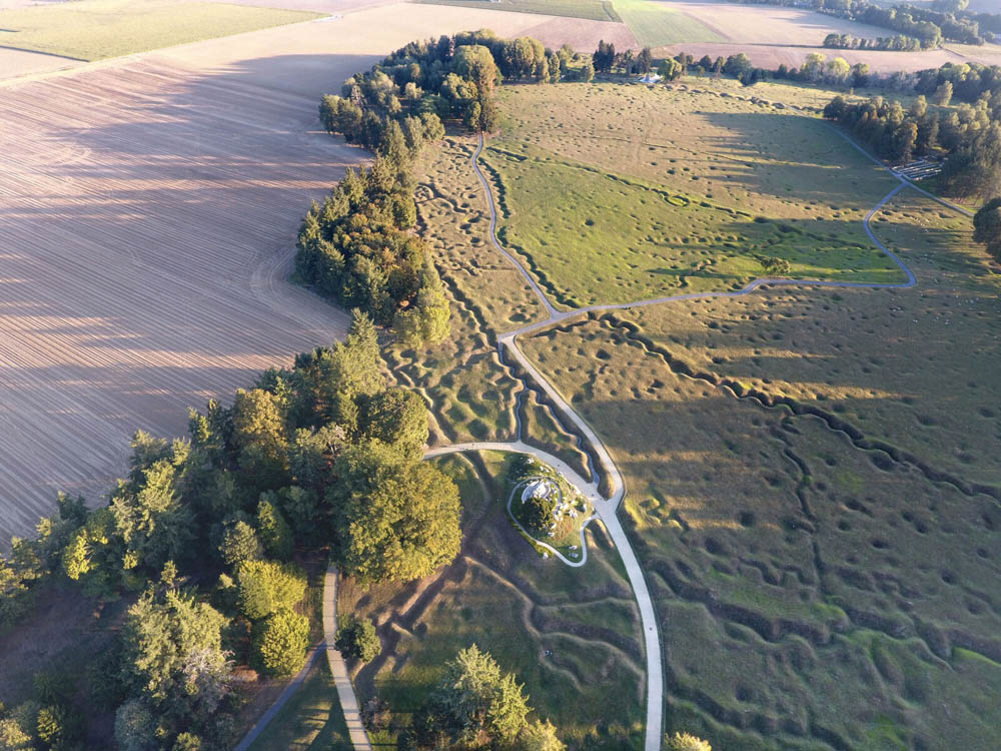
Image: The still battle-scarred landscape of Newfoundland Memorial Park on the Somme (© Somme Tourisme/Nicolas Bryant)
Visiting the Somme today, with its rolling open farmers' fields, small, charming villages, and gentle river valleys, hides its blood-soaked past.
The region was once the site of one of the most devastating battles in human history. It was here that the titanic Battle of the Somme was fought. Between July and November 1916, millions of soldiers clashed in the Somme’s bloody battlefields, leaving hundreds of thousands of dead on both sides before it ground to a halt.
The Battle was one of the largest fought during the Great War, leaving an indelible mark on the history and psyche of the Commonwealth nations that fought here, particularly the United Kingdom.
Today, the Somme’s peaceful tranquillity belies the carnage and chaos of those 141 days in 1916. However, the scars and reminders remain, not least the preserved trenches and craters, hinting at the horrors of this most devastating of battles.
Perhaps the most powerful legacy of the Somme are Commonwealth War Graves’ cemetery memorials that dot the landscape. Lovingly maintained, these range from the monumental to the individual, but each showcases the enormous loss of life the Somme represents.
Visiting the Somme takes you on a journey through a landscape where memory and meaning comingle into a place that is rich in remembrance.
Where are the former battlefields of the Somme?

Image: A map showing the Somme sector (Wikimedia Commons)
The former Somme frontline covered a length of just 20 miles at the battle’s height.
The battle took place in the Picardy Region of northwest France, specifically in the Somme department. Some parts of the line extend into today’s Pas-de-Calais department too.
Most of the Somme line lay on the upper reaches of the River Somme amid the gently undulating, rolling landscape between the towns of Albert and Peronne.
The Upper Somme Valley runs from Péronne westwards towards the city of Amiens.
Compact, yet rich with history, most of the major Somme sites are located within a 20-minute drive. Multiple walking and cycle routes exist too, making it easy to navigate.
Travelling to the Somme battlefields
Where to Stay
- Albert - The most convenient base for Somme battlefield touring, featuring a central location close to Thiepval and Beaumont‑Hamel.
- Péronne - Ideal for visitors focusing on the southern Somme and home to the excellent Historial de la Grande Guerre museum.
- Amiens - A beautiful, historic, larger city with more amenities, the stunning medieval cathedral, and easy access to the Somme valley.
Getting There
From the UK
By Car:
- Calais to Albert: approx. 1 hr 45 mins
- Calais to Péronne: approx. 1 hr 30 mins
By train:
- Eurostar to Paris, then TGV to Amiens or Lille
- Local trains connect to Albert and Arras
From Paris
By car:
- Approx. 1 hr 45 mins to Albert
By train:
- Paris Gare du Nord to Amiens (1 hr)
- Paris Gare du Nord to Arras (50 mins)
Getting Around The Somme
A car is by far the easiest way to explore the battlefields, although the open country also lends itself well to bicycle tours. Distances between sites are short, but public transport is limited.

Want more stories like this delivered directly to your inbox? Sign up for our newsletter for regular updates on the work of Commonwealth War Graves, blogs, event news, and more.
Sign UpKey sites of the Somme
The North
The most northerly section of the Somme saw some of the heaviest fighting and heaviest losses of the First Day of the Somme. When visiting the Somme battlefields, it can be a good place to start.
Stretching between Serre and the River Ancre, tens of thousands attacked the line north of Albert on a clear, summer morning. A fierce artillery barrage was meant to have softened German defences, but this was not the case.
British soldiers found themselves walking into heavily defended fortifications and trench networks. German machine-gun, artillery, and rifle fire cut a huge swathe through the British, with just shy of 20,000 dying on the Somme’s First Day.
The fighting in the northern Somme sector wound down after the battle’s early stages but returned until the ground was fought over once again in the last days of the Somme offensive.
How long will it take to visit CWGC sites in the Northern Somme?
The following Commonwealth War Graves cemeteries help illustrate the earliest stages of the Battle of the Somme in the northern sector. It should take about 2-3 hours to visit these sites, taking time in each to appreciate the cemetery, its history, and the people commemorated there.
Serre Road Cemeteries
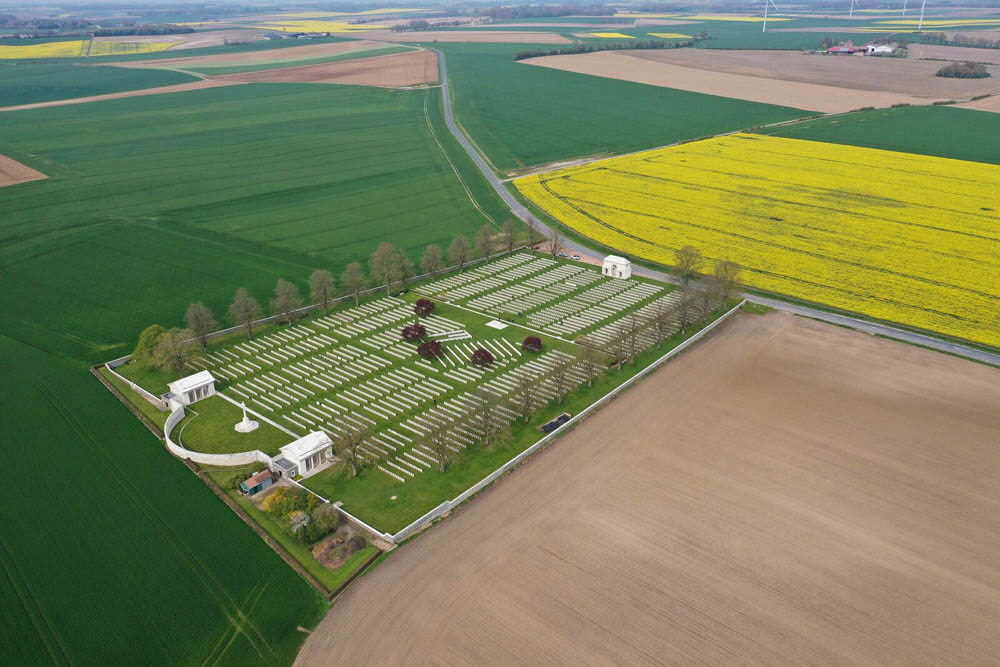
Image: An overhead view of Serre Road No.2
Serre is at the most northerly section of the Somme line, although diversionary attacks were made further along at Gommecourt on the Somme’s first day.
Serre was attacked by Men from the 31st Division on 1 July 1916. A New Army formation drawn from Pals’ Battalion recruits from Leeds, Barnsley, Sheffield, and Durham, the 31st was torn to pieces on that fateful morning.
Over 2,000 men were wounded or killed in barely an hour, including 16-year-old Private Horace Illes.
On the same day, men of 1st/6th Battalion, Warwickshire Regiment, were engaged at a German defensive network near Serre known as the “Quadrilateral”. The attack was unsuccessful, with the Warwicks losing more than 500 men killed.
There are three Serre Road cemeteries we maintain here. Together, they commemorate close to 10,000 casualties of the Somme Campaign. Representing the brutality of the Somme, many are unidentified, including almost 5,000 unidentified casualties at Serre Road Cemetery No.2.
The Serre Road Cemeteries are:
- Serre Road Cemetery No.1
- Serre Road Cemetery No.2
- Serre Road Cemetery No.3
A series of smaller CWGC cemeteries are located near the Serre Road sites, including:
- Queens Cemetery
- Like Copse Cemetery
- Railway Hollow Cemetery
The Non-CWGC Sheffield Memorial Park, featuring individual regimental memorials, sits near Queens and Railway Holly Cemeteries.
Redan Ridge Cemetery No.3
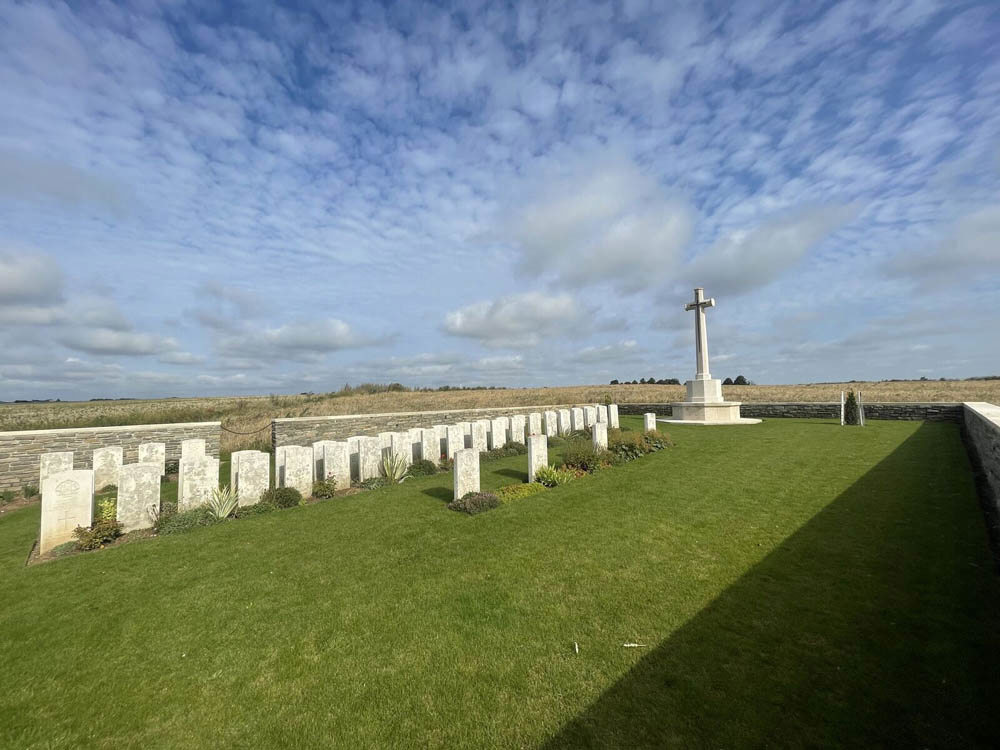
Image: Redan Ridge Cemetery No.3
The high ground between Serre and the village of Beaumont-Hamel is known as Redan Ridge. The ridge and surrounding area were German-held territory on the First Day of the Somme.
The 4th Division led the attack on Redan Ridge. Although they managed to enter the German frontline with its trenches intact, the men of the 4th Division now faced withering fire from both sides.
British troops found themselves cut off and forced to retreat at high cost. All told, the 4th Division lost 4,700 men, with around 1,800 dead.
Red Redan Ridge Cemetery No.3 stands almost on top of the former German frontline. It’s a small cemetery, holding just over 50 burials of the Great War. Many of those buried here died not only in July but in November when the 2nd Division attempted to take Redan Ridge.
Across the ridge and nearby, you can find several CWGC cemeteries, including:
- Redan Ridge Cemetery No.1
- Redan Ridge Cemetery No.2
- Munich Trench Cemetery
- Frankfurt Trench British Cemetery
- Waggon Road Cemetery
Newfoundland Memorial Park

Following the line of Redan Ridge south brings us to the village of Beaumont-Hamel. For the people of Newfoundland, Beaumont-Hamel holds special but sad significance.
It was here, on 1 July, that 780 volunteers of the 1st Battalion, Newfoundland Regiment, went into action. Their losses were devastating.
Some were hit clambering from their trenches; others barely made it past the British wire into No Man’s Land; others, with grim determination, pressed on.
Only 100 or so Newfoundlanders came away from the attack unscathed. All of the battalion’s officers were killed or wounded. These losses were some of the heaviest taken by any battalion on the First Day of the Somme.
The Government and Women of Newfoundland bought the land after the war, and a memorial park was opened in 1925 by Field Marshal Sir Douglas Haig, overall commander of the British forces during the Somme battle.
At the centre stands a proud bronze caribou, symbolising the people of Newfoundland, atop a monument bearing the names of 800 members of the Newfoundland forces who died during the First World War but have no known grave. A visitor centre staffed by Newfoundland volunteers is located on site, as well as a winding network of preserved trenches.
Within Newfoundland Memorial Park sit several CWGC cemeteries, including:
- Y Ravine Cemetery
- Hawthorn Ridge Cemetery No.2
- Hunter’s Cemetery
The Newfoundlanders fought as part of the wider 29th Division attack on Beaumont-Hamel.
Ten minutes before the main attack, at 7:20 am, a huge mine was detonated beneath a German strongpoint called the Hawthorn Ridge Redoubt, in the north of the Beaumont-Hamel sector.
It was hoped the Allies would be able to cross here with minimal casualties. This was sadly not the case. The crater is still there, known as Hawthorn Ridge Crater, and sits close to the CWGC cemeteries Beaumont-Hamel British Cemetery and Hawthorn Ridge Cemeteries No.1 and No.2.
A piece of low ground known as the Sunken Road running alongside Hawthorn Ridge was immortalised Geoffery Malins’ The Battle of the Somme. Released in UK cinemas in August 1916, this combined footage captured at the front with staged recreations to show the public the reality of the Battle.
Men of the 1st Lancashire Fusiliers were filmed just ahead of setting off their assault, having snuck into their positions under the cover of darkness. Exposed and unsupported, many of the men, their faces still visible in Malins’ film, were cut down in minutes.
Beaumont-Hamel remained in German hands until November 1916, when it was captured by the 51st (Highland) Division.
Ancre British Cemetery
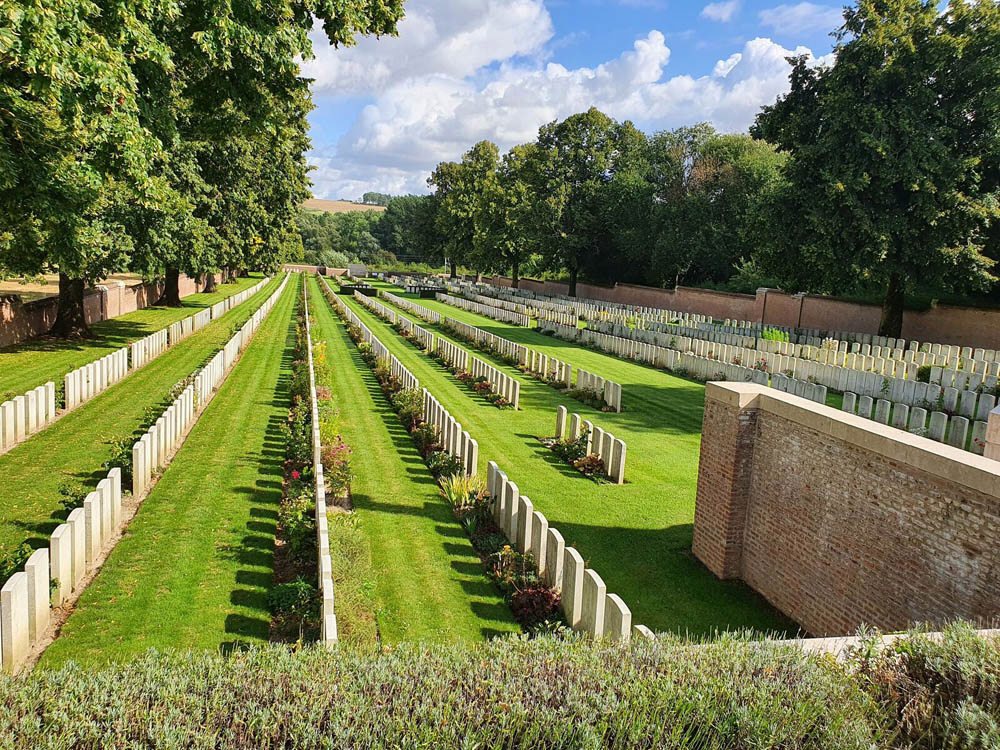
Image: Ancre British Cemetery
Moving south, we head towards the Ancre Valley, named for the River Ancre.
By November, the area Thiepval Ridge close to the Ancre had been captured. British High Command was keen to make another push before winter made further campaigning impossible.
It was at the Ancre that the final offensive of the Battle of the Somme took place.
In darkness and early morning fog on the morning of 13 November 1916, the attack went in. While the 51st (Highland Division) attacked Beaumont-Hamel, the British 63rd (Royal Naval) Division attacked at St Pierre.
The 63rd (Royal Naval) Division was made up of sailors and marines not on ships, instead deployed to the frontlines to support regular Army infantry divisions.
It made slow progress in the face of German machine guns but captured the village of Beaucourt.
Some of the final British casualties of the Somme are buried at Ancre British Cemetery. Over 2,500 First World War casualties are buried here, just over half of whom are identified.
The Royal Naval Division Memorial, commemorating men of the 63rd (Royal Naval) Division, sits on the main road from Arras to Albert at Beaucourt-sur-Ancre.
The South
The southern half of the British attacks on the First Day of the Somme again saw horrendous losses but also some major successes.
Here, British units faced German-held villages such as La Boisselle, Fricourt, Mametz and Montauban. British lines met French sections at the end of the line at Maricourt.
In several places, the artillery bombardment worked as intended: cutting barbed wire and smashing German bunkers, as British troops stormed trenches at Montauban Ridge, capturing Mametz and Montauban.
In the weeks following the Somme’s first day, the British High Command focused its efforts on the Southern sector. After consolidating gains, a major attack on Bazentin Ridge was organised for 14 July 1917.
How long will it take to visit CWGC sites in the Southern Somme?
The following Commonwealth War Graves cemeteries help illustrate the earliest stages of the Battle of the Somme in the northern sector.
It should take around 3-4 hours to visit them all, assuming you are travelling by car.
Bapaume Post Military Cemetery
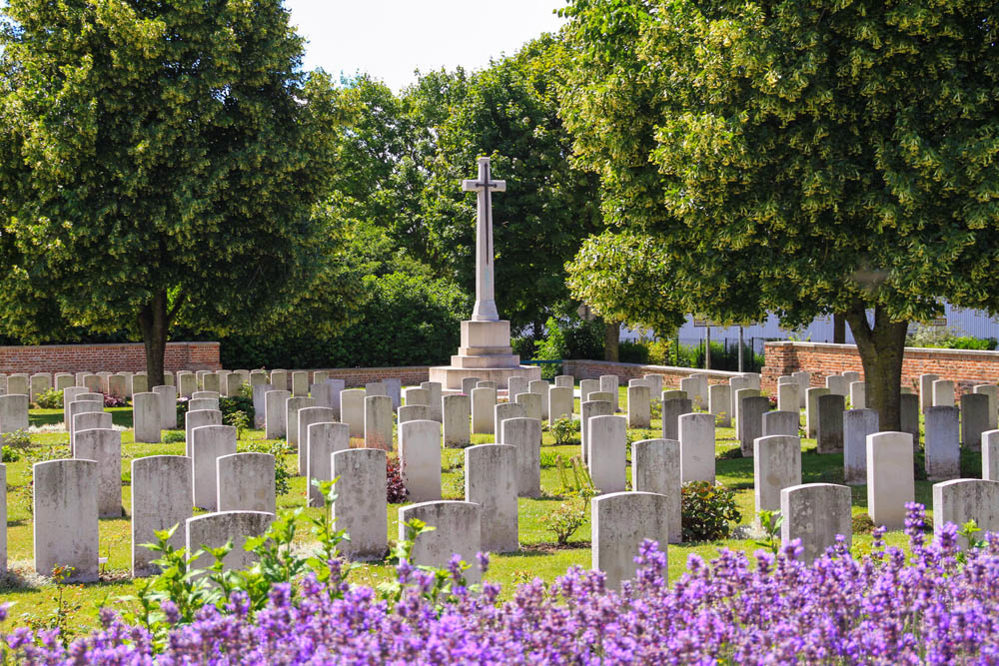
Image: Bapaume Post Military Cemetery
Some 2,300 men of the 34th Division were killed on the Somme’s first day, the heaviest of any regiment, yet the final resting places of thousands of these soldiers are sadly unknown.
One of the cemeteries and memorials commemorating men of the 34th Division is Bapaume Post Military Cemetery. Here, around 410 burials of the First World War can be found.
The men of the 34th Division came across the UK, representing Edinburgh, Lincolnshire, Suffolk, Tyneside and Northumberland. On 1 July 1916, the Division attacked, its objective the village of La Boiselle.
Two minutes before its assault at 7:30 am, the huge Lochnagar mine went up, sending clods of earth spiralling into the sky. Moments later, the 34th went into action. The din of machine-gun fire grew, and within 10 minutes, 80% of the leading battalions lay wounded or dead in No Man’s Land.
La Boiselle was eventually taken on 4 July during a tremendous thunderstorm.
Fricourt New Military Cemetery
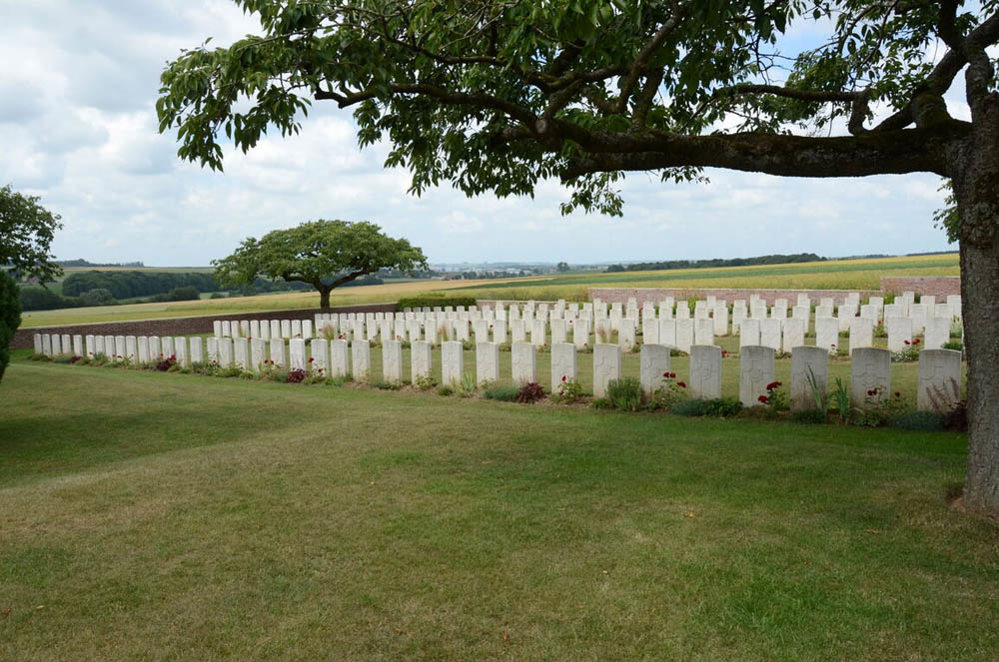
Image: Fricourt New Military Cemetery
Fricourt village, just outside Albert, is dotted with military cemeteries dating to the Somme, including Fricourt New Military Cemetery and Fricourt British Cemetery.
Many of those buried here are casualties of the 17th (Northern) Division. As its name suggests, the regiments making up the Division were drawn from communities across the North of England, including Yorkshire, Staffordshire, Lincolnshire and Lancashire.
On the campaign’s first day, the 17th (Northern) Division advanced across No Man’s Land, men of the 10th Battalion, West Yorkshire Regiment leading the way. As they left their trenches and prepared to cross the fields, they were cut down in a devastating fusillade.
By evening, nine out of every ten men of the 10th lay dead or wounded in No Man’s Land. Fricourt was captured the following day.
Devonshire Cemetery
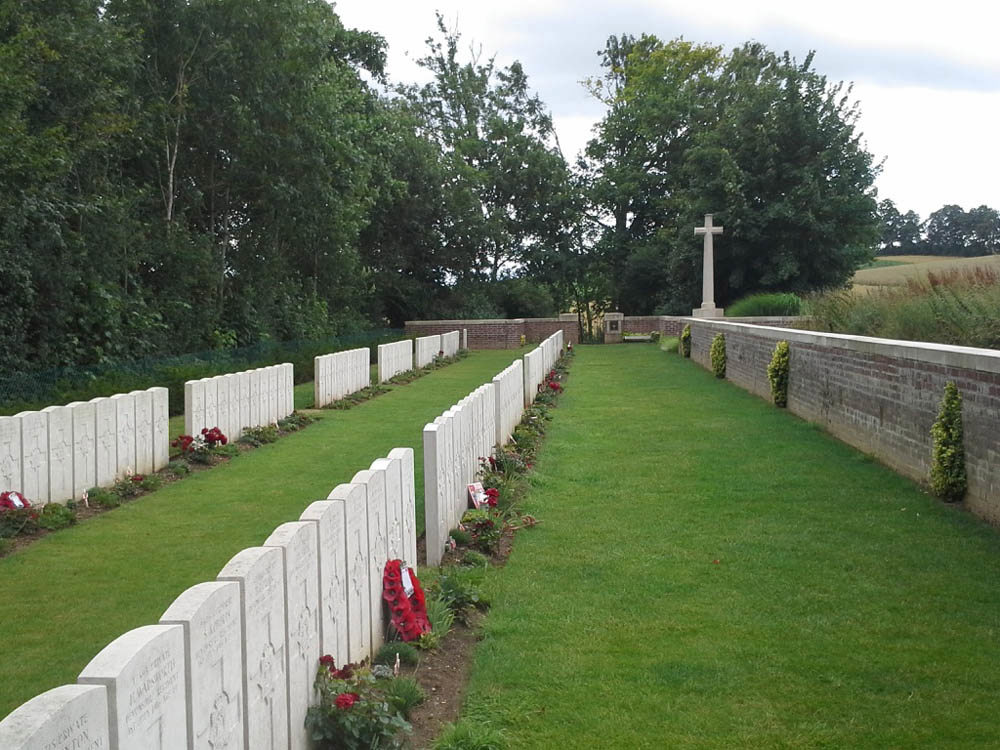
Image: Devonshire Cemetery
Devonshire Cemetery is an interesting place to come when visiting the battlefields of the Somme.
Barring one burial from the Royal Artillery, everyone buried here was a member of the Devonshire Regiment, specifically its 8th and 9th Battalions.
The Devonshires’ were devastated in the ultimately successful assault on Mametz.
The regiment set off from the British lines on high ground overlooking Mametz and Montauban, through fields criss-crossed with German defences.
By the end of July 1, Mametz had been taken after a long struggle, but 200 of the Devonshires were dead.
When the cemetery was first started, a wooden marker was erected with the words that are today inscribed on a stone plaque: “The Devonshires held this trench, The Devonshires hold it still.”
Peronne Road Cemetery
Péronne lay at the extreme edge of the British lines of the Somme. From there, French troops occupied that section of the line, although the bulk of the French Army’s effort in 1916 was focused on Verdun some 120 miles away to the southeast.
The French were highly experienced and supported by overwhelming artillery. On the first day of the Somme, the French guns were instrumental in obliterating German defences around the village of Montauban.
The British 30th Division led the attack on Montauban. Composed mostly of “Pals” from Manchester and Liverpool, the Division swept aside the defenders, taking Montauban. Their success contrasted greatly with the slaughter in the Northern Somme and demonstrated that infantry could capture even well-prepared defences if properly supported with artillery.
Peronne Road Cemetery holds over nearly 1,350 First World War casualties, with many taken in from smaller battlefield cemeteries. Otherwise, casualties dating after 1st July 1916 buried here come from medical units burying war dead from the northern Somme.
It’s an interesting place to visit, showing the contrast between the relatively uncostly taking of Montauban and the bloody disaster of the Northern Somme.
Quarry Cemetery, Montauban
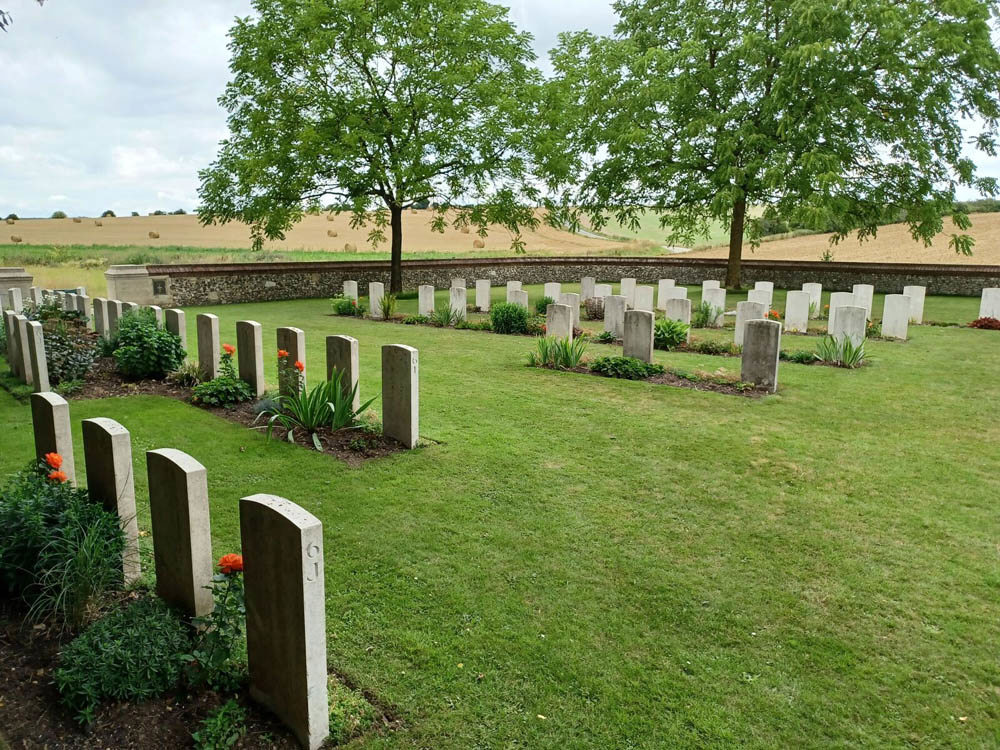
Image: Quarry Cemetery, Montauabn
Visiting CWGC cemeteries and memorials on a Somme battlefield trip helps you experience the ongoing campaign through the men who fought and fell in it.
Quarry Cemetery, Montauban and the nearby Caterpillar Cemetery and Memorial are worth a visit to understand how the fighting evolved in the Southern Somme sector.
After Montauban was captured, gains were consolidated with the capture of La Boisselle, Contalmaison, Mametz Wood and Trônes Wood. With these positions secured, the British looked to advance on the Bazentin Ridge.
Over the night of 13/14 July, British troops of the 3rd, 7th, and 9th Divisions crept across No Man’s Land, stealthily taking up positions close to the German frontline. For three days, British guns had pounded German positions on the Ridge.
The British had concentrated 1,000 artillery guns into a concentrated area and essentially blitzed the German frontline non-stop. After the gunfire reached its crescendo at 3.25 am on the morning of July 14, the infantry went over the top.
The artillery had done its job, cutting the wire and smashing defences, allowing the British infantry to move through. From Bazentin to Longevuel, British infantry captured high ground, completing its objectives.
At Quarry Cemetery, 740 Commonwealth casualties lie, including 190 or so artillerymen. After the fighting moved off, artillery stayed in place, resulting in a lengthy duel between German and British gunners.
Caterpillar Valley Cemetery
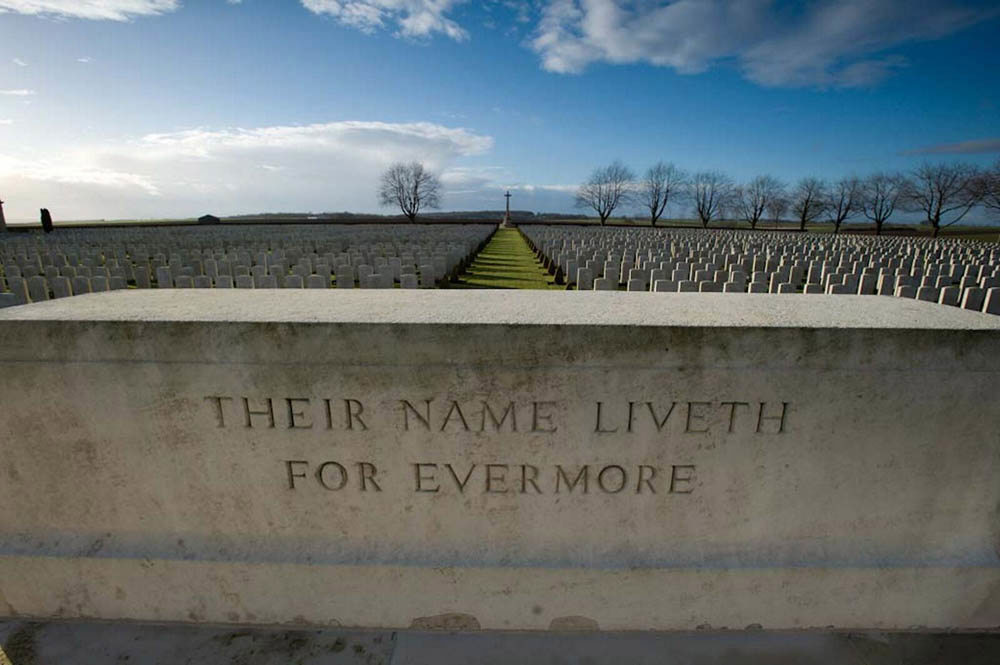
Image: Caterpillar Valley Cemetery
Caterpillar Valley Cemetery is a must-visit for any Somme battlefield tourist. It sits in the heart of the battlefield where much of the fighting between July and September 1916 took place.
From it, you can cast your gaze over the Somme front, spotting iconic locations like Delville and High Wood, as well as many other CWGC cemeteries.
Caterpillar Valley is the second-largest cemetery on the Somme, with over 5,500 graves. Nearly 3,800 of these are unidentified. Within the cemetery sits the Caterpillar Valley (New Zealand) Memorial, commemorating 1,200 members of the New Zealand forces who died on the Somme with no known grave.
Thiepval Ridge
No visit to the battlefields of the Somme is complete without a visit to Thiepval Ridge.
An important piece of high ground, the ridge was defended by some of the most formidable German defences anywhere on the Western Front.
Attacks went in on 1 July, but many German positions did not fall that day. Fighting along the Thiepval Ridge continued through August, with British Empire forces gradually pushing the Germans back.
A major effort was made to fully capture the ridge in September 1916.
How long will it take to visit CWGC sites on THiepval Ridge?
It should take around 2-3 hours to visit the Thiepval Ridge CWGC cemeteries and memorials if travelling by car.
Connaught Cemetery
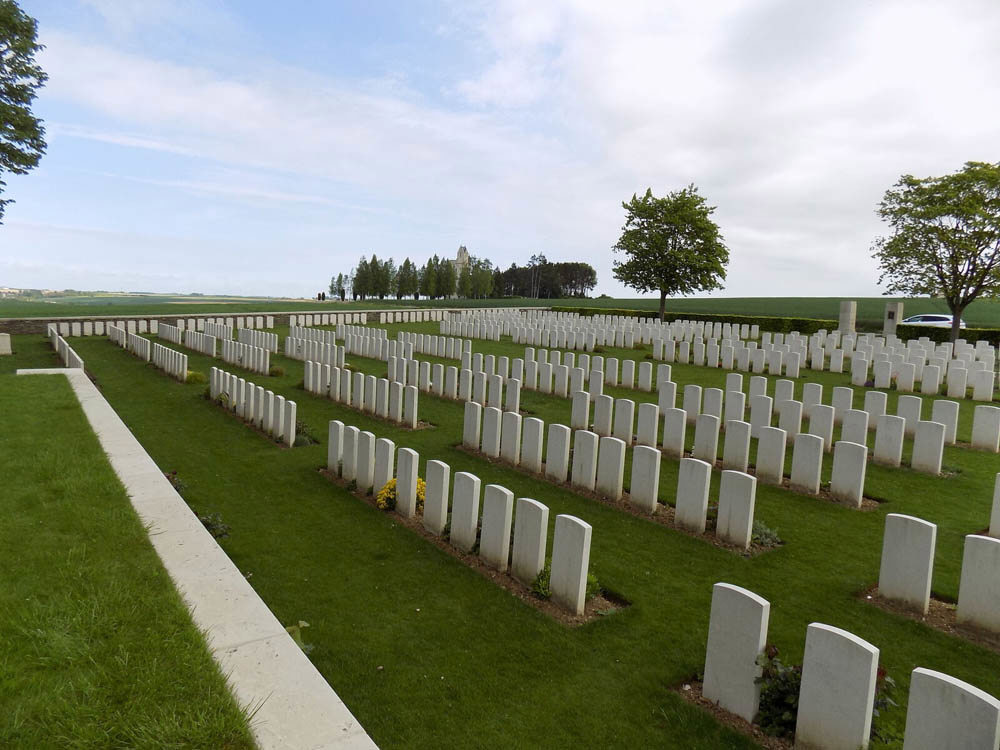
Image: Connaught Cemetery
On the Morning of 1 July, the men of the 36th (Ulster) Division attacked the daunting Schwaben Redoubt, one of the most heavily defended German fortifications in France.
In the face of heavy fire, they managed to overcome many of the front-line defences. As the Ulsters broke into the frontline, brutal hand-to-hand combat unfolded in pillboxes and trenches, before the British troops were driven back by German reinforcements.
BY the end of the day, some 5,000 dead or wounded British troops lay on Thiepval Wood. A testament to the intense, bloody fighting, many of these men could not be identified, or their bodies recovered. These soldiers are commemorated on the Thiepval Memorial.
Connaught Cemetery holds a small number of those who died in the attack on the Schwaben Redoubt. Close by is “Bloody Road” where many of the dead and dying Ulstermen lay before recovery.
The remains of the Schwaben Redoubt sit close to Mill Road Cemetery, where a further 1,280 British servicemen are commemorated.
Other cemeteries in the Thiepval Ridge section that tell the story of the first day of the Somme include:
- Lonsdale Cemetery – Contains 1,540 war graves from the 32nd Division’s assault on the Leipzig Redoubt defences
- Ovillers Military Cemetery – Attacked by the 8th and 12th (Eastern) Divisions, Ovillers was finally captured on 16 July by the 48th (South Midland) Division. Ovillers Military Cemetery holds over 3,400 casualties of the Somme
Pozieres British Cemetery
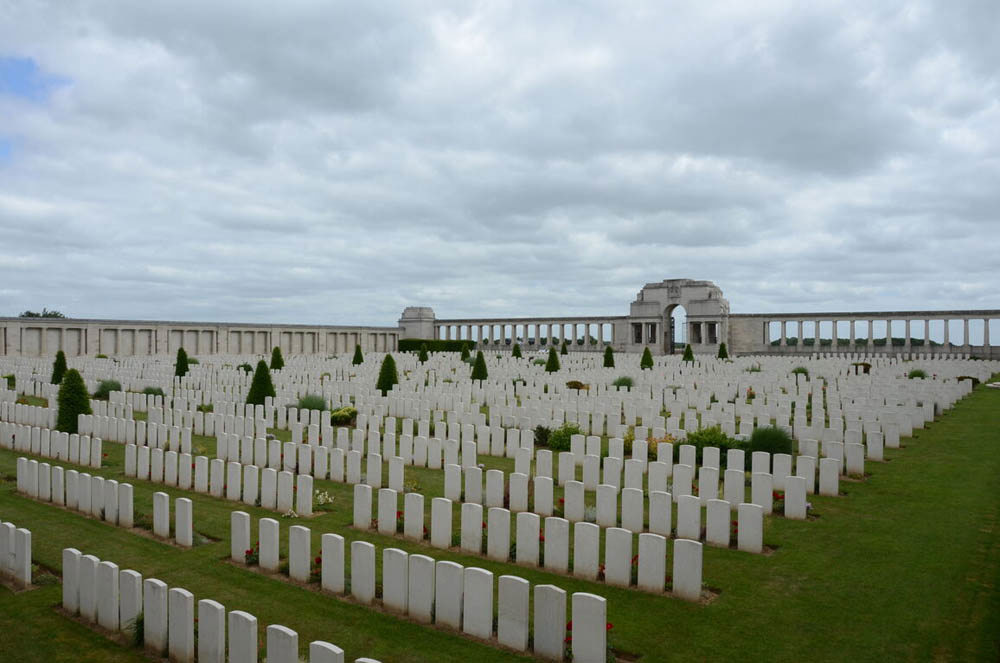
Image: Pozieres British Cemetery
By mid to late July, British troops, taking heavy losses from the early fighting, had begun to be reinforced across the Somme by troops from across the Empire. Soon, Australian, Canadian, New Zealand, South African, and Indian troops and cavalry would be getting involved in the fighting.
Pozieres became the site of heavy fighting as the campaign progressed beyond July 1914. By now, the 1st Australian Division had been moved to this section of the Somme frontline.
The Australians attacked the village of Pozieres on 23 July. The German frontline had been smashed by artillery, but the fighting amidst the village rubble lasted for several days. British formations on either side of the village launched unsuccessful attacks, unable to achieve a breakthrough.
After the village was captured, fighting continued throughout August. The Australians were subject to bitter bombardments and near constant fire due to German counterattacks, taking heavy casualties.
Behind Pozieres lay a Mouquet Farm, known as Mucky or Moo-Cow Farm to the Aussies. A complex of deep cellars and tunnels connected to the German trench network; this was a substantial obstacle.
Mouquet Farm saw some of the bloodiest fighting of the entire Somme Offensive. As the Aussies were being bled dry by the attack at Pozieres and Mouquet, they were relieved by Canadian and British Forces in September.
The Australian Imperial Force suffered around 23,000 casualties on the Somme, with 6,700 losing their lives.
Pozieres British Cemetery is the final resting place of 2,700 servicemen. Amongst the headstones, you will find Canadian and Australian casualties resting alongside their British counterparts.
Within the cemetery lies the Pozieres Memorial, commemorating 14,000 men who died in 1918, pushed back by the German Spring Offensive, but with no known grave.
Thiepval Memorial to the Missing
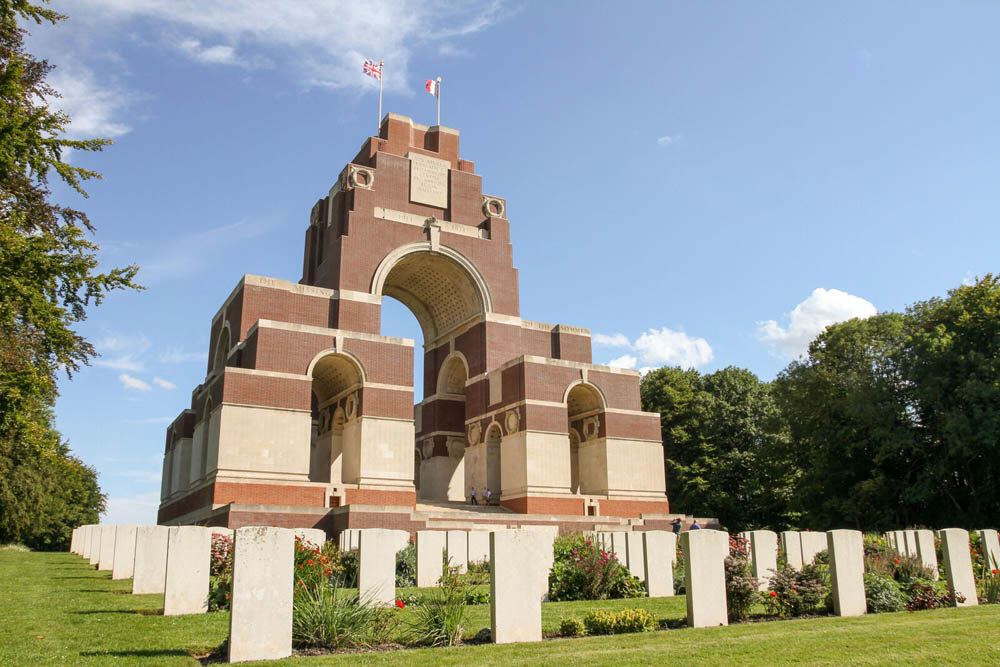
Image: Thiepval Memorial to the Missing
No visit to the Somme is complete without a trip to Commonwealth War Graves’ largest memorial to the missing in the world: The Thiepval Memorial.
Thiepval itself was heavily fought over in the Somme Offensive. Known for its chateau and patisserie pre-war, the German Army fortified the small village, including the construction of the notorious Schwaben and Leipzig Redoubts.
On the opening day of the Somme, Thiepval was assaulted by the 15th Battalion Lancashire Fusiliers, aka the Salford Pals, and the 16th Northumberland Fusiliers, known as the Newcastle Commercials.
As was the case with so many Pal’s Battalions, these young men were cut down in swathes before German fire.
British forces did not take Thiepval until 26 September 1916. After Mouquet Farm had been secured, the 18th (Eastern) Division methodically pushed up the slopes of Thiepval Ridge and captured the village after intense hand-to-hand combat.
Today, the Thiepval Memorial to the Missing of the Somme stands sentinel over the region’s former battlegrounds. Over 72,000 names of British and South African servicemen with no known war graves are commemorated on its monumental name panels.
Given that over 150,000 Commonwealth soldiers died in the Somme Campaign, the sheer volume of names with no known war grave commemorated by Thiepval is staggering. Visitors will be humbled by the number of missing soldiers from this most devastating battle.
Originally raised in a bleak, shattered landscape, the Thiepval Memorial now stands amidst mature trees and landscape returned to its pastoral state, but one which still bears scars and reminders of the horrors of the Somme that still haunt Britain and the Commonwealth’s shared psyche.
A non-CWGC visitor centre lies down the slope from the Memorial, where visitors can learn more about the battle, some of the people who fought and fell there, plus a gift shop with Great War-themed merchandise.
Commonwealth locations to visit on the Somme
South African National Memorial
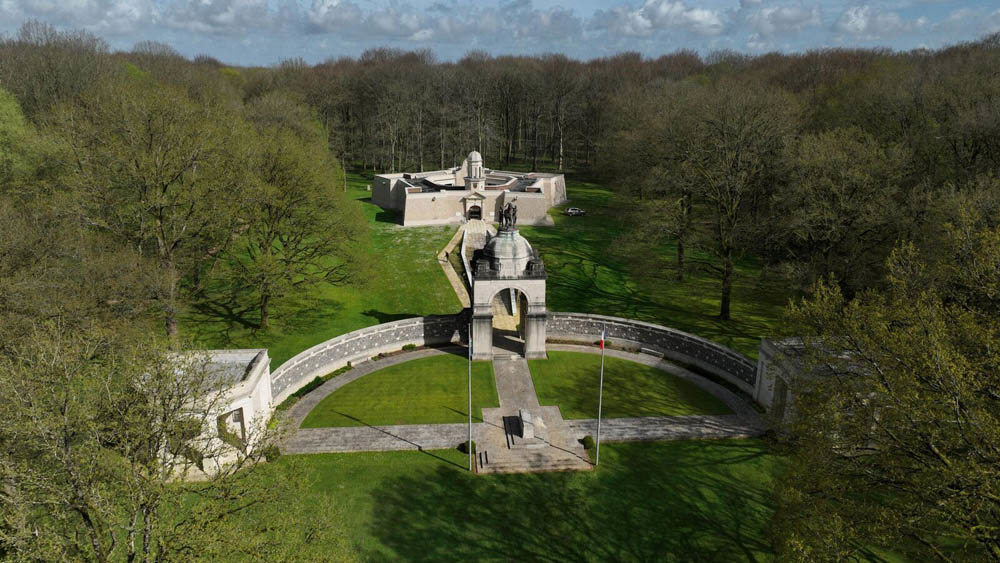
Image: The South African National Memorial
Delville Wood is intrinsically linked to South Africa’s Great War Story.
Here, in July 1916, 3,100 officers and men of the South African Brigade entered the thick woodland to capture the strategically important ground. After six days of intense fighting, 750 bloodied and battered South African servicemen were relieved, their comrades left amid the battered copse.
The South African National Memorial at Delville Wood was unveiled in 1926, commemorating the South Africans who fought and fell in the Great War. The memorial stands at the site of their first baptism of fire.
The South African Delville Wood Commemorative Museum stands close to the memorial, providing deeper insights in the South African’s experiences on the Somme and wider Western Front.
Canadian Military Cemeteries
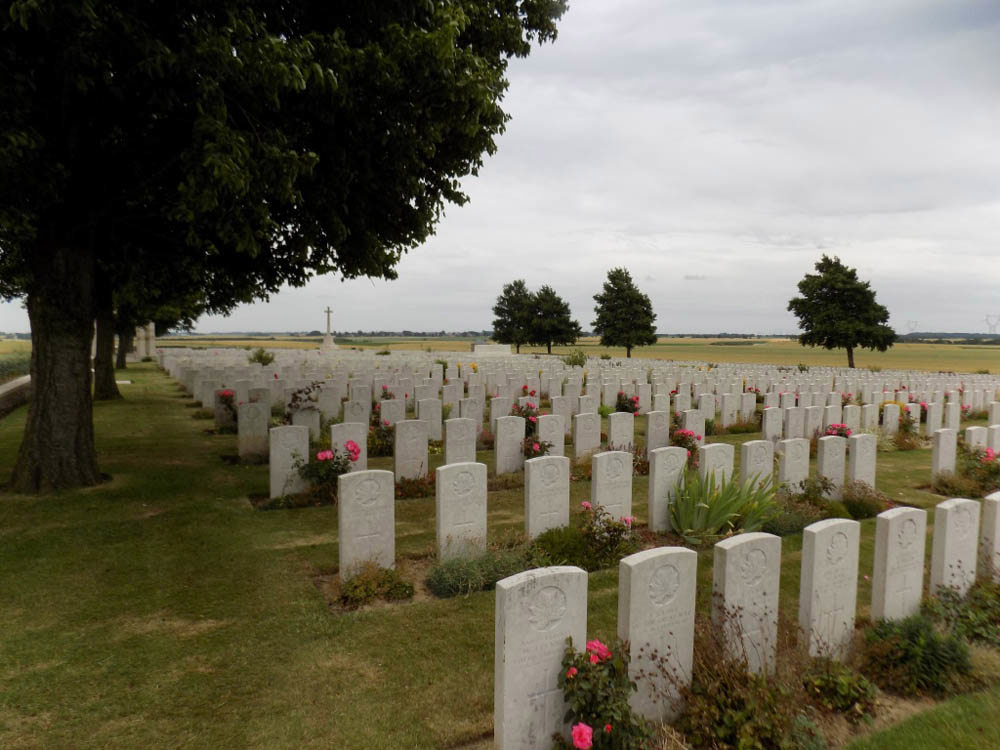
Image: Adanac Military Cemetery
The Canadian Corps suffered around 23,000 casualties during the Battle of the Somme. It was involved in some of the bitterest fighting of the campaign, especially as attrition set in following the July advances.
Places like Regina Trench and Flers-Courcelette are as integral to the Canadian Great War Experience as the vaunted Vimy Ridge. The Somme became a crucible for Canadians on the Western Front, testing its soldiers and leadership before their major successes in 1917 and beyond.
To understand the cost paid by the Canadians on the Somme, we’d recommend trips to:
- Adanac Miliary Cemetery
- Regina Trench Cemetery
- Courcelette Cemetery
Here, thousands of Canadians lie or are commemorated, representing the enormous struggle of the Somme beyond just British and Irish soldiers.
London Cemetery & Extension
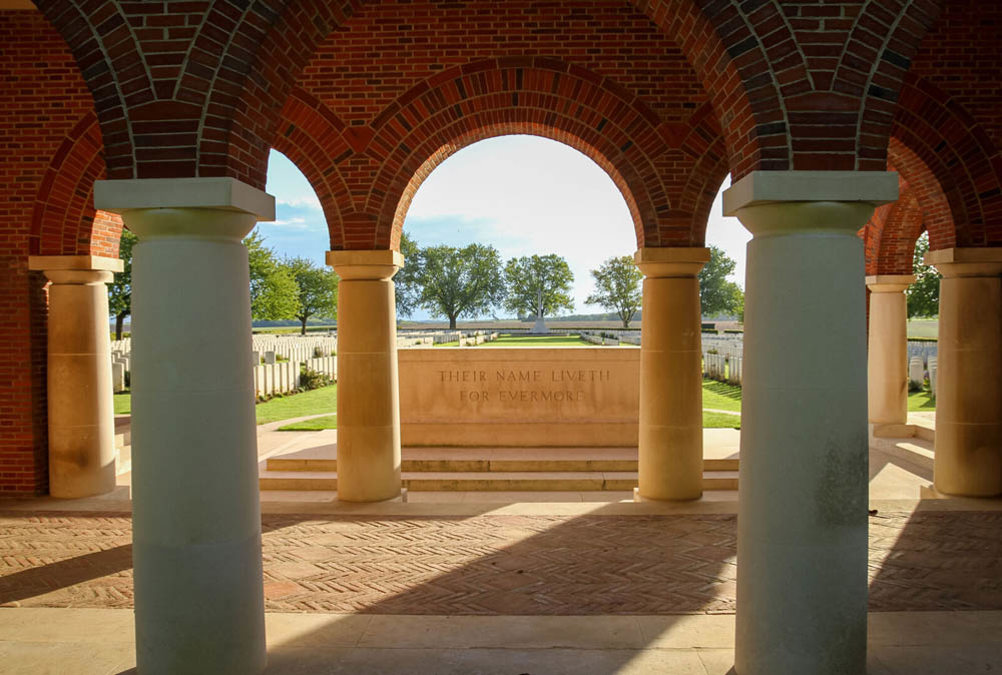
Image: London Cemetery & Extension, Longueval
Did you know the Battle of the Somme was one of the last times a major cavalry charge was ordered on the Western Front?
Although this was the same battle in which tanks were introduced for the very first time, cavalry was still seen as a tool to potentially exploit any gaps in the German lines.
At High Wood, one of the most bitterly contested pieces of ground of the Somme battle, horsemen of the 7th Dragoon Guards and 20th Deccan Horse of the 2nd Cavalry Division charged through Caterpillar Valley into German guns.
Despite reaching the southern edge of High Wood and engaging German infantry, the cavalry was forced to withdraw or, in some accounts, hold the edge of the wood with heavy losses.
Approximately 50 men were killed in the charge, and a further 100 were wounded. Horse losses were even heavier, at between 125 and 150.
The charge demonstrated the bravery and professionalism of Indian cavalrymen who had been waiting for the opportunity to fight mounted after enduring months of trench warfare.
Many of the Indian cavalrymen are buried at nearby London Cemetery, making it an important part of any Somme battlefield visit to understand the contribution of Commonwealth forces.
Caterpillar Valley (New Zealand) Memorial
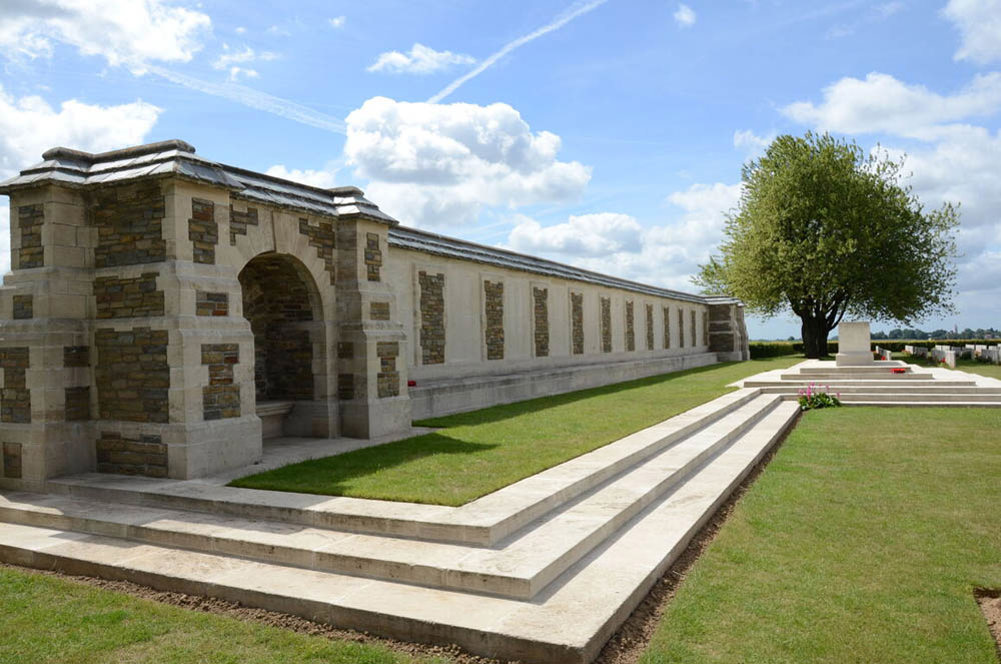
Image: Caterpillar New Zealand Memorial
The Kiwis arrived on the Western Front in April 1916 and began to gain vital experience in trench warfare at the normally quiet sector of Armentieres. As casualties began to mount across the Somme Offensive, and with more experience under its belt, the New Zealand Division was hurled into the Somme in September 1916.
At the Battle of Flers-Courcelette, the Kiwis performed well, capturing the Switch and Flers Trenches, as well as helping capture the village of Flers itself.
The New Zealand Division was in action for 23 days during the Battle of the Somme. In that time, it took an astonishing 7,000 casualties, including missing, dead, or wounded.
The Caterpillar Valley (New Zealand) Memorial is the largest memorial dedicated to Kiwi troops on the Somme.
Sat in Caterpillar Valley Military Cemetery, it commemorates 1,200 officers and enlisted New Zealanders who fought and fell on the Somme, but who have no known war grave.
Non-CWGC Somme sites to visit
The Circuit of Remembrance
The Circuit of Remembrance (Circuit du Souvenir), also known as the Remembrance Trail, is a signposted, 40-mile driving, walking, and cycling route through the former Somme battlefields.
It passes through many important 1916 locations that help tell the Battle of the Somme story and the people who fought here.
Key stops on the Circuit of Remembrance include:
- Albert – An important hub of early fighting on the Somme, including the British disastrous first day attacks, Albert is rich in World War history
- La Boiselle – Home to the immense Lochnagar Crater, blown by the Royal Engineers on 1 July 1916
- Thiepval – Site of immense fighting across Thiepval Ridge and now site of Commonwealth War Graves largest war memorial the Thiepval Memorial to the Missing of the Somme
- Beaumont-Hamel – The site where the Newfoundlanders charged into battle, you will find some of the best-preserved trenches on the Somme at Beaumont-Hamel
- Rancourt – Rancourt houses the French National Cemetery, a German military cemetery, and the small Rancourt Military Cemetery
- Péronne - Within the Château de Péronne sits the Museum of the Great War (Historial de la Grande Guerre), dedicated to the a balanced history of the war, showcasing French, British, and German perspectives
The Circuit of Remembrance is clearly signposted with driving, cycling, and walking routes all available. Visit the Somme Tourism website for more information.
Lochnagar Crater, La Boisselle
One of the most dramatic reminders of the underground war, Lochnagar Crater was created by a massive British mine explosion on 1 July 1916. At 100 metres wide and 30 metres deep, it’s the largest surviving crater on the Western Front.
Somme 1916 Museum, Albert
Located in a former air‑raid shelter beneath the town, this museum uses dioramas, artefacts, and immersive displays to recreate trench life.
Historial de la Grande Guerre, Péronne
One of Europe’s best First World War museums, offering a balanced view of French, German, and British experiences. The displays are modern, thoughtful, and beautifully curated.
Pozières Windmill Site
Marked by an Australian memorial, the Windmill site is not CWGC. Australian official war historian Charles Bean described it as the “centre of the storm” for Australian troops.
Fricourt German Cemetery
This German cemetery is a powerful counterpoint to the Commonwealth cemeteries. It contains more than 17,000 German graves.
Ulster Memorial Tower
The Ulster Memorial Tower is close to the Thiepval Memorial. Opened in 1921, it stands as Northern Ireland’s national war memorial, symbolising the Ulster Division’s struggles on the Somme and wider war. A small café and gift shop is located on-site.
Why the Battle of Somme still matters today
The Somme is not just a battlefield; it is a shared landscape of memory. For the United Kingdom, it represents the sheer scale of loss of the Great War, but it is also an important place for understanding and commemorating the wider Commonwealth. Australian, Canadian, New Zealand, Indian, and South African troops all fought and fell across the Somme.
Walking these fields today, you feel the weight of history but also the peace that has returned. Visiting the Somme teaches us about courage and loss, but also helps us reflect on resilience, bravery, and the need for commemoration.
Visit Commonwealth War Graves in France
The CWGC Visitor Centre, located an hour away from the Somme Battlefields in Beurain, lets you go behind the scenes of the remarkable work we undertake to maintain British and Commonwealth cemeteries and memorials around the world.
Located in Beaurains, France, in the heart of the former Western Front, our Visitor Centre spotlights our highly skilled craftsmen, carpenters, stonemasons, mechanics, and blacksmiths. Their tireless efforts ensure our sites globally are kept to the high standards and beautiful aesthetics associated with our sites.
This is your chance to see the inner workings of one of the world’s foremost commemoration organisations.
Check out our free audio tour for individual visitors, an in-depth guide to every aspect of our work: from how we still recover and rebury the dead of the World Wars, to our highly skilled craftsmen’s vital role in maintaining and caring for the most impressive and recognisable war cemeteries and memorials worldwide.
You can also download our For Evermore app featuring virtual tours of some of our key sites, including the Thiepval Memorial to the Missing of the Somme.
Author acknowledgements
Alec Malloy is a CWGC Digital Content Executive. He has worked at the Commonwealth War Graves Commission since February 2022. During that time, he has written extensively about the World Wars, including major battles, casualty stories, and the Commission's work commemorating 1.7 million war dead worldwide.