

Fitting Memorials
Basra Memorial Digital Name Panels
As we continue our work to ensure everyone is commemorated equally by name, we’re honoured to introduce new digital name panels for all names commemorated on the Basra Memorial in Iraq, ensuring this important site of commemoration can be better understood and explored.
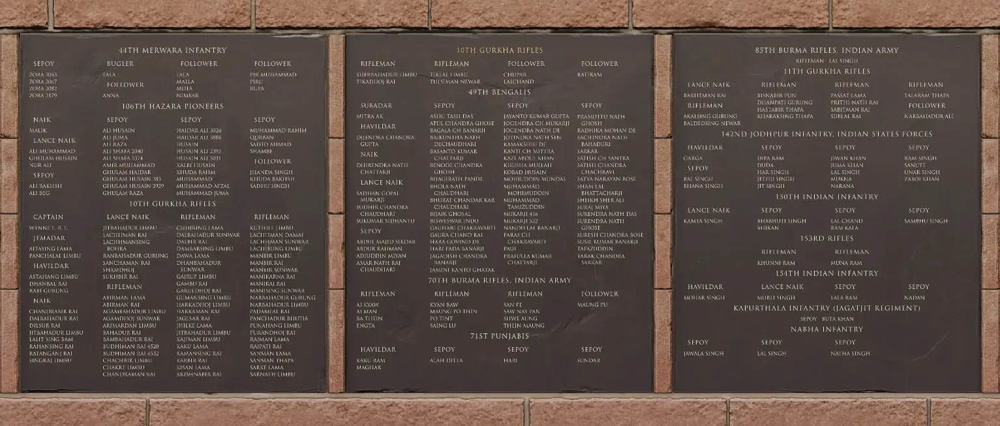
For over 100 years, the names of 33,000 Indian Army soldiers who died in the First World War have been missing from the Basra Memorial in Iraq.
Through these digital memorial panels, you can now see the names of Indian soldiers brought together for the first time and explore the names and stories of more than 46,000 Commonwealth service personnel commemorated by this memorial.
Dr George Hay, CWGC Official Historian, said: "The launch of these panels marks an important moment for the Commission and the commemoration of the Indian Army’s dead of the Mesopotamia Campaign. For the first time, the names of these men will be displayed as they should have been nearly a century ago, restoring to them the honour they deserve.
"This takes us a step closer to fully reversing this historical inequality while also helping people around the world engage with these casualties and their stories."
Explore the Digital Name Panels
Sierra Leone Freetown Memorial
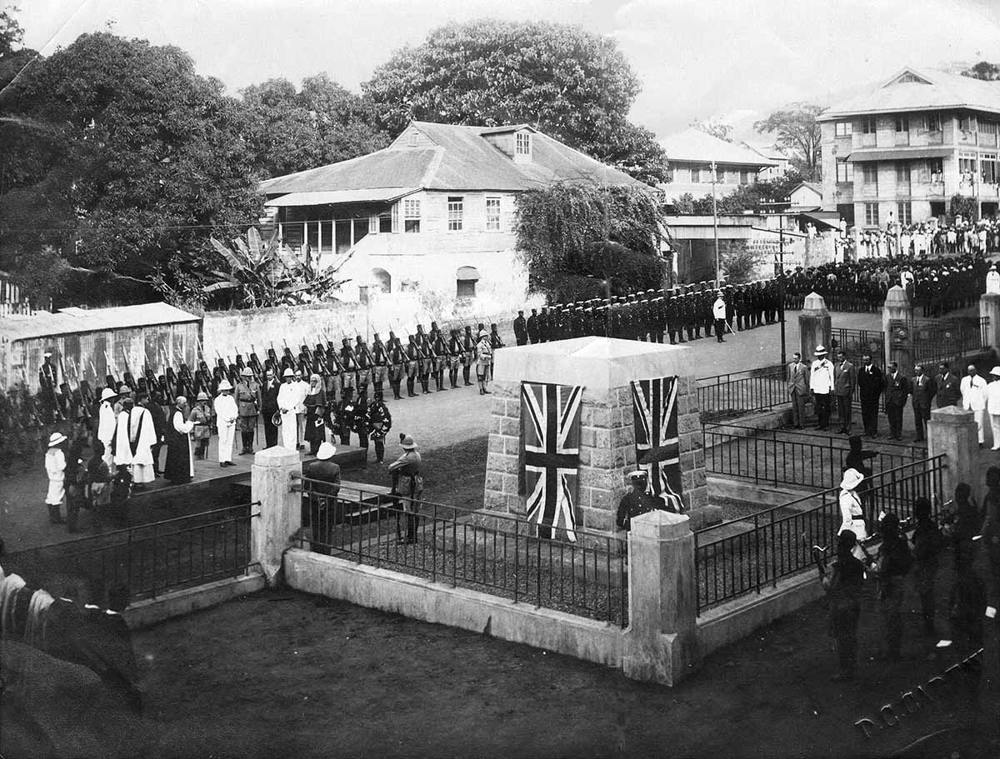
The Sierra Leone Freetown Memorial photographed by Captain C E Cookson 11 March 1931.
We continue our tradition of working with architects of global renown and we currently have architectural projects underway in Sierra Leone, Kenya, and South Africa. These all use the latest thought on the evolving role of commemorative spaces, will consider sustainably sourced materials, as well as the contemporary understanding of the historical context of those who served and lost their lives, but were not commemorated at the time.
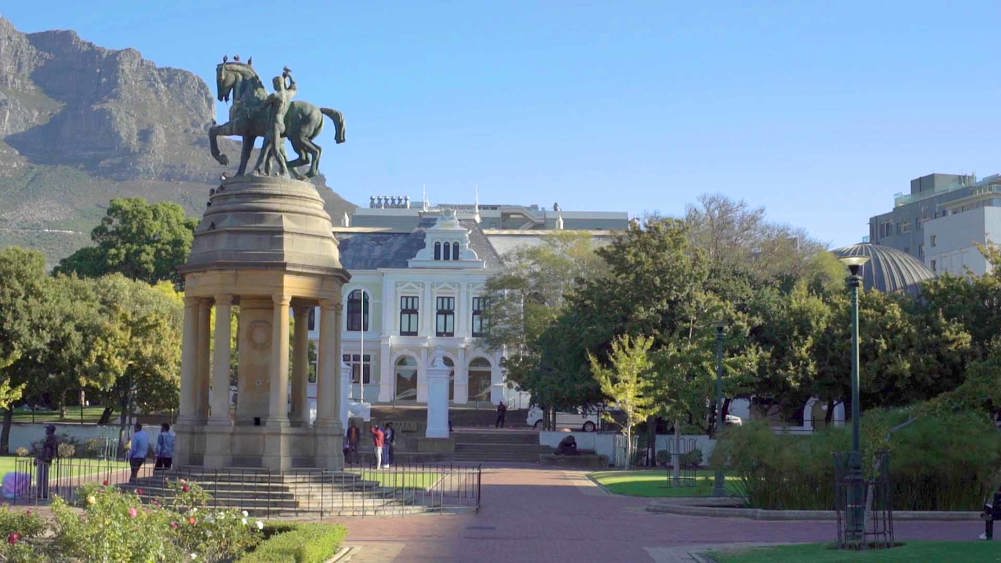
The Cape Town Labour Corps Memorial will honour more than 1 700 Black South Africans who served in the country’s military labour units across Africa during the First World War, and perished between 3 August 1914 and 14 August 1921 with no known grave.
These men were enlisted for non-combatant duties and made an essential contribution to the war effort in a range of auxiliary roles including stevedores, wagon drivers, railway builders and repairers – ultimately to supply and feed the front lines and keep armies in the field. Many perished on the African continent or lost their lives at sea in the South Atlantic or Indian oceans.
The new Commonwealth War Graves Commission (CWGC) site of memory, located within the Delville Wood Memorial Garden in the Company’s Garden in Cape Town, is part of a restorative programme for occasions when the then Imperial War Graves Commission, or the colonial administrations with which it worked, chose not to treat some ethnic groups in the same way it treated Europeans - a disparity in treatment that affected more than 100,000 people from the African and Indian continents.