09 March 2026
Commonwealth Forces Explained: Who Is Included and Why
Ever wondered who the Commonwealth armed forces of the First and Second World Wars were? Discover more about the people commemorated by Commonwealth War Graves here.

Image: A Second World War era recruitment poster highlighting the Commonwealth (IWM (Art.IWM PST 8457))
Commonwealth forces refer to those who served in the military, auxiliary, and medical services of the British Empire during the First and Second World Wars.
The 1.7 million men and women commemorated by Commonwealth War Graves came from all over the British Empire and even beyond it. Among those we commemorate, you’ll find Brits, Indians, Australians, New Zealanders, South Africans, East Africans, and many more nationalities.
Each of these people lost their lives as a result of their military service and so are commemorated by CWGC war cemeteries and memorials globally.
Commonwealth military service was not restricted to frontline units, squadrons or ships; labour and support units, drawn from across the Empire, were essential to victory, as were the men and women of the Merchant Navy, who risked life sailing the world’s oceans keeping our forces supplied.
For over a century, we have been commemorating the Commonwealth’s war dead in 23,000 locations in more than 150 countries and territories worldwide, each linked by their shared service in the Commonwealth’s armed forces.
At a Glance: What’s on This Page
This page explores who served in the Commonwealth Forces of the First and Second World Wars, what that search term means, and how they are commemorated by the Commonwealth War Graves Commission.
- What "Commonwealth forces" means in the First and Second World War and CWGC records
- Which countries and territories were included in Commonwealth forces
- How colonial forces and labour units were part of wartime service
- East Africa explained: who served, in what roles, and where they are commemorated
- How CWGC records define and verify Commonwealth forces
- How to search CWGC records
What “Commonwealth Forces” Means in CWGC Records
At the time of our founding by Royal Charter in 1917, the Commonwealth didn’t exist.
The Commonwealth was formally established in 1931 as more countries within the British Empire became self-governing Dominions. Following the Second World War and the decline of the Empire, the Commonwealth developed into the global association of 56 member states we know today.
To reflect this greater change, we transitioned away from our original name, The Imperial War Graves Commission, to the Commonwealth War Graves Commission in 1960.
Our records still maintain the original Imperial regimental and force names.
So, while you may see reference to Imperial Forces or unit and regimental names from the Imperial Era in our records, know that those commemorated by us would be considered Commonwealth forces.
Which Countries and Forces Were Included
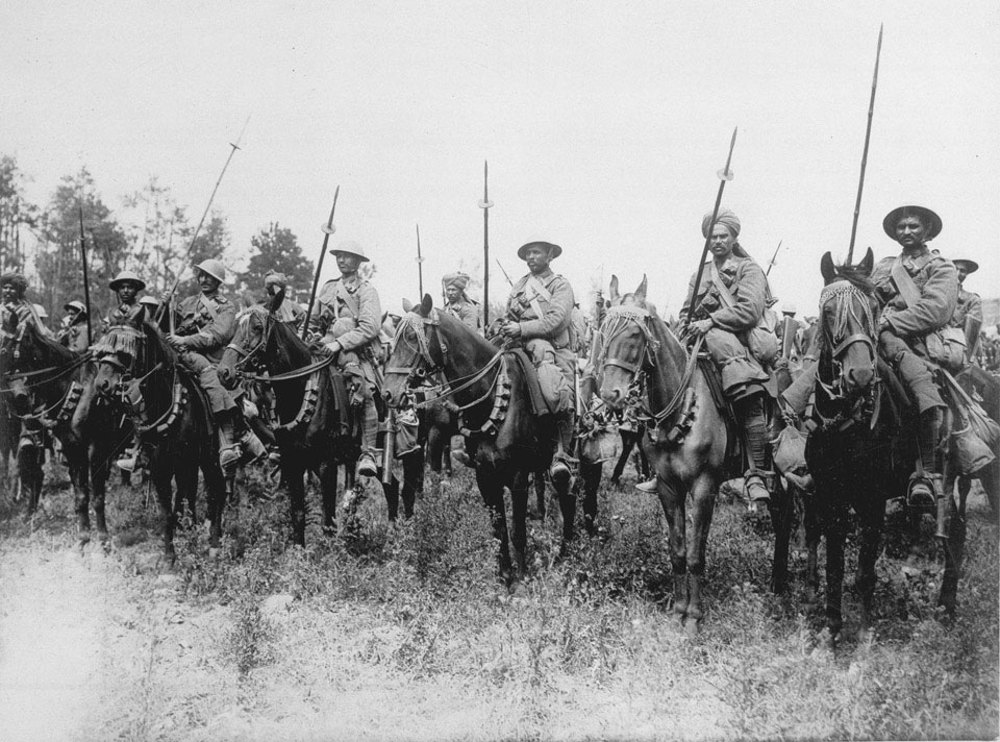
Image: Indian cavalrymen await the order to advance during the Battle of the Somme, 1916 (National Army Museum)
Commonwealth forces were numerous and diverse, featuring millions of servicemen and women from around the British Empire.
The largest and most obvious contributor to the Empire’s forces during the two World Wars was the United Kingdom itself. The British Army, Royal Navy, and Royal Air Force formed the bulk of the Empire’s military might.
However, they were far from alone. While nearly 850,000 men and women commemorated by Commonwealth War Graves came from the United Kingdom, roughly the same number of fallen servicemen and women in our care came from a host of other nations.
Together, in our cemeteries and on our war memorials worldwide, these people, united by shared service and loss, are commemorated equally, side-by-side, regardless of nationality, race, or rank.
Dominion forces and national formations
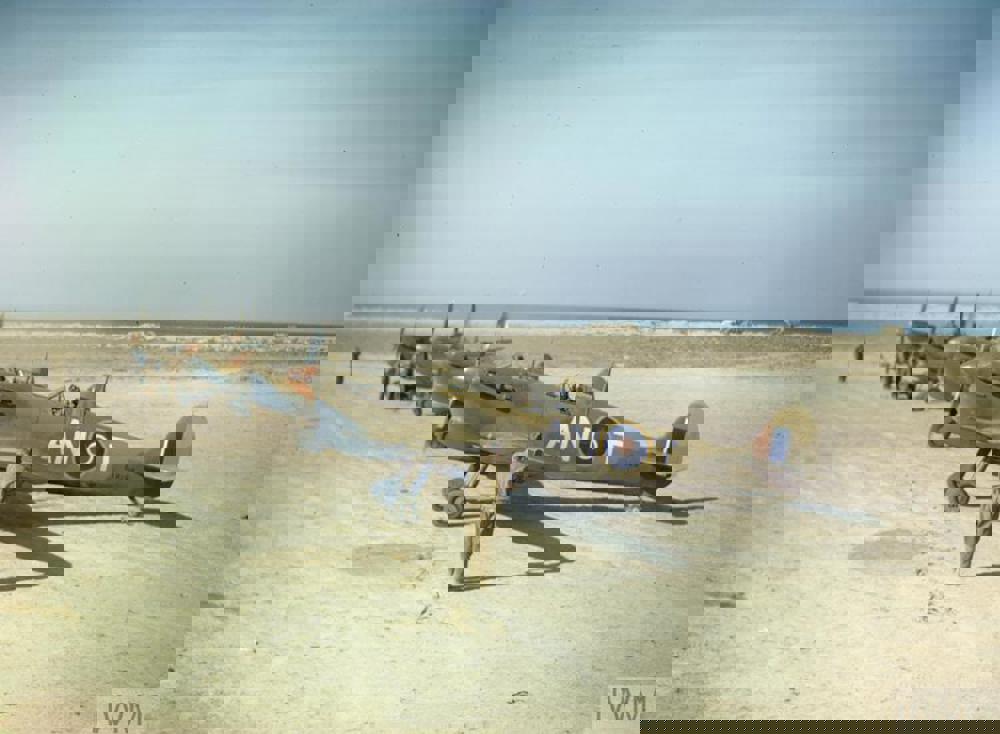
Image: Aircraft of the Royal Canadian Air Force line up in Tunisia, May 1943 (IWM (TR 861))
Dominion forces refer to the armed forces of the former Dominions of the British Empire, such as Australia, Canada, New Zealand and South Africa. You may see references to formations such as the Australian Imperial Force or Royal Canadian Air Force, for example, around our website or in our records.
Dominions were essentially self-governing, with their own parliaments and militaries. By the Statute of Westminster in 1931, these nations were sovereign and declared war independently of Great Britain.
Dominion forces in the wider Commonwealth Forces coordinated closely with the British and were often placed under the overall command of British officers and commanders, but were mostly led by their own citizens and officers. Australian General Sir John Monash and Canadian Sir Arthur Currie are examples of Dominion commanders of the First World War.
Colonial regiments and locally raised units
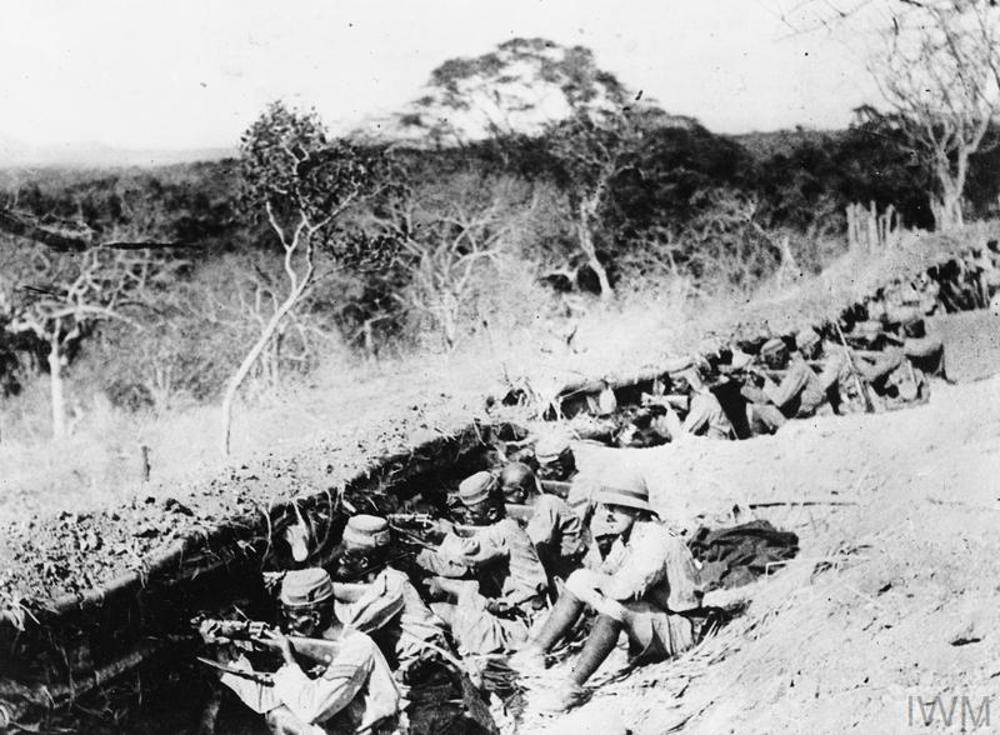
Images: Men of the King's African Rifles holding the line near the Tsavo River during the First World War (IWM (Q 69874))
Commonwealth forces of the World Wars will also include colonial and locally raised units and regiments. These refer to units and formations raised in British imperial colonies and placed directly under British command.
The largest of these is the Indian Army. Reaching 2.5 million members at its peak in the Second World War, the Indian Army was predominantly commanded by British commanders, such as Field Marshal William Slim, with Indian and British officers leading enlisted men.
Colonial units, alongside their dominion counterparts, represent the sheer variety of Commonwealth forces.
Examples of colonial units that served or were raised in the World Wars include:
- King’s African Rifles (KAR) - Raised in East Africa from territories like Kenya, Uganda, Nyasaland (present-day Malawi), Tanganyika (present-day Tanzania), the KAR saw extensive action in both World Wars, notably in the East African campaign in the First and Second World Wars and against Japan in Burma (present-day Myanmar)
- British West Indies Regiment (BWIR) - Formed in 1915, the BWIR saw over 15,600 volunteers from Caribbean colonies such as Jamaica, Trinidad, and Barbados serve as combatants and labourers in Palestine, Egypt, Mesopotamia, and France during the Great War
- Gurkha Regiments – Famed and feared, over 200,000 Nepalese Gurkhas served in the Commonwealth Forces of both World Wars, noted for their service in North Africa, the Burma Campaign, and Italy
Unit names are clearly stated in CWGC records, helping you find Colonial and Dominion personnel commemorated in the wider Commonwealth forces in our care.
Naval, air and auxiliary service
 Image: SOE Operative Noor Inayat Khan
Naval, air and auxiliary services are all commemorated by Commonwealth War Graves, provided these personnel lost their lives in the First or Second World War.
We also commemorated Commonwealth sailors of the Merchant Fleet. The Merchant Navy was an essential cog in both World Wars’ logistical machines. It kept supplies of food, equipment, and ammunition flowing over hostile seas, keeping civilians and militaries supplied and in the fight.
While the men and women who served aboard merchant vessels came from across the world, often from non-Commonwealth nations, those who served aboard merchant vessels and shipping fleets in service to the British Empire during the World Wars would be commemorated by Commonwealth War Graves.
The same applies to navy or air force casualties from outside the British Empire, but who served in the Royal or Dominion Navies.
A good example of this would be John Gillespie Magee Jr., a fighter pilot and author of the famous sonnet “High Flight”, who flew with the Royal Canadian Air Force despite coming from the neutral United States. Because John was a Royal Air Force pilot at the time of his death in December 1941, he is commemorated as a Commonwealth casualty, not a United States Air Force casualty.
Intelligence and espionage organisations also recruited non-British Empire citizens to aid the war effort.
We can see this with several operatives working in the Special Operations Executive (SOE) during the Second World War, such as Ensign Noor Inayat Khan.
Khan was born in Russia to an Indian father and an American mother, was raised in Paris, and served with the SOE as a radio operative before her death in September 1944.
The above is what and who we mean by “Commonwealth forces”. The definition also impacts our records and how those in our care are properly commemorated.

Want more stories like this delivered directly to your inbox? Sign up for our newsletter for regular updates on the work of Commonwealth War Graves, blogs, event news, and more.
Sign UpService Beyond Combat: Labour and Support Roles

Image: A Merchant Navy convoy sails through foggy Arctic waters, on its way to deliver important crago and supplies (IWM (A 15356))
Napoleon’s old adage that “an army marches on its stomach” is one of the most well-worn military concepts out there, but it is nonetheless true.
Armies, air forces and navies of all shapes and sizes require a constant supply of food, equipment, medicine and medical supplies, and ammunition to keep operational.
Why support roles were essential to wartime operations
Militaries, including armies, navies, and air forces, employ what’s known as a “tooth-to-tail ratio”, referring to the number of troops required to support frontline troops. The “tooth” are the combat soldiers at the front, while the “tail” is logistical, transport, engineering, and medical support staff and units.
According to researchers on the Great War Forum, the British Army employed a toe-to-tail ratio of 1:2.6 during the First World War. That means for each frontline soldier, there were 2.6 support staff behind them.
Without people digging trenches, transporting ammunition, setting up medical hubs and facilities, sailing on merchant vessels on the world’s oceans, driving trucks, cleaning uniforms, and more working in often overlooked roles, the combat troops simply could not function.
The Royal Engineers are the most visible support units, but organisations like the Canadian Forestry Corps or Indian Labour Corps provided important support functions for combat and frontline units.
Carrier Corps and Labour Units explained
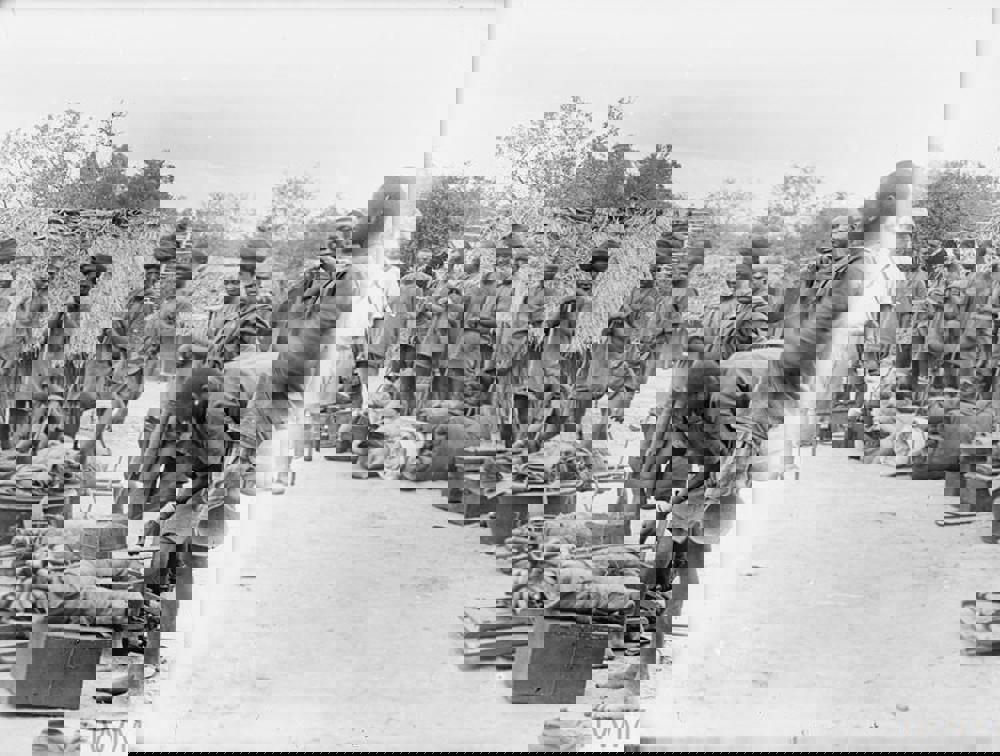
Image: Members of the Carrier Corps, locally-raised labour units, provided essential transport and logistics services in theatres such as East Africa (IWM Q 15647)
Commonwealth forces drew on locally raised labour and carrier units to boost its support manpower.
Labour units were organised as part of regular army units, such as the Pioneer Battalions or Royal Engineers Labour Battalions and Army Service Corps labour companies. Many Commonwealth and Imperial units were organised too, such as:
- South African Native Labour Corps
- Chinese Labour Corps
- West Indian labour units organised from the British West Indies Regiment
- Egyptian Labour Corps
The Carrier Corps was formed to meet the enormous logistical challenges of the First World War East Africa Campaign. Difficult terrain, a lack of mechanised transport infrastructure, such as railways, and the presence of the tsetse fly limiting animal-based logistics, meant human transport was often the only viable option.
Over a million Africans, recruited from territories in modern-day Kenya, Sierra Leone, Nigeria, and South Africa, served in the Carrier Corps.
Facing harsh conditions, often unarmed, and susceptible to illness, these men worked tirelessly to support the combat troops but paid a high cost. It’s estimated that some 100,000 or so Africans died while serving in the Carrier Corps.
Equality in commemoration regardless of role
Since our founding in 1917, Commonwealth War Graves has always pursued a policy of equality in commemoration.
Rank, background, race, or religion does not alter how a serviceman or woman is commemorated. Our standards are applied equally to 1.7 million servicemen and women commemorated at over 23,000 locations globally.
From the highest-ranking generals and officials to porters and carriers, all those who fell in service to the British Empire's armed forces in the World Wars are worthy of equal commemoration.
A good example illustrating this is Southampton’s Hollybrook Memorial. Here, you will find the name of Lord Herbert Kitchener, Secretary of State for War and possibly the highest-ranking British casualty of the First World War, is commemorated alongside members of the South African Native Labour Corps who were lost with the sinking of the SS Mendi in February 1917.
While these men were separated by class, rank and geography, they were united by their military service and perpetual commemoration.
This applies to those who served in labour, carrier, support, and logistics roles worldwide. However, due to historical attitudes and prejudice, many labourers and carriers sadly went without proper commemoration.
Since 2020, the CWGC Non-Commemoration project has been working to redress historical imbalances in commemoration. By working with governments, military authorities, and local archives, education bodies, and more organisations, the Non-Commemoration Team has been able to:
- Identify missing names
- Understand casualty numbers
- Identify likely burial locations
- Reinstate abandoned graves
- Construct new memorials to the fallen
East Africa: Service, Labour and Commemoration
A high number of Commonwealth forces fought across East Africa during the First World War. One of the most overlooked theatres of the conflict, East Africa drew in hundreds of thousands of British, Indian, Australian, New Zealand and South African troops but the campaign is not as well known as the Western Front or Gallipoli for example,
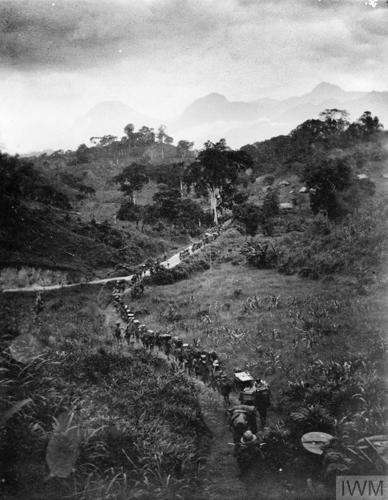 Image: A transport column moves through German East Africa (present-day Tanzania)
Africans served in their millions in East Africa too, with British forces recruiting from Ghana, Nigeria, Sierra Leone, South Africa, Kenya, and Gambia.
The East Africa Theatre and its Scale
East Africa was the largest, busiest African theatre of the First World War. It is believed over a million men served, including many local labourers and servicemen.
Eschewing the major set-piece battles of the Western and Eastern Fronts, the war in East Africa was one of movement, attempted sweeping envelopments, long marches into the African interior, and guerrilla ambush warfare.
Although they were unable to decisively defeat the German military in East Africa, British and Commonwealth forces claimed victory in late November 1918, two weeks after the Armistice was signed, following communication delays.
Such activity came at a terrible cost. While frontline losses are estimated at between 3 to 10,000, the logistics and support troops suffered terribly. As many as 100,000 African labourers died in the East African Campaign.
The King’s African Rifles and other locally raised forces
We’ve touched on the Carrier Corps, but many of the Commonwealth and Colonial units serving in East Africa were raised locally, including the King’s African Rifles.
The King's African Rifles was formed in 1902 by uniting a collection of existing colonial regiments from across British East Africa, focused initially on Nyasaland (present-day Malawi), Kenya and Uganda.
Though principally raised to perform internal policing and security operations, these units were expanded on the outbreak of war in 1914 and swelled considerably in the years that followed. By the end of the war, the KAR numbered some 30,000 Men.
It is believed some 5,000 or so KAR members died in the East Africa Campaign.
How CWGC commemorates East Africans today
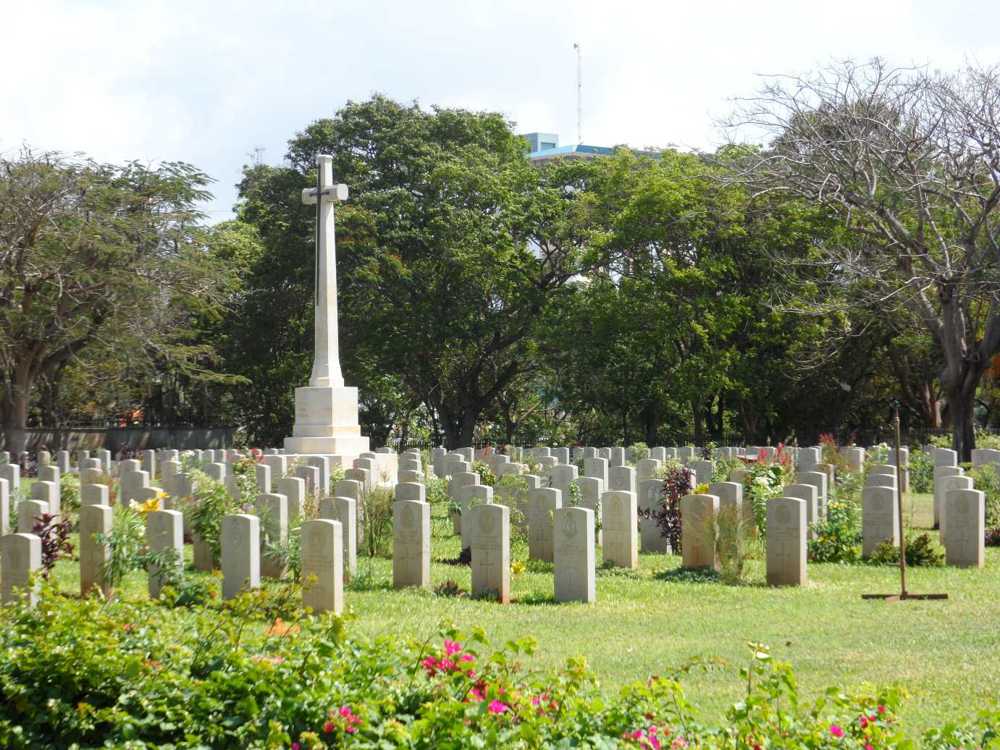
Image: Dar Es Salaam War Cemetery where casualties of the East Africa Campaign are commemorated
Extensive research by the Non-Commemoration Programme Team has led to the discovery of hundreds of new names of previously non-commemorated East African Servicemen.
The discovery and ongoing digitisation of Kenyan historical records relating to the KAR have given us new insights into these men, their experiences, and, crucially, their names, ensuring their proper commemoration.
“These records represent one of the most important archival finds of the CWGC’s Non-Commemoration Programme, not just because of the names of the dead they contain but because of what the files represent," said Dr George Hay, CWGC Official Historian.
"By working with the Kenya Defence Forces to digitise and safeguard these records, the project has not only preserved a significant piece of colonial history but is also helping the CWGC to honour the contributions of African soldiers who played such a crucial role in shaping the history of East Africa.”
Elsewhere, at places like Dar Es Salaam War Cemetery, the Zomba 1914-1918 (King’s African Rifles Tower) Memorial, and the Mbala Memorial, provide permanent places of commemoration for fallen East Africans of the World Wars.
The Non-Commemoration Programme has officially ended, but the team's work will continue as part of our day-to-day commemoration work. Records will be updated and appropriate memorials and resting places constructed for those East African servicemen and women not currently commemorated by Commonwealth War Graves.
How CWGC Determines Who Is Commemorated
Under the terms of our Royal Charter, we are responsible for the commemoration of the following personnel:
Personnel who died whilst serving in a Commonwealth military force or specified auxiliary organisation between:
- 4 August 1914 and 31 August 1921 and
- 3 September 1939 and 31 December 1947
Personnel who died after they were discharged from a Commonwealth military force, if their death was caused by their wartime service between:
- 4 August 1914 and 31 August 1921 and
- September 1939 and 31 December 1947
Commonwealth civilians who died as a consequence of enemy action, Allied weapons of war or whilst in an enemy prison camp between:
- 3 September 1939 and 31 December 1947
Commonwealth forces and personnel who died in wars before or after these dates are not eligible for commemoration under the Commonwealth War Graves criteria.
For more information on CWGC eligibility and our records, visit the Commemoration page.
How to Verify Inclusion Using CWGC Records
Our records are available to the public and can help you better understand the Commonwealth forces we commemorate.
How to search CWGC records - Search by name, unit, or country
The Find War Dead tool contains many fields and options for checking our database and is one of the most popular ways to search CWGC records.
Don't forget to use our Research Guides if you are having trouble finding the information you are seeking in our records.
Search by name, unit, or country
The most obvious way to start your record search is with a casualty’s name.
You can search via surname, first name, and initials on the CWGC website. Our records contain combinations of full names, name and initial, and initials only. You may need to try several of these to find your Commonwealth soldier.
To further refine your search, you can also include the person’s service number and/or regiment.
Served with (country) displays which nation’s armed forces the casualty served with.
Please note this does not mean the casualty’s nationality. See the example of John Gillespie Magee Jr. John was a US citizen, but, as he was serving with the RCAF at the time of his death, his country of service in CWGC records is Canada.
Our records also let you select which war the casualty served in:
- First World War
- Second World War
Further record search refinement
Additional search fields let you refine your Commonwealth casualty search further, including:
- Country commemorated in
- Cemetery or Memorial
- Unit (battalion, ship, or squadron, etc.)
- Age at Death
- Date of Death
- Honours & Rewards
- Additional information (parents' names, place of birth, personal inscription, etc.)
If you cannot find a record
Many people died during the war years in circumstances which mean they don’t meet the relevant criteria. Others were missed from a key record due to an administrative error.
CWGC records don’t always include details about where a service person was from, or exactly where they died. Our records are centred around where a person is buried or commemorated.
Providing as much information as possible in your search will give you more refined, clearer results. The Additional Fields section can help you here, giving you more specific search criteria to work with.
Other search tips include:
- Check all your spellings
- Be sure they are a First or Second World War casualty
- Are they eligible for commemoration as per CWGC eligibility criteria
If you have reason to believe you know of a casualty that fits our criteria but isn’t included in Commonwealth War Graves records, and believe you have a case of non-commemoration, please contact the Commemorations Team.
Search our records


Commemoration Today Frequently Asked Questions
Commemoration matters because it keeps individual stories alive, helping communities understand the human cost of conflict and the value of peace. Our work preserves the war graves and memorials of 1.7 million men and women of the Commonwealth, regardless of rank, nationality, or background, keeping them in our collective memories.
Commemoration means to remember, honour, or show respect to a person, a group, or an event. At Commonwealth War Graves, we have been charged with the commemoration of the Commonwealth’s Fallen of the World Wars in perpetuity via the establishment and care of the cemeteries and memorials commemorating 1.7m war dead of the World Wars.
For the Commonwealth War Graves Commission, commemoration refers to the official, permanent, and physical marking of the war dead (headstones, memorials), while remembrance is the ongoing, often personal, act of honouring, reflecting on, and remembering their sacrifice through acts of respect.
As the number of people with a direct connection to those we commemorate grows ever smaller, we must continue to commemorate and pass on the stories of those who fought and died. New generations need to discover these stories of family members and people from their own communities, and to be inspired by the cemeteries and memorials where they are commemorated.
Future generations get a deeper understanding and connection to the shared sacrifice and history of the Commonwealth via commemoration. CWGC connects with younger generations through our storytelling initiatives such as For Evermore, our online stories archive, War Graves Week events, and far-reaching education and outreach work. In doing so, we keep their stories alive so they are never forgotten.
Since our founding by Royal Charter in 1917, we have been charged with the commemoration of 1.7 million men and women who lost their lives in military service to the British Empire in the World Wars. We maintain war cemeteries and memorials in 23,000 locations across more than 150 countries and territories worldwide.
There are many ways to engage in commemoration with Commonwealth War Graves, ensuring you help keep alive the stories and memories of those we commemorate:
- Search our records
- Visit a site
- Browse and share casualty stories on For Evermore
- See our education resources
- Come to an event
Author acknowledgements
Alec Malloy is a CWGC Digital Content Executive. He has worked at the Commonwealth War Graves Commission since February 2022. During that time, he has written extensively about the World Wars, including major battles, casualty stories, and the Commission's work commemorating 1.7 million war dead worldwide.