

25 February 2026
Exploring Cemeteries & Memorials across the Commonwealth
Commonwealth War Graves cemeteries and memorials connect people and places across continents, marking individual lives with equality and care.
At places such as Tyne Cot, you can find servicemen of the Commonwealth lying side by side in equal commemoration, such as Australian Clarence Smith Jeffries VC lying a stone’s throw from Glasgow Native James Ferris.
Or the Hollybrook Memorial in Southampton, where Field Marshal Kitchener, Secretary of State for War, is commemorated alongside members of the South African Native Labour Corps.
Commonwealth War Graves sites tell the story of the Commonwealth’s contribution to the World Wars, something we highlight on days such as Commonwealth Day each year. But our work goes far beyond that; it is a year-round, eternal commitment.
At a glance - what this page covers
This page covers Commonwealth War Graves war cemeteries around the world commemorating 1.7 million men and women of the Commonwealth who died in the World Wars:
- How Commonwealth War Graves sites help connect us in a shared history and heritage
- Remarkable CWGC war cemeteries and memorials to visit
- Lesser known CWGC sites to visit
- How these places are landscapes of memory & meaning
- Why protecting and maintaining these sites matters
A Shared Story of Global Commemoration
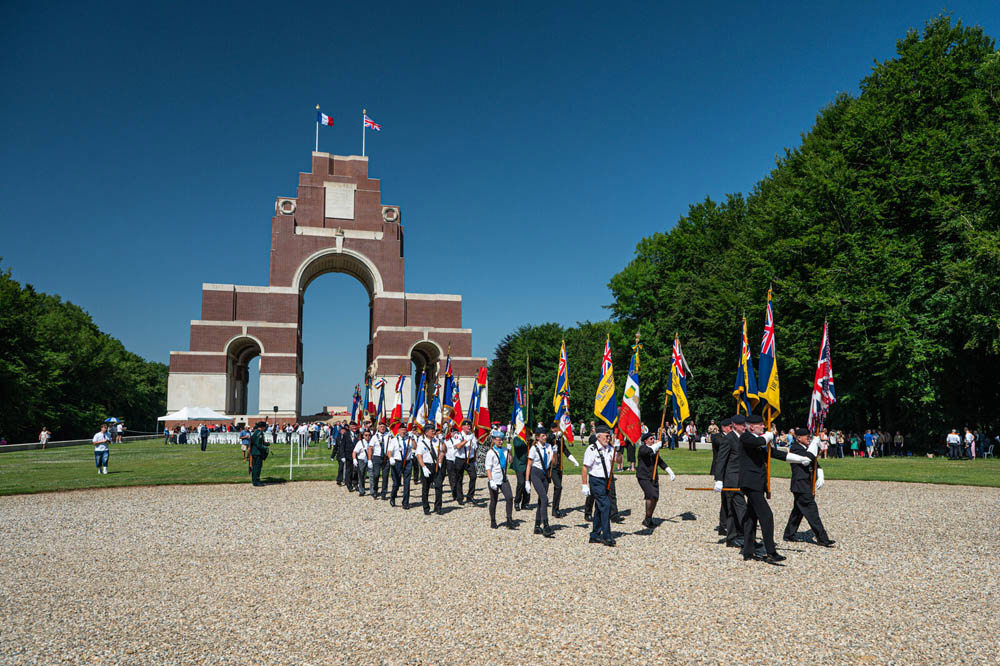
How Commonwealth sites connect cultures, countries, and communities
Commonwealth War Graves sites are the cemeteries, memorials, and individual war graves of 1.7 million men and women of the Commonwealth in over 150 countries and territories worldwide.
Funded by six Commonwealth governments (UK, Australia, Canada, India, New Zealand, and South Africa), our sites tell of the shared sacrifice endured by all those who fought in the armed forces of the British Empire in the World Wars.
Why commemoration looks different across the world – but means the same thing
Because of geography, weather, and other considerations, some Commonwealth War Graves cemeteries and memorials look a little different to others.
For instance, at the Kanchanaburi War Cemetery in Thailand, which commemorates Prisoners of War who worked on the Burma-Siam Railway, you will notice bronze plaques rather than our iconic stone headstones. This is due to the soil conditions and climate – but the purpose remains the same: commemoration of the Commonwealth’s war dead.
From Europe to Asia, Africa to the Pacific – one shared responsibility
Commonwealth War Graves memorials and cemeteries reflect the global nature of the World Wars.
Since our founding in the Great War, we have believed in the principles of equality in commemoration. That’s why, from Europe to Asia, Africa, and beyond, everyone in our care is commemorated equally, regardless of rank, race or religion.
Historic imbalances in commemoration have sadly existed. As part of our commitment to the Commonwealth and our founding mission, we are working hard to correct them. The incredible work of the Non-Commemorations Programme teams has revealed thousands of names, leading to the construction of our newest war memorials in decades.
Remarkable Commonwealth War Graves You Can Visit
Memorials that shape national memory
Thiepval Memorial to the Missing of the Somme
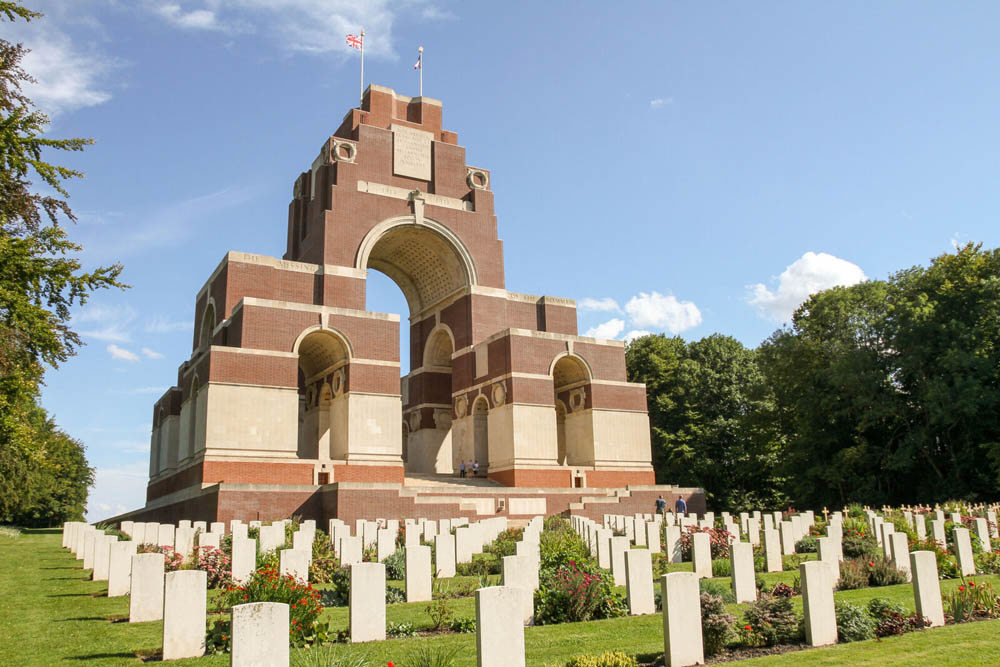
The Battle of the Somme has left an indelible mark on the history and psyche of the United Kingdom.
Over 150,000 British servicemen died in the 141-day campaign for minimal territorial gains. The First Day of the Somme, where close to 20,000 British soldiers lost their lives, remains the blackest day in British Military history over a century later.
The Thiepval Memorial to the Missing of the Somme, our largest war memorial in the world, commemorates over 72,000 British and South African soldiers who died in the Battle of the Somme, but who have no known war grave.
As visitors approach the vast red brick memorial, nestled amongst mature trees and lush greenery of a location once rent asunder by warfare, they’ll notice the sheer scale of Thiepval. It represents the scale of loss of the Somme, with nearly half the battle’s British war dead named on its panels.
Ypres (Menin Gate) Memorial
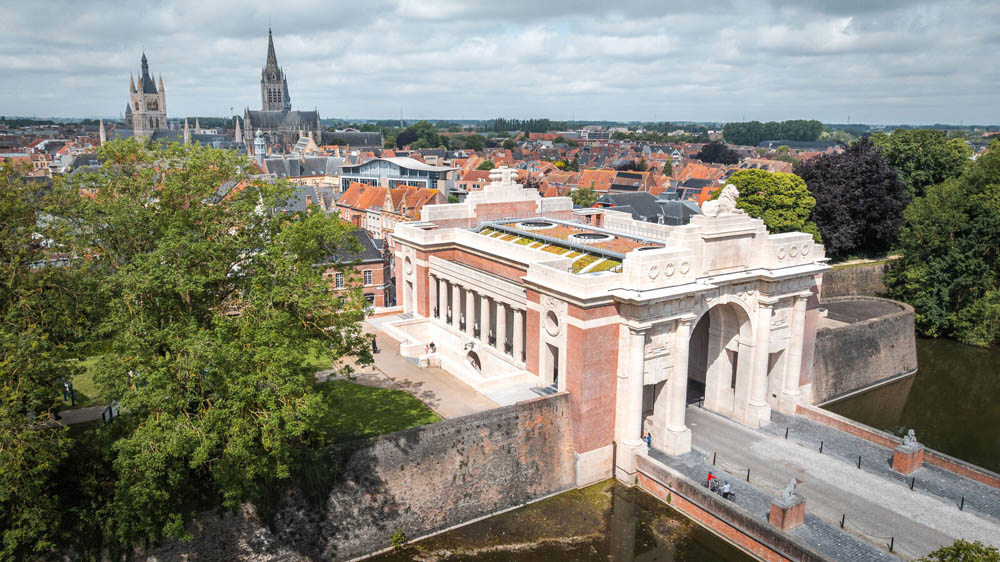
The First World War was a truly global conflict, yet servicemen from across the Commonwealth served on the Western Front. Perhaps one of the best memorials to illustrate this is the Ypres (Menin Gate) Memorial.
As you approach, note the mournful lions adorning the memorial’s masonry; notice the sheer number of names carved into the memorial’s panels; see the intricate stonework and attention to detail.
Over 50,000 Commonwealth servicemen from the UK, Australia, Canada, India, and South Africa are commemorated here, representing the hundreds of thousands of soldiers who marched down the Menin Road to the World War One battlefields of the Ypres Salient during the Great War.
(New Zealand’s missing war dead of the Western Front are commemorated elsewhere across the Ypres Salient and Somme battlefields.)
Singapore Memorial
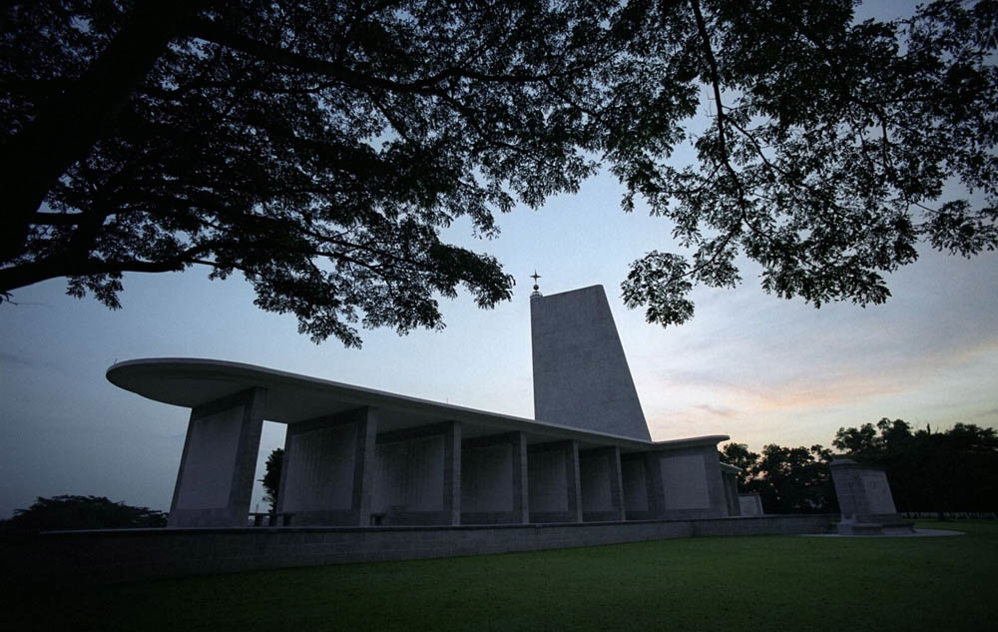
The sweeping Singapore Memorial bears a resemblance to the rear end of an aircraft or a submarine conning tower, perhaps representing the “steel, not flesh” approach taken by the Allies in the Second World War.
Less devastating in terms of lives lost, the Second World War nonetheless plunged the Commonwealth nations back into conflict. For the British Empire, Asia and the Pacific became a battleground once more, only on a much larger scale compared with the region’s conflicts in the Great War.
Today, the Singapore Memorial commemorates a further 23,000 or so Second World War servicemen.
Representing the global struggle and the diverse nature of the Commonwealth’s armed forces, you’ll find British, Australian, Canadian, Indian, and South African servicemen from a variety of service branches commemorated here.
Lesser-known sites with powerful human stories
Neuve-Chappelle Indian Memorial
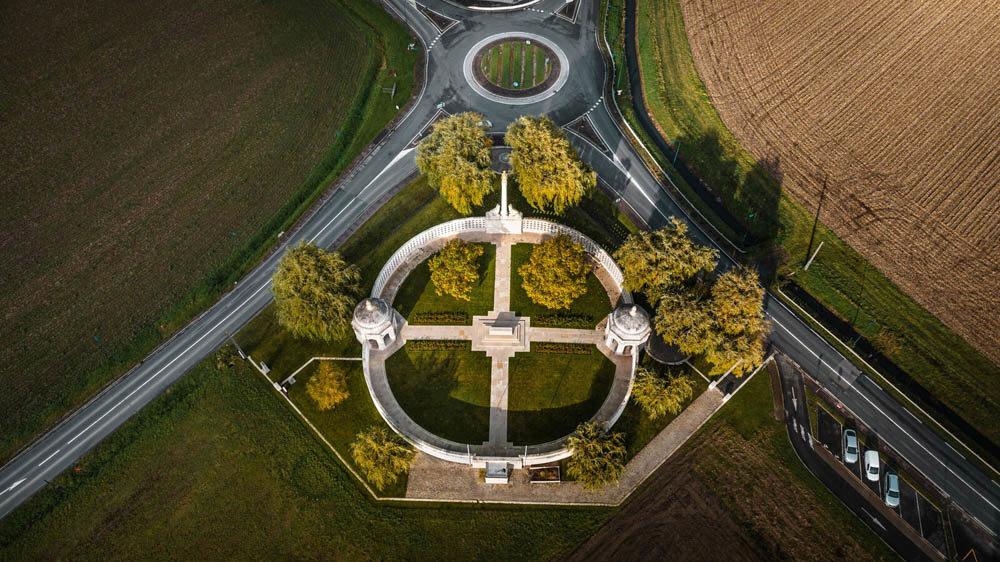
The Indian Memorial at Neuve Chapelle commemorates over 4,700 Indian soldiers and labourers who lost their lives on the Western Front during the First World War and have no known graves. The location of the memorial was specially chosen as it was at Neuve Chapelle in March 1915 that the Indian Corps fought its first major action as a single unit.
Over the course of the war, India sent over 150,000 frontline soldiers and support troops to the Western Front. Of the 8,000 or so who lost their lives, nearly 5,000 have no known war grave and so are commemorated here.
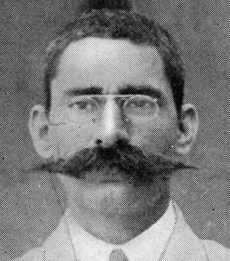 Among their number is Major Pandit Piaraylal Atal. Born in 1872, Pandit grew up in Jaipur and attended medical school in Lahore. After graduating, he travelled to England and continued to study medicine.
Pandit joined the British Army in 1899, and before the outbreak of the First World War, he served at home in India and in China, reaching the rank of Major. During the First World War, he was a medical officer with the 129th Duke of Connaught's Own Baluchis.
He was in the thick of the action several times and was mentioned in dispatches for attending the wounded while under fire. This remarkable 43-year-old veteran soldier died on 23 November 1914, when the medical post he was working in was hit by enemy shell fire.
South African National Memorial, Delville Wood
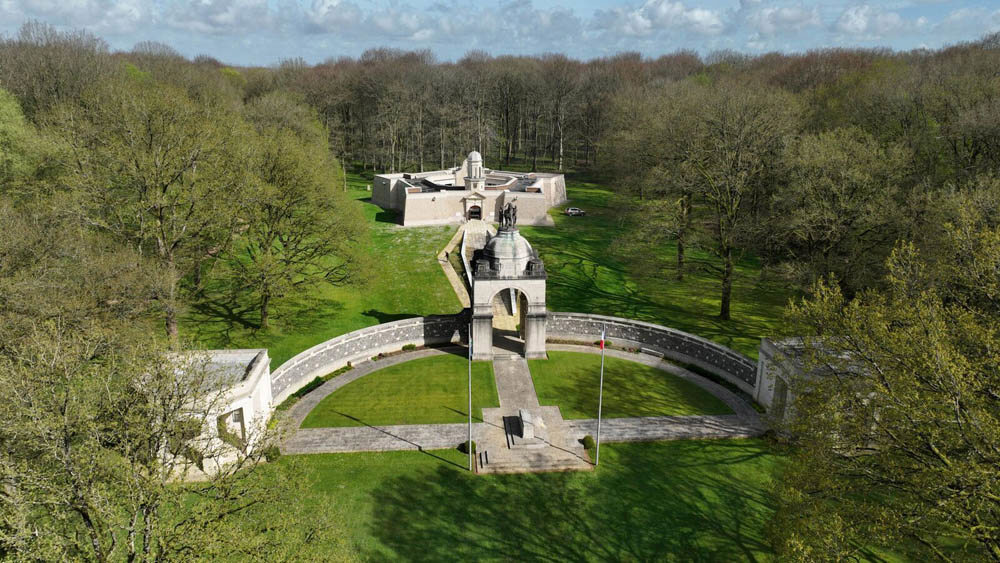
The Somme is forever linked to the British wartime experience, but it also holds special significance for South Africa.
At Delville Wood in July 1916, 3,100 officers and men of the South African Brigade entered the thick woodland to capture the strategically important ground.
After six days of intense fighting, 750 bloodied and battered South African servicemen were relieved, their comrades left amid the battered copse.
The South African National Memorial at Delville Wood was unveiled in 1926, commemorating the South Africans who fought and fell in the Great War. The memorial stands at the site of their first baptism of fire.
The South African Delville Wood Commemorative Museum stands close to the memorial, providing deeper insights into South Africa’s experiences on the Somme and wider Western Front.
Dar es Salaam War Cemetery
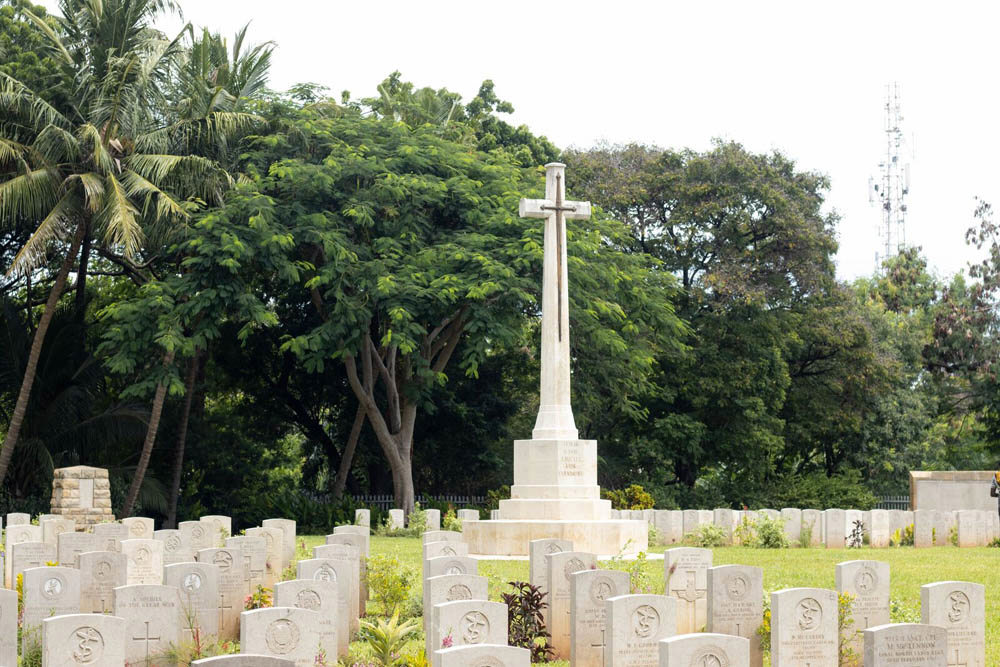
The War in East Africa is one of the most overlooked First World War campaigns. Hundreds of thousands of British Indians, South Africans, Rhodesians, and even Australians and New Zealanders, served in the theatre.
What’s more, hundreds of thousands of local African soldiers were also recruited, especially from 1916 onwards, in East Africa by British authorities. Regiments such as the King’s African Rifles, raised from British East Africa (today Kenya), Nyasaland (Malawi), Uganda, and British Somaliland (part of present-day Somaliland), fought and fell in the War in Africa.
They were supported by carriers and labourers drawn locally and from British African colonies, such as the Cape Town Labour Corps.
Dar Es Salaam was the capital of German East Africa and saw Britain’s first recorded action of the war on 8 August 1914 when HMS Astraea shelled a radio station and disabled two German merchant ships.
The port city was captured in September 1916 when the 129th Baluchis entered Dar Es Salaam after heavy Royal Navy shelling. The city became the East African Campaign’s chief sea hub for moving supplies and the sick and wounded.
Dar Es Salaam War Cemetery was established in 1968, half a century after the end of the First World War in East Africa. Isolated and scattered graves and those from sites that could no longer be maintained were brought into the existing cemetery. Now, over 1,750 Commonwealth casualties lie here.
Among those is Lieutenant Alexander Gordon Sale. Alexander was born in Barrow-on-Trent, Derbyshire, in November 1894. He travelled to British East Africa in February 1914 and was employed by Pauling & Co., Contractors for the Railway to the Magadi Soda Lake.
Alexander enlisted as a Trooper in the Pioneer Corps in British East Africa in August 1914 and was commissioned Second Lieutenant in the 3rd (Reserve) Battalion, King’s African Rifles in January 1915.
Sale advanced to Lieutenant in March 1915 and was killed in action during his first action near Lake Victoria, German East Africa, 9 March 1915.
A letter from his commanding officer, published in the Reptonian, his old school newspaper, said, "Sale had been only a very short time with the battalion and very soon endeared himself to his brother officers and men. He was very keen and always ready for any work; all of us were very sorry to lose him.’
Kranji War Cemetery & The Singapore Memorial
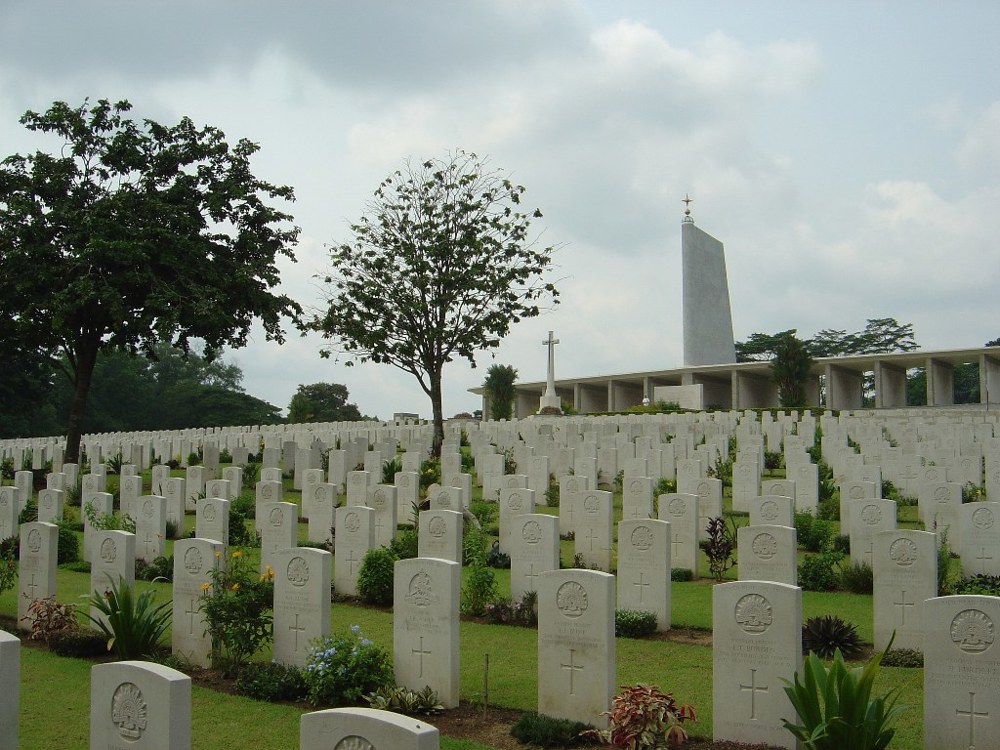
Kranji War Cemetery and The Singapore Memorial tell of the international effort that was the Second World War’s Far East Campaign.
Much like East Africa in the Great War, this theatre took in a wide range of Commonwealth troops, from the UK to India and Nepal, to Australia and New Zealand, to regiments and squadrons from South, West, and East Africa.
Singapore fell in February 1942, and the Japanese established a prisoner of war camp at Kranji; a hospital was organised nearby at Woodlands.
Once Singapore was reoccupied, the small cemetery established at the camp was expanded. It was enlarged further post-war, taking in graves from across Singapore. To commemorate those with no known grave, the Singapore Memorial, with its sweeping form, was built. Together, these sites commemorate by name nearly 30,000 Commonwealth men and women.
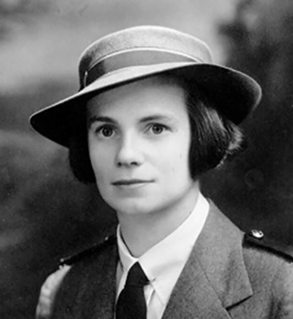 Elaine Balfour-Ogilvy is one of the many tens of thousands of names you can find on the Singapore Memorial.
Elaine was one of 21 Australian nurses murdered by Japanese soldiers on Radj Beach, Bangka Island, Indonesia, in February 1942. She and hundreds of British and Australian soldiers, nursing staff, and civilians were aboard the SS Vyner Brooke when it was bombed by Japanese aircraft after fleeing the fall of Singapore.
One of around 100 survivors of the Vyner Brooke’s sinking, Elaine made it to the beach alongside 22 fellow nurses and 80 or so wounded British and Australian servicemen. They were discovered by Japanese soldiers and massacred on the beach.
Elaine and her nursing sisters' bodies were never recovered, and so they are commemorated far from home on the Singapore Memorial.
Sai Wan War Cemetery
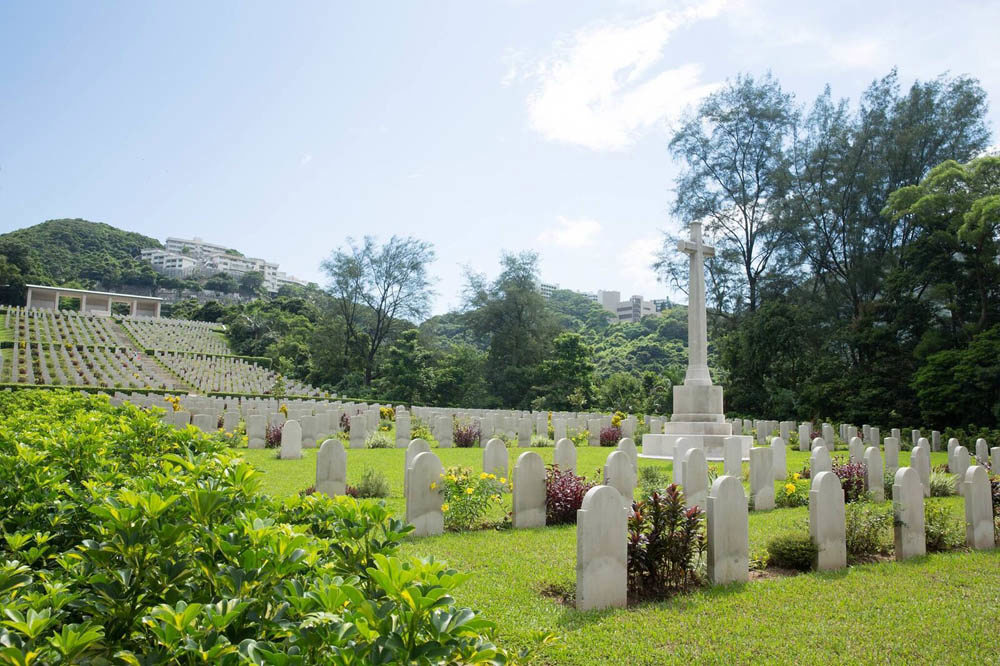
Sai Wan War Cemetery, standing overlooking the towering skyscrapers of Hong Kong, and the memorial within, also reinforce the global nature of our work and who we commemorate.
From the upper entrance, visitors enjoy a sweeping, panoramic view that reveals the entire site at a glance, a serene vantage point in which to pause, reflect and remember.
Again, you’ll find a variety of nationalities among those commemorated at Sai Wai, from Indian Army personnel to Canadian airmen, representing the international effort undertaken to defeat the Imperial Japanese.
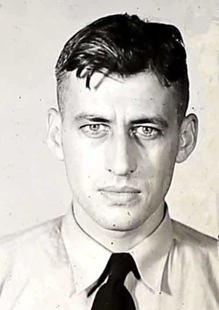 Flying Officer William Beresford Arnold of Kingston, Ontario, Canada, is among those buried at Sai Wan War Cemetery.
He enlisted into the Royal Canadian Air Force on 13 May 1942 at Winnipeg, Manitoba. After basic training, he was streamed as a navigator, initially promoted to sergeant, then commissioned as a Flying Officer on 25 December 1943.
On 1 October 1944, he was posted to 357 (Special Duties) squadron flying DC-3 Dakotas from Jassore, India.
He was the navigator on Dakota (serial KK180) on detachment in China when it crashed in bad weather ferrying supplies between Changting and Chihkiang on 20 May 1945. The aircraft ran low on fuel and made an emergency landing in a paddy field near Yuping, hitting a bank, killing William and his pilot. William was 32 years old.
Heliopolis (Port Tewfik) Memorial
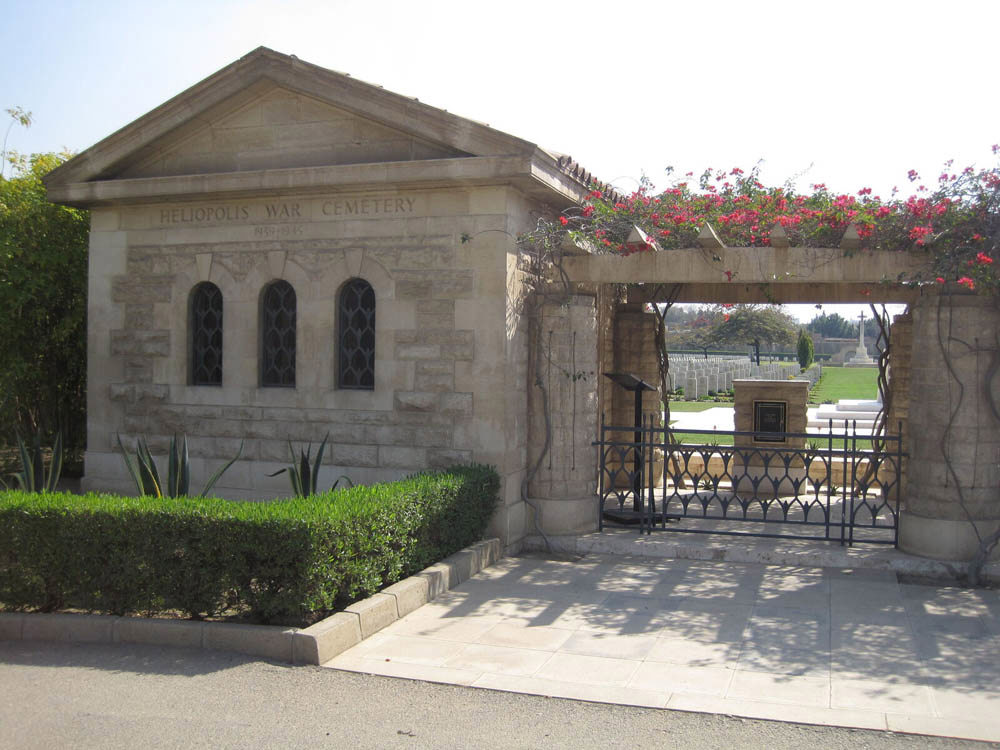
Heliopolis (Port Tewfik) Memorial has an interesting story. Originally unveiled in 1926, it stood at the mouth of the great imperial artery that was the Suez Canal, calling on the thousands who passed by to look up and recall the memory of more than 3,000 Indians who gave their lives in Egypt and Palestine during the First World War and have no known war grave.
In the Arab-Israeli War of the late 1960s, the memorial was completely destroyed, prompting construction of a new site. When originally built, the memorial did not commemorate any soldiers by name, and so we took the opportunity to rectify this historical inequality.
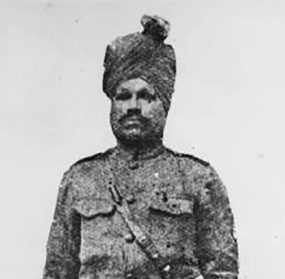 Bronze panels, bearing the names of more than 3,700 Indian servicemen, were installed in the entrance pavilion of Heliopolis War Cemetery, where they remain in proud commemoration of those who fought and fell in the Great War.
Victoria Cross recipient Risaldar Badlu Singh is one of these names.
“For most conspicuous bravery and self-sacrifice on the morning of the 23rd September 1918, when his squadron charged a strong enemy position on the west bank of the River Jordan, between the river and Kh.es Samariveh Village.
“On nearing the position, Ressaidar Badlu Singh realised that the squadron was suffering casualties from a small hill on the left front occupied by machine guns and 200 enemy infantry. Without the slightest hesitation, he collected six other ranks and, with the greatest dash and an entire disregard of danger, charged and captured the position, thereby saving very heavy casualties to the squadron.
“He was mortally wounded on the very top of the hill when capturing one of the machine guns single-handed, but all the machine guns and infantry had surrendered to him before he died. His valour and initiative were of the highest order.”
The work to redress the unequal commemoration of these servicemen presages the work of the Non-Commemoration Programme, uncovering thousands of names of those previously overlooked.
More than monuments – living landscapes of commemoration
Our war cemeteries and memorials around the world are more than just static points of commemoration; they are living landscapes of commemoration, demonstrating our eternal commitment to such Commonwealth heritage sites.
How CWGC sites support biodiversity and local ecosystems
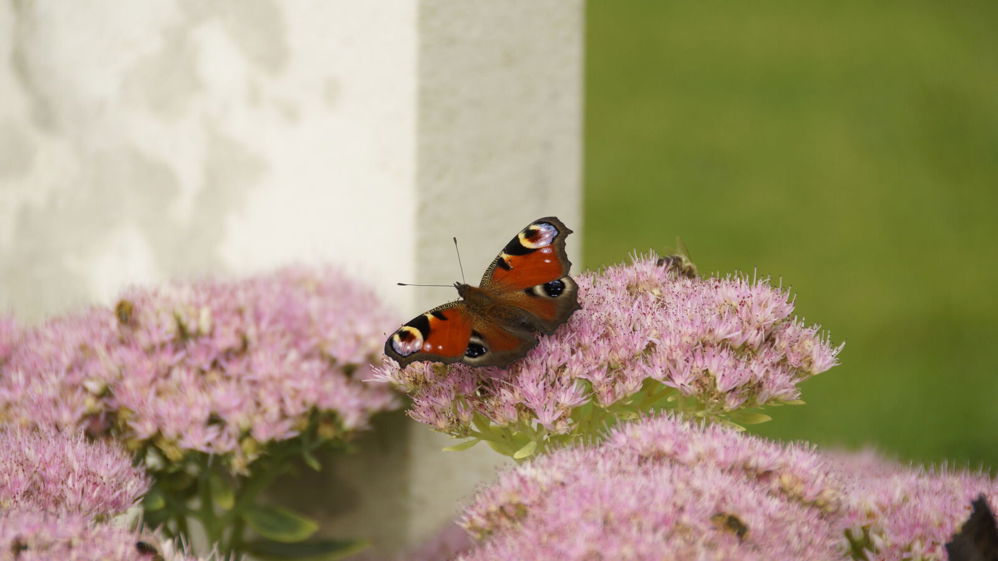
We have a duty of care to protect Commonwealth memorial sites perpetually. That means integrating sustainable working practices and solutions into our day-to-day work and planning for the future.
Biodiversity plays a big role in that. We are keen to improve the variety of plant and animal/insect life within our cemeteries. Blooming, bustling biodiverse supports our sites by enhancing climate resilience, encouraging pollinators to thrive, and preserving landscapes that inspire and delight.
According to the CWGC 2025 Sustainability Report, we made over 974 biodiversity improvements across our global estate that year, including the planting of wildflowers, the installation of insect hotels and bird nesting boxes, and other measures. Since 2019, we have also reduced biocide and pesticide use by over 98%.
Water consumption has been cut by 21% through smart irrigation systems and water-efficiency targets, mixing the latest technologies with over 100 years of horticultural expertise. We’ve also completed more than 60 water-efficiency audits over the last three years to raise awareness and promote action to conserve water.
With measures like these, we are protecting historic war graves and memorials against shifting global climates and weather patterns as part of our commitment to commemorating the Commonwealth’s war dead in perpetuity.
Designing places that honour the past while adapting for the future
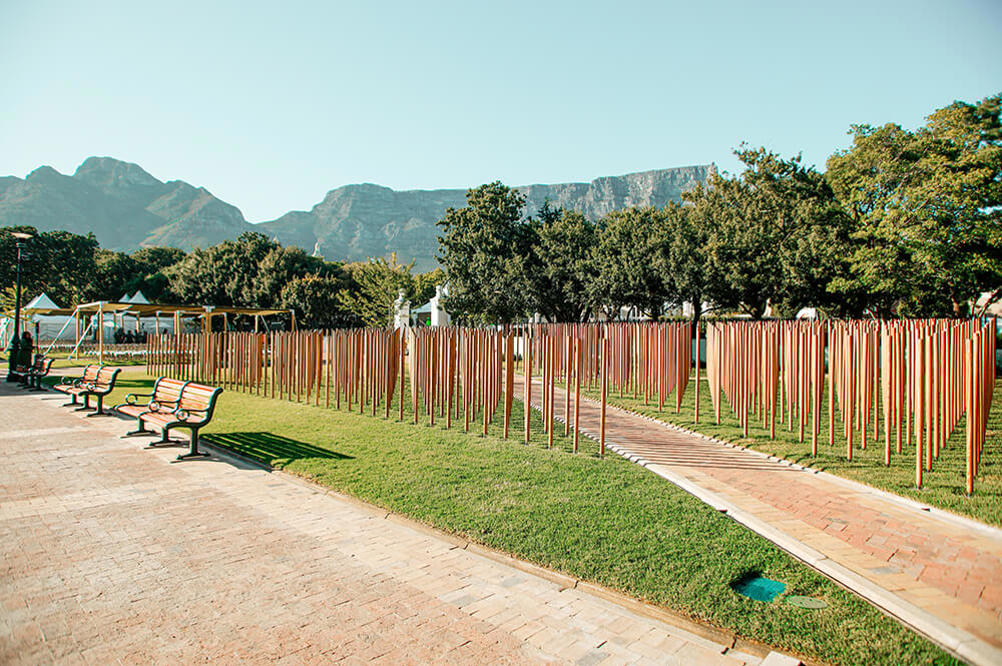
The design and aesthetic principles that guide the Commonwealth War Graves Commission were established in our early days. Now, we have to think cleverly about how to protect our sites against climate change and reduce our environmental impact at both new and existing locations.
For instance, the Cape Town Labour Corps Memorial was built with locally sourced materials, reducing carbon emissions during construction. Likewise, recycled stone has been used in the construction of the new Brookwood 1914-1918 Memorial, reducing the need for newly quarried material and lowering the project’s environmental impact.
Such measures, combined with wider initiatives like the 39,000 Trees global horticulture project, will help us design and maintain Commonwealth memorial sites that continue to inspire, delight, and move visitors forevermore.
Why Protecting These Sites Still Matters
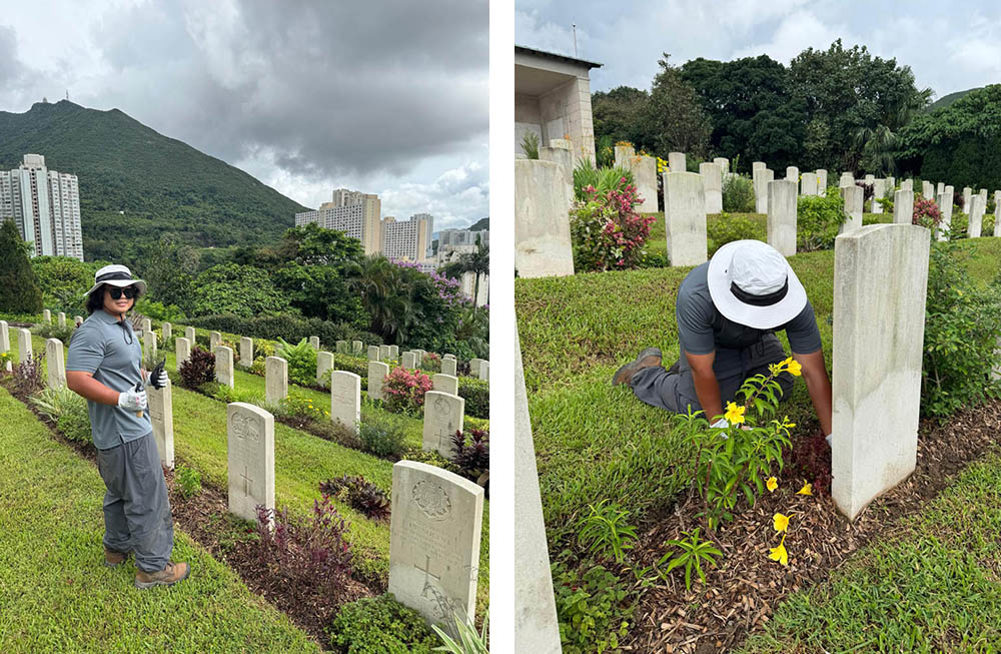
Caring for our sites sustainably is part of our ongoing commitment to the Commonwealth. Ever since our founding in the chaos and carnage of the First World War, Commonwealth War Graves has been committed to ensuring those in our care are remembered and commemorated eternally.
Caring for our sites sustainably is part of our ongoing commitment to the Commonwealth. Ever since our founding in the chaos and carnage of the First World War, Commonwealth War Graves has been committed to ensuring those in our care are remembered and commemorated eternally.
What happens when memory fades
The World Wars are sadly slipping from living memory. They represent a time when clear international collaboration resulted in the overcoming of incredible odds, but also a collective memory of shared sacrifice that runs through the Commonwealth.
We cannot allow the stories of the 1.7 million men and women of the Commonwealth commemorated at Commonwealth War Graves Commission sites worldwide to be forgotten. If they do, we lose touch with generations whose experiences and losses shaped the modern world.
The role of conservation in keeping commemoration relevant
Our ongoing care ensures these sites are protected against changing climates and accessible to all visitors year-round.
By maintaining and preserving these sites, we are ensuring the memories of those we commemorate are kept alive, even if that’s just by replacing a headstone, ensuring their name is legible on a name panel, or ensuring their final resting places are kept neat and tidy.
How Can You Carry These Commonwealth Stories Forward
Preserving, sharing, and carrying the stories of those we commemorate around the world, across the Commonwealth, is part of our shared responsibility.
Supporting storytelling, education and global engagement
The Commonwealth War Graves Foundation is our charity arm. It engages with the public and organisations of all shapes and sizes around the world to share more about our work and the men and women we commemorate.
Just recently, the Foundation has been funding tech and story-led education programmes in South Africa to highlight the contributions made by local labour corps members to raise awareness among young people. This is just one of a wide range of projects designed to boost outreach and knowledge of our work.
Visit the Commonwealth War Graves Foundation website for more information and to see how you can get involved.
Volunteering, visiting and advocating
We encourage participation in our shared history through volunteering. Whether that’s helping us care for our sites as a volunteer gardener or an Eyes On, Hands On Member, to becoming a tour guide or volunteer speaker, there are opportunities for us to get involved.
Of course, the simplest way to support the CWGC is to visit one of our sites. You can use our Find Cemeteries & Memorials tool to discover the closest of our 23,000 locations to you.
Commonwealth cemeteries & memorials FAQ
Yes, our sites are open to the public year-round, barring closures depending on maintenance or extreme weather. They are free to visit, and no booking is required.
We maintain cemeteries, memorials, and war graves in over 23,000 locations across more than 150 countries and territories worldwide.
The Commonwealth War Graves Commission is the organisation that maintains the war cemeteries, memorials, and final resting places of all Commonwealth war dead of the two world wars. We are funded by six member governments (UK, Australia, Canada, New Zealand, India, and South Africa) after our formation by Royal Charter in the early 20th century.
Commonwealth War Graves are located in more than 150 countries and territories worldwide, including Europe, Asia, Africa, North and South America.
Commonwealth War Graves sites are maintained by a global team of horticulturalists, maintenance professionals, stonemasons, and experts in global estate conservation.
Our Find War Dead tool allows you to search for all individuals we commemorate. You can also visit For Evermore, our online stories archive, to browse public-uploaded stories of those in our care and share your own.
Funding for our core work in maintaining and caring for Commonwealth war graves and memorials comes from our six member governments (UK, Australia, Canada, New Zealand, India, and South Africa). The Commonwealth War Graves Foundation funds activities outside the scope of our Royal Charter, including education and outreach programmes in the UK and overseas.
Commonwealth War Graves war memorials and cemeteries are important for recognising and remembering the loss of 1.7 million people from across the Commonwealth in the World Wars. Our collective memory binds us together, and the combined sacrifice of the Commonwealth is ably demonstrated by the names on our headstones and memorial panels.
Our sites are maintained by a global team of specialists, including horticulture and maintenance teams. We match day-to-day gardening and repairs with wider ongoing restoration and renovation programmes and new horticulture initiatives for long-term conservation.
Author acknowledgements
Alec Malloy is a CWGC Digital Content Executive. He has worked at the Commonwealth War Graves Commission since February 2022. During that time, he has written extensively about the World Wars, including major battles, casualty stories, and the Commission's work commemorating 1.7 million war dead worldwide.