

09 December 2025
Five war films to watch at Christmas
What’s better than settling down with a good film at Christmas? If you’re tired of the same old festive favourites, here are some Christmas war films worth checking out during your holidays.
War films to watch at Christmas
It’s something of a Christmas tradition in the United Kingdom that, once the turkey and trimmings have been polished off, the Christmas pudding has been eaten, and the adults have knocked back a few glasses of something strong, the family gathers round the television for an afternoon film.
These days, with streaming platforms, Blu-rays, and festive TV schedules, we’re spoilt for choice. Coupled with the myriad of Christmas classics and family favourites out there, picking the right movie for Christmas Day can be a little tricky.
Why not indulge in a war film? Several prominent war movies have been set at Christmastime, adding a frisson of festivity to the rollercoaster of emotions created by the very best war movies.
If you’re looking for a feature film to fill your Christmas Day afternoon, here are some suggestions.
Joyeux Noël
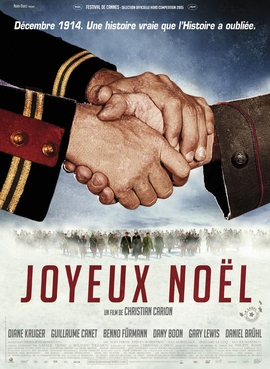 Image: Joyeux Noël poster (Wikimedia Commons)
It may not be the most famous or critically acclaimed war movie out there, but Joyeux Noël is the very definition of a Christmas war movie.
Taking place in December 1914, the film covers the iconic events of the near-mythical Christmas Truce.
On Christmas Eve/Day 1914, French, German, and British soldiers on small sections of the Western Front chose to lay down their arms for a short while, briefly bringing peace, tranquillity, and goodwill to all men to the frontline. Coming together in No Man’s Land, the erstwhile opponents exchanged gifts, ate together, and generally enjoyed each other’s company.
We know the peace was almost immediately shattered, but the Christmas Truce is one of the most miraculous events of the World Wars.
Joyeux Noël covers these events from multiple points of view, including Scottish, French, and German soldiers, giving us a multi-faceted perspective of the Christmas Truce. As the film progresses, it becomes even more poignant as the protagonists meet in No Man’s Land and friendships blossom under the spectre of slaughter.
Powerful and affecting, director Christian Carion’s film was nominated for multiple awards, including the Academy Award for Best Foreign Language Film and the BAFTA for Best Film not in the English Language.
Where Eagles Dare
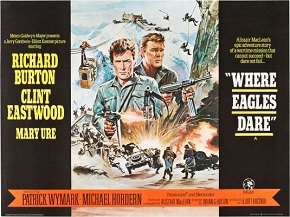 Image: Where Eagles Dare poster (Wikimedia Commons)
A good Christmas war film does not necessarily have to take place during the holiday season. Sometimes, you just want to sit down with a rip-roaring action adventure and enjoy the exploits of dashing leading stars amid stunning landscapes and intriguing twists and turns.
Enter the perennial classic Where Eagles Dare, beloved by dads of a certain age everywhere, and one of the most beloved and successful Second World War movies of all time.
You probably know the plot by now, but just in case, Where Eagles Dare follows a daring Allied mission to infiltrate a heavily guarded alpine Nazi fortress to rescue a captured general. Along the way, they face perilous mountain passes, possible deception, despicable SS generals, and seemingly entire divisions of German troops.
The movie mixes tense set pieces, stellar leading turns from Richard Burton and Clint Eastwood, and high-octane action amidst imposing snow-capped mountains, resulting in a rollicking, highly entertaining romp.
The icy mountain setting gives the film a wintery edge, even if white Christmases are becoming a thing of the past. The fortress looms over the story like the lair of some fairytale villain. Indeed, the suspense is heightened by the isolation, the blizzards, and the ever present cold.
Not strictly a Christmas film, but Where Eagles Dare’s mix of setting and action makes it a must-watch.
Oh! What a Lovely War
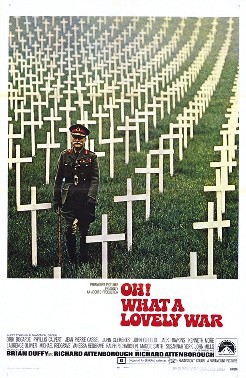 Image: Oh! What a Lovely War poster (Wikimedia Commons)
At 144 minutes, Richard Attenborough’s 1968 directorial debut is a bit of an endurance test, but it’s an interesting study of how anti-war sentiment bloomed in the background of the Vietnam War.
Adapted for screen from Joan Littlewood’s 1963 stage musical, Oh! What a Lovely War is a satirical summary of the First World War, mixing contemporary songs, vignettes, and allegorical settings to lay out the story of the conflict.
There’s no denying Oh! What a Lovely War’s cynicism. As a piece of social study, it’s interesting to see how the War to End All Wars was used to showcase widespread anti-war sentiment at the height of the 1960s.
The movie has created some of the most enduring war movie images of the modern era, particularly the film’s closing shots of a camera sweeping over rows and rows of pristine white cross grave markers, stretching into the horizon, symbolising the enormous loss of the Great War.
As for Christmas, one of the film’s standout moments is, of course, the Christmas Truce. It’s less sentimental than the portrayal in Joyeux Noël, and certainly the accents are quite ropey, but the six minutes of peace and comradeship, regardless of side, are still just as affecting.
The peace is shattered by falling artillery, but the portrayal is powerful, nonetheless.
1917
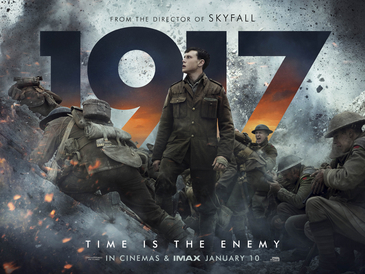 Image: 1917 poster (Wikimedia Commons)
1917 is one of the most remarkable war films of the modern age. Again, it isn’t really linked to Christmas, but the remarkable story of two soldiers in a race against time to deliver a message that could save thousands of soldiers’ lives is gripping, tense, and incredibly moving.
Director Sam Mendes and cinematographer Roger Deakins filmed the journey of the two protagonists, Lance Corporal William Schofield (George MacKay) and Lance Corporal Thomas Blake (Dean-Charles Chapman), as one long continuous take. We are right up close to the trip, which takes us across canals, through deserted trench networks, over No Man’s Land and into devastated French villages.
1917 is a visceral, hard-hitting war movie. It doesn’t pull any punches and is certainly a more serious film than either The Great Escape or Where Eagles Dare. We’re thrown into the heart of the action, giving a more intimate insight into what it must have been like for so many young men sent overseas in wartime.
A series of cameos pepper the film, including appearances by Mark Strong, Andrew Scott, Colin Firth, and Benedict Cumberbatch, but it’s the two relatively unknown leads who anchor the film and give 1917 its emotional impetus.
The Great Escape
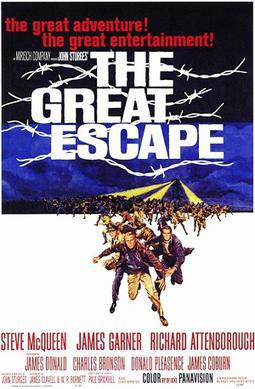 Image: The Great Escape poster (Wikimedia Commons)
Again, not strictly a Christmas film, or really related to winter or the holidays in any way, but is there a better lazy bank holiday afternoon film than The Great Escape?
The BBC agrees, with The Great Escape reaching a list of the most repeated and loved festive films of the last 50 years.
Arguably one of the most iconic military movies of all time, The Great Escape tells the enthralling story of the Second World War’s largest Allied prison break. On 24 March 1944, 76 Allied Prisoners of War escaped from the Stalag Luft III camp using a mix of clever deception, meticulous planning, and incredible courage.
Just three of the real-life Great Escapers made it to freedom. The remainder were recaptured by the Nazis. 50 were executed by the Gestapo, 48 of whom now lie side by side in Poznan Old Garrison Cemetery.
As for the film itself, The Great Escape is packed with A-list stars, including the aforementioned Attenborough and McQueen, but also James Garner, James Coburn, and Charles Bronson.
It’s full of iconic scenes too: McQueen attempting to leap barbed wire to freedom on his motorbike; McQueen bouncing a baseball off the cooler wall in solitary confinement; the last, sad execution of the escapers.
For all its iconic status, The Great Escape still delivers a potent mix of thrills and suspense – and has one of the most whistleable theme tunes in existence.
Other war films to watch at Christmas
The films we have showcased so far have mostly focused on the Commonwealth or British experience of the World Wars, but many festive films offer different stories and perspectives at wartime.
Stalag-17 – Directed by the legendary Billy Wilder, Stalag 17 is set in a German PoW camp where American airmen struggle with confinement. Deftly balancing humour and tension, Wilder’s classic draws on its wintry setting and snowy backdrop, allowing the holidays to seep in understated ways
Merry Christmas, Mr Lawrence – A very different kind of war film, Merry Christmas, Mr Lawrence is set in the cruel harshness of a Japanese PoW camp. While Christmas frames the narrative, this more brutal tale of defiance and clashing ideologies than a holiday romp. A great film, but certainly on the more contemplative end of the war movie spectrum.
Silent Night – A 2002 movie based on real events, Silent Night tells the true story of Elizabeth Vincken, who sheltered both American and German soldiers in her Ardennes family home on Christmas Eve, 1944, at the height of the Battle of the Bulge. Moderate in scale, the film’s message is clearly heartfelt while highlighting a small, little-known part of World War history.
Christmas in the World Wars
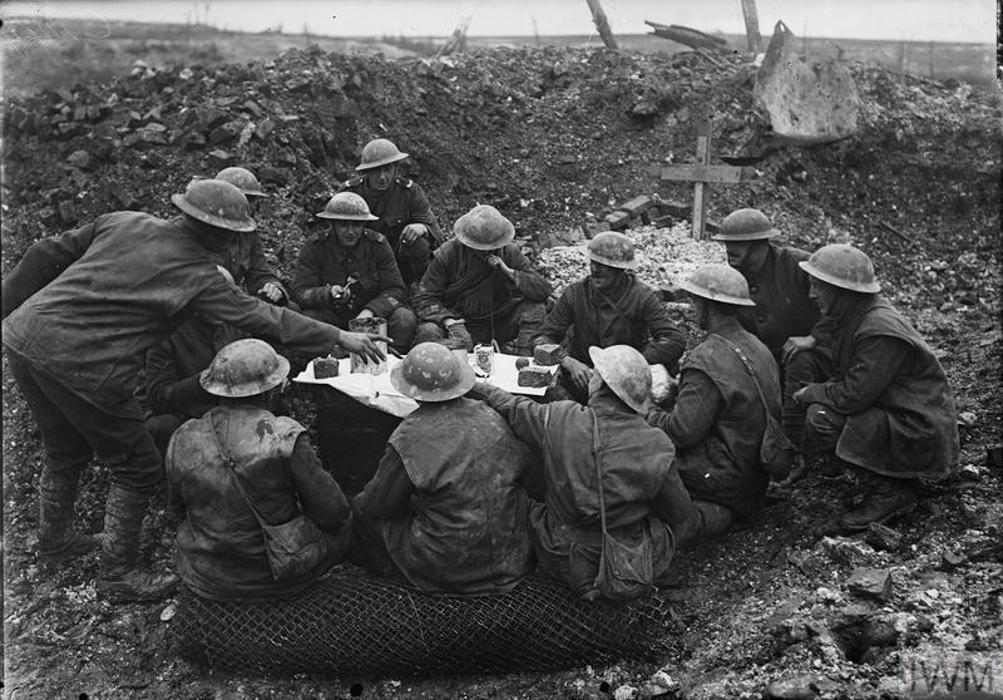
Image: First World War-era British troops hold a Christmas party amidst a shell crater, somewhere on the Western Front (IWM (Q 1631))
Despite the deprivations of wartime, people all over the world, on both the home front and the front lines, came together to celebrate Christmas.
The Great War is, of course, indelibly linked to Christmas via the miraculous spontaneous truces that broke out along small sections of the Western Front on Christmas Day 1914.
The Christmas Truce offered a slim, temporary respite from the carnage and slaughter of the war’s opening months. As we know, the war would grow deadlier as the years rolled by and casualties rose.
By the end of the war, over 1.1 million Commonwealth servicemen and women had lost their lives in the world’s deadliest conflict to date.
Nevertheless, men at the front still tried to make the most of it. Parcels from home containing sweet treats, drinks, cigarettes, and more creature comforts were shared and opened. Letters were read and carols sung, bringing a little bit of peace on Earth and goodwill to all men to the front, despite the conditions.
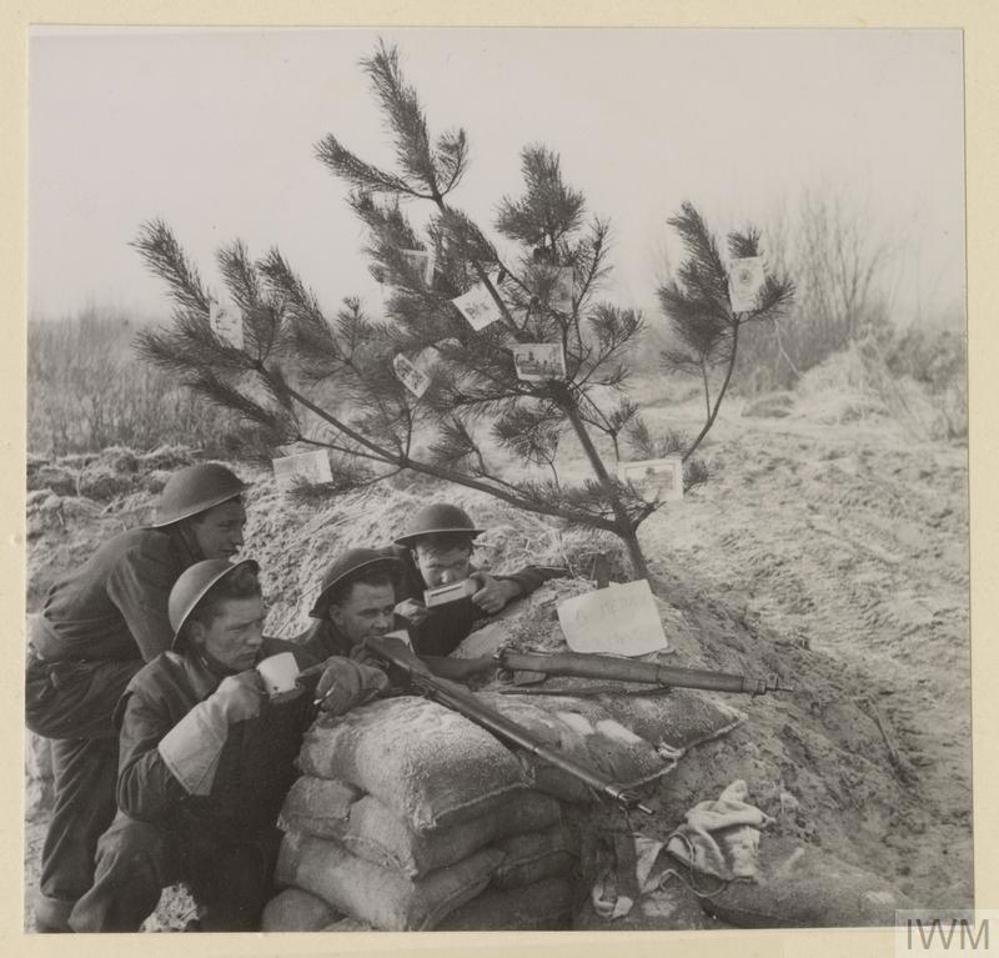
Image: Frontline troops enjoy an extra cup of tea on Christmas morning beneath notes, cards, and well-wishes from relatives which hang on the nearby tree (IWM (TR 2568))
No miraculous truces are recorded between Axis and Commonwealth troops during the Second World War, but soldiers and civilians once more tried their best to feel festive.
In the UK, where rationing was in force, celebrations were adjusted as food, paper for cards, and luxuries were hard to find. Gifts given at home and sent overseas were often homemade and heartfelt. Where possible, extra rations were shared – including Christmas puddings for the boys at the front!
Sadly, the spectre of death still hung over the world. Christmas Eve 1944 saw Manchester endure a deadly V-1 weapon attack, with 37 civilians killed by Hitler’s vengeance weapons.
Still, the servicemen doing their bit, and the civilians at home, all did their best to enjoy Christmas in wartime during the Second World War.
Author acknowledgements
Alec Malloy is a CWGC Digital Content Executive. He has worked at the Commonwealth War Graves Commission since February 2022. During that time, he has written extensively about the World Wars, including major battles, casualty stories, and the Commission's work commemorating 1.7 million war dead worldwide.