

06 April 2026
International Monument Spotlight: Delville Wood
Enclosed by trees and greenery amidst the former Somme battlefields sits the South African (Delville Wood) Memorial.
For South Africa and its World War legacy, the name Delville Wood holds special significance. It was here that the South African Brigade endured its first major engagement on the Western Front.
For a century, the Commonwealth War Graves Commission has cared for this site on behalf of the South African government, as part of our wider commitment to care for the cemeteries and memorials commemorating the Commonwealth’s war dead.
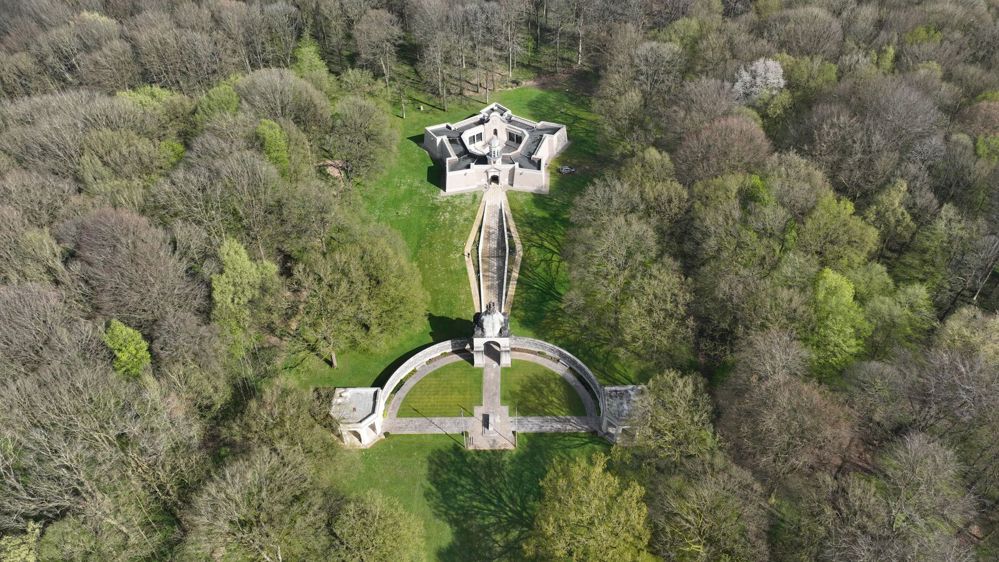 Image: The Delville Wood Memorial and Visitor Centre nestled among the greenery of Delville Wood itself. Over a century ago, the landscape was quite different
What is the Delville Wood Memorial?
A South African National Memorial on the Somme
The South African (Delville Wood) National Memorial is a war memorial located on the former battlefields of the Somme commemorating South Africa’s war dead of the First and Second World Wars.
Since 1926, the Deville Wood Memorial has stood as South Africa’s only national military memorial on the Western Front, its arch bearing the following inscription in English and Afrikaans:
“Their ideal is our legacy
Their sacrifice is our inspiration”
Opposite the Memorial complex sits Delville Wood Cemetery. Here, over 5,000 First World War servicemen are buried, including 87 South Africans of the Great War.
Some 229,000 South Africans served in the First World War, with over 10,000 never making it home. The Delville Wood Memorial commemorates these South Africans – but not by name.
Unlike other national memorials to the missing, no names of the fallen are inscribed on the Delville Wood Memorial proper. Instead, South Africa’s war dead are commemorated by name in cemeteries around the world or carved into CWGC’s memorials to the missing. Their names are also included in the South African Roll of Honour held at the Delville Wood Museum.
Today, the memorial is symbolic of South Africa’s contribution to the Great War, but also all conflicts in which South African servicemen and women have lost their lives.
The South African (Delville Wood) Memorial itself is a flint and stone screen wall, featuring a central arched gateway, topped with a bronze equestrian statue showing the twin figures of Castor and Pollux alongside a horse, representing the Union of South Africa.
The wider complex features a museum dedicated to South Africa’s experience of both World Wars. In 2016, for the centenary of the Battle of Delville Wood, the names of non-white South African servicemen, previously overlooked, were carved into a memorial wall connecting the greater Memorial with the museum complex.
In 2014, the body of Private Beleza Myengwa was moved to the museum courtyard. It is believed Private Myengwa was the first South African Native Labour Corps member to die on the Western Front. His inclusion is symbolic of the wider South African war narrative, which for many years overlooked the contributions of non-White personnel.
What a “memorial to the missing” means
A “memorial to the missing” commemorates fallen soldiers of the World Wars who have no known war grave.
There are many reasons why a serviceman may not have an identified final resting place. They may have been lost in enemy territory, their body may have been lost among the chaos and carnage of warfare and never recovered, or they weren’t able to be identified upon discovery and recovery, for example.
Many national memorials list the missing by name. The Delville Wood Memorial is different. It bears no name, official CWGC name panels or inscriptions of the fallen.
The Memorial Wall linking the Delville Wood Memorial and the museum is not considered the official point of commemoration for South Africa’s war dead. These men will be commemorated by CWGC elsewhere.
How memorial and cemetery landscapes relate
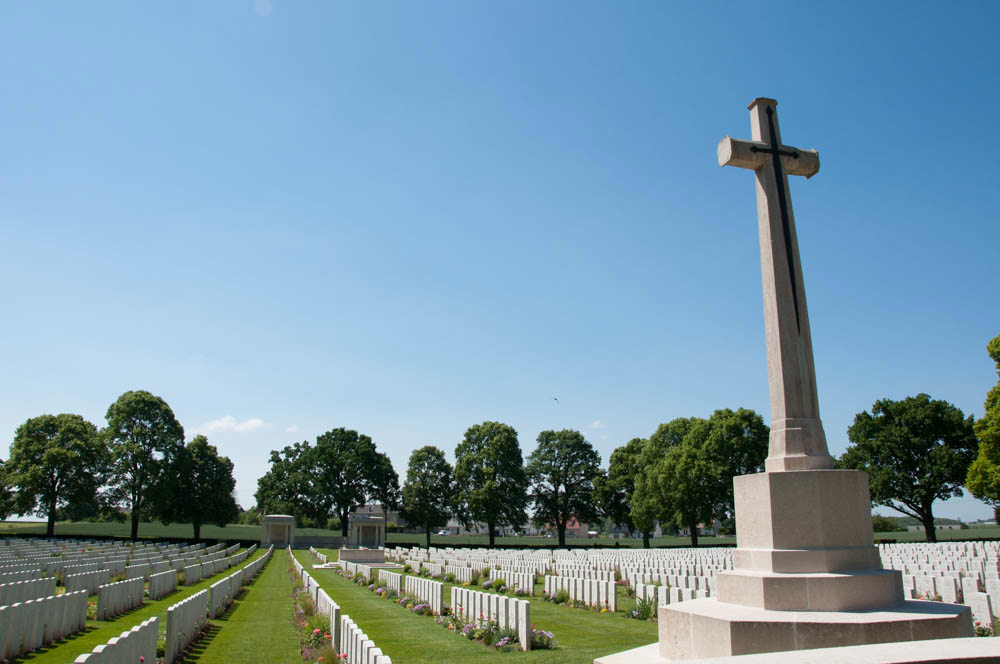
Image: Delville Wood Cemetery sits across from the Delville Wood Memorial as part of the wider memorial site
The Delville Wood Memorial sits amidst the former battlefields of the Somme, a landscape rich in memory and historic and emotional resonance.
The wider location is known as the Delville Wood Memorial Site, incorporating the memorial and visitor centre, the Commonwealth War Graves Commission cemetery and the iconic wood itself.
The central avenue of Delville Wood Cemetery is continued across the Longueval-Ginchy road by a grass road, in a wide clearing, running Northward into Delville Wood; and across the clearing, at the top of a low rise, is the South African (Delville Wood) Memorial.
Today, the countryside has healed, but reminders of the carnage remain. Some sections of the lawn walk up to the Delville Wood Memorial are cratered and pitted from shellfire. The lush, wooded canopy and surroundings were planted after the war, with the acorns which grew into the oaks lining the memorial’s central avenue transported from South Africa, as the woodland had been nearly totally devastated in wartime.
The Somme is a landscape tinged with tragedy, memory, and emotional resonance. The Deville Wood Memorial fits into a wider commemorative context, alongside national memorials to Australian, Indian, Canadian, and New Zealand troops.
Sites such as Delville Wood are embedded in the landscape, acting as moving reminders of the combat and devastation that ensued here decades ago. They remind us of the human cost of war and the importance of remembering and commemorating our war dead.
South Africa on the Somme: Why the Memorial sits here
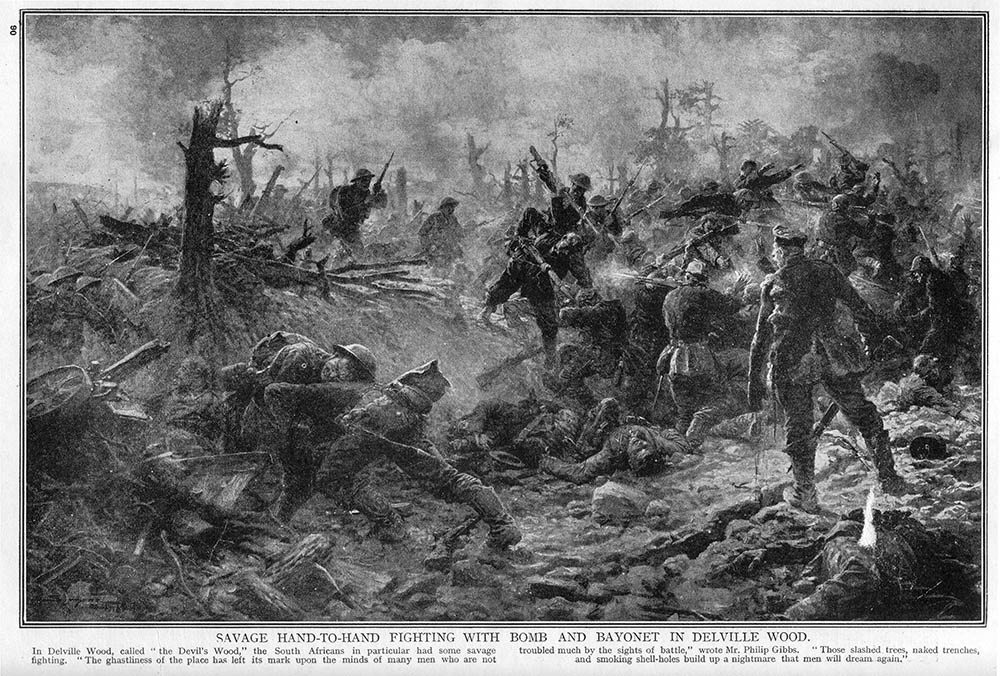
Image: Illustration of fighting in Delville Wood titled "Savage hand-to-hand fighting with bomb and bayonet in Delville Wood" - H.W. Wilson, 1917 (Wikimedia Commons)
The Delville Wood Memorial stands at the heart of the South African Brigade’s position during the Battle of Delville Wood in mid-July 1916.
Here, 3,200 or so men and officers of the Brigade marched into the wood, driving their opponents from the wood and holding on for six days and five nights under constant enemy artillery fire and counterattacks. When relieved on 21 July, the Brigade numbered 29 officers and 751 enlisted men.
The Official History of the Great War 1914-1918 recorded the South African’s courage during their five-night ordeal:
"The South Africans had covered themselves with glory at Delville Wood, which is now laid out as a memorial to their dead. Despite terrible losses, they had steadfastly endured the ordeal of the German bombardment, which seldom slackened and never ceased, and had faced with great courage and resolution repeated counter-attacks delivered by fresh [German] troops. Since their first advance into the wood on the morning of 15th July, they had defied all attempts to drive them completely from it.”
The fight for Delville Wood continued into August when the 38th (Welsh Division) captured it. A final sweep cleared the woods of German positions in September.
After the war, the original area was left as it was at the end of the conflict. Bumps and shell craters still scarred the land. Save for one lone tree, the wood had been effectively destroyed.
The French Government sold the land to South Africa for a symbolic fee of 1 franc. New trees, with seeds from South Africa, were planted. Wide grassy woodland paths known as “rides” were preserved.

Want more stories like this delivered directly to your inbox? Sign up for our newsletter for regular updates on the work of Commonwealth War Graves, blogs, event news, and more.
Sign UpThe Somme as a shared commemorative landscape
Delville Wood is inextricably tied to South Africa’s wartime experience, but did you know that all the major Commonwealth nations fought on the Somme?
The campaign was spearheaded by the British, with support from the Royal Newfoundland Regiment and the French. Still, as casualties mounted following the battle’s disastrous early stages, Australian, Canadian, Indian, New Zealand, and South African units were transferred to the Somme.
From Delville Wood, you do not have to go far to find confirmation of a multi-national approach to warfare. Just in Delville Wood Cemetery alone, South African soldiers lie alongside Australian, British, and Canadian servicemen, demonstrating the shared loss endured by our nations in wartime.
Memorials such as the South Africa Memorial highlight the international nature of the First World War, reminding us of the shared sacrifice endured by the Commonwealth throughout the conflict.
What national memorials represent in a CWGC context
National Memorials such as the South Africa (Delville Wood) Memorial are symbolic of our ongoing commitment to the Commonwealth.
As well as Delville Wood, we care for the national memorials of Australia, India, Canada and New Zealand, on behalf of their respective governments. Please note this falls outside of our “core” work. We will genuinely work on horticulture at these sites, while partnering with member governments on large-scale projects as and when the need arises.
Since our founding by Royal Charter in 1917, we have been dedicated to commemorating the fallen of the Commonwealth and caring for the final cemeteries and memorials bearing their names.
Our work in maintaining and caring for these sites continues, ensuring we preserve the memories of those they commemorate eternally, and fostering deeper links between the nations of the Commonwealth.
CWGC’s Role at Delville Wood: Care, Conservation and Custodianship
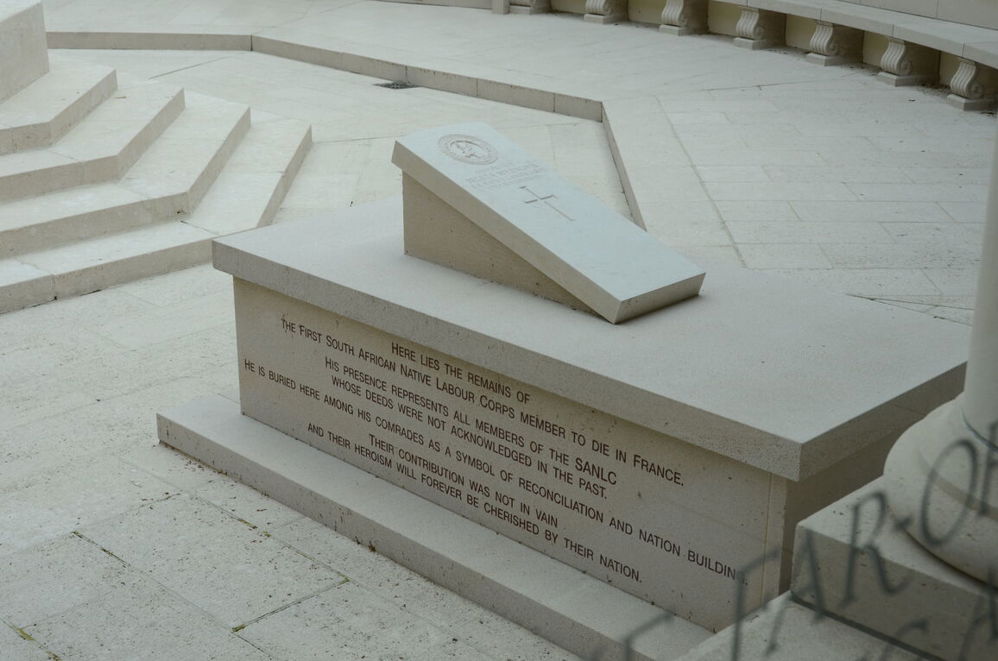
Image: The sarcophagus of Private Beleza Myengwa
At the Commonwealth War Graves Commission, we are committed to the permanent, year-round care of our cemeteries and memorials, as well as the national memorials we care for on behalf of our member governments.
While it is one site, the different constituent sections of Delville Wood are:
- Delville Wood Cemetery – Maintained as core CWGC work
- The South African (Delville Wood) National Memorial – CWGC’s Agency Services
- The South African Delville Wood Memorial Pathway – CWGC’s Agency Services
- The South African Delville Wood Visitors Centre – South African Government
Deville Wood itself – CWGC’s Agency Services Our work at Delville Wood Cemetery is part of our core, regular maintenance, blending horticulture, cleaning, and stonemasonry into a holistic care regime.
Caring for the Delville Wood Memorial is a little different.
Care of the South African (Delville Wood) National Memorial falls to our Agency Services Team.
Its work at Delville Wood is mainly focused on maintaining the stunning horticulture and plant life adorning the site. This includes keeping the lawns pristine, reviewing tree health, and cutting, trimming, and planting as necessary, and caring for Delville Wood itself.
At Delville Wood specifically, the bulk of the Agency Services team’s work focuses on caring for the now thick woodland as required.
When it comes time to renovations and stonework repairs, we would work with the South African Government on such projects. The funding for these is supplied by the South African government, not our own budget.
We will also work with the South African Government on keeping the stone and metal features in top condition. In 2010, for example, we helped with the restoration of the Memorial’s bronze statue, bringing it back to life after nearly a century of exposure to the elements.
Our teams also inspect the grave of Private Myengwa within the museum courtyard. His sarcophagus is regularly inspected for cleanliness and legibility as per our headstone cleanliness standards. Any issues or damage are reported and repaired as necessary.
While we do not officially maintain the museum/visitor centre, we would support the South African Government on any necessary repairs or refurbishments as part of our Agency Services if needed.
We have also taken on the job of maintaining the memorial wall, which was added in 2016.
What “permanent care” means in practice
As per the terms of our Royal Charter, we are charged with caring for the final resting places of the Commonwealth’s war dead in perpetuity.
Our sites, or those we care for on behalf of governments or other organisations, are regularly inspected for damage, wear and tear, poorly performing horticulture, and so on.
We work based on a cycle of inspections, with any necessary remedial work performed by our own in-house specialists.
While we are contending with numerous challenges, such as changing climates and wilder weather worldwide, we have not lost sight of our organisation’s original scope and purpose: the permanent commemoration of the Commonwealth’s war dead.
What Delville Wood Means Today: Commemoration & Learning
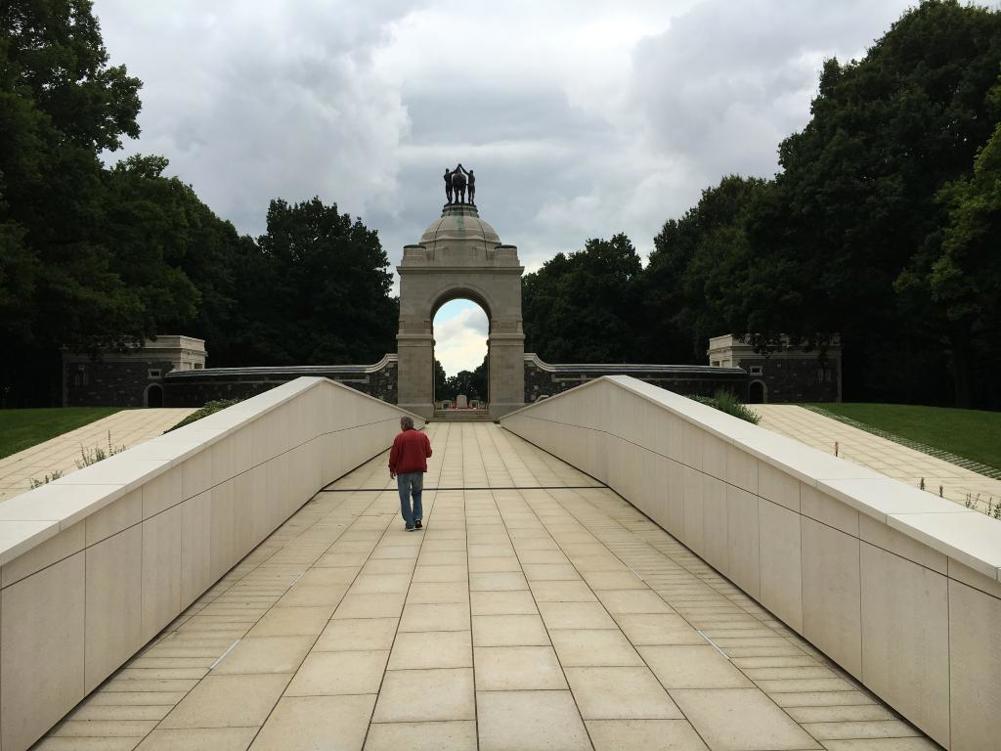
Image: Delville Wood is a place rich in meaning for South Africa and understanding the nation's contribution and sacrifice made during the Great War
For a century, the Delville Wood Memorial has stood in commemoration of South African servicemen and women.
It continues to serve as a powerful reminder of the loss experienced by South Africa during the World Wars and a place for peaceful contemplation on how so many gave their lives in these world-changing conflicts.
From place to action
If the Delville Wood Memorial has inspired you to research more about the South African servicemen and women in our care, you can search our records to discover who they were and where they’re commemorated.
Want to visit Delville Wood and the South African Memorial? Use our Find Cemeteries & Memorials tool to find locations, directions and more information on all of our sites.
Why not use this tool to plan a trip to the Somme battlefields and discover more of our cemeteries and memorials there?
Got a story of a South African serviceman in our care? We’d love to read it! Upload it today to For Evermore: Stories of the Fallen, our online digital stories archive, so it can be preserved and shared with future generations.
The South African (Delville Wood) National Memorial - Frequently Asked Questions
The South African (Delville Wood) National Memorial is the national memorial commemorating South Africa’s fallen of the First and Second World Wars. Over time, its purpose has expanded to commemorate and memorialise all South Africans killed in all conflicts worldwide.
The Delville Wood Memorial does not formally commemorate by name any South African casualties. They are commemorated by name on CWGC cemeteries and memorials worldwide. Within the memorial’s museum lies the war grave of Private Beleza Myengwa of the South African Native Labour Corps.
Delville Wood was the site of the South African Brigade’s first major engagement on the Western Front. The South African Brigade took and held Delville Wood for six days and five nights between 15-21 July 1916 under a near constant artillery barrage and counterattack. The place now holds special significance for South Africa.
Delville Wood Cemetery sits opposite the South African (Delville Wood) National Memorial, holding over 5,000 burials of the First World War. The Delville Wood Memorial and Museum incorporate a single war grave.
We maintain Delville Wood Cemetery as part of our core work. At the Delville Wood Memorial, we primarily work on the horticulture, including maintenance of the wood itself. If required, we will partner with the South African government on wider maintenance works, such as stonemasonry, restoration and refurbishment.
Author acknowledgements
Alec Malloy is a CWGC Digital Content Executive. He has worked at the Commonwealth War Graves Commission since February 2022. During that time, he has written extensively about the World Wars, including major battles, casualty stories, and the Commission's work commemorating 1.7 million war dead worldwide.
This blog was written with the help of Steve Hill, CWGC Head of Agency Services.