

20 January 2026
Renovating Rome War Cemetery: Recapturing the Architect’s Original Vision
Rome War Cemetery recently underwent a stunning transformation, recapturing the architect Louis De Soissons’ original vision with new planting and irrigation.
Renovating Rome War Cemetery
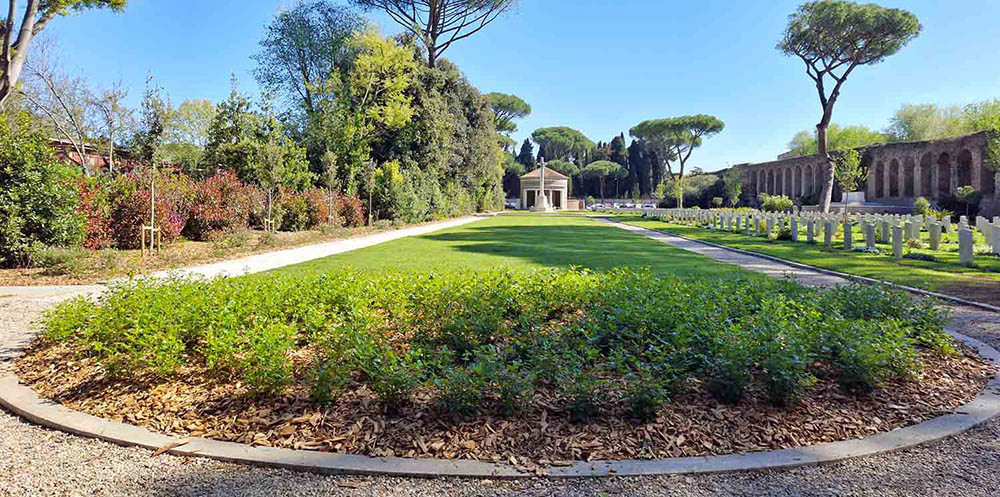
Rome War Cemetery holds the remains of Commonwealth service personnel who died in Italy during the Second World War.
Burials began shortly after the Liberation of Rome on 3 June 1944. Major restoration work was completed in 2025, which has returned the cemetery to architect Louis De Soisson’s original design, including reinstating pathways and improving sustainability measures, as well as preserving his work under current climate conditions.
The cemetery has become part of Rome’s extensive cultural history. It sits close to many iconic locations, including the ancient Pyramid of Cestus, Monte Testaccio, and is directly opposite the peacefully tranquil Cimitero Acattolico di Roma cemetery, where iconic poets Keats and Shelley lie alongside other famous figures.
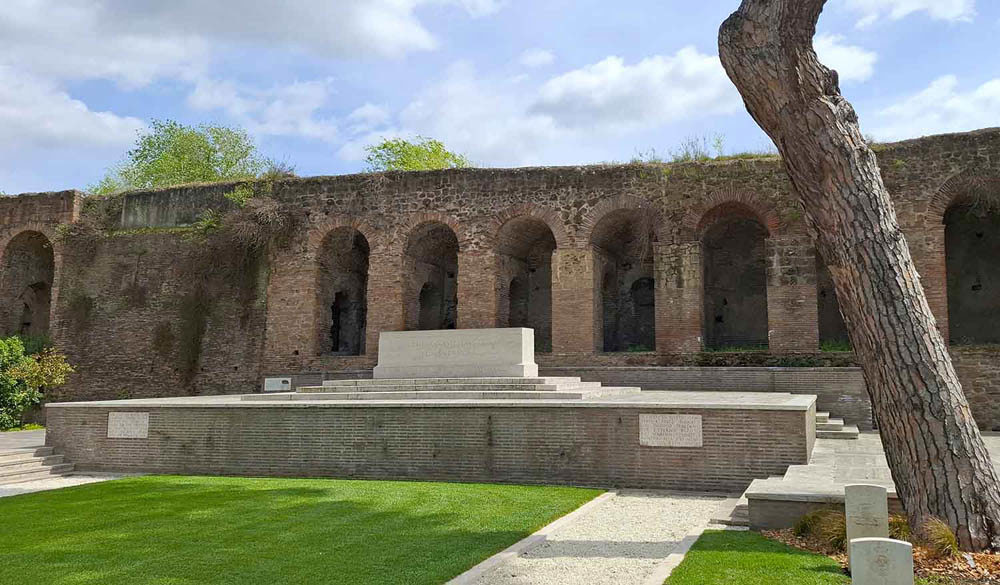
 Providing a visual and physical link to Rome’s storied past are the historically significant 3rd-century Aurelian Walls, which form the cemetery’s southern boundary.
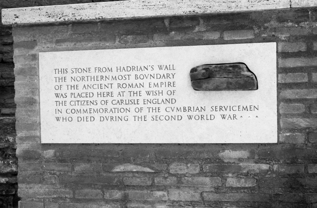
But did you know this is not the only historic Roman Wall represented here? In 1960, to commemorate the Cumbrian men who had fallen in the liberation of Italy, the town of Carlisle donated a small piece of Hadrian’s Wall to the Italian Government.
The Italian Authorities selected Rome War Cemetery to hold the fragment. You can see it today embedded in the wall near the Stone of Remembrance.
Recapturing the architect’s vision
Between April 2024 and 2025, we initiated an extensive renovation programme to bring Rome War Cemetery closer to De Soisson’s original design.
De Soisson envisioned Rome War Cemetery as a natural “nave of a basilica, using trees, hedges, and walkways as elements of demarcation of the space.”
In Rome, a city full of magnificent basilicas, sacred, and historic spaces, De Soissons’s approach shows his ability to integrate cultural and local context into his architectural vision.
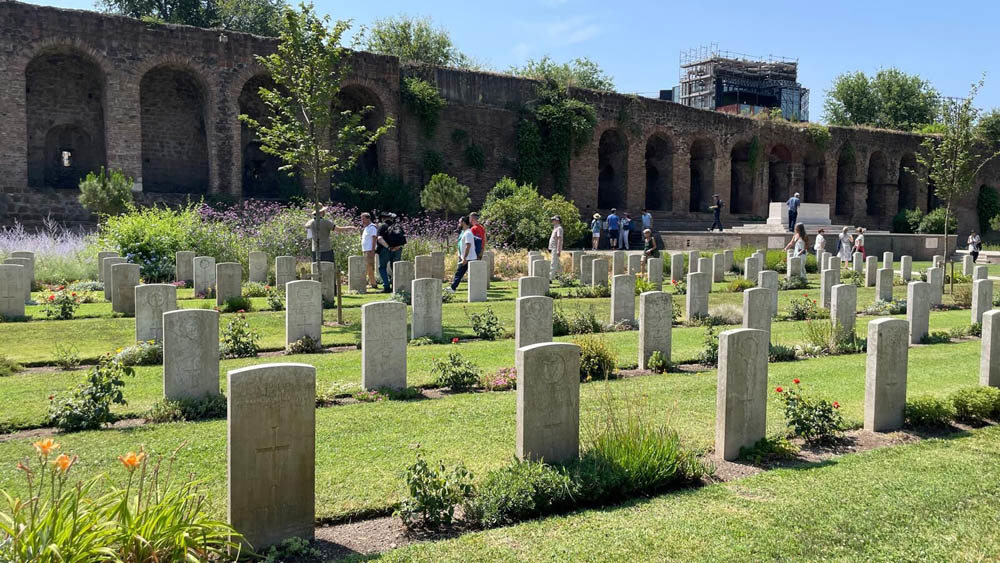
"This renovation project was a great opportunity to reflect on how people visit and use the site and how best to honour the wonderful surroundings and the cemetery’s original design, while advancing its sustainability,” David Richardson, Commonwealth War Graves Head of Horticulture, said.
“Peace, tranquillity, and places for quiet contemplation are essential to the visitor experience in any one of our cemeteries, yet people are always surprised when they find these qualities in the heart of a busy, vibrant city.
“By turning to horticulture, reshaping and replanting two existing groves alongside the Aurelian Wall with sensory plants, we have been able to create and initiate secret garden-like spaces, where we see visitors stop for moments of quiet reflection and peace.”
A horticulture design process
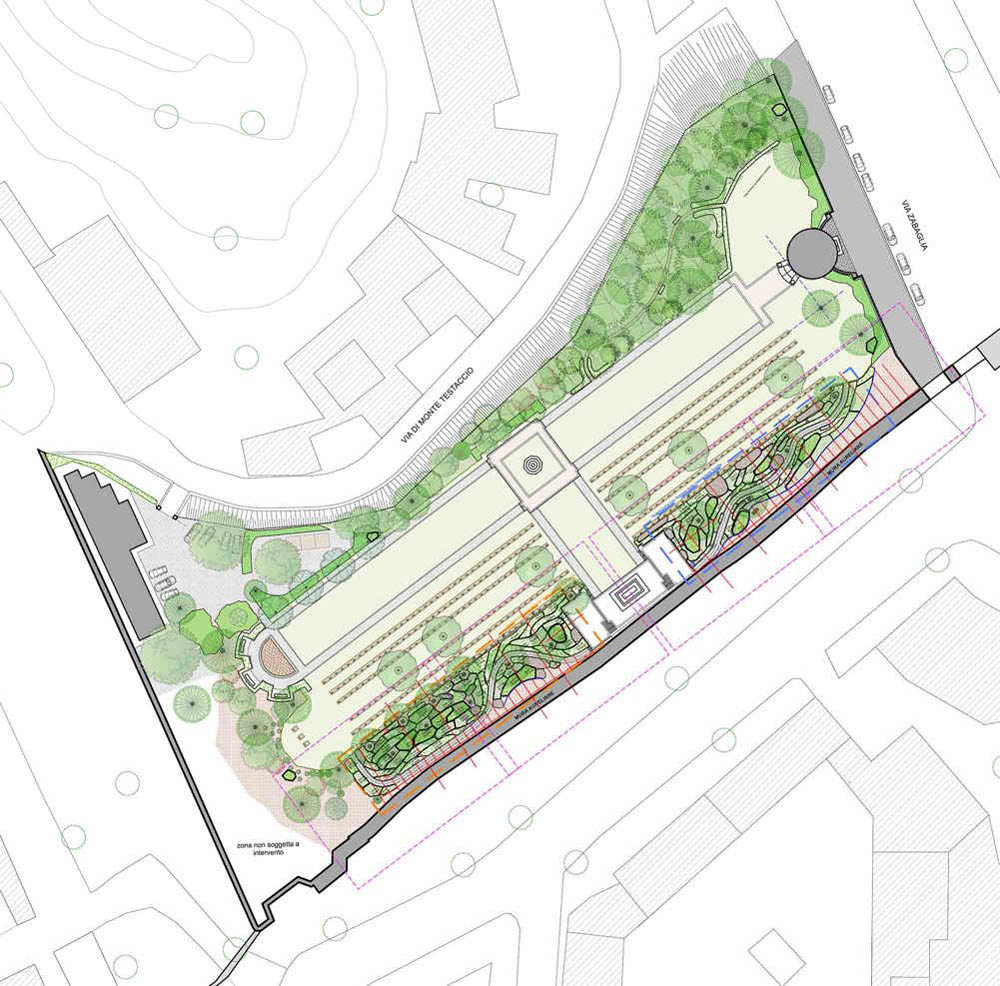
Realigning the cemetery with De Soisson’s plan involved reinstating two gravel paths between the central Stone of Remembrance and Cross of Sacrifice, providing the central “basilica nave”, over which plants and trees will bloom.
All CWGC cemeteries feature carefully maintained horticulture and plant life, but this project has greatly enhanced the cemetery’s beauty and connection with the surrounding area.
New specimens of stone pine (Pinus Pinea) have been planted. Two of these have been placed to harmonise the site with the peaceful Cimitero Acattolico di Roma opposite the War Cemetery in Rome, while others will eventually screen the space from nearby buildings, adding to the secret garden feel of the cemetery.
Plantings have been carefully chosen to encourage biodiversity, too, attracting plenty of pollinators of all shapes and sizes, ensuring healthy plants and wildlife for years to come.
Louis de Soissons
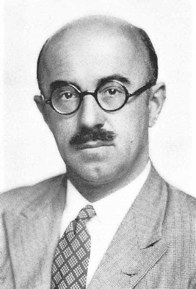 Louis de Soissons (1890 – 1962) designed Commonwealth war cemeteries for us in Italy as Principal Architect during and after the Second World War, a position he held until 1957. His work focused on classical themes, formal landscaping and the symbolism of the First World War cemeteries.
Over 40 Commonwealth War Graves cemeteries and memorials were designed by de Soissons, with his plans drawing heavily on the architecture and feel of classical antiquity, seamlessly slotting his sites into their historic and cultural context.
De Soissons’ style harks back to the ‘classical Roman’ architecture, which has a very real relevance deep in the heart of Ancient Rome. The combination of ancient and modern architecture, the latter deliberately designed to fondly recall the former, makes a highly valuable aesthetic experience within the cemetery.
Contributing to climate resilience
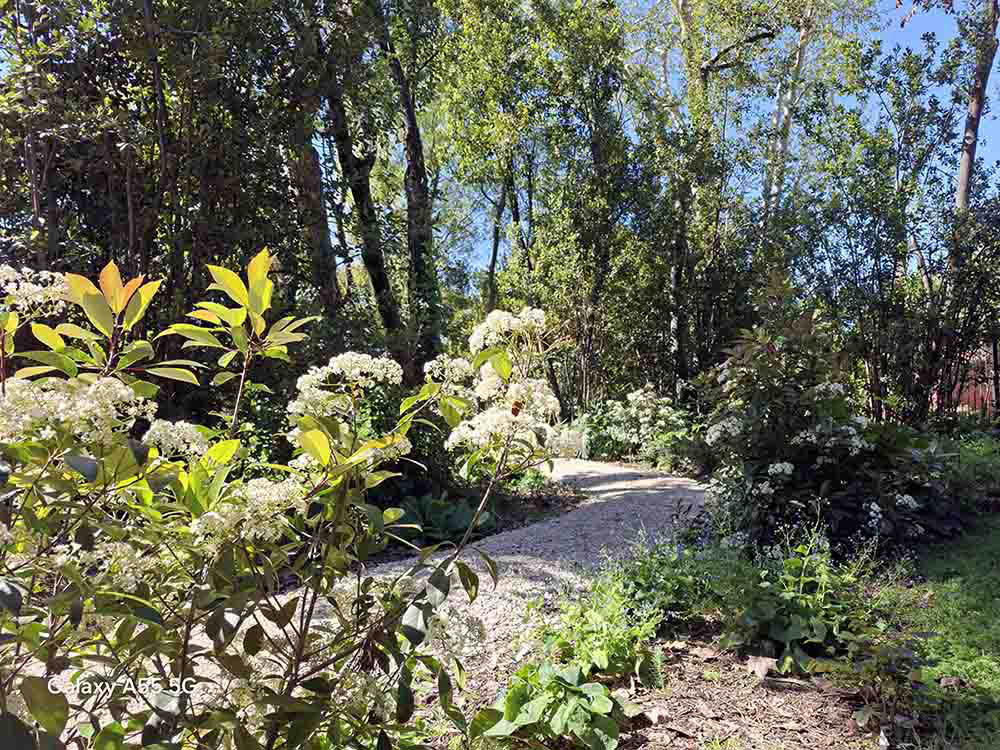
As we updated the site to reflect its original character, we also took the opportunity to strengthen Rome War Cemetery’s resilience to climate change, ensuring it remains sustainable for generations to come.
Planting of species that are more resilient to drought and disease, with new flowering plants and grasses, has taken place throughout the cemetery. Species which require very little water and are resistant to low temperatures have been planted, helping us reduce water use while also boosting biodiversity.
A more efficient zonal irrigation system, capable of modulating the quantities of water needed in different parts of the site, has been installed. It is linked to a new weather station and a soil humidity control system, allowing us to reduce and rationalise water consumption to meet any local variations in climate.
Some old, decaying or potentially dangerous plants and trees were removed. In their place, a new row of six Ulmus “San Zanobi” elms was planted, chosen and positioned specifically to create a spectacular “green cathedral” effect along the central avenue.
At the same time, new shrub species and succulent plants were introduced, selected for their high resistance to drought and reduced need for irrigation.
Beyond horticulture, the new response has helped ensure Rome War Cemetery will continue to serve and support the wider community.
Today, it sits within the vibrant Testaccio neighbourhood, a once-working-class district that has grown into one of the city’s most dynamic areas, home to food markets, trattorias, and some of Rome’s leading contemporary art spaces.
Yet the cemetery remains a timeless reminder of courage, sacrifice and the human cost of conflict. It continues to host commemorations, school visits, community events and quiet moments of reflection for visitors and residents alike.
“Seeing the site return to architect De Soisson’s original vision is a great source of pride for us,” said Commonwealth War Graves’ Country Manager for Italy, Claudia Scimonelli. “The various phases of work have gradually restored it to its original beauty, while keeping the need to preserve such a remarkable place for future generations through the responsible use of resources firmly in mind.
“Since the reopening, we have been working with local communities, schools and embassies to encourage them to visit this renewed landscape and to share the stories of the fallen.”
With this renovation, Rome War Cemetery remains an important fixture of the city’s culture and history.
Engage with memorials worldwide - visit CWGC sites
Author acknowledgements
Alec Malloy is a CWGC Digital Content Executive. He has worked at the Commonwealth War Graves Commission since February 2022. During that time, he has written extensively about the World Wars, including major battles, casualty stories, and the Commission's work commemorating 1.7 million war dead worldwide.
This article was written with the help of David Richardson and Claudia Scimonelli. David Richardson is CWGC's Director of Horticulture. He has worked for CWGC for over 30 years in all of our global areas, leading the care and development of our global estate. Claudia is CWGC Country Manager, Italy. She oversees our activities in Italy, including engagement with the general public and the care and maintenance of our Italian war cemeteries and memorials.