

13 April 2026
The Battle of the Somme: The First Day told through Six Lives
The Battle of the Somme resulted in the largest loss of life ever experienced in a single day by the British Army. It remains the single bloodiest day in the Army’s history.
Seemingly, every community in the UK was touched by the Somme. From the first day and as the battle progressed, men from across the Commonwealth were drawn into the Somme’s killing fields.
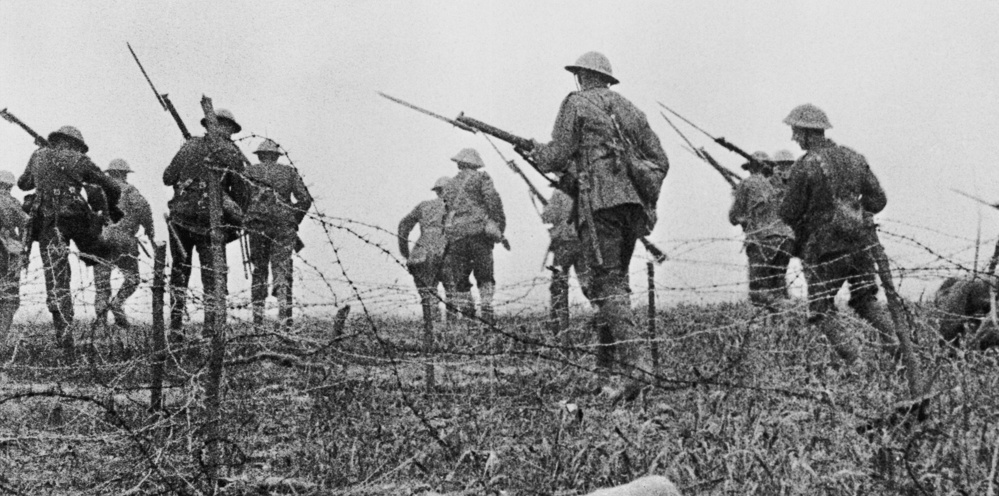
Image: A still from the famous "Battle of the Somme" film. While staged, it demonstrates the kind of obstacles facing British and Commonwealth soldiers on 1 July 1916 (Wikimedia Commons)
But the Battle of the Somme was not fought by anonymous soldiers. Each of the more than 18,500 men killed in action on 1 July 1916 was a real person with their own unique story.
It is our duty at the Commonwealth War Graves Commission to commemorate by name each and every one of these soldiers. We do this on our war memorials to the missing, such as Thiepval, and our many cemeteries, large and small, across the Somme.
Here, we explore the battle’s first day by looking at individual Somme stories of casualties who fought and fell on that fateful summer day over a century ago.
The First Day of the Somme through Six Lives
The experiences of these six servicemen illustrate the varied backgrounds of those who fought and fell on the Somme’s first day, as well as the tragic common thread that binds them.
Private William Branthwaite Manson
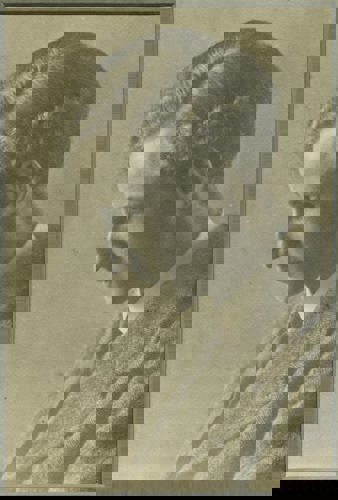 Image: William B. Manson (Royal Academy of Music)
William Manson, known as Willie B. Manson, was a promising young composer and student who studied at the Royal Academy of Music in London, but his story starts several thousand miles away.
Willie was born in Dunedin, New Zealand, in 1896, emigrating with his family to England at the turn of the 20th Century. Willie learned the piano at an early age, showing a strong talent for music, and in 1905 he was selected as one of the 10 boy choristers at the Chapel Royal Choir, St. James’ Palace, London.
By 1912, two years before the First World War broke out in Europe, Willie went on to a year of private coaching in music theory and composition at the Royal Academy of Music, where he majored in piano and composition.
Willie went on to receive numerous awards, including the prestigious Battison-Haynes Prize, the Silver Oliveria Prescott Prize, and the Charles Lucas silver medal for composition.
Willie volunteered in January 1916, joining a fresh wave of recruits that would be blooded on the Somme. Many of those who went over the top were recruits of 1914, or had enlisted as the war escalated and British manpower began to dwindle in the face of losses at Loos and other major actions.
Willie joined the 1st/14th Battalion, London Scottish Regiment and, with his unit, arrived on the Western Front in May 1916. By June, the London Scottish was stationed on the far end of the British lines on the Somme at Gommecourt.
On 1 July 1916, the First Day of the Somme, Gommecourt was attacked by the 56th (1st London) Division, of which the London Scottish was part, and the 46th (North Midland) Division.
To the north of the Gommecourt Salient, the 56th Division made some gains, even reaching the second line of German defences. In the south, the 46th met intense machine-gun fire and heavily defended German strongpoints, resulting in heavy casualties, stalling the British advance.
As happened across the Somme front, British artillery had failed to break the barbed wire and bunkers of the German line. After hours of struggling against determined defences, a German counterattack pushed the British soldiers back, inflicting heavy losses.
Willie was one of those sadly killed in the attack on the Gommecourt Salient, aged 20. An incoming shell struck him, and his body was sadly never recovered in the chaos and carnage of the unfolding battle.
Sadly, over half the British and Commonwealth casualties of the Battle of the Somme are missing; either their bodies were never recovered or could not be identified upon recovery.
These missing casualties are today commemorated on the Thiepval Memorial Missing of the Somme. Upon its monumental memorial panels are inscribed the names of more than 72,000 British and South African officers and enlisted men of the Somme.
Among their number is Private William Branthwaite Manson: a promising young composer and musician cut down before his creativity and musicianship could truly flourish.
Lance Corporal Charles Henry Vanhinsbergh
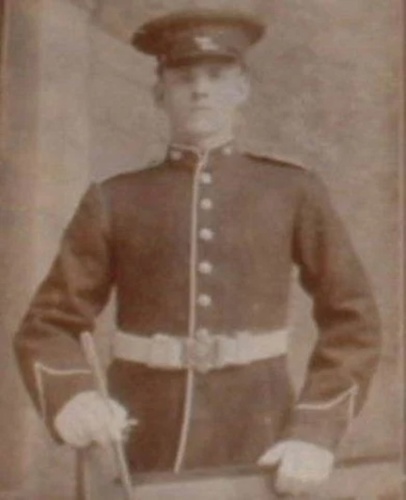 Image: Lance Corporal Charles Vanhinsbergh
Lance Corporal Charles Henry Vahinsbergh was born to parents Adolphus and Elizabeth Vahinsburgh of Hackney, London, in 1894. Adolphus was born in Belgium and moved to England with his family as a young child, settling in Britain’s capital.
Charles was one of nine children born to his parents and one of eight boys. As the Great War grew in magnitude, seven of the Vanhinsbergh boys found themselves in uniform, but Charles’ military career begins shortly before the guns fired for the first time on the Western Front.
Charles enlisted in Stratford, probably between 6 and 15 April 1914, serving in the 2nd Battalion, King’s Own Yorkshire Light Infantry (KOYLI), a battalion of the regular army, with service number 11077.
The King’s Own Yorkshire Light Infantry and the men of 2nd Battalion had a busy war up to the First Day of the Somme. Arriving in France in August 1914, the Battalion was in action at some of Britain’s earliest Western Front Engagements, including the Battles of Mons, Le Cateau, the Marne, the Aisne, La Bassee, Messines and 1st Battle of Ypres.
1915 brought no respite for the boys of 2nd Battalion, earning battle honours in the 2nd Battle of Ypres and the Capture of Hill 60. The relentless routine of being in the front line, in reserve and resting must have felt endless as the months passed.
Much of the first half of June 1916 was spent northeast of Albert, effectively in the centre of the Somme front, preparing for a planned attack.
On 27 June the men went into the trenches only to learn that the attack, originally planned for 29 June had been postponed for 48 hours. The last four days of June in the trenches 5 men of the battalion were killed and 54 wounded.
In the early hours of 1 July 1916, the 2nd Battalion acted as a support battalion and formed up in Kintyre and Caithness trenches, about 300 yards east of Authuille village.
The 2nd Battalion’s war diary details the mood amongst the men ahead of the assault:
“The strain was beginning to tell on the men by now, for they had been for 36 hours engaged in constant bombing with the enemy and had had no sleep. However, they showed great endurance and stuck it well until, at about 9 pm on the evening, we were relieved by the 14th Bde and withdrew to the dugouts at Crucifix Corner.”
Battalion casualties by the end of the day amounted to 5 officers killed and seven wounded, 42 other ranks killed, 242 wounded, 46 missing and 7 with shell shock. One of those casualties was Lance Corporal Charles Stanley Vanhinsbergh.
Charles was 22 years old when killed in action. Charles’ body has never been found. He is one of 56 men of 2nd Battalion, The King’s Own Yorkshire Light Infantry commemorated on the Thiepval Memorial.
While many of the recruits that went “over the top” on July 1, 1916, were fresh, the men of the KOYLI, such as Charles, were professional soldiers ahead of the conflict, proof that the war claimed fresh conscripts and experienced servicemen indiscriminately.
Private Willis White
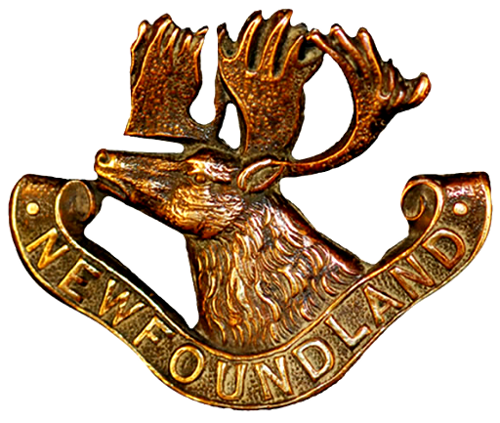 Image: Cap badge of the Royal Newfoundland Regiment
The First Day of the Somme is rightly remembered as the British Army’s blackest day, but the story of the Somme goes beyond just the United Kingdom.
As the battle widened, more and more Commonwealth troops were moved into the Somme sector as British losses mounted. But others were there on the very first day.
The Dominion of Newfoundland, although small, sent its sons to fight on the Western Front. As for their British comrades, the First Day of the Somme would be devastating for the Newfoundlanders.
At Beaumont-Hamel, the Royal Newfoundland Regiment went into action. Charging across No Man’s Land, German artillery and machine-gun fire ripped through the Newfoundlanders, devastating the regiment.
801 Newfoundlanders went into battle that day. The roll call the next day made for grim reading. 223 officers and enlisted men had been killed, 386 wounded, and a further 91 were missing. No unit suffered as heavily as the Royal Newfoundland Regiment on the Somme’s opening day.
Among those killed was Private Willis White. Willis was born in New Harbour, Newfoundland in June 1896. A lumberman by trade, he lived at Comfort Cove, Notre Damme Bay, before joining up.
Sadly, Private White was one of the 91 Newfoundlanders missing from the attack on the First Day of the Somme. Today, he is commemorated alongside his comrades on the Newfounald Memorial at Beumont-Hamel. Here a bronze Caribou statue solemnly overlooks the preserved trenches where the Newfoundlanders fought and fell in such high numbers.
As the Somme went on, more soldiers from around the British Empire, including Australians, New Zealanders, Indian cavalrymen, and South Africans, were hurled into the battle. The effects were no less devastating.
Private White’s story reminds us that the Somme was not just a British battle. Men from across the Empire fought and died together, and would continue to do so until the Somme battle ended in November 1916.

Want more stories like this delivered directly to your inbox? Sign up for our newsletter for regular updates on the work of Commonwealth War Graves, blogs, event news, and more.
Sign UpCaptain Wilfred “Billie” Nevill
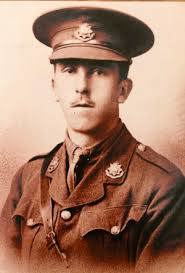 Image: Captain Wilfred Nevill
Born on 14 July 1894 in London, Wilfred Percy Nevill, also known as Billie, was the son of a wealthy coal merchant. He had three brothers and three sisters.
Billie attended Dover College, an independent school, where he was a prefect. A keen sportsman, he played both cricket and hockey at Dover, captaining both sides, as well as playing rugby and taking part in athletics.
Billie went on to Jesus College, Cambridge in 1913, studying the Classical Tripos. Whilst at Cambridge, Billie continued to play sports, most notably playing hockey for the college. An Annual Report states that he was the only freshman worthy of his colours.
Enlisting in November 1914, Billie was commissioned into the Army as a Second Lieutenant, initially with the East Yorkshire Regiment but was attached to the East Surrey Regiment. By 1915, he had risen through the ranks and had reached the rank of Captain.
By the First Day of the Somme, the East Surreys were based at Carnoy ahead of the village of Montauban towards the south of the Somme sector. The German lines were just 300 yards away from the East Surreys’ position.
The First Day of the Somme has entered legend for a myriad of reasons, and Captain Nevill’s exploits have their own plays in the Somme mythos.
At the start of the battle, Billie is recorded to have kicked footballs into No Man’s Land.
The story goes that, when on leave in May 1916, Billie purchased several footballs to bring back for his men.
There are disputes over the exact number, with some reports stating that four were to be used; historians widely agree now that there were only two. The idea was the footballs were to reassure his men and give them something to focus on ahead of combat, taking their minds off the battle to come.
Each confirmed ball had text painted on it, with one reading “The Great European Cup-Tie Final. East Surreys v Bavarians. Kick off at zero.” The other one had the words “NO REFEREE”, as a reminder that rough rules were allowed during the battle when they faced their enemy.
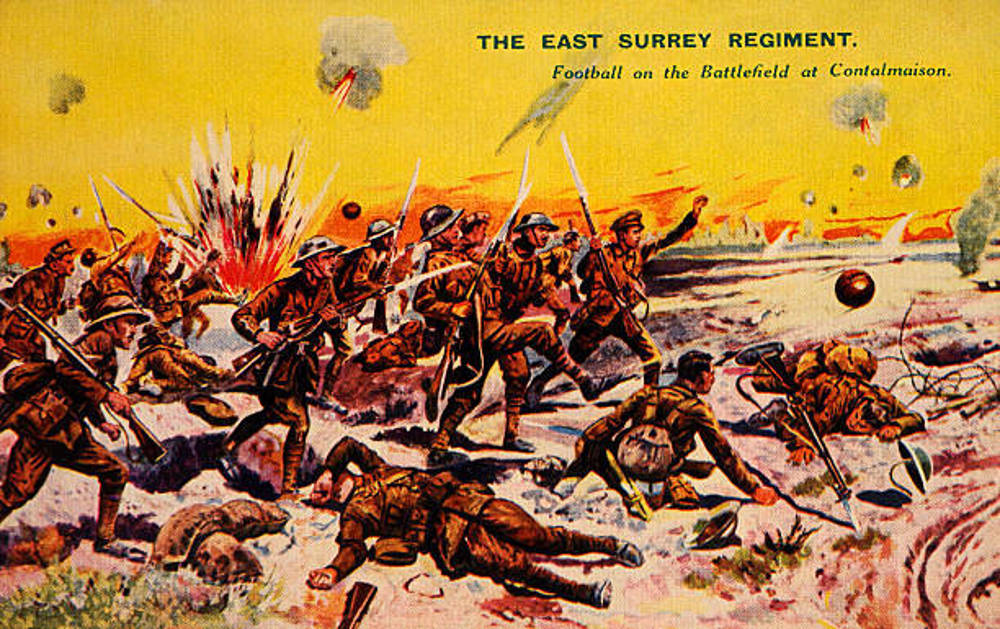
There was to be a prize for the platoon that crossed No Man’s Land and into German trenches first, awarded by Billie. This became known as the “Football Charge”.
Unfortunately, Billie wouldn’t live to award the prize to the winning platoon. He was killed in action during the advancement. A fellow officer, Second Lieutenant C.W. Alcock, would write to Billie’s sister in the aftermath, which explained what happened to her brother during the attack.
In the letters, Alcock spoke highly of Billie and his approach, stating:
“Five minutes before ‘zero’ hour (7.30 am), your brother strolled up in his usual calm way, and we shared a last joke before going over. The Company went over the top very well, with Soames and your brother kicking off with the Company footballs
“The surviving men of B Coy (now, alas, a mere handful) had the greatest admiration for Nevill’s qualities as a soldier & a Company Commander; but in addition to this, his personal charm & never failing good humour and courage, the interest he took in every individual under his command, made him loved by everyone”.
Today, Billie is buried alongside more than 800 First World War servicemen in Carnoy Military Cemetery.
Lieutenant William Noel Hodgson MC
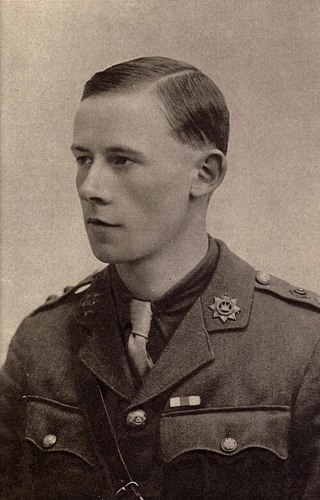 Image: Lieutenant William Hodgson
Lieutenant William Noel Hodgson, known as “Smiler” to his friends, was born on 3rd January 1893 in Thornbury, Gloucestershire, the youngest child of Henry Bernard Hodgson, Bishop of Saint Edmundsbury and Ipswich. Educated at Durham School and later at Christ Church, Oxford, Hodgson was a distinguished student, pursuing classics with academic promise that was to be lost to war.
When the War began, Hodgson volunteered in 1914 and was commissioned into the 9th Battalion, Devonshire Regiment, where he soon took on the gruelling role of Bombing Officer, tasked with supplying grenades to his men under fire, and often leading by example.
At the Battle of Loos in September 1915, Hodgson held a newly captured trench against fierce German assault for 36 hours, despite being isolated from support and running low on ammunition. His leadership and composure under fire earned him the Military Cross and a mention in dispatches for conspicuous gallantry.
By 1916, Hodgson’s battalion had moved to the Somme.
On 1st July, the opening day of the offensive, Hodgson was directing bombers into the terrible carnage near the village of Mametz.
During the assault, carried out through dense mud, barbed wire, and withering machine-gun fire, Hodgson personally conducted bombing runs into enemy trenches.
Tragically, while bringing ammunition forward for his men, he was fatally shot, not before writing a final, beautiful poem, “Before Action,” penned the night before the attack. It reflects a stoicism and spiritual resolve rarely captured in wartime verse:
"I, that on my familiar hill
Saw with uncomprehending eyes
A hundred of thy sunsets spill
Their fresh and sanguine sacrifice..."
Killed instantly, Hodgson was just 23 years old. He lies in Devonshire Cemetery, Mametz, Row A, Grave 3, in a plot named Mansell Copse.
Devonshire Cemetery was established on 4 July 1916 in the old British frontline trench system in Mansel Copse. Men of the 9th Devonshire Regiment had held the trench before going over the top on 1 July 1916, where they took extremely heavy casualties.
After the attack, a wooden board was erected close to the Devonshires’ mass grave, bearing the legend: “The Devonshires held this trench, the Devonshires hold it still.”
The same inscription is now carved in stone upon a memorial tablet, unveiled in 1986, 70 years after the Devonshires went into action.
War poets recorded their experiences, emotions, and feelings across the war. Through the work of men such as William Hodgson, we’ve come to get a better understanding of what it was like to serve on the front during the First World War.
Second Lieutenant Basil Henry Belcher
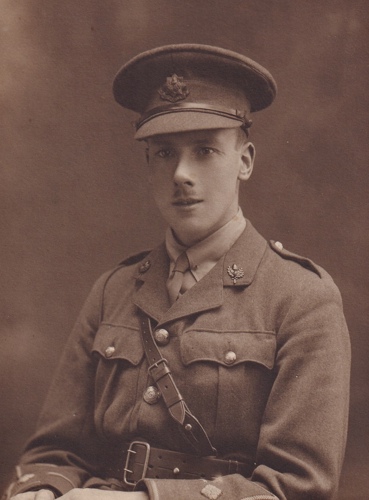 Image: Second Lieutenant Basil Belcher
As we mentioned earlier, nearly half the casualties of the Somme are missing.
Families across the UK and Commonwealth often held out hope that their loved ones would survive the battle, but amidst the mud, blood and fire of the Great War’s battlefields, it was difficult to pinpoint exactly what happened to soldiers, even if their remains were later recovered.
Such as the case of Second Lieutenant Basil Henry Belcher.
Basil was born in Newbury, Berkshire, on 3 August 1894 and was educated at Brighton College, where he was a member of the Officers' Training Corps.
At the outbreak of war, Basil and his elder brother, Wilfred, joined the 18th (Service) Battalion, Royal Fusiliers (1st Public Schools Battalion), and both were commissioned as Second Lieutenants in the 3rd Battalion, Royal Berkshire Regiment on 16 May 1915.
Basil transferred to the 2nd Battalion and served with them on the Western Front from March 1916. The Royal Berkshires were one of the British regiments to experience success on the First Day of the Somme. Storming over No Man’s Land near Montauban, the Berkshires captured their section of German frontline trench in just 23 minutes.
Despite their success, determined German fire and counter-attacks pushed the Berkshires back.
Basil was killed in action on 1 July 1916 as the Berkshires went into action, according to a report from Newbry Weekly News on 13 July 1916, two weeks after the action:
“Mrs W H Belcher, of Newbury, has received a telegram from the War Office, stating that her younger son, 2nd Lieut B H Belcher, Royal Berks Regt, has been reported missing on July 1st. From letters received from her elder son, it is feared that there is very little hope of his being alive.
“The battalion made an attack on the morning of July 1st, and came under very heavy machine gun fire, and 2nd Lieut B H Belcher was seen to fall just after leading his platoon over the parapet.”
For almost a year, the family may have held out some hope that Belcher would turn up in a list of prisoners of war, though the report that he fell close to the British lines must have made them fear the worst.
Sadly, confirmation came ten long months after Basil was killed in action
Confirmation came ten months after he fell, as reported in the Newbury Weekly News of 10 May 1917:
“In view of the fact that no further information has been forthcoming about 2nd Lieut B H Belcher, Royal Berks Regt, reported missing July 1st, 1916, the Army Council conclude that he must have been killed in action on that day… He went into action on the morning of July 1st, and was seen to fall soon after leaving the trench. The ground was so swept away by the enemy’s fire that search was impossible.”
The agonising wait for confirmation of Basil’s fate was something families up and down the country felt, not just on the First Day of the Somme, but across the ongoing battle and wider war.
Basil’s body was recovered and identified, so he is thankfully not among the missing. Burial in CWGC war cemeteries gave families a place to visit and grieve for their loved ones, something many families did after the war, making the sad pilgrimage to the final resting places of their sons, brothers, fathers, uncles, and cousins.
Today, Basil rests alongside more than 7,000 Commonwealth servicemen of the Great War at Serre Road No.2 Cemetery. A testament to the slaughter, just over 2,000 of those buried here were identified. The remaining 5,000 men are commemorated by name on war memorials like Thiepval.
What these lives reveal about the First Day of the Somme
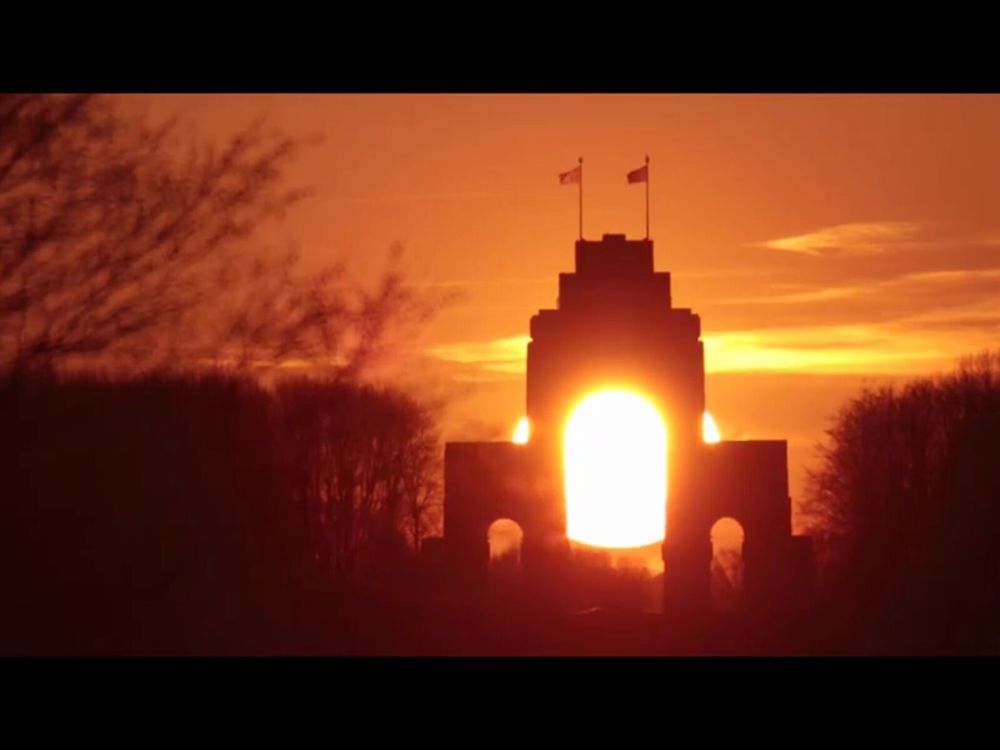
Image: Thiepval Memorial to the Missing of the Somme is our largest war memorial in the world, commemorating over 70,000 British and South African servicemen with no known war grave
Shared date, different realities
The First Day of the Somme took place across a lengthy frontline, drawing in tens of thousands of British and Commonwealth soldiers, supported by a French attack towards the south of the Sector.
These six stories of men from different backgrounds illustrate the different but shared realities facing the men on the Somme. Some units and soldiers made it to their German lines, taking and holding their objectives before being forced to withdraw; others were cut down as soon as they stepped over the parapet.
What commemoration makes visible
The commemoration of these servicemen brings home the reality of the carnage experienced by British and Commonwealth troops on 1 July 1916.
Take the Thiepval Memorial, for example. This huge structure rises high above the former Somme battlefields; its name panels are covered in tens of thousands of names of missing First World War Servicemen.
Towards the back of the memorial grounds, facing the former Somme frontlines, sits Thiepval Anglo-French Cemetery, where rows of serried CWGC and French grave markers stretch back before rolling hills, a reminder of the international effort of the Battle of the Somme.
The Thiepval site is symbolic of the huge loss experienced on the Somme, while also highlighting the international effort that was the First World War.
But Somme commemoration is far from restricted to one site. There are over 450 CWGC locations dotted across the Somme, from major war memorials to our purpose-built war cemeteries, to individual graves in local churchyards.
These sites are physical reminders of the sheer scale of loss that occurred on the First Day of the Somme. Here, French, British, and South African soldiers are commemorated forever, so their loss and their names are never forgotten.
How to explore Battle of the Somme stories through CWGC
Find a name
We commemorate each and every one of the Commonwealth servicemen who died on the First Day of the Somme and the wider battle.
You can use our Find War Dead tool to search CWGC records to discover who they were, which unit they served with, and where they are commemorated.
Explore stories from the Battle of the Somme
As this blog proves, Somme stories are some of the most moving, interesting, and inspiring in First World War history.
On For Evermore: Stories of the Fallen, our digital stories archive, we have collated many tales from the First Day of the Somme and the ongoing battle. This way, we preserve and share the memories of those who fought and fell in this most notorious battle.
Visit For Evermore today to discover stories from the Battle of the Somme.
Have a story of a casualty we commemorate and want to share it? We encourage you to upload it to For Evermore to help grow our archive and ensure these stories are never forgotten.
Plan a visit to the Somme
With hundreds of sites around the Somme, there are many places where you can experience the battle through our Somme war cemeteries and memorials.
Use our Find Cemeteries & Memorial tool to locate Somme sites that interest you.
What this means today: Commemorating the Somme through individual lives
Why names still matter
The people who fought on the Somme were more than just names etched into a headstone or carved into a memorial panel. Each was a real living, breathing person with their own hopes and aspirations. They were someone’s son, their father, their brother, their uncle, their cousin.
These names still matter as their loss, while tragically, ultimately paved the way for Allied victory in the First World War.
Losing their names from history is something we are keen to avoid. They all played a role in one of the most significant events in British history, military or otherwise. We must never lose sight of their experiences, or who they were, so we may learn from the past and prevent such events in the future.
From Somme history a modern connection
Today, Commonwealth War Graves Commission Somme cemeteries and memorials play an important role in preserving the memory and meaning of the Somme.
These sites, preserved for over a century or more, act as physical reminders of what unfolded across the Somme between July and November 1916.
The physical link between past and present helps us remember exactly what the soldiers on both sides experienced – and the enormous cost in human life.
Carrying stories forward
As you read these stories, we hope you share them with your friends and family and explore our stories archive to find more stories from the Somme.
Carrying their stories forward ensures they will never be forgotten.
Be sure to visit For Evermore to read more stories from the Battle of the Somme and to share your own.