

16 March 2026
Why commemoration still matters today
Commemoration is at the core of what we do at the Commonwealth War Graves Commission. Discover why commemoration of the war dead still matters today.
Why Commemoration Still Matters Today
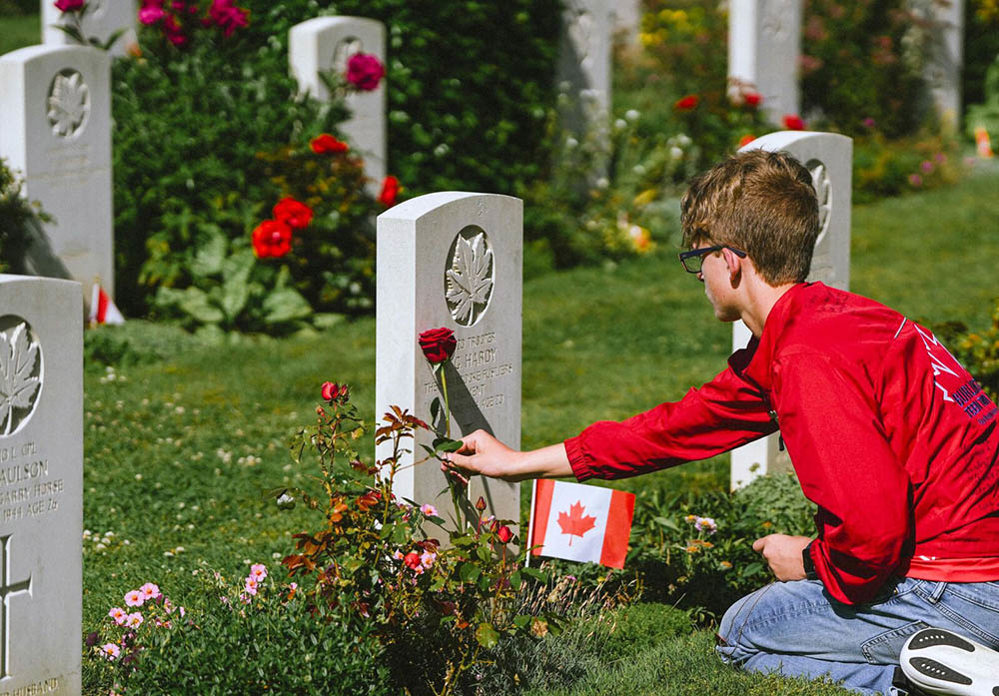
The importance of commemoration is a continual debate. Why do we commemorate the war dead? Why does commemoration matter in the 21st century?
The First World War has long faded from living memory, and the veterans of the Second World War are slowly but surely leaving us.
As of 2024, according to Blesma, the Limbless Veterans Charity, between 300,000 and 500,000 Second World War veterans remain worldwide. Royal British Legion research from 2025, 80 years after VE/VJ Day, found that just 8,000 British WW2 veterans were alive.
As the living witnesses to the world-changing events leave us, commemoration has taken on a new level of importance. Sharing and remembering the experiences of those who fought and fell in World Wars is essential to understanding the people, events, and causes that led to these world-changing conflicts.
With more than 1.7 million men and women in our care, each with their own stories, commemoration is at the core of our work, now and into the future.
At a Glance: What’s on This Page
This blog article covers the importance of commemoration, including:
- What commemoration means
- Why commemoration remains relevant as living witnesses fade
- How commemoration connects generations
- The global scope of Commonwealth commemoration
- How CWGC keeps commemoration alive through daily care, research, and storytelling
- What commemoration asks of us today
What Commemoration Means
Commemoration means to remember, honour, or show respect to a person, a group, or an event.
“Commemoration of those who died in the two World Wars is still really important today,” said Commonwealth War Graves Director of Education, Outreach and Volunteering Simon Bendry. “As the number of people with a direct connection to those we commemorate grows ever smaller, it is vital that we continue to share and pass on the stories of those who fought and died.
“New generations need to discover these stories of family members, and people from their own communities, and to be inspired by the cemeteries and memorials where they are commemorated.”
Commemoration as an active responsibility
At Commonwealth War Graves, we have been charged with the commemoration of the Commonwealth’s Fallen of the World Wars in perpetuity.
The very nature of our organisation means commemoration of all the men and women from around the world in our care is an ongoing, permanent responsibility.
On a practical level, modern commemoration for us is daily horticultural care of our worldwide estate, careful cleaning and maintenance of headstones, and painstakingly updating and maintaining our records for the utmost accuracy.
But Commemoration goes beyond the simply practical…
Honouring individuals, not just events
Commemoration today means more than just remembering events like D-Day or the Battle of the Somme: it means remembering the people behind these events and recognising and appreciating their loss.
Individuality has always been a core tenet of the work of the Commonwealth War Graves Commission.
Where possible, our approach is to record and present each person’s name and service details with dignity, whether that be on a headstone in your local churchyard to an inscription on a monumental memorial to the missing.
With projects like For Evermore, modern commemoration at the CWGC has taken on a new phase. Now, we are able to share the stories of those in our care, helping preserve their memories and experiences for future generations.
Beyond ceremonies and anniversaries
Commemoration can take many forms: from the simple laying of a wreath on a war memorial or war grave, to simply talking to a family member about your relatives’ and ancestors’ experience in wartime, to visiting war graves locally and everything in between.
It’s important to mark major battle anniversaries and events, such as Armistice Day, the D-Day Invasion, and so on – but commemoration is broader.
It includes research projects, development and sharing of educational resources, recovery and identification work, community outreach, and much more.
For us at the Commonwealth War Graves Commission, commemoration of the Commonwealth’s war dead remains absolutely central to our work.
Why Commemoration remains relevant today
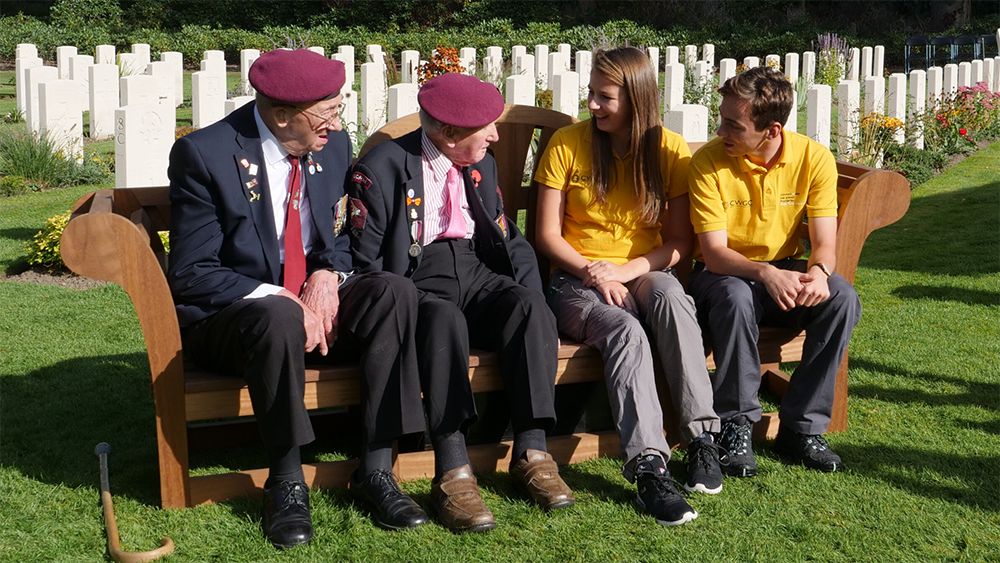
As the last living memories of the World Wars drift away, commemoration shifts from personal memory to collective remembrance and responsibility.
We still see an appetite from the public for World War history; from the millions of people marking events like V-E Day and Remembrance Day to visitors to our sites, coming to pay their respects.
Our sites welcome hundreds of thousands of visitors per year, with more than 100,000 visiting Bayeux War Cemetery in the D-Day 80th Anniversary Year. The Thiepval Memorial regularly attracts hundreds of thousands of visitors, likewise Tyne Cot Cemetery.
With the public still engaged, we can help keep those in our care in our collective memory.
Lessons that endure beyond history
The importance of commemoration is that it is more than just remembering; we can actively learn from the people and events we commemorate.
Commemoration preserves the human consequences of conflict. We have 1.7 million reasons why we commemorate the World Wars.
Their experiences are useful in better understanding who fought in these conflicts, why they did so, how the conflicts began, and the sheer human cost of global warfare.
Preserving them underscores the importance of commemoration: using these experiences to understand our past better and, if possible, to influence our future.
The cost of forgetting
When the memory of the World Wars disappears from public memory, we will be losing a vital link to our shared past.
For many countries in the Commonwealth, their participation in the World Wars was often the first steps towards independence, built from the sacrifice of so many, richly ingrained in their national stories.
Commemoration is a safeguard against losing these vital connections. It keeps evidence, context, and experiences alive for future generations.
Our ongoing work in caring for the final resting places of the Commonwealth’s war dead, their places of commemoration, and engaging with the public on who we are and what we do, our education and outreach programmes, form part of commemoration.
Commemoration across generations
Commemoration is a throughline that links us all in a common, shared history. It asks generations to interact, remember, and interpret the past.
Passing memory forward
Reaching young people is an important part of our work, ensuring commemoration and remembrance and the pubic are connected as the years go by.
Education and outreach are vital tools in this strategy. Each year, we reach roughly 15,000 school-age learners to engage them with our history and the stories of those we commemorate.
We have created a suite of in-class education resources for all key learning stages to help children, teenagers, and university-age students better understand who we are, the importance of our work, and why the World Wars still matter.
For example, in 2025, alongside the South Africa Elevate Programme, we reached 4,000 high school students across Cape Town with new ed-tech solutions to help them better understand the roles and commemorations of Black South Africans in the World Wars.
Annual events like War Graves Week, where we celebrate our own work and showcase it to the public worldwide, are another way we push memory forward.
“War Graves Week is an annual initiative by the Commonwealth War Graves Commission to help the public discover the stories behind the names in our cemeteries and memorials,” Megan Maltby, Commonwealth War Graves Head of Public Engagement, explains. “It is a moment dedicated to education, connection and an opportunity to understand not only who we commemorate, but why their legacy and our work still matter today.
“For me, War Graves Week is a reminder that remembrance is a shared responsibility. It highlights the extraordinary global effort that goes into caring for these sites, from Europe and Africa to Asia, the Pacific, and beyond. Our staff and volunteers across the world take part, demonstrating the work that goes into maintaining cemeteries, researching histories, and welcoming communities to learn more about the individuals in our care.
“By sharing their stories, through tours and events, and highlighting the dedicated, often unseen work that ensures their resting places remain places of dignity and reflection, we help future generations understand the human cost of conflict and appreciate the importance of carrying these lessons forward.”
Also helping us push commemoration further is our charity arm, The Commonwealth War Graves Foundation.
Through projects such as the CWGF Guides Programme, we can reach new, younger audiences, ensure the memories of the people in our care are preserved, and give young people new ways to develop and engage with our shared heritage.
In fact, the Cape Town education project was partly funded by a grant from the Foundation, all part of its commitment to reaching new generations.
Why Commemoration cannot stand still
Technology and society do not stand still, and neither must commemoration.
To reach future generations, organisations like ours must think practically about new technologies, ideas, and innovations.
We are already exploring this with projects such as the For Evermore digital stories archive or the technology-driven project in Cape Town, which is helping us reach new avenues.
But this also means taking proactive and forward-thinking approaches to horticulture and maintenance. Changing climates and weather worldwide have led to us to take new approaches to cleaning and caring for our sites.
For instance, the 39,000 Trees project has been developed to protect our sites against the effects of a changing climate, while also safeguarding the horticultural heritage of our cemeteries and memorials.
By using the right plant for the right environment approach, backed up by software such as TreePlotter, we are better able to shape a healthier, more climate-resilient landscape across our global estate.
By protecting our sites, we ensure the people they commemorate are never forgotten.
Shared responsibilities across time
Volunteers, local partners and international governments all play a role.
Six Commonwealth governments provide us with our annual funding to properly commemorate their war dead:
- United Kingdom
- Canada
- Australia
- New Zealand
- South Africa
- India
Our global workforce and volunteer community sustain the daily work of commemoration.
In the UK, we’ve welcomed thousands of volunteers, from 300 Guest speakers to our Eyes On, Hands On programme participants who help us care for over 160,000 headstones nationwide. With their help, we are keeping commemoration alive in different corners of the country.
The success of our volunteer programmes domestically has seen further rollout. In Canada, hundreds of volunteers are helping care for our sites with the expansion of Eyes On, Hands On.
This distributed model of care means commemoration is not the preserve of a single generation or nation but a shared, ongoing duty.

Want more stories like this delivered directly to your inbox? Sign up for our newsletter for regular updates on the work of Commonwealth War Graves, blogs, event news, and more.
Sign UpA global act of commemoration
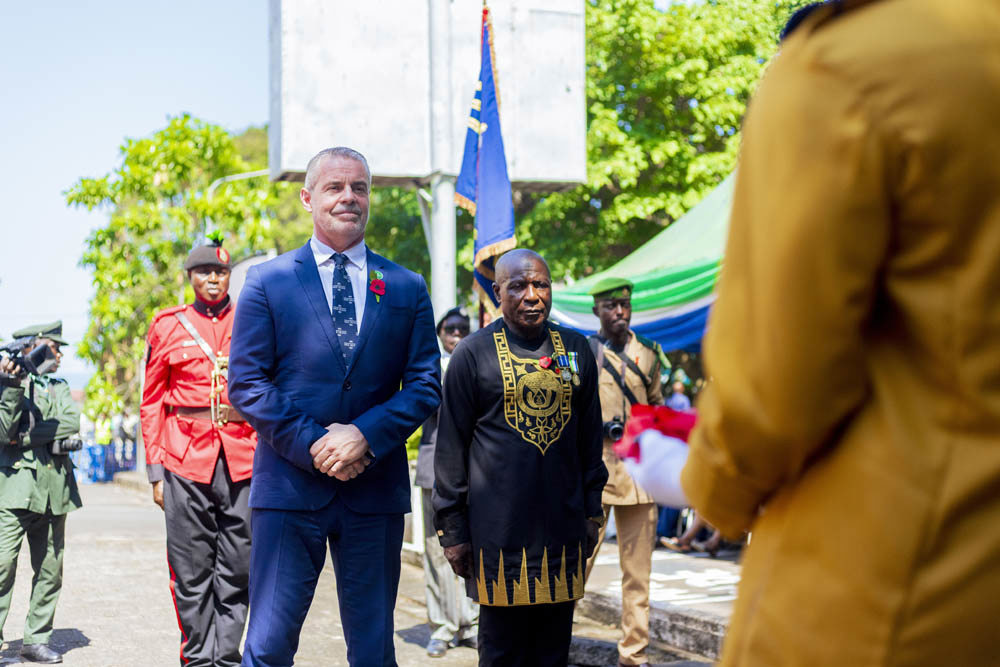
Commemoration under CWGC is international by design: it recognises the global scale of the two world wars and the diversity of those who served.
A shared story across nations and cultures
Commemoration extends far beyond the Western Front and the former battlefields of Europe. We care for over 23,000 locations in more than 150 countries and territories worldwide. These range from single graves on remote Scottish islands to our major memorials in Singapore and Thailand, to our constructed war cemeteries such as Tyne Cot.
This global footprint represents the extent of the World Wars and also our enormous geographic reach. The people of the Commonwealth are many and varied, but all are equal in commemoration.
Equality in commemoration
At the Hollybrook Memorial in Southampton, England, you will find the name of Lord Kitchener – Secretary of State for War and possibly the highest-ranking figure to die in the First World War – alongside the names of over 600 members of the South African Native Labour Corps who died when the SS Mendi sank in February 1917.
This example is a clear demonstration of our commitment to equality in commemoration. From the outset, there was a desire that each individual casualty should be commemorated equally and by name, regardless of their rank in military or social life, or their ethnicity or religion. This principle has been central to our mission since our founding and remains a guiding standard for how names are recorded and remembered today.
Despite this commitment, there are historical cases where this principle of equality was not upheld. The reports from our Non-Commemoration Programme have highlighted a number of areas where Commonwealth war dead were not commemorated appropriately, or not commemorated at all.
Since the release of our First World War report in 2021, our teams have been working to address these historical inequalities in commemoration, and the work continues today as we work to ensure that all of those we commemorate receive the proper recognition.
Learn more about the work of the Non-Commemoration Programme
Collective memory on a global scale
The World Wars truly live up to their name. On two separate occasions, the war was plunged into massive conflict, drawing in people of various religions, nationalities, races, and beliefs.
Together, we have a shared, collective memory that has shaped our nations, and our cemeteries and memorials help tell the story of this shared heritage.
Perfect examples of this are the National Memorials we care for on behalf of our member governments in France and Belgium, such as the Neuve-Chapelle Indian Memorial or the Delville Wood South African Memorial.
However, historical imbalances in commemoration equality have previously meant thousands of those who served with in the Armed Forces of the British Empire had been overlooked.
Our Non-Commemoration Programme, founded in 2020, has been working to redress these imbalances. By working with organisations such as the Kenyan Defence Forces, university archives, and member governments, we have been able to identify thousands of previously not commemorated service personnel.
How CWGC keeps commemoration alive
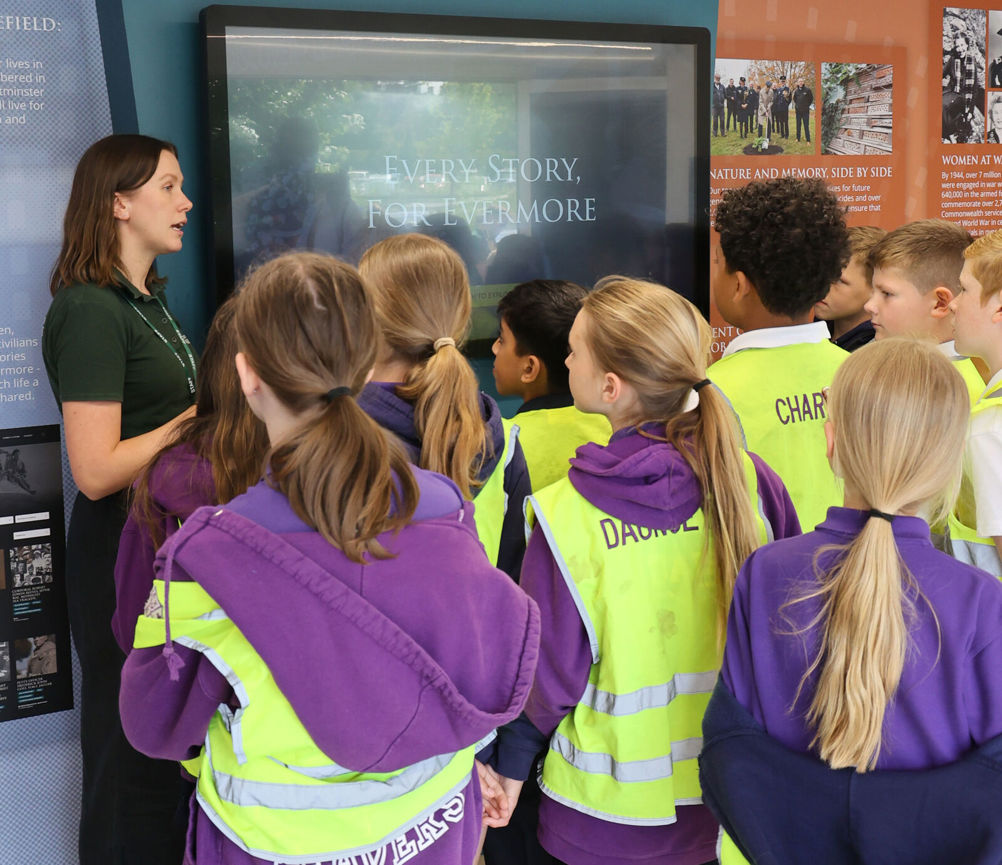
Commemoration is not an abstract ideal; it is a set of practical, expert activities carried out every day.
Caring for cemeteries and memorials worldwide, CWGC’s horticulture and conservation teams maintain headstones, plant borders, and manage landscapes so that sites remain places of dignity and reflection.
But we are also exploring innovative ways to expand commemoration beyond our physical work.
From records to stories: For Evermore and beyond
The For Evermore digital archive invites the public to add personal stories, photographs and memories to the official record, transforming names into narratives that can be searched and shared.
This project helps bridge the gap between our records and family memory, inviting you to join us in personal commemoration by preserving the stories of your relatives for future generations to discover, learn, and remember.
Adapting without losing meaning
Modern commemoration balances innovation with respect for tradition: digital tools increase access to records, sustainability programmes protect landscapes for future generations, and conservation practice preserves material heritage.
These adaptations ensure that commemoration remains relevant without losing its meaning or value.
Recovery, identification and ongoing research
Each year, we are informed of 80 to 150 discoveries of human remains. Every effort is made to identify and properly commemorate these individuals by our Recovery and Commemorations Teams.
As further information has come to light over the years, and through the diligence of researchers, the public, families, our Commemorations team, national defence authorities, and relevant agencies, it has occasionally been possible to name some of the unidentified individuals in our war graves.
Likewise, when new discoveries of remains are found and recovered, every effort is made to identify the casualty if possible.
Once recovered, each casualty goes through a detailed investigation comparing physical findings with military records of the war and the missing.
If a Commonwealth service person is identified, a reburial service takes place, arranged alongside the relevant military authorities, with family members invited to attend.
The relevant defence ministry of the casualty’s nationality arranges the funeral. Casualties are buried with full military honours. Commonwealth War Graves is responsible for the digging of the grave and the installation of a new CWGC headstone.
If we cannot identify the casualty, the person’s remains are reburied with the same respect and ceremony under a CWGC headstone inscribed with “Known Unto God”.
If we have been able to identify a previously unknown casualty, a rededication will take place.
This means their final resting place will be rededicated with a new Commission headstone bearing their name and any other identifying features we have been able to ascertain (regiment, nationality, etc.).
What commemoration asks of us today
There are simple, meaningful ways to take part in commemorating our fallen.
Turning memory into a living legacy
Sharing a story with a younger person, bringing a class to a cemetery, or contributing to our digital archive turns remembrance into a living legacy.
This way, we can preserve and share the stories of the 1.7 million men and women commemorated by the Commonwealth War Graves Commission, ensuring their experiences and legacy are shared with future generations so they are never forgotten.
Carrying the story forward
Commemoration asks us to be curious and to care: to look up a name, to read a story, to support conservation and research.
You can find all of these across our website, whether that’s using our Find War Dead tool to search through our records, downloading a research guide, or sharing a story on For Evermore.
Simply taking the time to visit one of our sites and read the names on the serried rows of headstones is a simple but powerful act of commemoration.
Participation, however large or small, is down to you.
At Commonwealth War Graves, we protect and promote the living legacy of all 1.7 million men and women in our care, ensuring their experiences and stories are never forgotten.
Why protecting commemoration protects our future
Memory is a foundation for understanding the past to see what we can learn in the present and create a better future.
When we protect commemoration, we protect a resource that helps societies reflect on the consequences of conflict and the value of human life. We have 1.7 million reasons why this is important at Commonwealth War Graves.
Memory as a foundation for the future
Commemoration preserves testimony that can inform education, policy and public debate, but also deeply reminds us of the human cost of war.
Our ongoing work in recovery, research and storytelling ensures we never lose our connection to the World Wars.
Support our work and help honour the 1.7 million who never returned home
Author acknowledgements
Alec Malloy is a CWGC Digital Content Executive. He has worked at the Commonwealth War Graves Commission since February 2022. During that time, he has written extensively about the World Wars, including major battles, casualty stories, and the Commission's work commemorating 1.7 million war dead worldwide.