

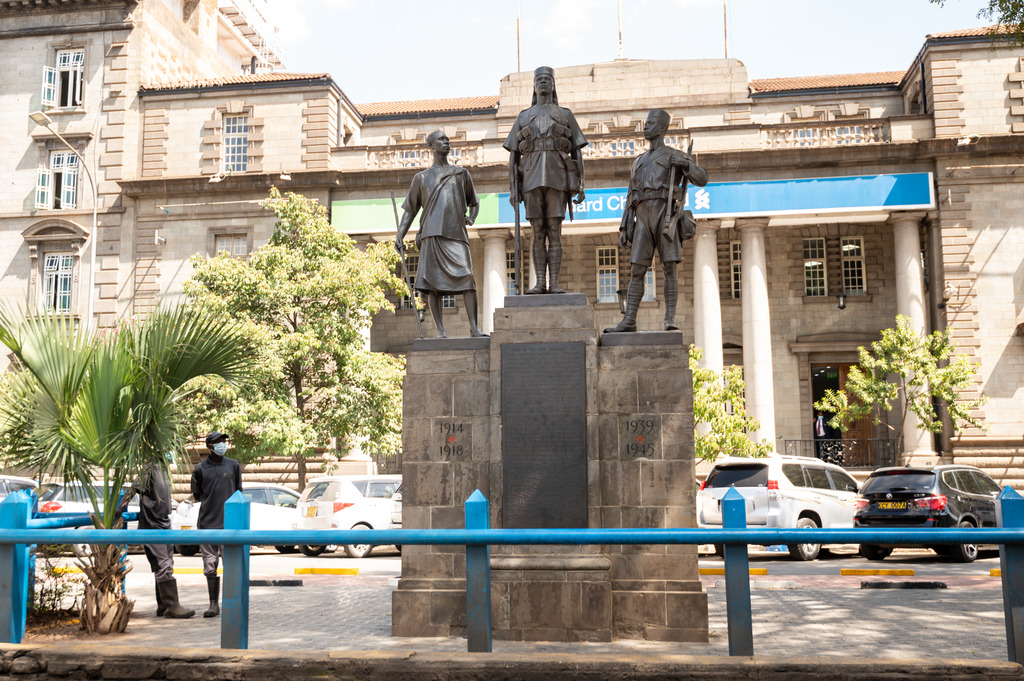
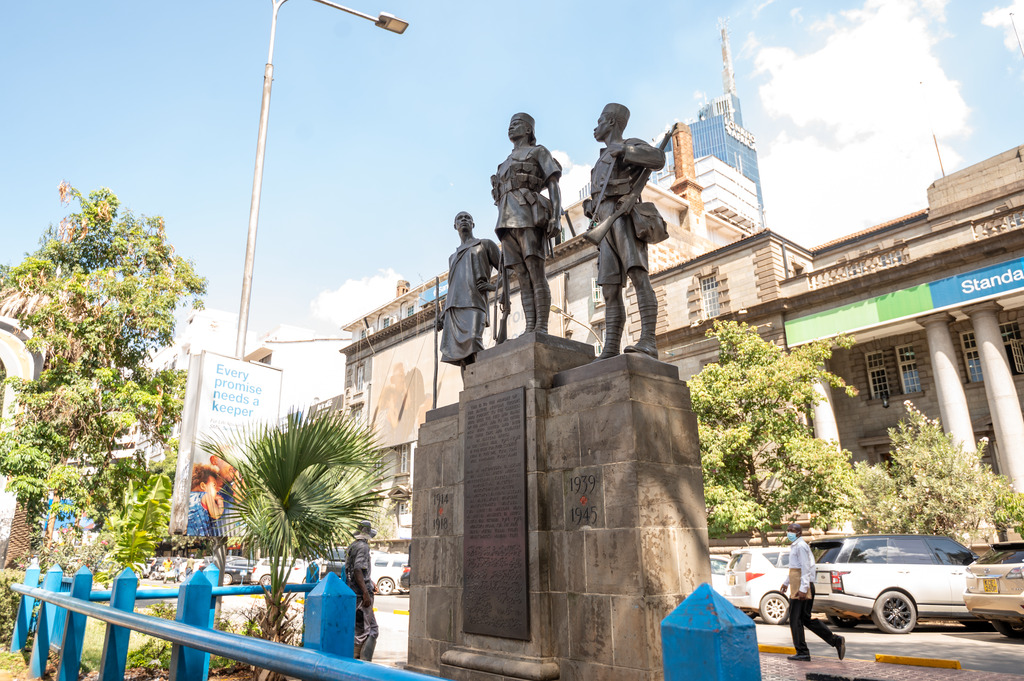
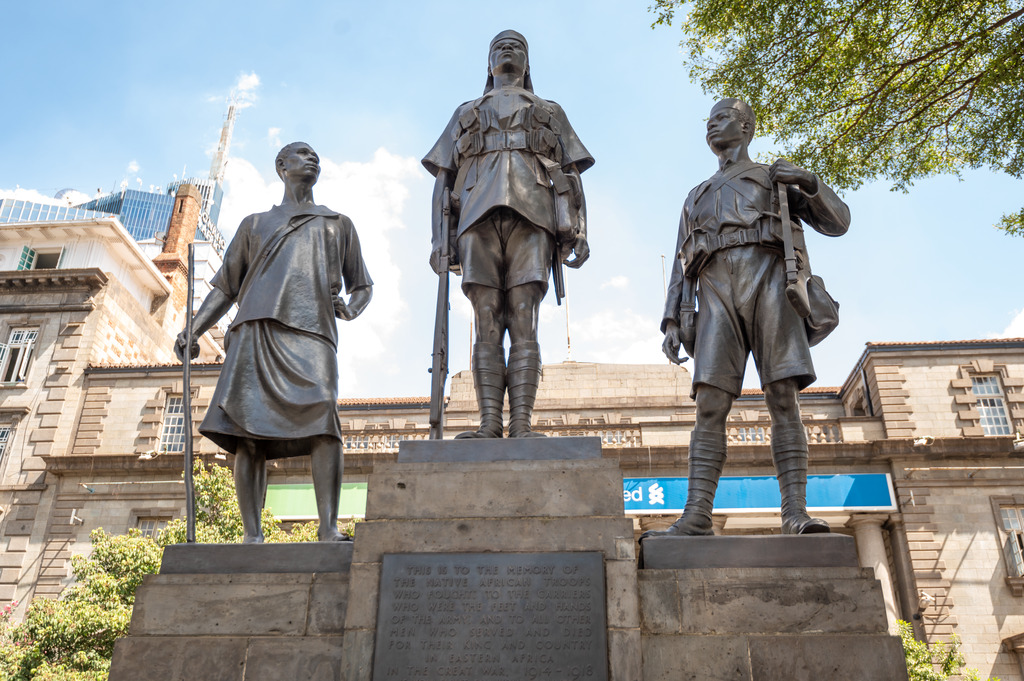
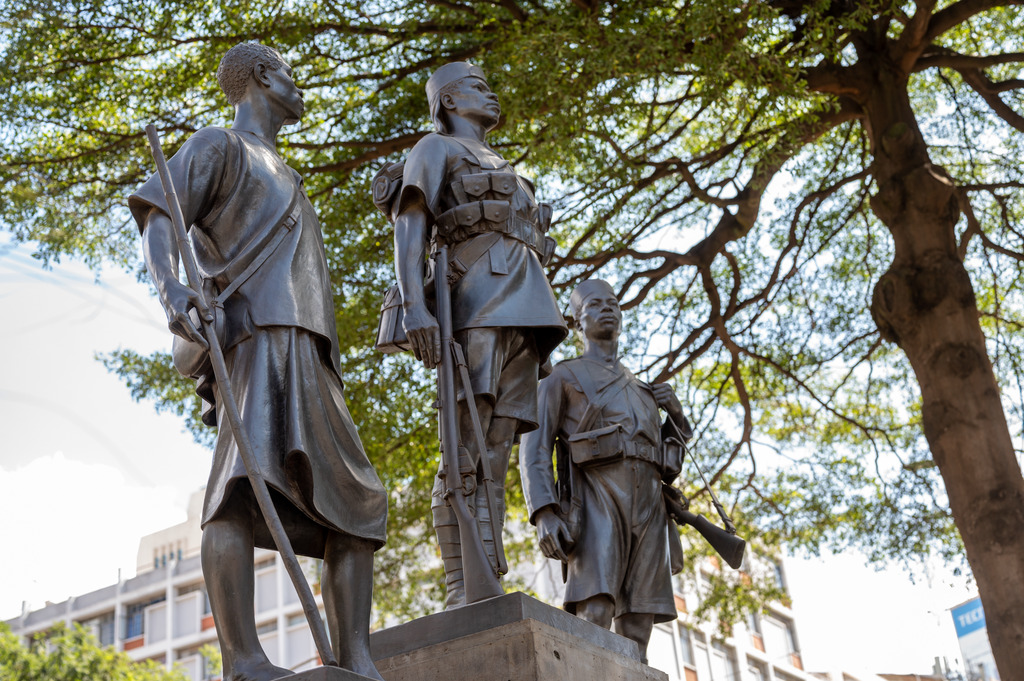
Nairobi African Memorial
- Country Kenya
- Total identified casualties 0 Find these casualties
- GPS Coordinates Latitude: -1.28418, Longitude: 36.82224
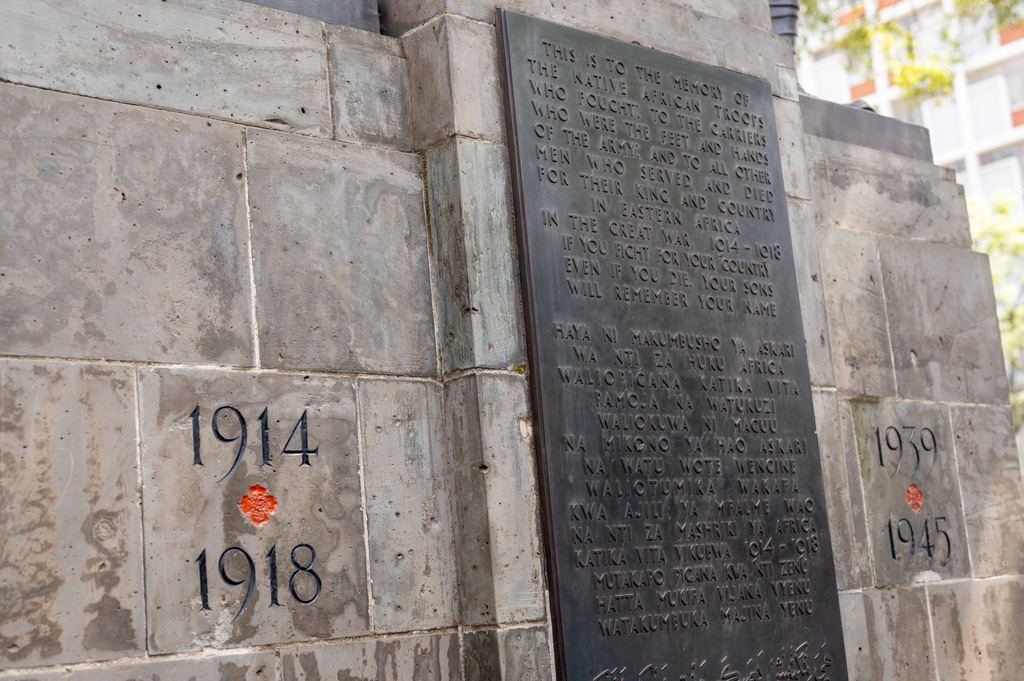
About the Nairobi African memorial
The First World War (1914-1918) left little of the world untouched. The Nairobi African Memorial is one of three memorials that honour East Africans who died while serving with British forces in the war against Germany.
During the conflict, more than 55,000 soldiers and 650,000 non-combatant labourers were raised from across East Africa to serve alongside British Empire forces in fighting centred on present day Tanzania. Nearly 10,000 of those soldiers served in Kenyan units and over 186,000 Kenyans served as carriers. More than 5,100 soldiers died during the conflict, including over 1,400 in Kenyan units, but it was the porters of the Carrier Corps who suffered the worst hardships. Overburdened, ill-provisioned and often serving in unfamiliar climates, their casualty rates were considerably higher. It is believed more than 83,000 died during the war, the majority from disease. At least 31,900 of this number came from Kenya.
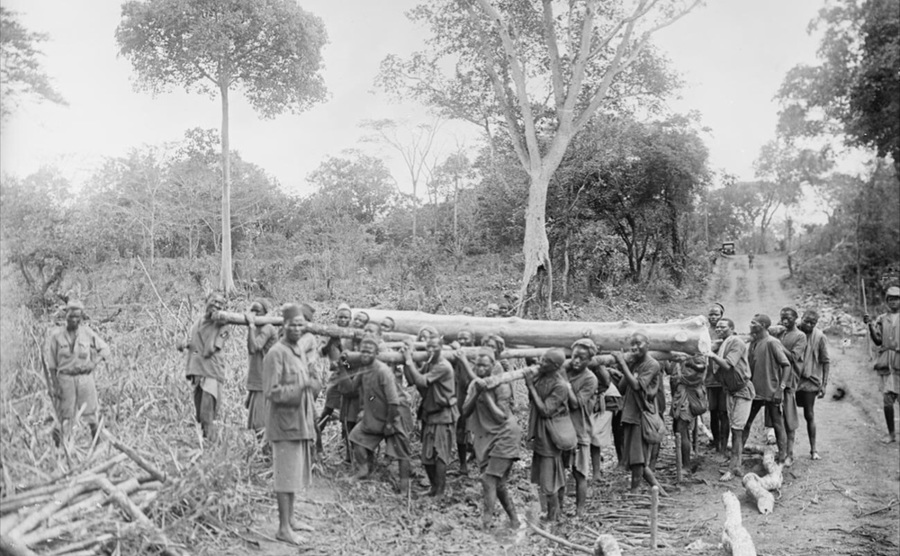
IWM, Q15625 – Kenyan porters of the 2nd Road Corps, Chikukwe, Tanzania, January 1918
Nairobi was the centre of British operations during the first half of the war before most headquarters transferred to Dar es Salaam following its capture in 1916. The old racecourse, situated in the vicinity of Kariokor, hosted one of the largest carrier depots in East Africa, with over 67,000 men registered there. Thousands of other carriers and soldiers passed through Nairobi on the Uganda Railway, with the sick and injured tended to by hospitals also based here.
The grave locations of East Africans who died in Nairobi during the First World War are largely unknown, but it is believed that many lie unmarked in municipal and other cemeteries. This memorial honours their memory, alongside those East Africans who died across the region whose graves and names are not known.
Location information
The African Memorial at Nairobi stands on Kenyatta Avenue in the centre of town, opposite the Memorial Hall Obelisk.
History information
At the outbreak of the First World War Tanzania was the core of German East Africa. From the invasion of April 1915, Commonwealth forces fought a protracted and difficult campaign against a relatively small but highly skilled German force under the command of General von Lettow-Vorbeck. When the Germans finally surrendered on 23 November 1918, twelve days after the European armistice, their numbers had been reduced to 155 European and 1,168 African troops.
The African troops and followers who died with the Commonwealth forces during the East African campaign of the First World War are for the most part commemorated by three memorials, one at Nairobi, one at Mombasa and one at Dar es Salaam. The backbone of the combatant force in East Africa were the King's African Rifles, organised in seven regiments, of which three (the 1st, 3rd and 4th) existed in 1914. The whole force eventually numbered 22 battalions. The officers and necessary technical troops were from the United Kingdom, the other ranks Sudanese, or men from the East African protectorates. They were later reinforced firstly from India, South Africa and in 1917 from West Africa. The Arab Rifles, mainly consisting of men originally from the Yemeni and Hadramout regions, served with distinction throughout the war and the Intelligence Corps, represented by the Askari, played an important and dangerous role as scouts.
The African combatant troops raised for the East African campaign numbered 34,000. The non-combatant porters, stevedores and followers of the Military Labour Corps 600,000. Almost 50,000 of these men were lost, killed in action died of sickness or wounds, but as no complete record of their names exists, no names appear on the memorials.
The statistics are quoted only within the commemoration figures for Tanzania.