27 April 2026
Records around the world: working in global archives in search of the missing dead
In our efforts to better understand those we commemorate and to uncover the names of previously non-commemorated casualties of the two world wars, we work with records sourced from archives around the globe.
CWGC Official Historian George Hay guides us through our work in international archives and how this is helping us uncover new names for commemoration.
Records Around the World and CWGC’s work
At a glance: What’s on this page
- Why records were missing or hard to find
- Our research into finding these records
- CWGC’s work with archives around the world
- Kenya archives case study
- How we verify records and how this adds to our understanding
- How these records help us commemorate previously non-commemorated service personnel
- How to search our records
Non-Commemorated personnel & searching for lost records
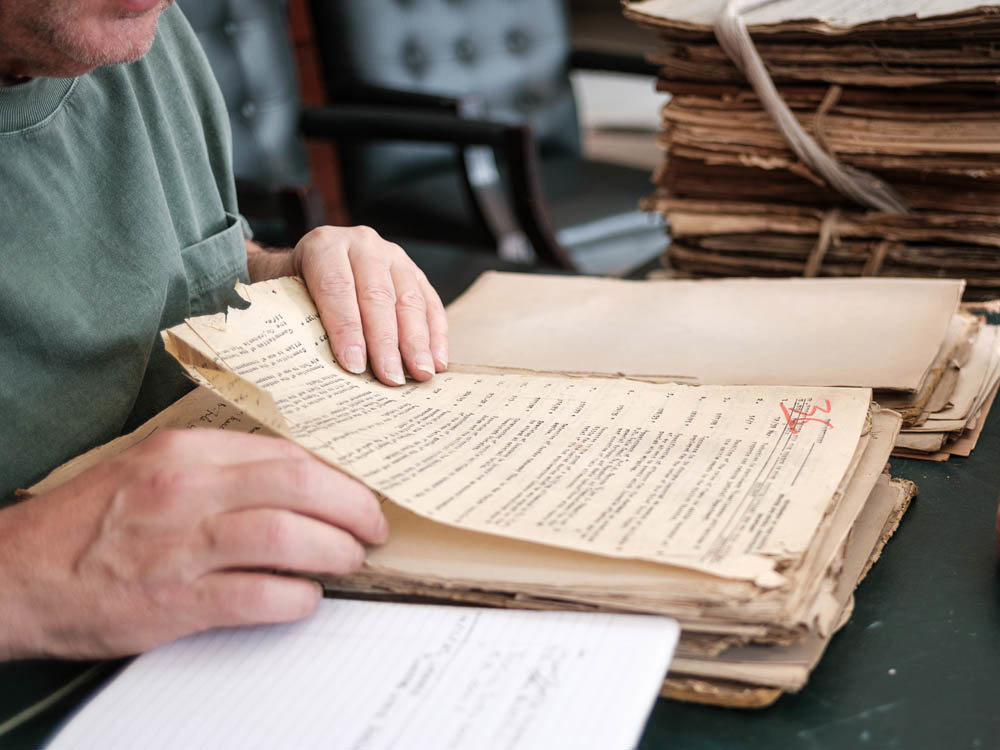
Image: Poring through old Pakistani archives
In April 2021, the CWGC published a report highlighting inequalities and gaps in its commemorations. For the most part, these issues affected dead African and Indian personnel, with the most significant problems connected to the East Africa theatre of the First World War.
Here, as many as 88,000 soldiers and carriers who died in British service remained unnamed. Following the publication of that report, the Commission embarked on a five-year programme to find answers to these issues, but particularly in the hope of recovering the names and burial places of those never commemorated.
Given the passage of time and the kind of records required, this has meant scouring archives across the world looking for fragments of this forgotten history. This is the story of that search.
A dispersed archival legacy
The nature of this war and the way in which manpower was mobilised by the British Empire had a significant impact on the records produced.
The same is, of course, true for what happened to those records after the war and following the retreat from empire after the Second World War. Both these issues have impacted the preservation, location and availability of information.
East African Records: Understanding the Theatre and the Challenge
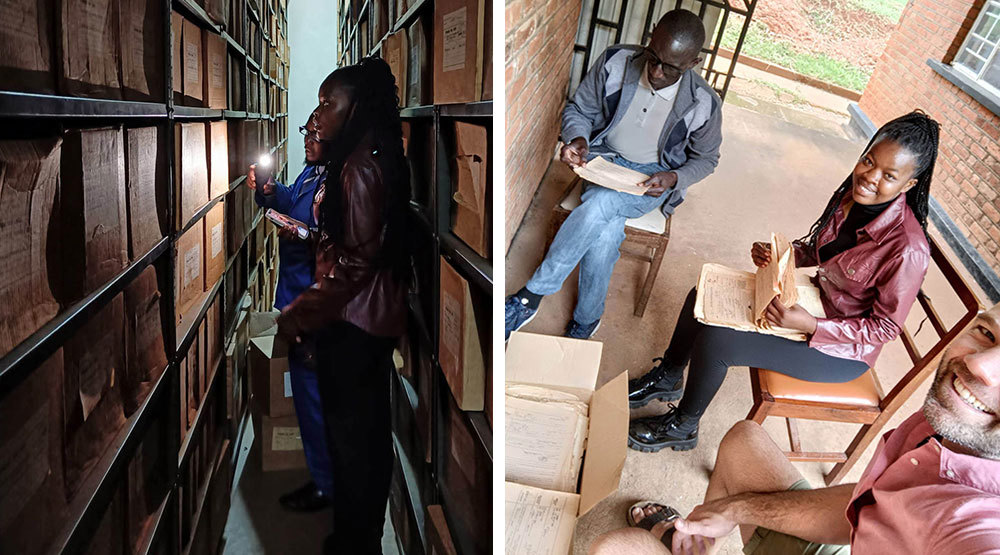
Image: Searching and reading through Malawian archives and records
The way the war in East Africa developed and the increasing demands it made on locally raised manpower, meant that formalised systems supported by efficient record-keeping were not in place from the outset. Whilst this was true for the fighting forces, it was particularly significant for labour units.
With few roads or railways, and with mechanical and animal transport limited by disease and the terrain, both British and German forces in East Africa ultimately resorted to human porterage to solve their transportation issues. By the end of the war, more than a million East Africans would be drawn into carrier service.
In the British case, recruitment of manpower in the early period of the war was far less organised and structured than anything seen in the UK. Instead, ad-hoc arrangements, often driven by individuals, dominated early efforts. Perhaps predictably, these conditions and practices did not always create the kind of records we see elsewhere, if they create records at all.
It is also important to understand the nature of British imperial administration and the impact this had on the records it produced. In most of the countries affected by these issues, a local colonial administration produced paperwork in the day-to-day handling of its business. This will have included all aspects of governance, including defence matters.
Unlike an independent state, however, these administrations also answered to authorities in the metropole – in this case, the British government via the Colonial Office.
Because of this link and because of the way in which the British imperial state administered its empire, substantial quantities of paperwork created in the far reaches of that empire ultimately ended up in London. Because of the UK’s various Public Records Acts, those papers were ultimately transferred to what is now The National Archives, where they are open to public scrutiny.
What paperwork stayed within the colony and what was sent to London is not always clear-cut, and it undoubtedly changed with time and events. Furthermore, various established policies at home and across the empire allowed for the destruction of paperwork that was not deemed to be of historical significance.
While the vast majority of what was produced day-to-day probably fell into this insignificant category, there is now plentiful evidence that colonial administrations also destroyed or transferred back to London substantial quantities of material that was anything but unimportant and might otherwise have been retained in the country.
This is especially true for the period of colonial retreat after the Second World War, for which there are several well-documented cases of both practices.
So, what is the legacy of all this history and complex administration? Well, for those records held within UK archives, there are accessible catalogues that mean researchers can easily identify material of note and scrutinise it without difficulty.
Across the former British Empire, however, cataloguing and access are far from certainties.

Want more stories like this delivered directly to your inbox? Sign up for our newsletter for regular updates on the work of Commonwealth War Graves, blogs, event news, and more.
Sign UpSearching through Archives: Known unknowns and unknown unknowns
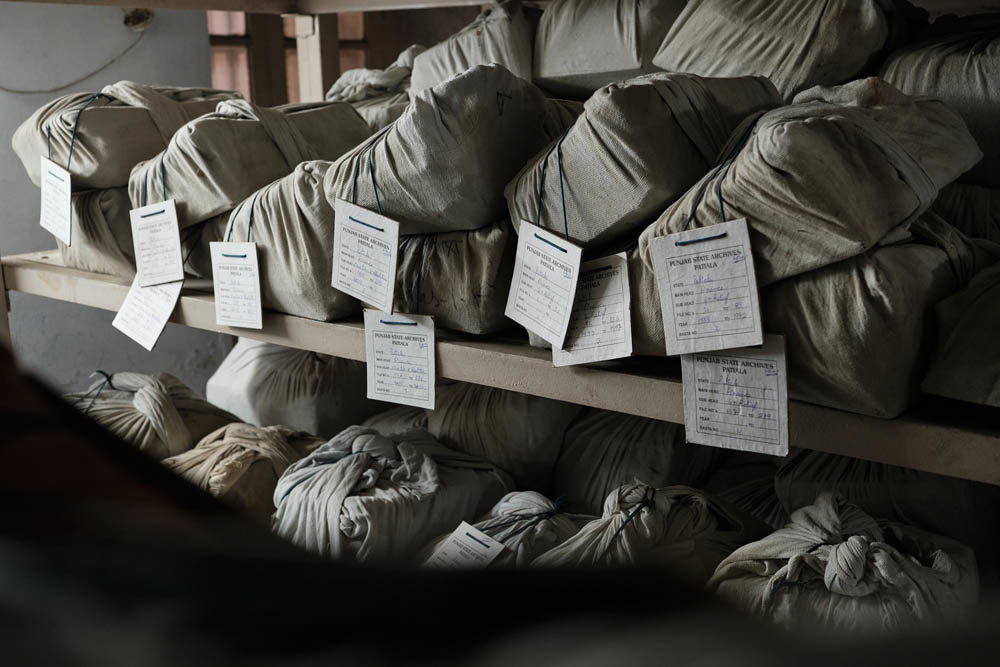
Image: Archive bags full of old records and documents waiting to be explored by CWGC reseachers
Approaching this work and considering the records that were required, there were some we knew had been produced at the time but could not say whether they had survived. These were our known unknowns.
Beyond this, countless other possible collections could hold answers about which we knew nothing: these were our unknown unknowns.
Working in archives in pursuit of century-old original documents will always be hit and miss, with significantly more of the latter. Whether what you are looking for survives is just the first hurdle that must be surmounted.
Before you have a document in your hands, you have to know how to identify it through cataloguing, and an archivist has to be able to locate it in a repository. In many archives across East Africa, there is little to no formalised cataloguing, meaning the researcher must study accession lists – effectively an inventory of what was deposited at different times – and work closely with those who know the collections.
Even then, it is essential to think broadly and to use logic about how records might have been collated and described by those who passed them into the care of the archives. Finally, it is also possible that some records, when seen in isolation, may only provide part of a picture, with important corresponding material held elsewhere.
This is particularly relevant in the colonial context, where, as already noted, so much paperwork was split, with some returning to the UK and some being retained in the colonies.
Piecing this information together is often the hardest part of this work, but it is often also the more rewarding.
Working with Archives in Kenya and East Africa: a case study
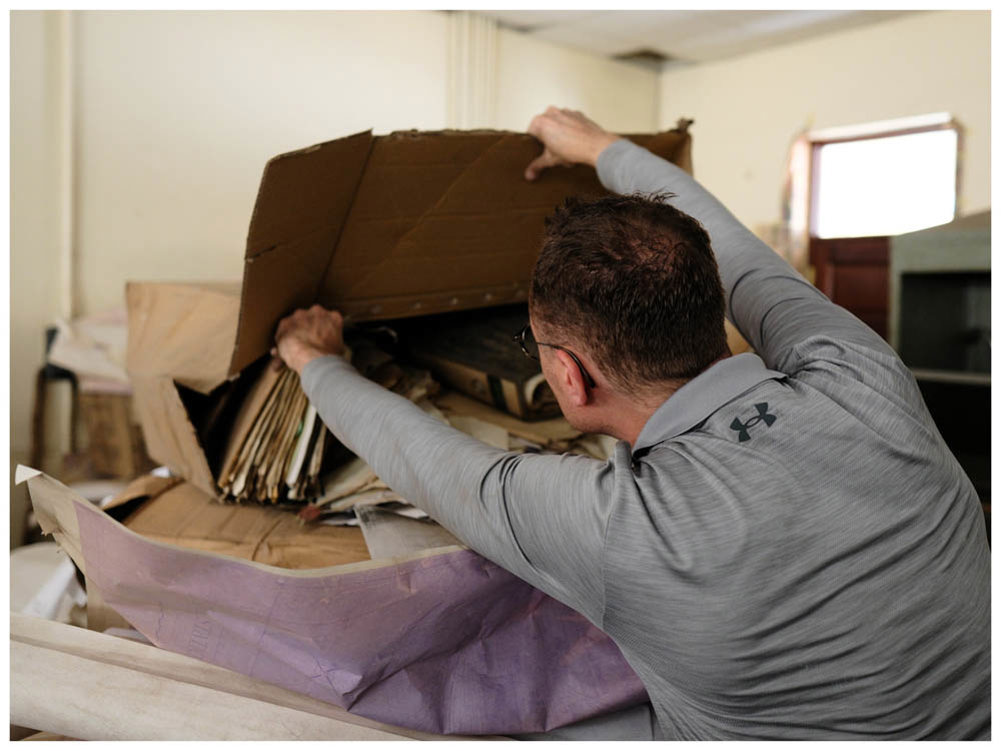
Image: Our work in Kenya included reviewing items and documents stored in the Kenya Railway Archives
While the accessibility of UK archives allowed CWGC’s historians to make early progress on some aspects of this work, little was known about what had survived elsewhere. This was particularly true of East Africa, where the main issue of missing commemorations existed.
As Kenya was the administrative centre of the British war effort in the region, it was assumed that it was also probably the home of some of the ‘lost’ information we were looking for. Our work there was, therefore, perhaps the best example of how the programme tried to tackle the challenge of complex archival work at great distances.
Working in partnership has always been essential to this programme. While this is unquestionably a shared history, it has always been felt that those communities affected by these events must be part of the process of uncovering and better understanding them.
Furthermore, local expertise was always going to be invaluable in navigating the archival landscape, about which we knew little.
As a result, CWGC’s historians worked collaboratively in all the major collections in the country, searching for this missing information. Amongst the most developed of these partnerships was with the National Museums of Kenya, with whom we worked closely for several months picking through the records at the Kenya National Archives.
One of the most important finds during this period were records indicating the burial locations of carriers in Mombasa. To highlight the significance of the global nature of this work, we were only able to pinpoint the relevant cemetery by combining information from these finds with records found in UK archives (read more here).
However, while this was productive and important work as regards burials, the biggest breakthrough in terms of naming the dead came from a separate collaborative effort with the Kenya Defence Forces (KDF).
Working closely with the KDF’s Director of Veterans Affairs, we learnt of a collection of historical personnel records in that organisation’s possession. These dated back to the late nineteenth century and the establishment of the British colonial military force in East Africa, the King’s African Rifles.
Unknown to the wider academic world and having never left storage since Kenya’s independence, these records are not only extremely rare but are of enormous historical significance.
With support from the British Library’s Endangered Archives Programme, we secured a grant to begin digitising them, during which we were able to identify soldiers who had served and died with British forces during the war. A digital copy of a portion of these incredible records is now preserved by the British Library (see here).
While archival work from the whole research programme has produced in excess of 20,000 new names for commemoration, we are clearly far from even just the East African target of 88,000. Thinking about specific cohorts of manpower, however, the statistics do look better.
Thanks in a large part to the KDF papers and our relationship with that organisation, we have expanded the number of King’s African Riflemen commemorated by the CWGC from just over 150 to in excess of 4,500. We are confident this represents all those who fought and died with British forces during the First World War, making this one of the most important successes of the whole programme.
Verifying data and adding to our records and understanding
When this information is digitised and extracted from the records, these details are collated and submitted to the CWGC’s Commemorations department.
Working under special rules reflecting the sparsity of information available to us for these personnel, the new names are adjudicated and, ultimately, added to a temporary digital holding space on the casualty database known as ‘books of remembrance’.
A separate part of the CWGC’s Non-Commemorations Programme is responsible for transforming these virtual commemorations into physical sites, the first major example of which was the Cape Town Labour Corps Memorial in South Africa, unveiled in January 2025.
Slowly undoing the injustices of the past
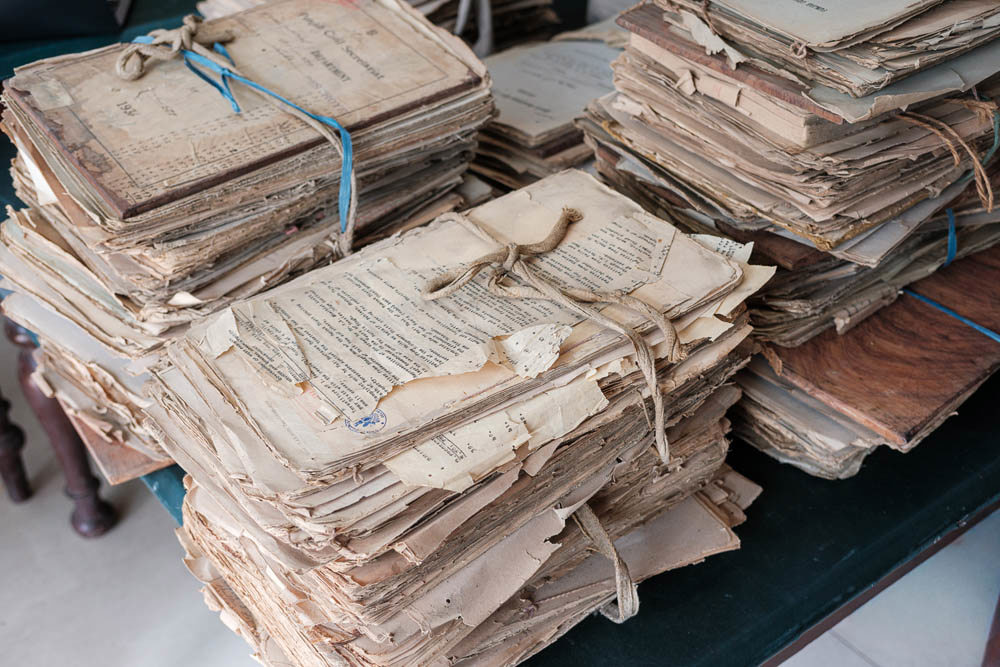
Image: Reviewing and understanding old records is key to helping us undo historical injustices in commemoration
As stated at the outset, the principal aim of this work is to identify records that enable us to commemorate the dead who were denied this right after the world wars.
It is hard to overstate the significance of this, but by naming those lost, we not only return to them the respect and dignity they and their families were owed, but we also hopefully start to change the narrative around who served and sacrificed in these wars.
The more present-day African communities see themselves represented in commemorations, the more they will engage with the significant contributions their forebears made to these world-changing events.
Given the way Western narratives of these wars have dominated, this would be a significant shift that empowers others to own their history and tell their own stories of these conflicts.
How to search CWGC records
The Find War Dead tool contains many fields and options for checking our database and is one of the most popular ways to search CWGC records.
Don't forget to use our Research Guides if you are having trouble finding the information you are seeking in our records.
Search by name, unit, or country
The most obvious way to start your record search is with a casualty’s name.
You can search via surname, first name, and initials on the CWGC website. Our records contain combinations of full names, name and initial, and initials only. You may need to try several of these to find your Commonwealth soldier.
To further refine your search, you can also include the person’s service number and/or regiment.
Served with (country) displays which nation’s armed forces the casualty served with.
Please note this does not mean the casualty’s nationality. See the example of John Gillespie Magee Jr. John was a US citizen, but, as he was serving with the RCAF at the time of his death, his country of service in CWGC records is Canada.
If you cannot find a record
Many people died during the war years in circumstances which mean they don’t meet the relevant criteria. Others were missed from a key record due to an administrative error.
CWGC records don’t always include details about where a service person was from, or exactly where they died. Our records are centred around where a person is buried or commemorated.
Providing as much information as possible in your search will give you more refined, clearer results. The Additional Fields section can help you here, giving you more specific search criteria to work with.
Other search tips include:
- Check all your spellings
- Be sure they are a First or Second World War casualty
- Are they eligible for commemoration as per CWGC eligibility criteria?
If you have reason to believe you know of a casualty that fits our criteria but isn’t included in Commonwealth War Graves records, and believe you have a case of non-commemoration, please contact the Commemorations Team.
The Non-Commemorations Programme
The CWGC Non-Commemoration Programme had a clear mandate: to ensure all those who died in the world wars, no matter where they were, where they died or how they died, are remembered equally.
Whilst our initial five-year programme to address historical inequalities in commemoration after the world wars reached its formal endpoint in 2026, the work continues. This ongoing global effort will ensure all individuals that we have found have not been commemorated equally will receive the proper recognition they deserve.
Author acknowledgements
Dr George Hay is the Official Historian at the Commonwealth War Graves Commission (CWGC), an Honorary Academic at the University of Kent and a Fellow of the Royal Historical Society. He writes widely on the social history of British and Commonwealth armies in peace and war, and works to generate greater understanding of the CWGC’s history, its sites and the casualties in its care. He co-authored the CWGC’s 2021 and 2025 reports on historical inequalities in commemoration and continues this work by leading the research strand of the organisation’s Non-Commemoration work.