

Coriano Ridge War Cemetery
- Country Italy
- Total identified casualties 1887 Find these casualties
- Identified casualties from Second World War
- GPS Coordinates Latitude: 43.98464, Longitude: 12.60415
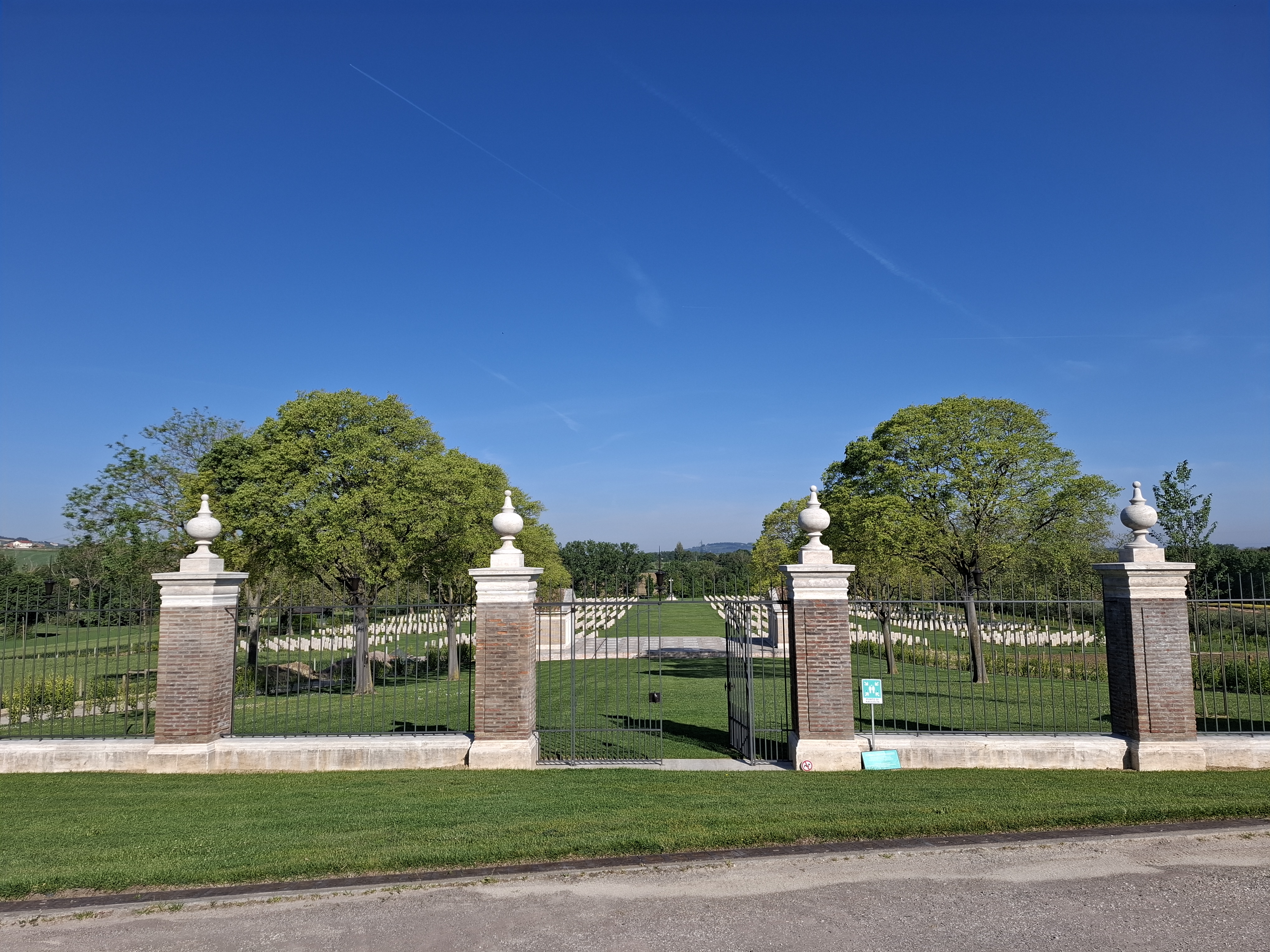
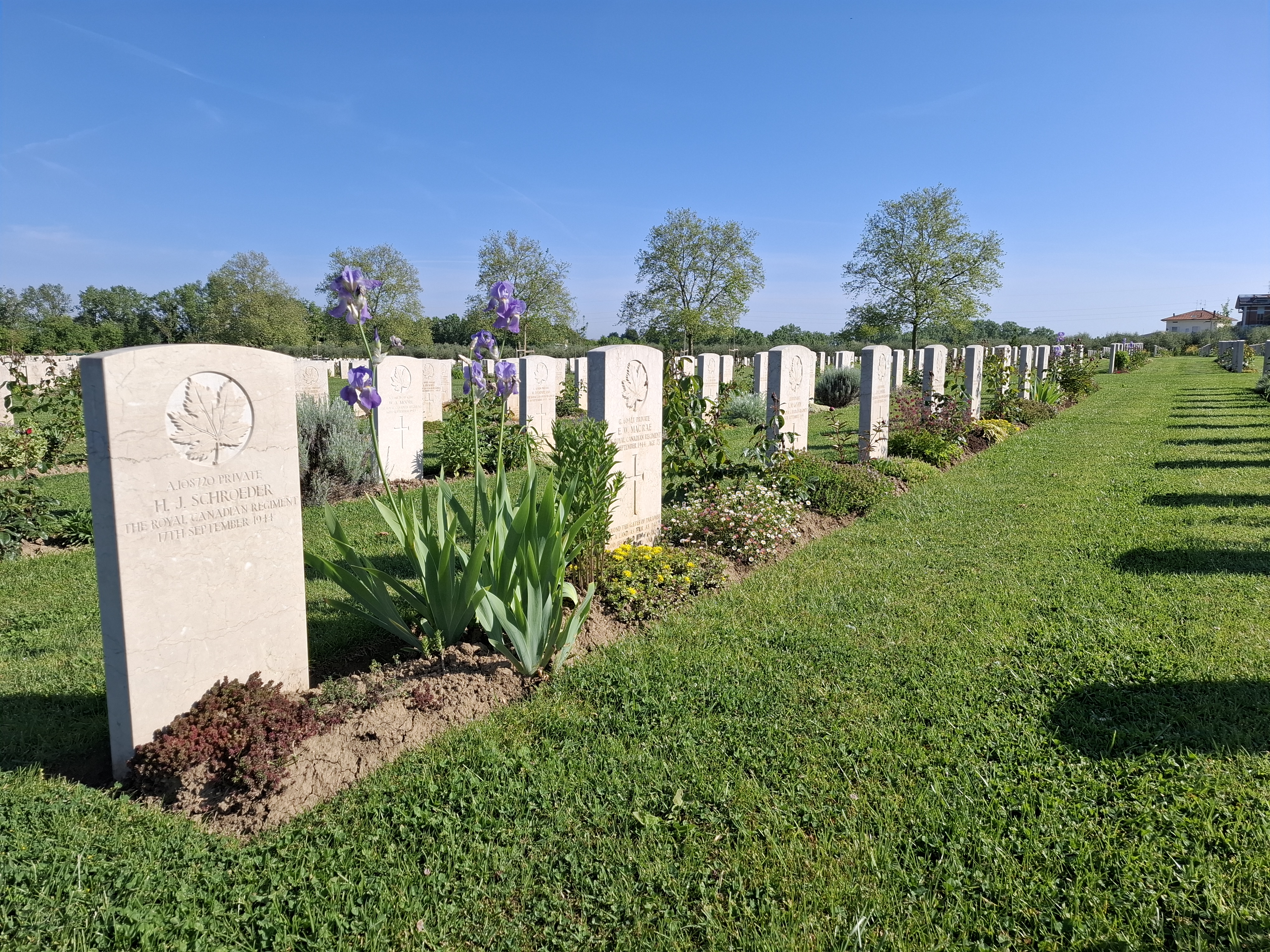
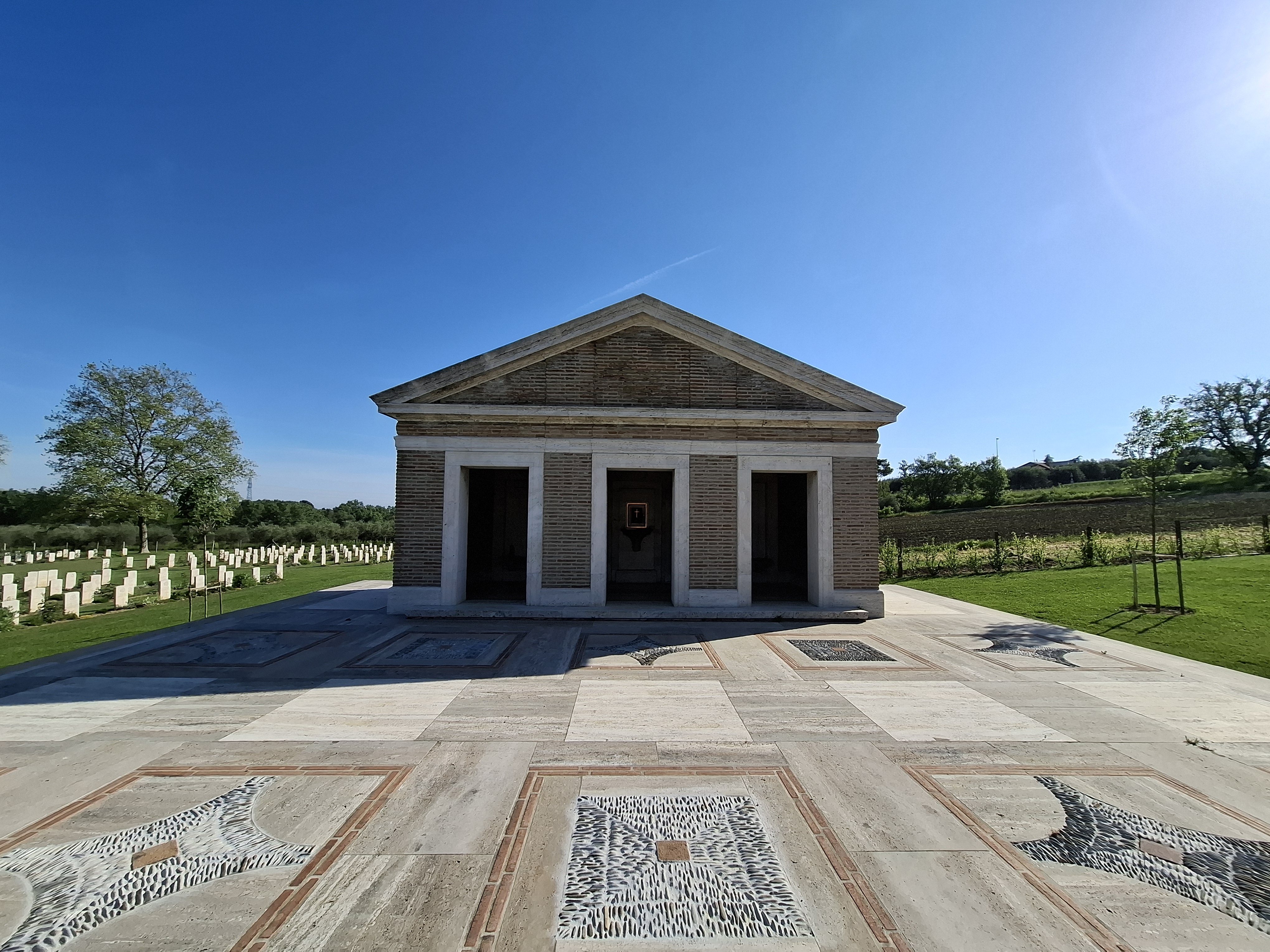
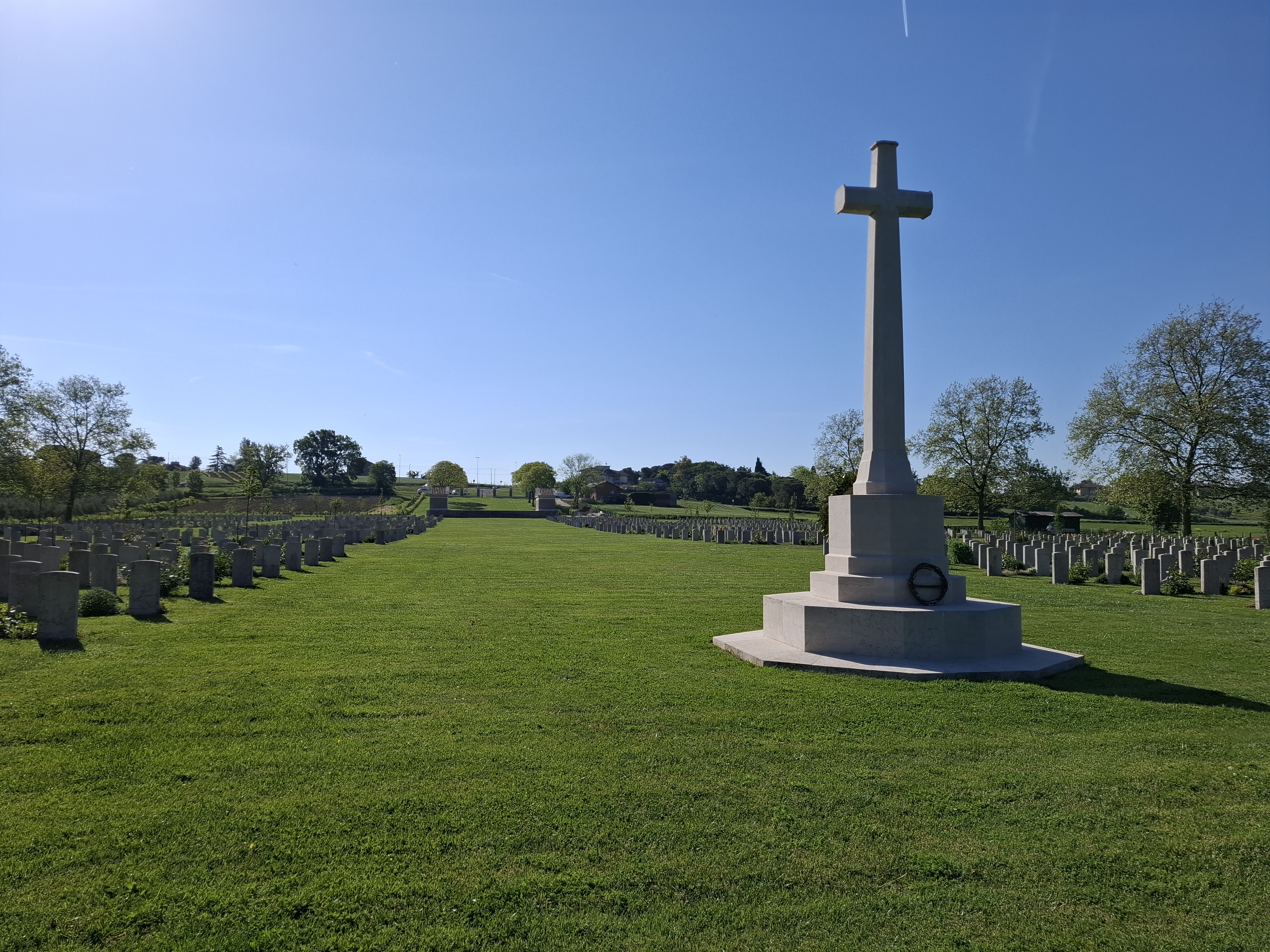
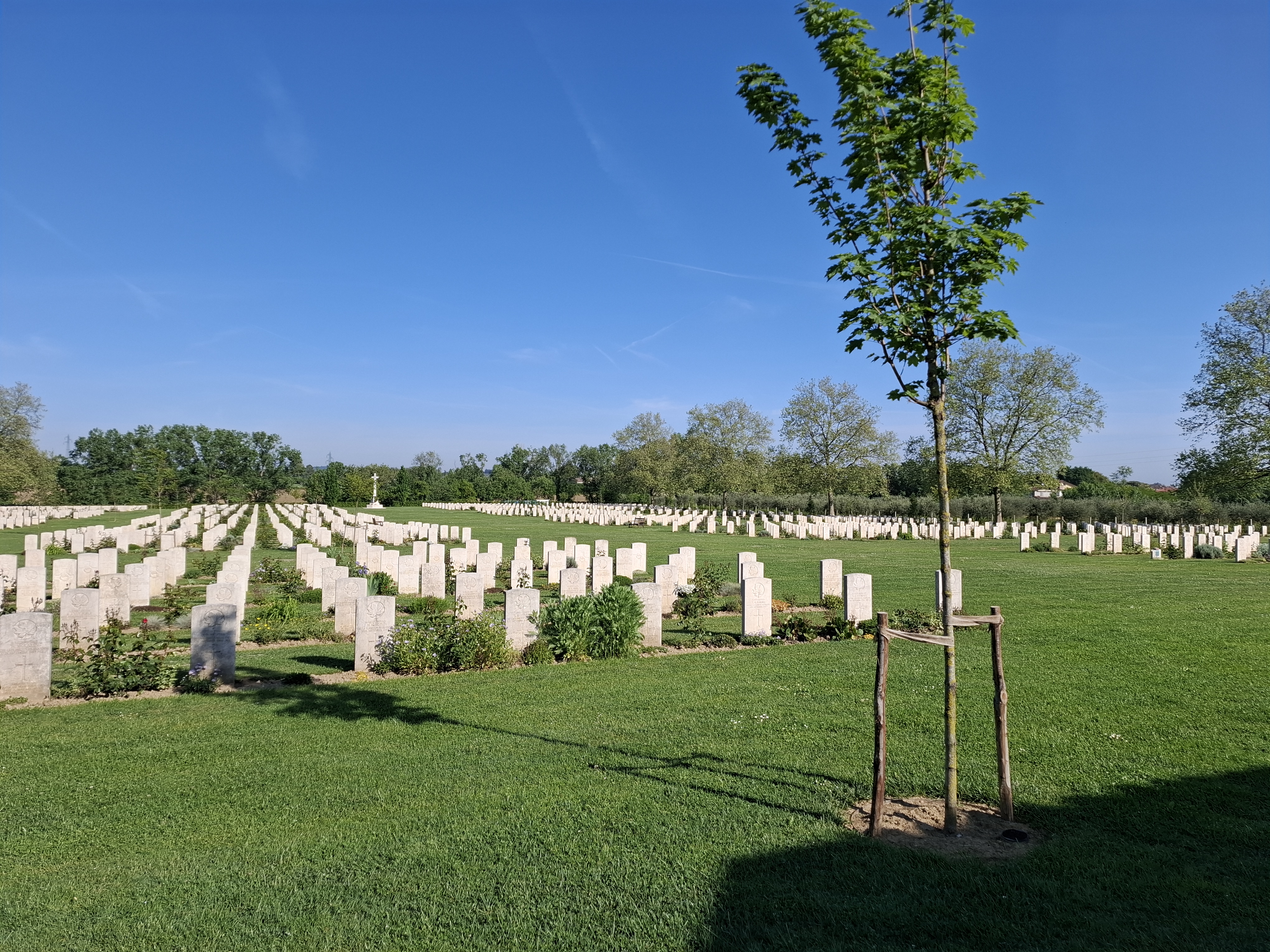
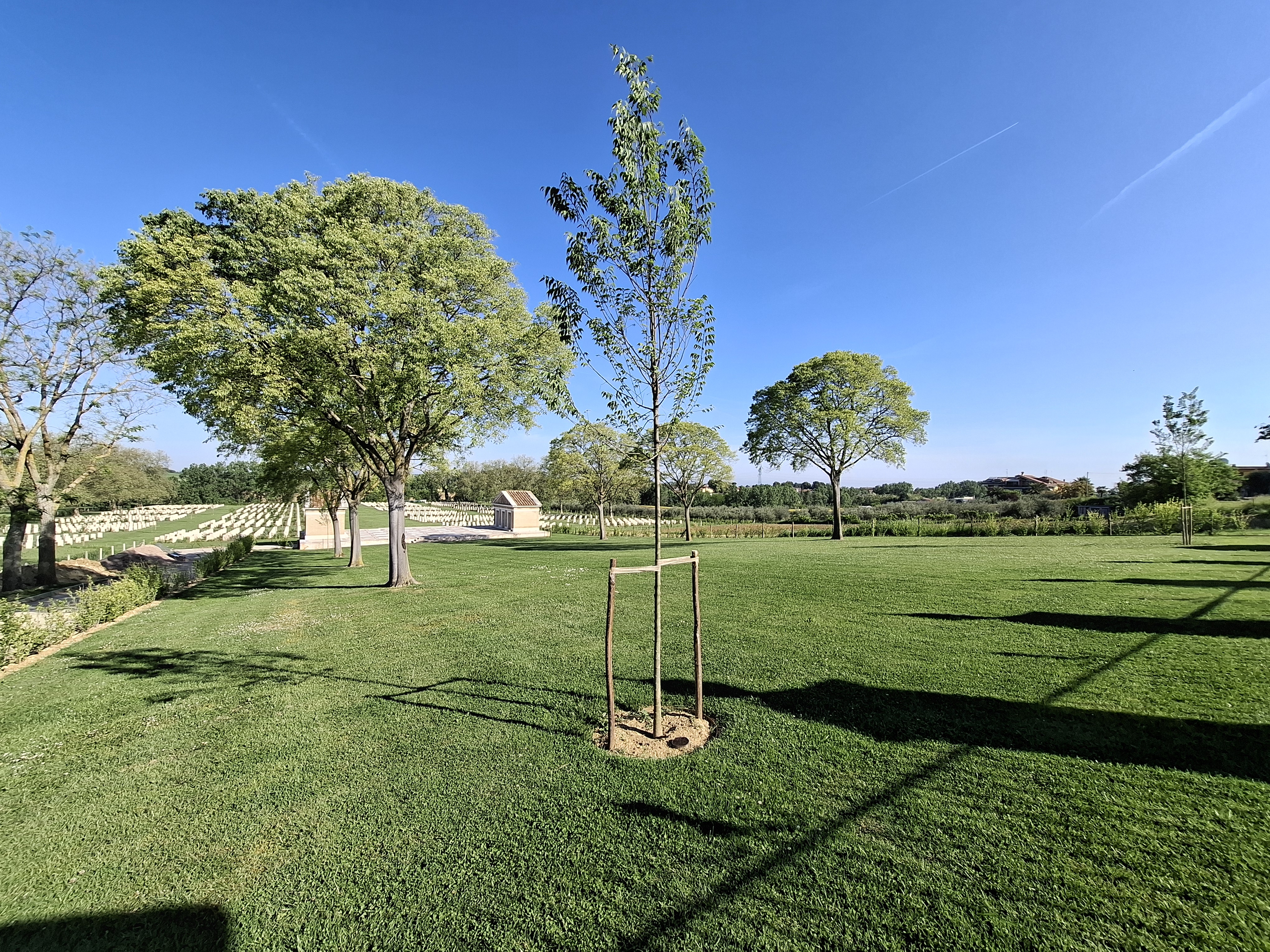
Cemetery Spotlight - Coriano Ridge War Cemetery
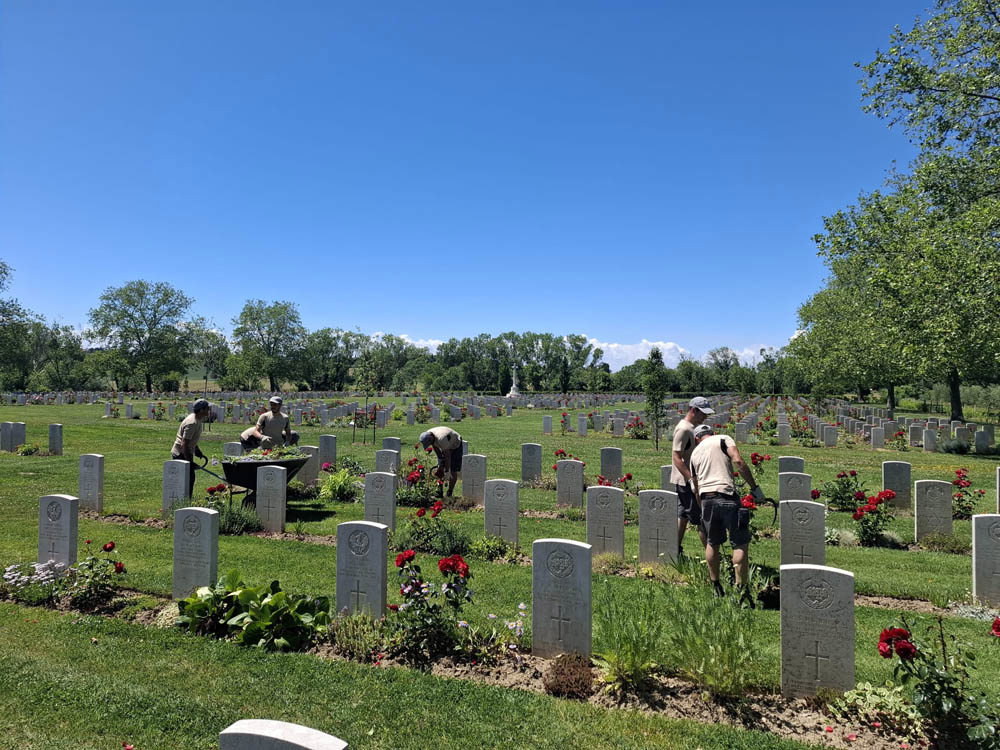
Coriano Ridge War Cemetery is cared for by a team of seven gardeners. The same team is also responsible for five other CWGC sites: Cesena, Rimini, Gradara, Montecchio War Cemetery and Ancona War Cemetery.
Because the team works across several locations, it usually spends around one and a half days at Coriano each week. This means every visit has to be carefully planned. The cemetery is large, and the team must complete a wide range of tasks while maintaining the same high standard across the whole site.
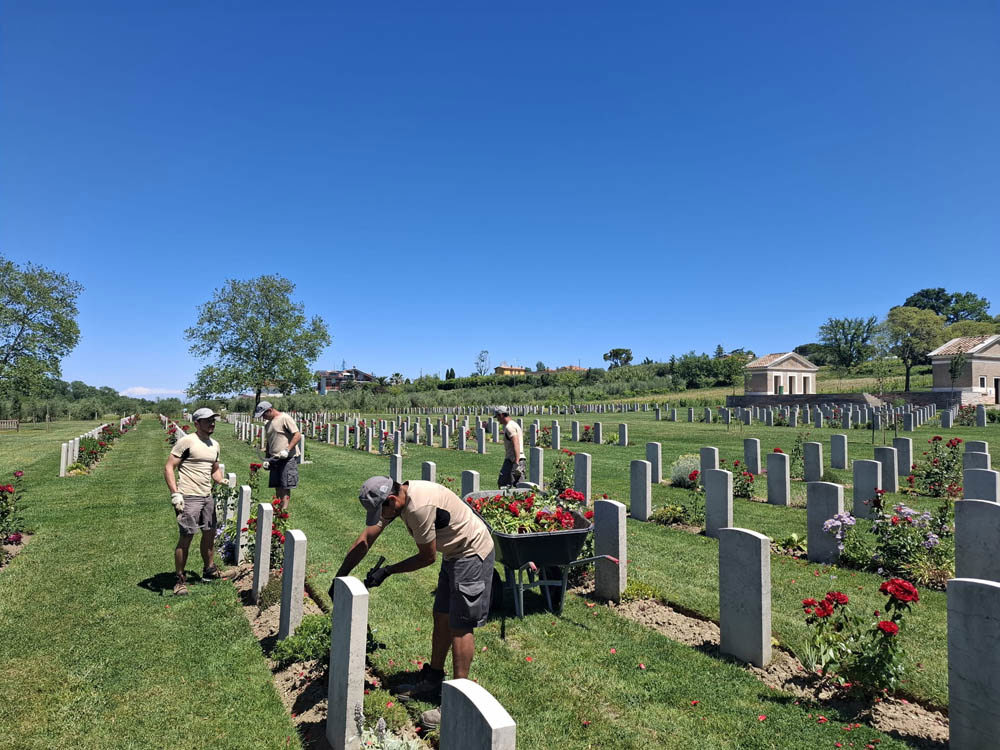
A typical working day begins with clear roles. Two gardeners start on the ride-on mowers, two use blowers, two work with the Eliet machine, and one uses the strimmer. As each person completes their first task, they join the rest of the team to remove weeds with Dutch hoes or work through the borders by hand.
During the summer, there is always someone mowing the cemetery’s 21,550 square metres of lawn. Other team members maintain more than seven kilometres of grass edges and complete detailed trimming around headstones, trees and planting areas.
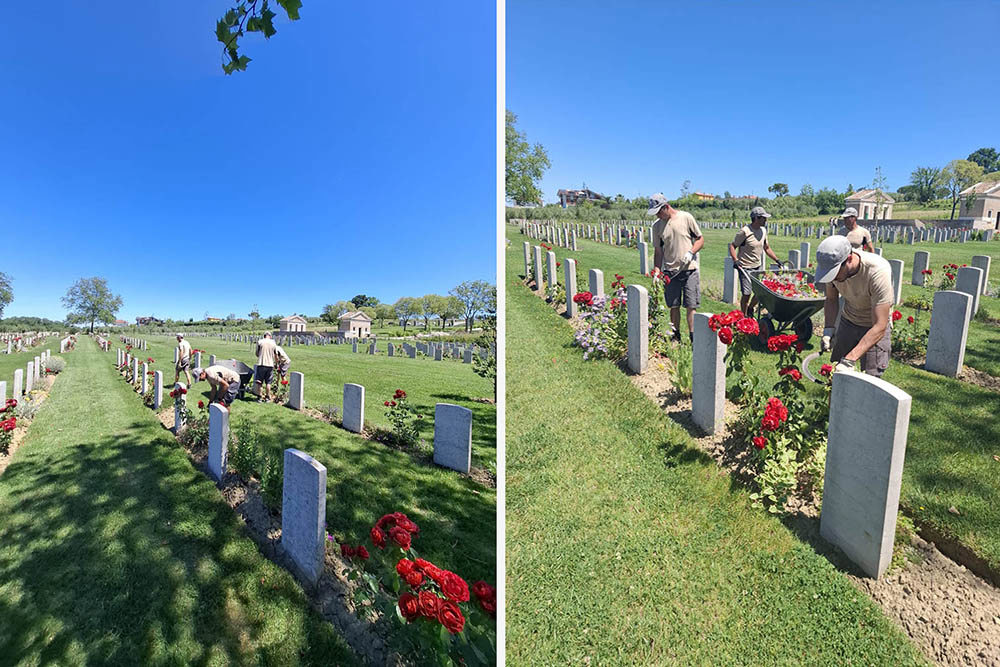
The cemetery also contains around 2,900 linear metres of borders. These must be weeded by hand, while dead flowers are replaced, faded blooms are removed, and plants that have grown too large are cut back. The team regularly checks the irrigation system and maintains the machinery needed to care for the site.
The work is not limited to the cemetery landscape. The visitor entrance building must always be clean and welcoming, with the cemetery registers kept in good order. The stores and welfare building must also remain organised.
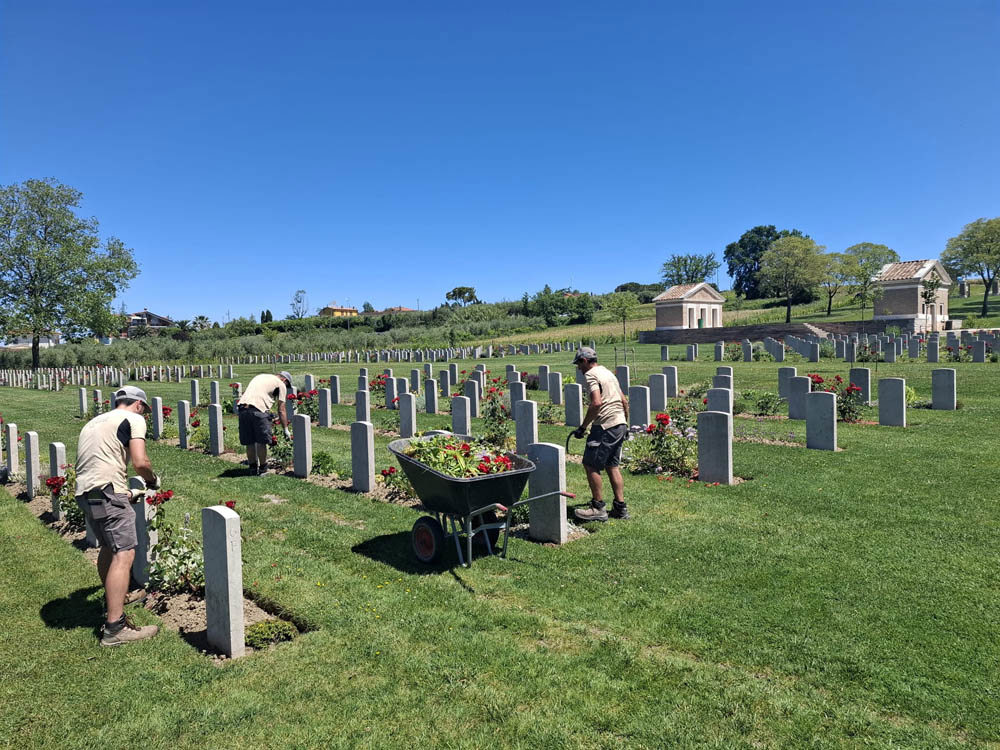
The work changes during the winter, although the team has noticed that the colder working season is becoming shorter as the climate changes.
During this period, the gardeners inspect the borders with spades to remove Cynodon, or Bermuda grass, from deeper layers of soil. They also collect leaves, move compost around the site and prune approximately 700 metres of hibiscus hedge by hand.
Other winter work includes reducing borders that have spread beyond their correct size, restoring soil levels and maintaining the clear circles around the bases of trees.
Machinery and the irrigation system are also prepared for winter. Equipment is cleaned, lubricated, protected and stored carefully. This helps prevent damage from cold weather, keeps the machinery working efficiently and allows the team to restart work properly when the growing season begins again.
The team has changed several of its working methods to reduce the use of chemicals.
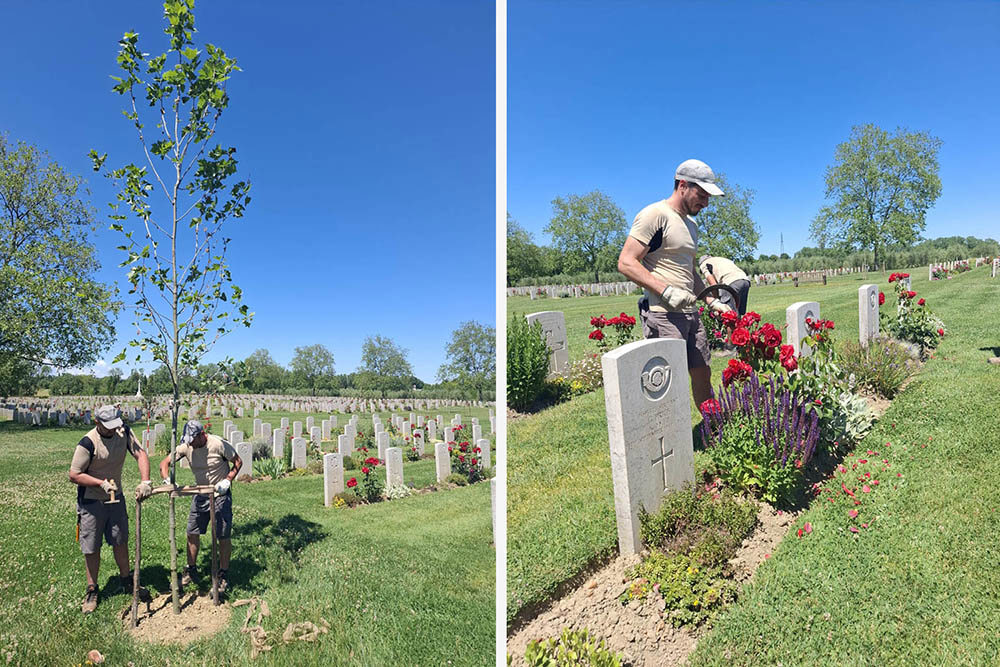
Since pesticides were withdrawn, the gardeners have protected around 900 rose shrubs by collecting harmful larvae by hand. This takes time, but it allows the roses to be managed without chemical treatment.
The removal of glyphosate has also made the control of Cynodon much more difficult. The grass must now be removed mechanically or by hand. This takes longer, requires more physical effort and can involve awkward working positions.
The team describes this as the return of an old challenge that gardeners faced decades ago. One part of the work is helping younger members of staff learn these more traditional methods and understand how to control the grass without relying on chemical products.
Around 2,000 square metres of flowering meadow have also been created outside the cemetery, close to the hedge. This provides a better habitat for insects and supports local biodiversity.
Coriano is a warm site, and periods of extreme heat have become more common. The team plans its working day carefully to protect staff.
Work in the open central sections of the cemetery is completed early in the morning, when temperatures are lower. Later in the day, the gardeners move towards the sides of the site, where large trees around the boundary provide more shade.
The gardeners aim to make sure the ground in front of every headstone has healthy plant cover and flowers. No row should receive less attention because it is further away or less visible.
The team is also working to reduce the environmental impact of maintaining Coriano and the other sites in its care.
Some areas are left uncut or maintained at a height of around 20 centimetres. Stronger flower varieties are being introduced, including perennial plants with deeper roots that can cope better with higher temperatures and less water.
Green waste is composted and reused on site, supporting the aim of sending no horticultural waste away for disposal. Battery-powered equipment is recharged using energy produced by solar panels.
For the gardeners, the reward comes from seeing the cemetery well cared for each day. It also comes from the response of visitors, the families of those buried at Coriano and colleagues across CWGC.
Location information
Coriano Ridge War Cemetery is 3.5 kilometres west of Riccione, a seaside resort on the Adriatic coast, and is reached by turning west off the main Rimini/Riccione road, the SS 16, about 1 kilometre north-west of Riccione. At this turning there is a sign leading to the cemetery. Follow it in the direction of Coriano until a T junction is reached, then turn left and after a short distance the cemetery will be found on the right-hand side.
Cemetery address: Via Piane, 4 - 47853 Coriano (RN) Emilia Romagna.
GPS Co-ordinates: Latitude: 43.98485, Longitude: 12.604041.
Visiting information
ARRIVAL
All routes to the cemetery are signposted.
PARKING
The car park is directly outside the main entrance to the cemetery. There is a large area within the car park dedicated for coaches to park.
The car parking area is flat with a gravel and stone surface.
ACCESS, LAYOUT AND MAIN ENTRANCE
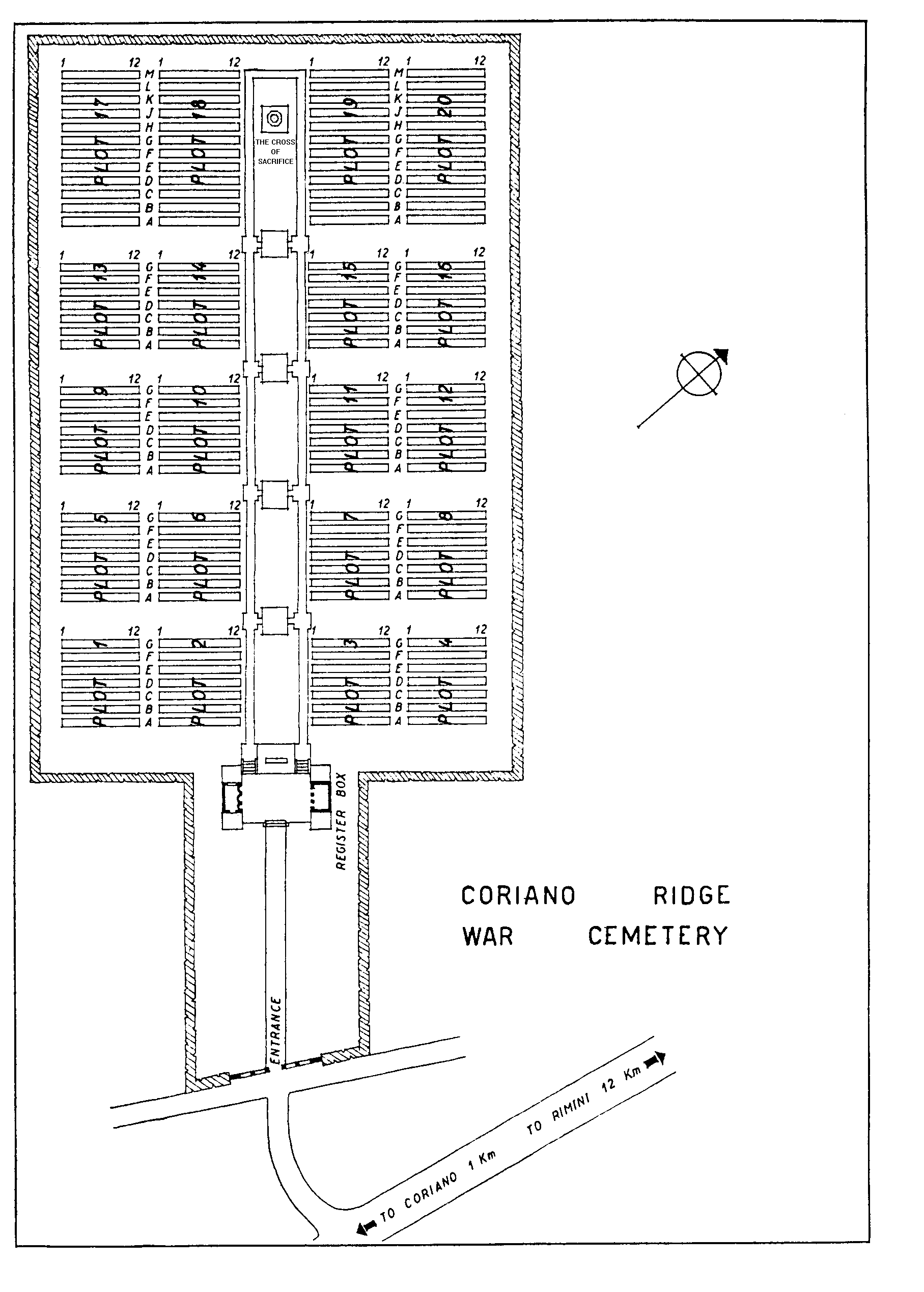
The cemetery is long and rectangular shaped.
The main entrance is accessed from the parking area, edged by a stone raised kerb, though a double gate, approximately 1.6 metres wide. Approximately 50 metres of downward sloping grass leads to a courtyard area with sections of raised mosaic pebbles and flat paving, accessed up three steps from the entrance side, and approximately 10 steps down into the cemetery.
There are two large buildings, one on either side of the courtyard, with single a step up through the three openings into Memorial shelter on the right side. There are benches and a Register Box located inside. The left building is a tool store.
The Cross of Sacrifice stands at the furthest point from the main road.
ALTERNATIVE ACCESS
There is an alternative entrance into the cemetery, down a stone and concrete ramp, with a 2-meter-wide access gate into the cemetery on the left-hand side of tool store.
The ramp slopes down onto the grass burial area. The internal paths within the cemetery are grass and flat.
ADDITIONAL INFORMATION
The cemetery is permanently open.
History information
On 3 September 1943 the Allies invaded the Italian mainland, the invasion coinciding with an armistice made with the Italians who then re-entered the war on the Allied side.
Following the fall of Rome to the Allies in June 1944, the German retreat became ordered and successive stands were made on a series of defensive lines. In the northern Apennine mountains the last of these, the Gothic Line, was breached by the Allies during the Autumn campaign and the front inched forward as far as Ravenna in the Adriatic sector, but with divisions transferred to support the new offensive in France, and the Germans dug in to a number of key defensive positions, the advance stalled as winter set in.
Coriano Ridge was the last important ridge in the way of the Allied advance in the Adriatic sector in the autumn of 1944. Its capture was the key to Rimini and eventually to the River Po. German parachute and panzer troops, aided by bad weather, resisted all attacks on their positions between 4 and 12 September 1944. On the night of 12 September the Eighth Army reopened its attack on the Ridge, with the 1st British and 5th Canadian Armoured Divisions. This attack was successful in taking the Ridge, but marked the beginning of a week of the heaviest fighting experienced since Cassino in May, with daily losses for the Eighth Army of some 150 killed.
The site for the cemetery was selected in April 1945 and was created from graves brought in from the surrounding battlefields.
Coriano Ridge War Cemetery contains 1,939 Commonwealth burials of the Second World War.