

Jakarta War Cemetery
- Country Indonesia
- Total identified casualties 946 Find these casualties
- Identified casualties from Second World War
- GPS Coordinates Latitude: -6.22146, Longitude: 106.84029
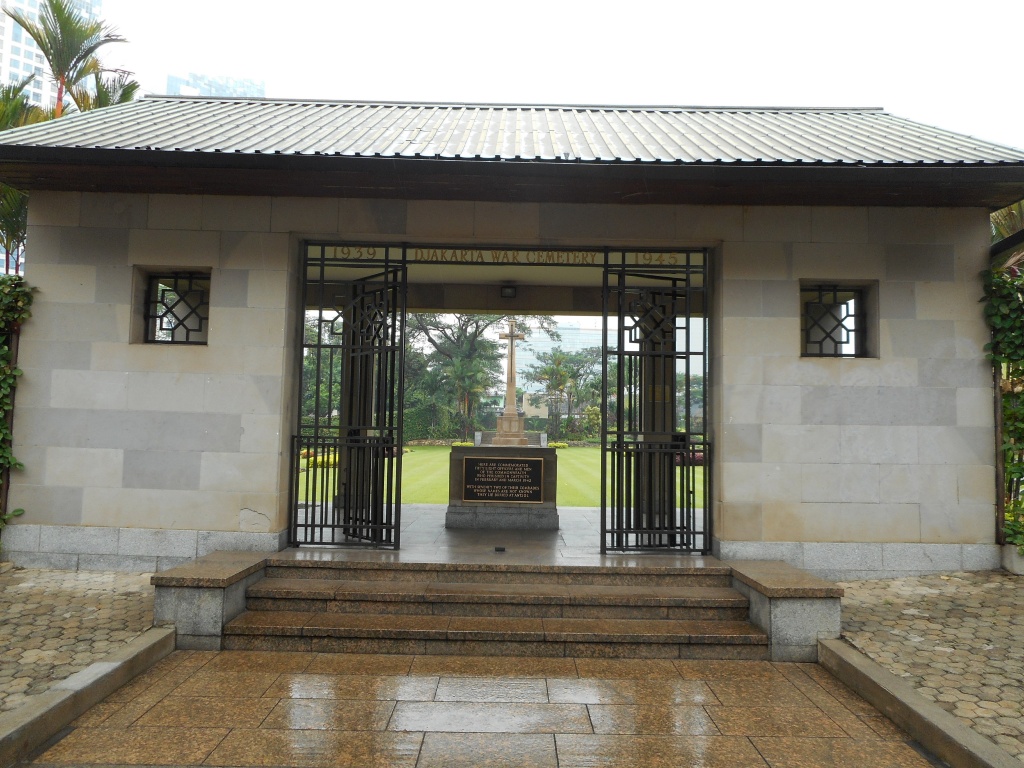
Cemetery Spotlight: Jakarta War Cemetery
Jakarta War Cemetery lies in Indonesia’s capital city on the north-west coast of the island of Java.
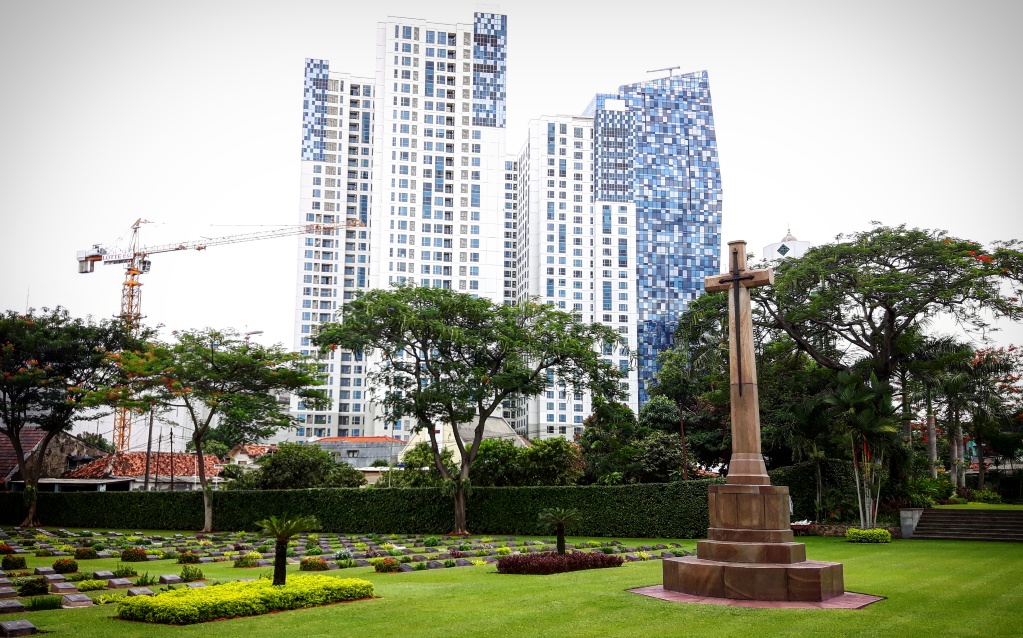
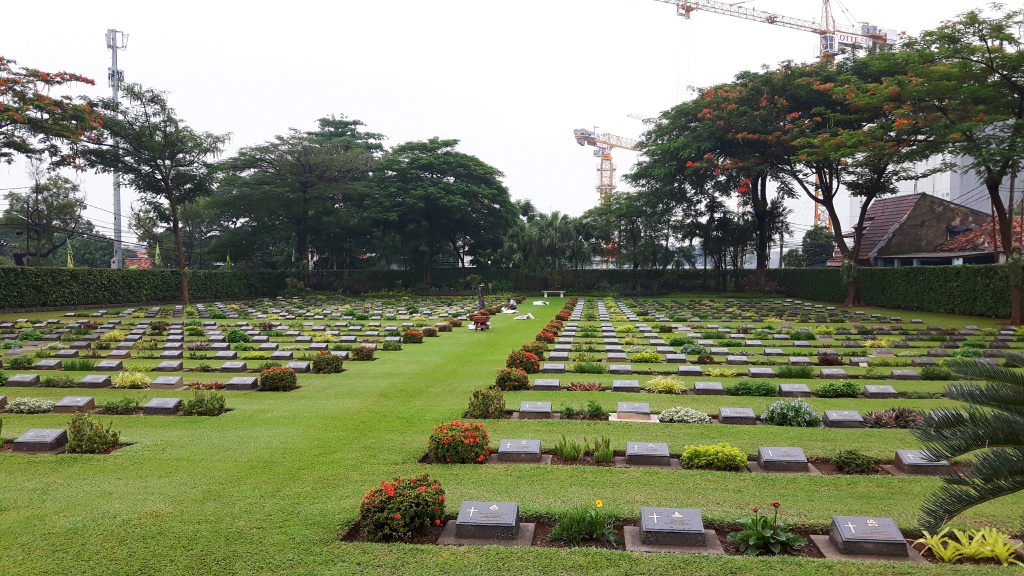
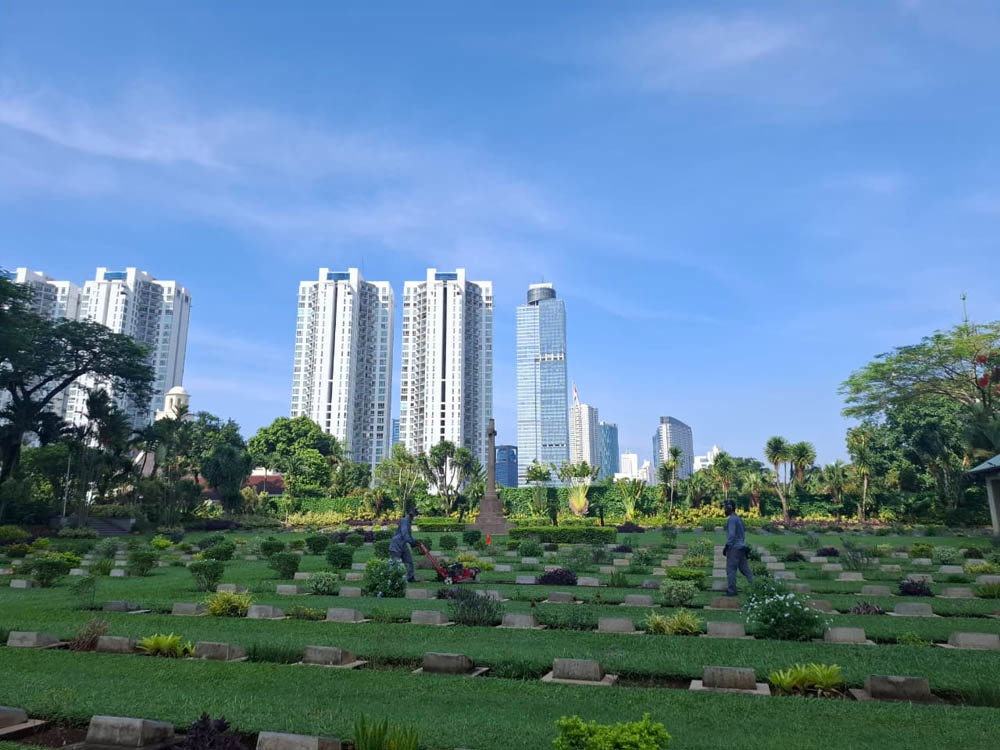
Set in the densely built-up suburb of Menteng Pulo in South Jakarta (Jakarta Selatan), and immediately adjoining the Netherlands Field of Honour, it is one of the most urban war cemeteries in the Commission’s global estate. Known locally as Makam Perang Jakarta, the cemetery is a quiet, green space surrounded by high-rise buildings and the bustle of the city streets.
Care & Maintenance
To keep Jakarta War Cemetery in prime condition, the gardening team follows a regular programme of mowing, weeding, edging, re-planting and structural cleaning.
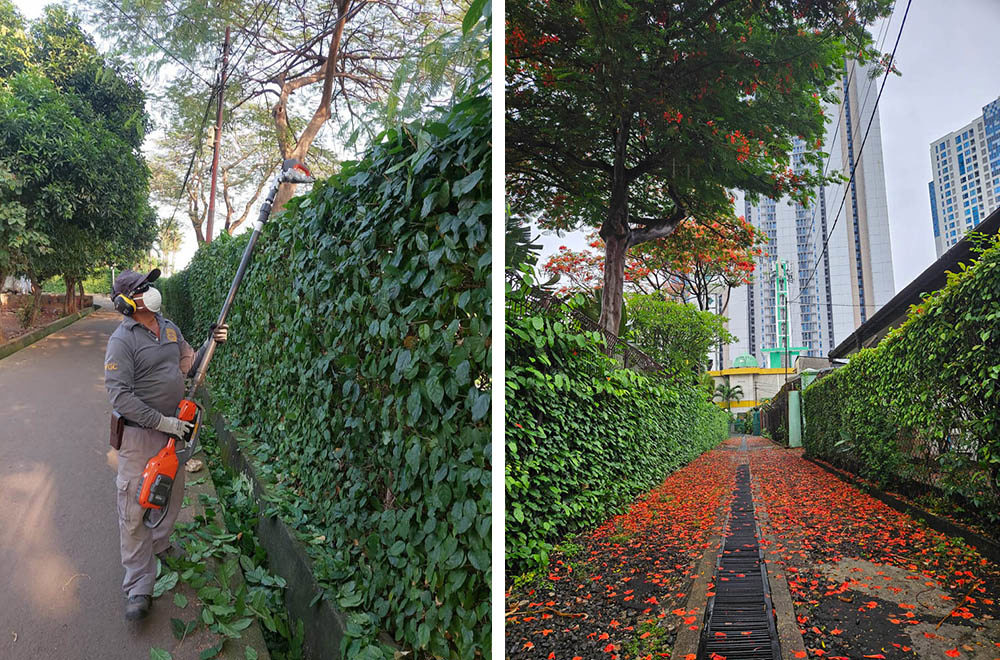
The tropical climate – close to the equator, with only two seasons, wet and dry – presents particular challenges. Periods of intense rain, followed by strong sun and high humidity, can cause rapid growth, localised flooding and stress on both plants and stonework, so the team must constantly adjust their work to the prevailing conditions.
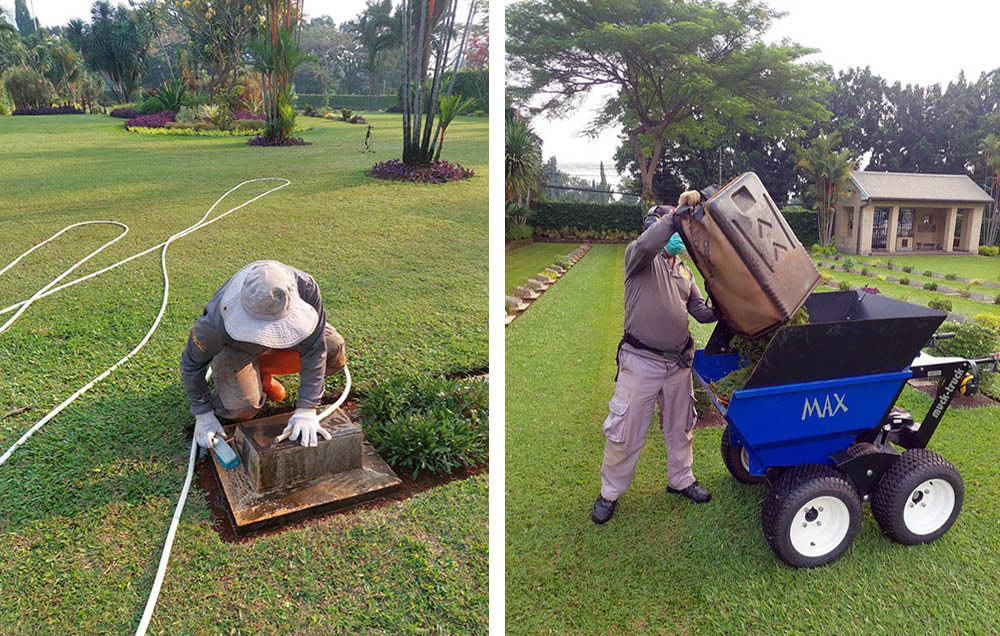
In recent years, much of the horticultural equipment has been switched to battery power, including hedge-cutters, blowers, brush-cutters and push mowers. This reduces noise levels in and around the cemetery, is more environmentally friendly, and makes the machinery lighter and easier for staff to handle as they move around the site.
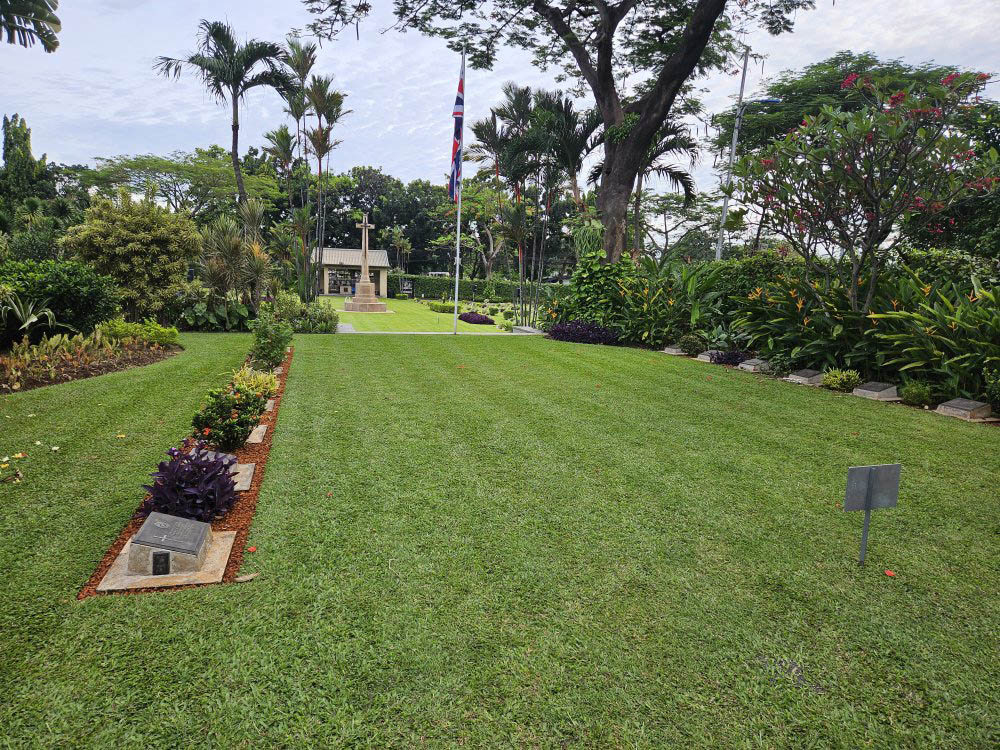
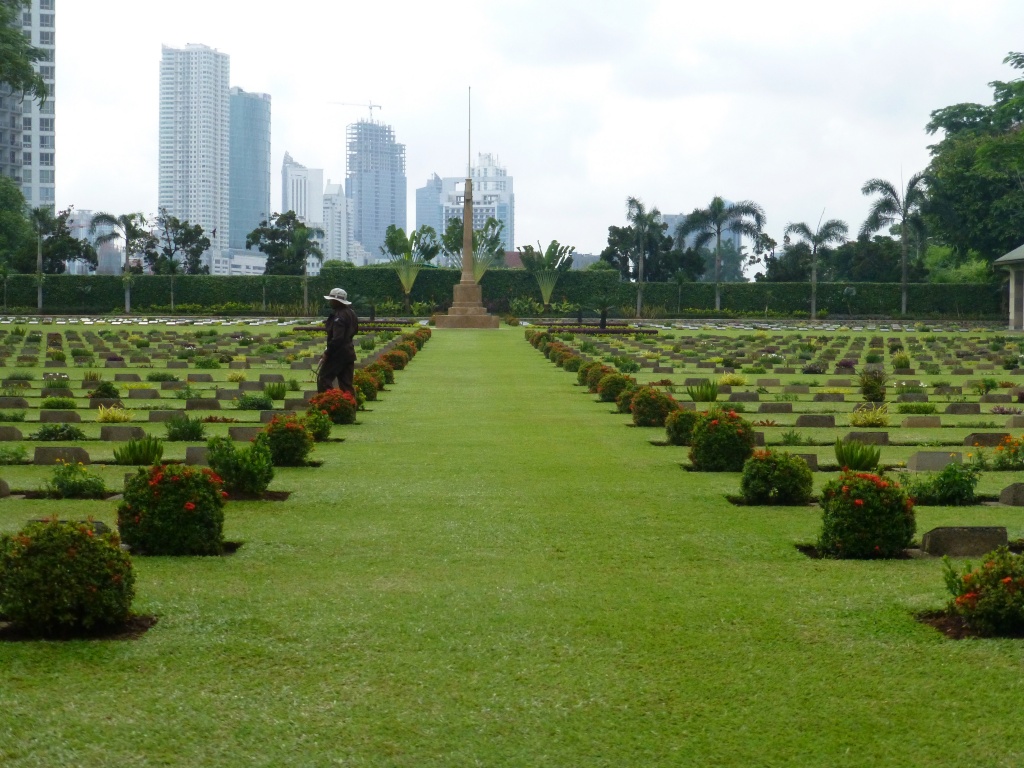
Jakarta’s gardeners also use a specially made angle bar when carrying out edging work – a simple tool created by the Head Gardener some years ago. It helps to keep the lawn edges precise, straight and neat, maintaining the crisp geometry that is such a feature of the cemetery’s appearance.
Stories of Service
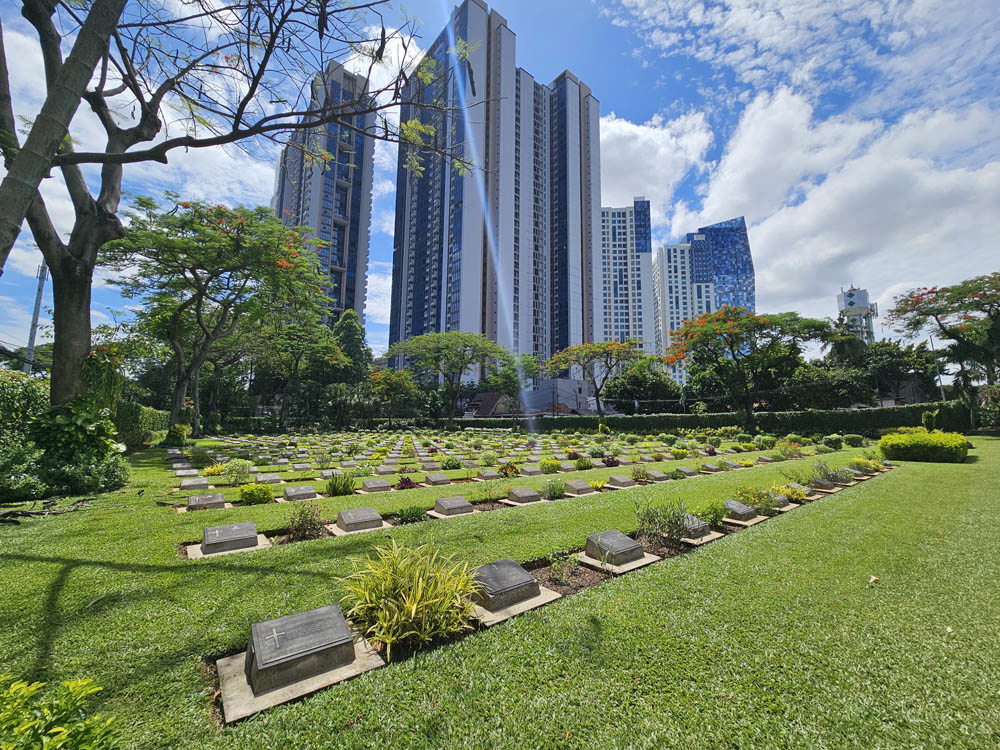
Jakarta War Cemetery is the resting place of more than 1,100 Commonwealth servicemen and women. Many died in the defence of Java and Sumatra during the Japanese advance of 1942; others perished later as prisoners of war. Among them are sailors who fought in the Battle of the Java Sea, soldiers of “Blackforce”, including a number of Australians whose graves lie together in Plot 6 and airmen killed in flying operations and airfield defence.
Jakarta War Cemetery is also the resting place of eight Australian Army Nursing Service sisters who survived the sinking of the SS Vyner Brooke in February 1942, only to die later as prisoners of war.
The ship, carrying women and children evacuating from Singapore, was attacked and sunk by Japanese aircraft in Banka Strait. Of the 65 Australian nurses on board, only 24 were alive at the end of the war. Those who died in captivity in Sumatra – from illness, malnutrition and harsh conditions – were later brought together and re-buried here in Jakarta, where their graves stand as a powerful testament to courage, endurance and care for others in the most extreme circumstances.
Today, with its meticulous planting, carefully maintained lawns and striking memorial features, Jakarta War Cemetery offers a serene and solemn place of remembrance at the heart of a busy, modern metropolis.
Location information
Jakarta (Djakarta) lies on the north-west coast of the island of Java. Jakarta War Cemetery is in the suburb of Menteng Pulo, 11 kilometres from the city centre and is adjacent to the Netherlands Field of Honour, Jakarta Selatan (South Jakarta). It can be reached by two main roads - Jalan Dr Saharjo and Jalan Casablanca.
Visiting information
PARKING
There is no car park at Jakarta War Cemetery and no off-street parking nearby.
ACCESS, LAYOUT AND MAIN ENTRANCE
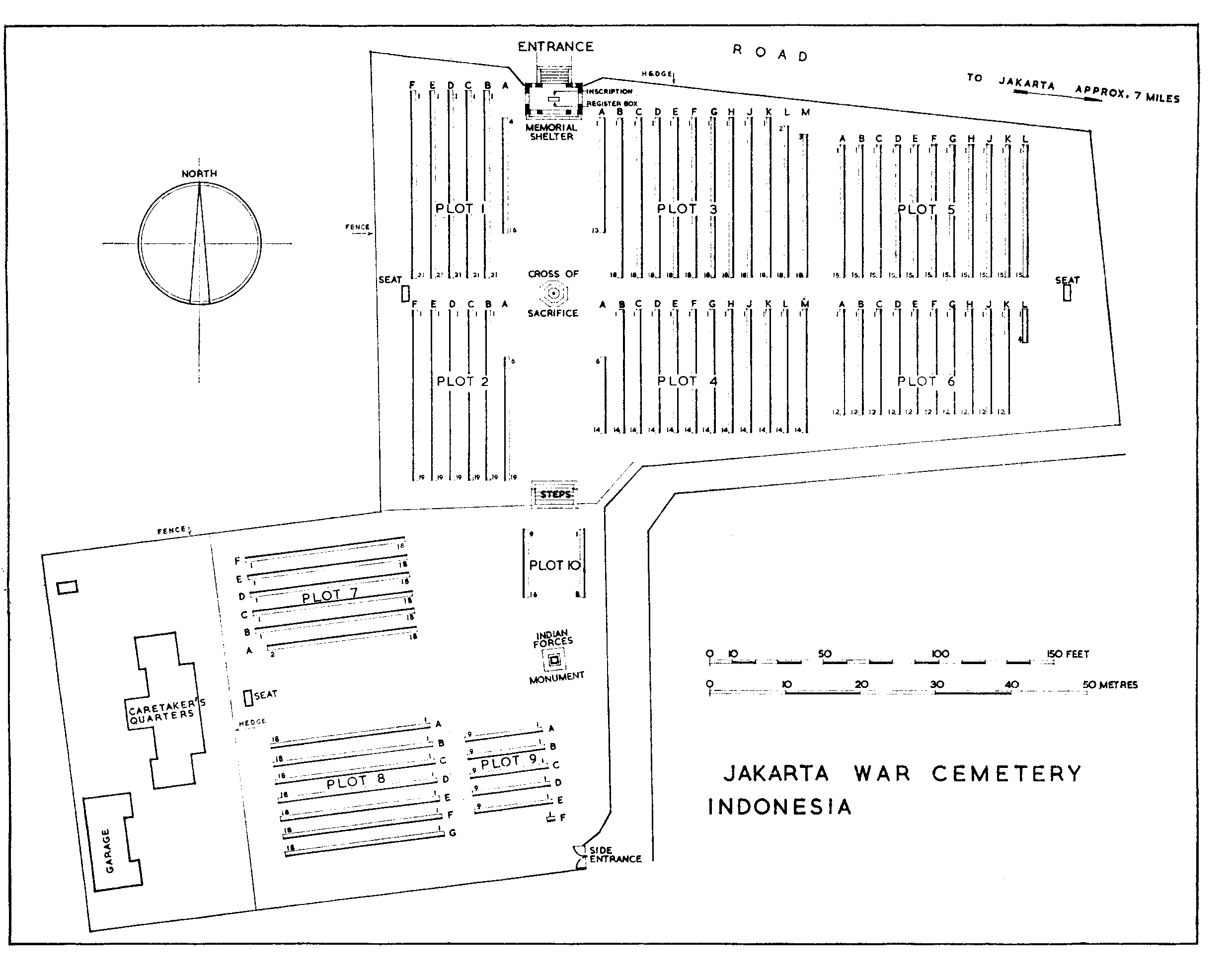
Access into the cemetery is through the main entrance. There are stone steps leading to the Entrance Building, from where there is access into the lower part of the cemetery. All the paths and routes around the cemetery are grass, flat and firm with no obstructions.
The Cemetery is divided into two separate areas arranged over two levels. The main entrance to Jakarta War Cemetery leads to the lower level of the cemetery. There are stone steps and a ramp that lead up to the upper level.
The Register Box for the cemetery is in the Entrance Building. The Cross of Sacrifice is also on the lower level of the cemetery and sits in a prominent position facing the entrance. There are benches to the left and right of the Cross of Sacrifice.
In the centre of the upper level is the Indian Forces Monument. All the paths in the upper level are grass, firm and flat.
ALTERNATIVE ACCESS
There is a stone ramp leading to a metal gate to the left of the main entrance building. The width of the gate is approximately one metre.
There is additional access through a service entrance at the side of the cemetery, the width of the entrance is around two and a half metres.
A third access route into the cemetery is through The Jakarta Netherlands Field of Honour.
ADDITIONAL INFORMATION
Opening hours are 0800 hrs – 1700 hrs Monday to Friday
History information
Jakarta, the capital of the Republic of Indonesia, lies on the north-west coast of the island of Java. It was the administrative capital of the former Netherlands East Indies and was known as Batavia, the name used in the records of the 1939-1945 War.
Batavia was the port by which thousands of British and Commonwealth servicemen entered Java in February 1942 from Singapore and Sumatra, shortly before the Japanese invasion of the island. It was defended by Nos. 232 and 605 (Fighter) Squadrons from Tjililitan airfield, a few miles distant. Although greatly outnumbered and dwindling in strength, the fighters remained in action in defence of the capital from 17th-27th February. The 77th Heavy Anti-Aircraft Regiment was also employed in Batavia's defence.
On 25th February H.M.S. Exeter, Electra, Encounter and Jupiter and H.M.A.S Perth sailed from Batavia to join the Eastern Striking Force at Sourabaya before meeting the Japanese in the Battle of the Java Sea. On 1st March the Japanese landed near Batavia, by the 4th the Dutch had ordered its evacuation, and on the 5th the Japanese occupied the town. Most of the Allied prisoners of war captured in Java were later concentrated in a number of prison camps around Batavia, one of the largest being "Bicycle Camp", so named because it had been the barracks of a Dutch cycle battalion. The camp held among its first prisoners 300 survivors of H.M.A.S. Perth, and 250 soldiers of the 2/15th Punjab Regiment who had fought in Borneo.
In 1961 at the request of the Indonesian Government, the Commonwealth dead from the Netherlands Field of Honour at Sourabaya, and from those at Palembang, Medan and Muntok in Sumatra, were brought into the cemetery, which already contained 474 Commonwealth war graves. Additional land was acquired to accommodate all the graves, and the total number of burials was increased to over 1,000. Jakarta War Cemetery therefore contains the graves of many who died in defence of Java and Sumatra during the swift Japanese advance in 1942 and many others who perished afterwards as prisoners of war. Among the dead were sailors who fought in the Battle of the Java Sea, soldiers of "Blackforce" including a number of Australians whose graves lie together in plot 6, and airmen who died in flying battle and airfield defence.
The cemetery is entered on its northern side by a short flight of steps leading into a memorial building. This contains bronze plaques which contain the names of the 58 identified officers and men who now lie buried at Ancol. Two main grass avenues cross the site, one running north-south and one east-west, and the Cross of Sacrifice stands at their intersection. The graves of members of the forces of undivided India lie on a terrace in the southern part of the cemetery. Here an Indian Forces monument has been set up; it is a stone pillar crowned by a sculptured wreath and bearing wreaths on two sides, with "INDIA" inscribed below one and "PAKISTAN" below the other.
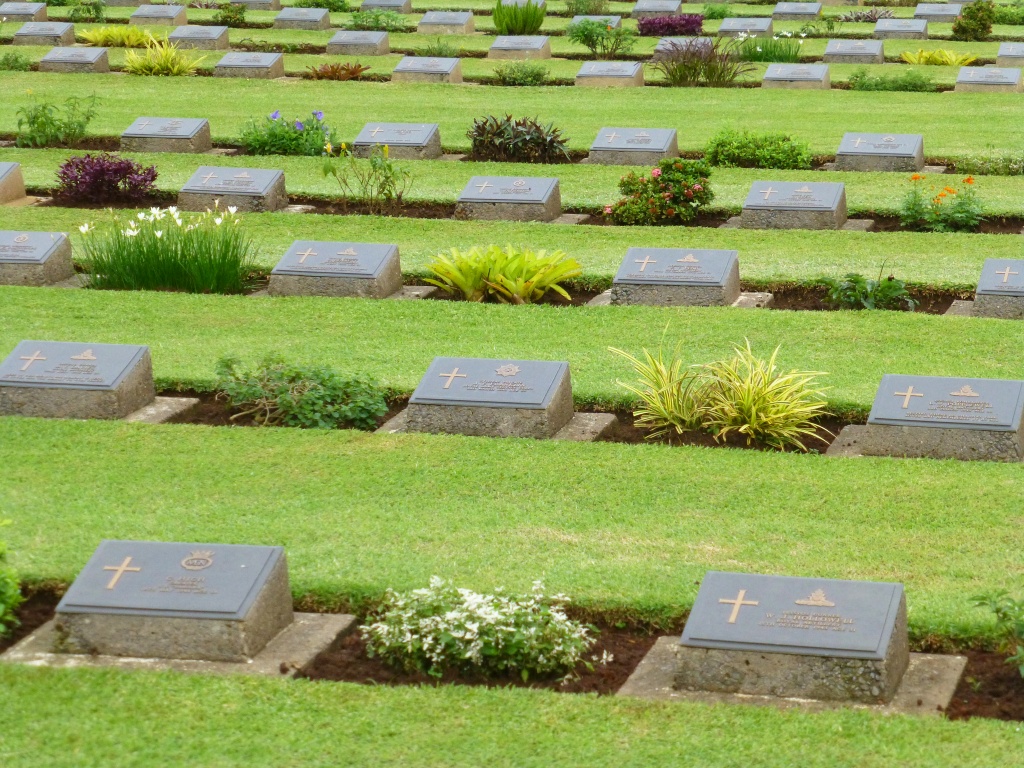
The graves are marked by bronze plaques set in concrete pedestals. The cemetery is covered with turf and planted with many colourful sub-tropical trees and shrubs.
The architect of this cemetery was Ralph Hobday O.B.E. who was the Senior Architect of the Commission