

Chungkai War Cemetery
- Country Thailand
- Total identified casualties 1692 Find these casualties
- Identified casualties from Second World War
- GPS Coordinates Latitude: 14.00583, Longitude: 99.51513
Please note
Please be aware that there may be snakes in the Cemetery.
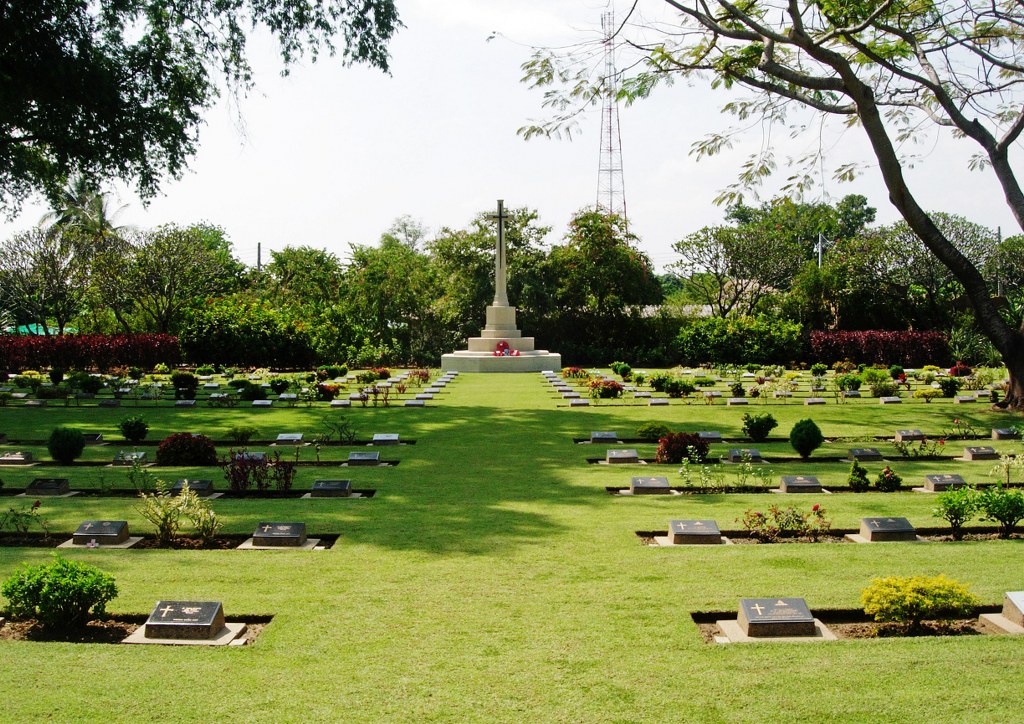
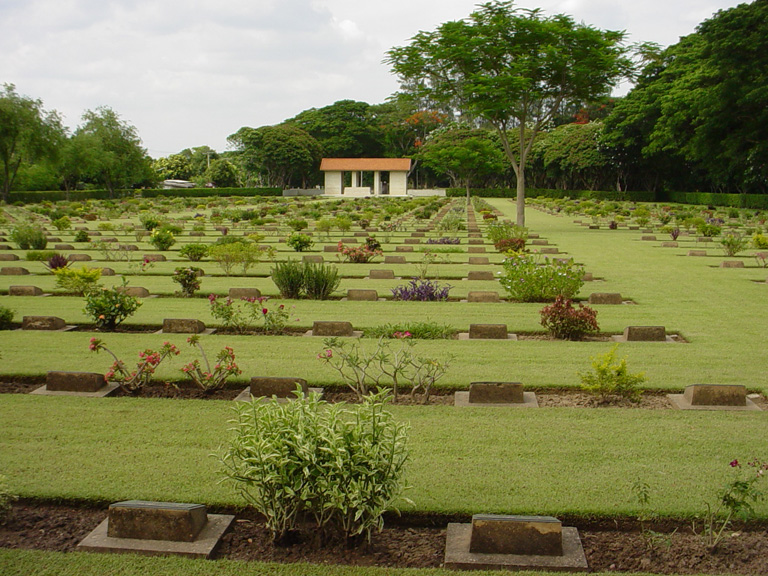
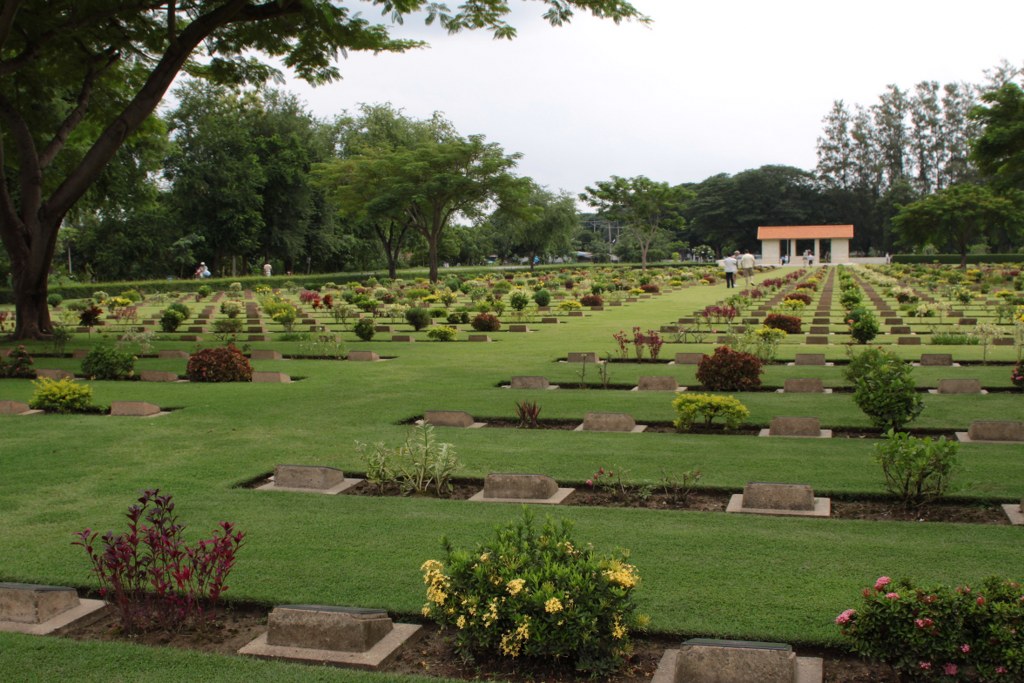
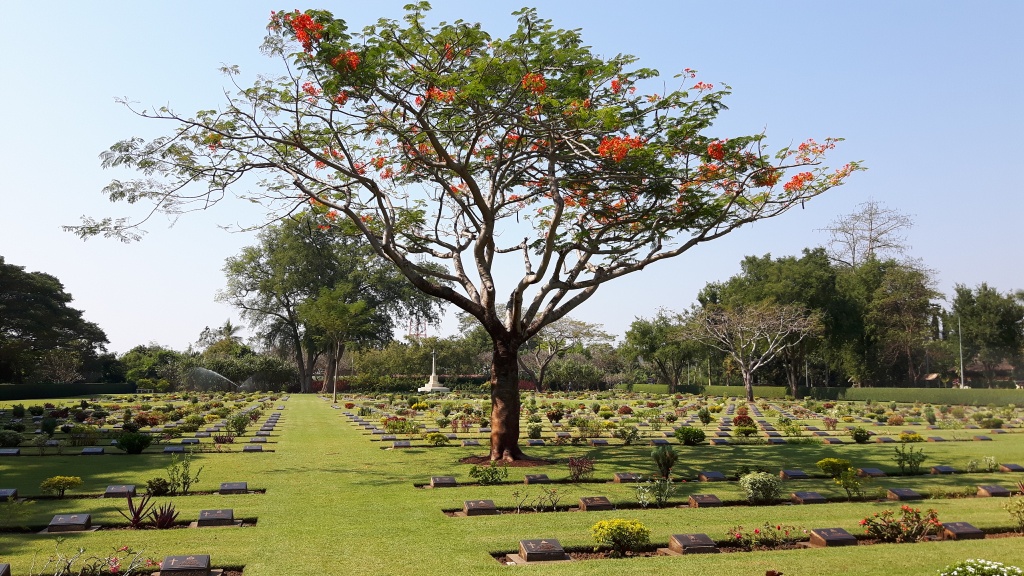
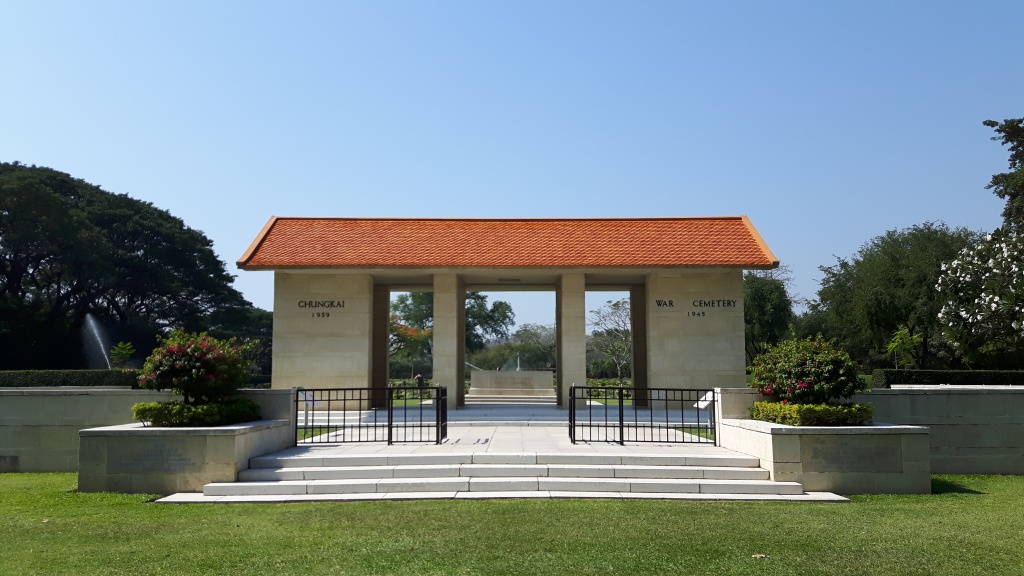
Cemetery Spotlight - Chungkai War Cemetery
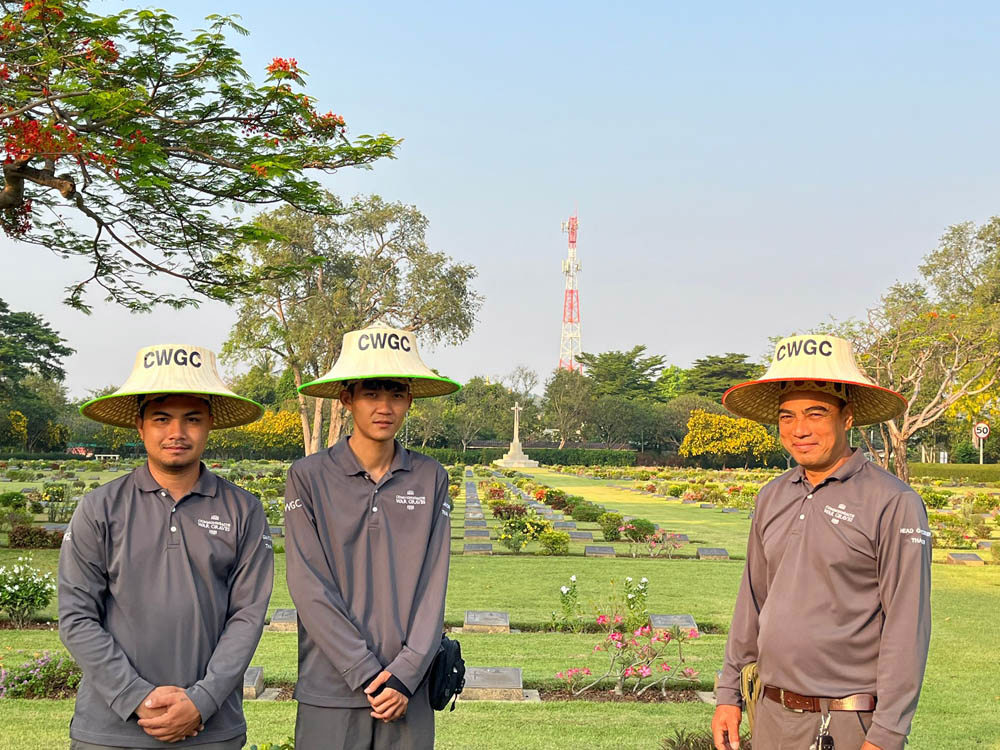
Under the leadership of Head Gardener, Gon Art-han, our dedicated three-person team ensures the cemetery remains in pristine condition. They work tirelessly to keep the grounds well-maintained and healthy, providing a peaceful resting place for the fallen while offering a warm, respectful welcome to visiting loved ones.
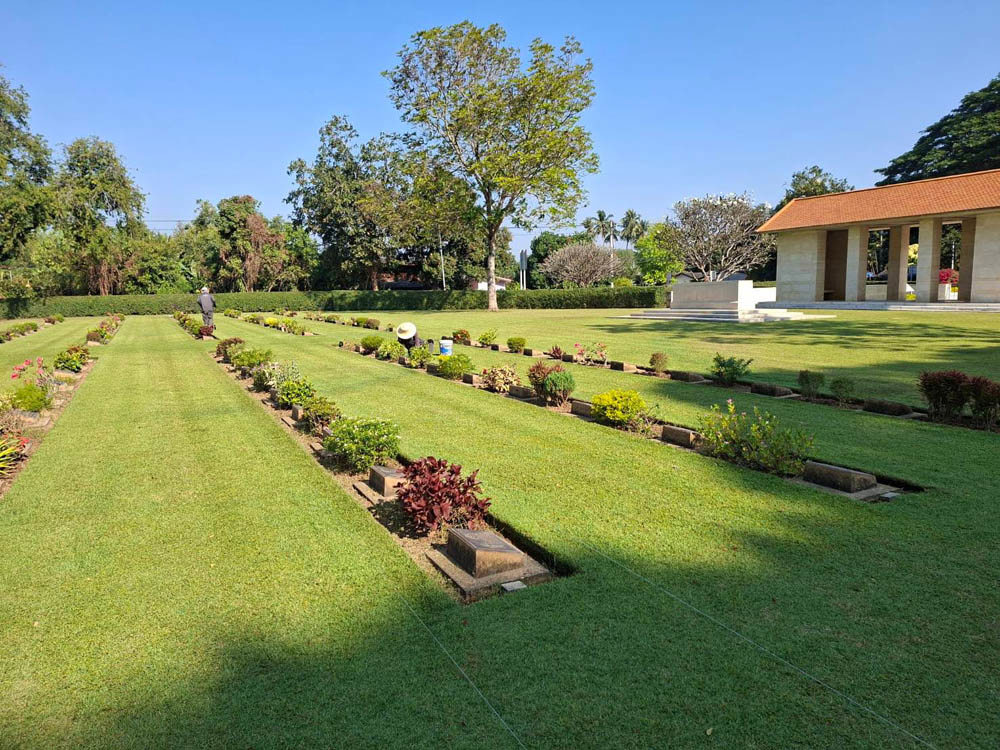
Our staff gently reapply coconut chips along each row to combat the drying effects of the intense heat. After application, the area is irrigated so the chips can absorb water, helping the plants stay hydrated during the hot season. This care extends to the turf, where regular mowing allows us to monitor the grass as it evolves through the seasons and observe natural species like fungi or local wildlife, reptiles.
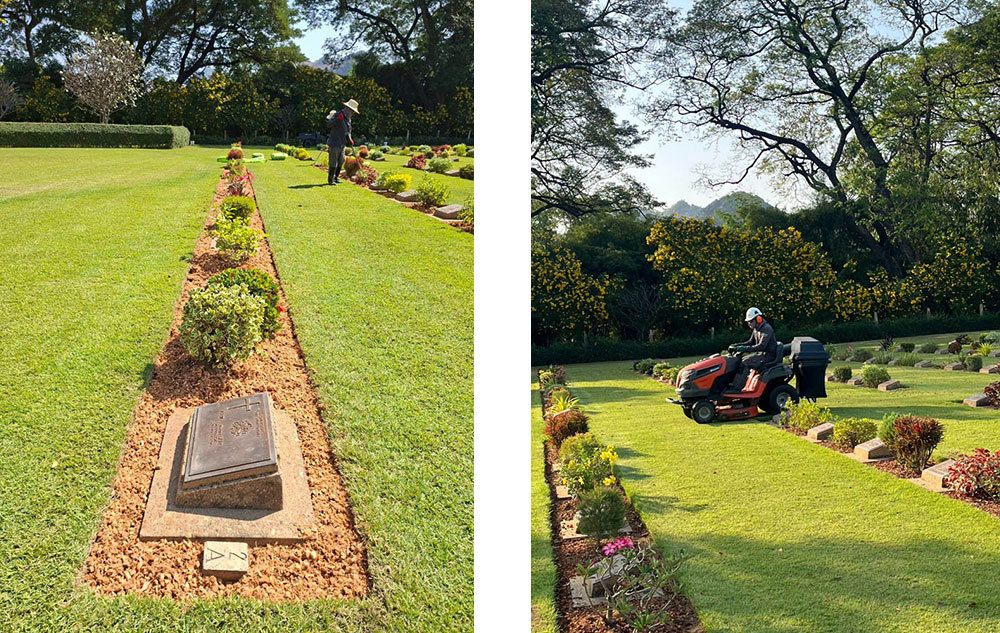
Our staff gently reapply Coconut chips along each row, as the intense heat causes them to dry out. After reapplying, we irrigate the area to allow the Coconut chips to absorb water, helping to retain moisture and keep the plants hydrated during the hot season.
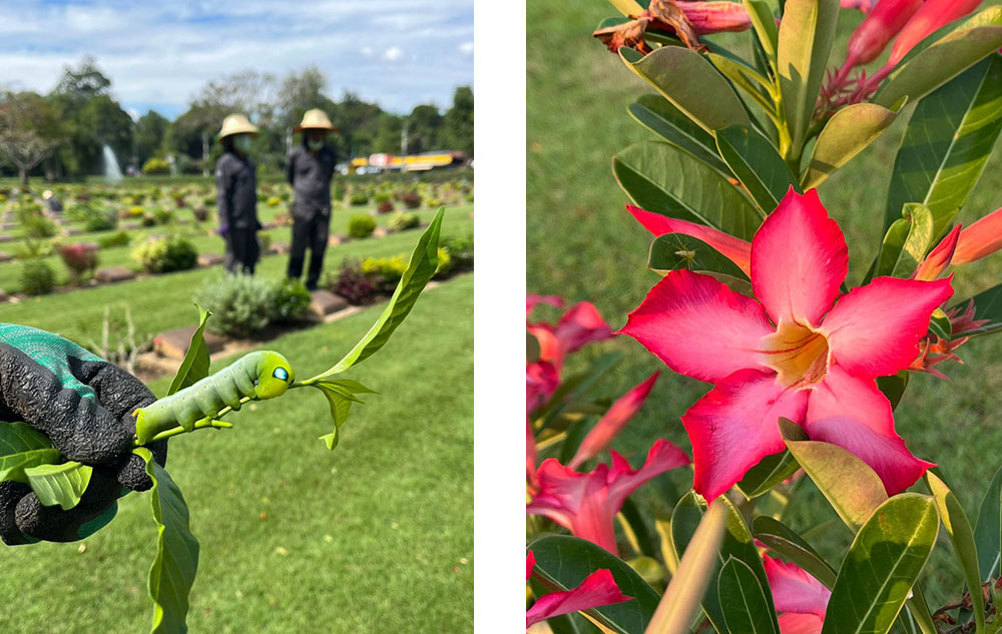
An abundance of shrubs and a peaceful setting attract bugs, bees, spiders and butterflies that come to sip nectar, find shelter, or even breed—resulting in beautiful caterpillars like this one.
Location information
Chungkai War Cemetery is located just outside the town of Kanchanaburi, which is 129 kilometres north-west of Bangkok, at the point where the river Kwai divides into two separate rivers; the Mae Khlong River and Kwai Noi River. The town is best reached by road along the National Highway which runs north from Bangkok. There is a bus and train service from Bangkok.
Chungkai War Cemetery is approximately 5 kilometres west of Kanchanaburi and can be reached by road over the narrow Sudjai Bridge.
The war cemetery can be located on city maps available at the tourist office or at larger hotels and is also signposted from Kanchanaburi War Cemetery, which is within the town of Kanchanaburi.
The Manager responsible for the cemetery can be contacted at Kanchanaburi War Cemetery.
Visiting information
ARRIVAL
The route to the cemetery is signposted, Chungkai War Cemetery is approximately 5 kilometres west of Kanchanaburi and can be reached by road, over the Sudja Bridge.
PARKING
There is space for parking at the cemetery, either in front of the main entrance (Memorial Shelter) or, along a concrete lane that runs alongside the cemetery grass area.
Access to the car park is through double width black metal gates between white stone gate posts.
All parking areas are flat, level concrete. There is no alternative parking nearby.
MAIN ENTRANCE, ACCESS & LAYOUT
Access into the cemetery through the main entrance (Memorial Shelter) is up steps, through the building, then down steps into the cemetery. The cemetery is generally level with turf throughout.
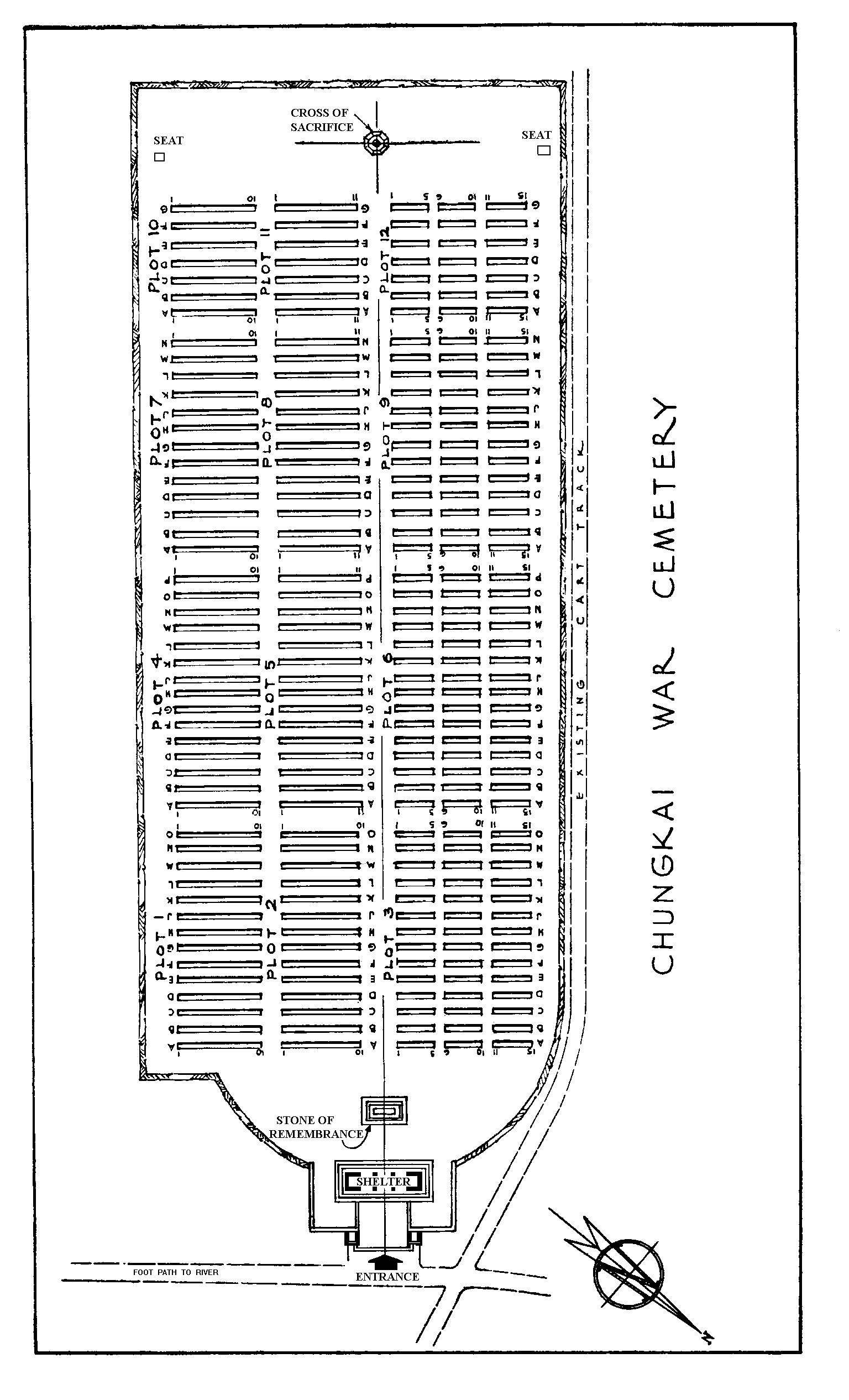
Directly behind the memorial shelter, is the Stone of Remembrance. The cemetery is a long rectangular shape, at the furthest point from the entrance is a Cross of Sacrifice. On either side of the Cross of Sacrifice are seating areas with stone benches.
ALTERNATIVE ACCESS
The route into the cemetery via the main parking area and lane (to the left of the Memorial Shelter). is step-free, firm, and flat.
ADDITIONAL INFORMATION
The cemetery is permanently open.
Please note, there may be snakes in the cemetery.
History information
The notorious Burma-Siam railway, built by Commonwealth, Dutch and American prisoners of war, was a Japanese project driven by the need for improved communications to support the large Japanese army in Burma. During its construction, approximately 13,000 prisoners of war died and were buried along the railway. An estimated 80,000 to 100,000 civilians also died in the course of the project, chiefly forced labour brought from Malaya and the Dutch East Indies or conscripted in Siam (Thailand) and Burma (Myanmar).
Two labour forces, one based in Siam and the other in Burma worked from opposite ends of the line towards the centre. The Japanese aimed at completing the railway in 14 months and work began in June 1942. The two sections of the line finally met near Konkoita towards the end of October 1943 and the completed line, 424 kilometres long, was operational by December 1943.
The graves of those who died during the construction and maintenance of the Burma-Siam railway (except for the Americans, whose remains were repatriated) were transferred from camp burial grounds and isolated sites along the railway into three cemeteries at Chungkai and Kanchanaburi in Thailand and Thanbyuzayat in Myanmar.
Chungkai was one of the base camps on the railway and contained a hospital and church built by Allied prisoners of war. The war cemetery is the original burial ground started by the prisoners themselves, and the burials are mostly of men who died at the hospital.
There are now 1,426 Commonwealth and 313 Dutch burials of the Second World War in this cemetery.
The cemetery was designed by Colin St Clair Oakes.