

Addis Ababa War Cemetery
- Country Ethiopia
- Total identified casualties 289 Find these casualties
- Identified casualties from Second World War
- GPS Coordinates Latitude: 9.05731, Longitude: 38.71566
Please note
There may be chameleons present in the Cemetery. Please take care not to touch them, as they have a tendency to bite if they feel threatened.
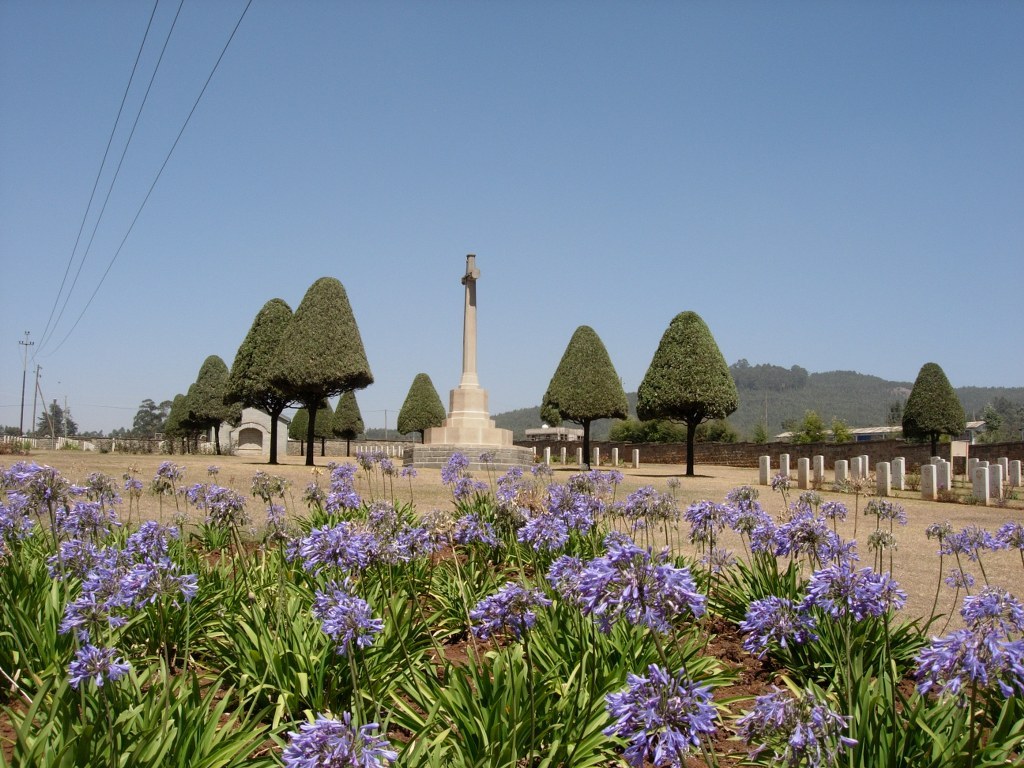
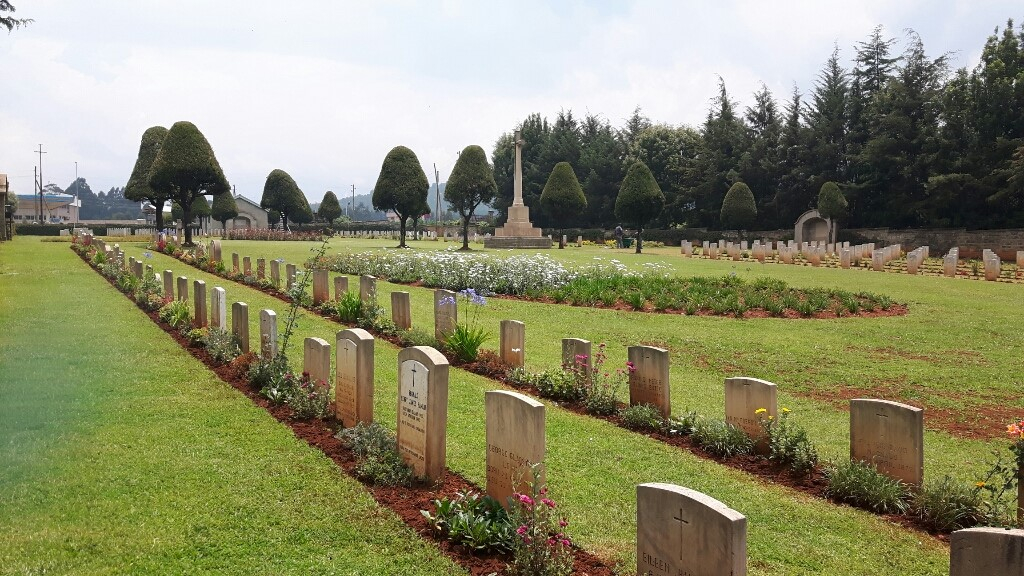
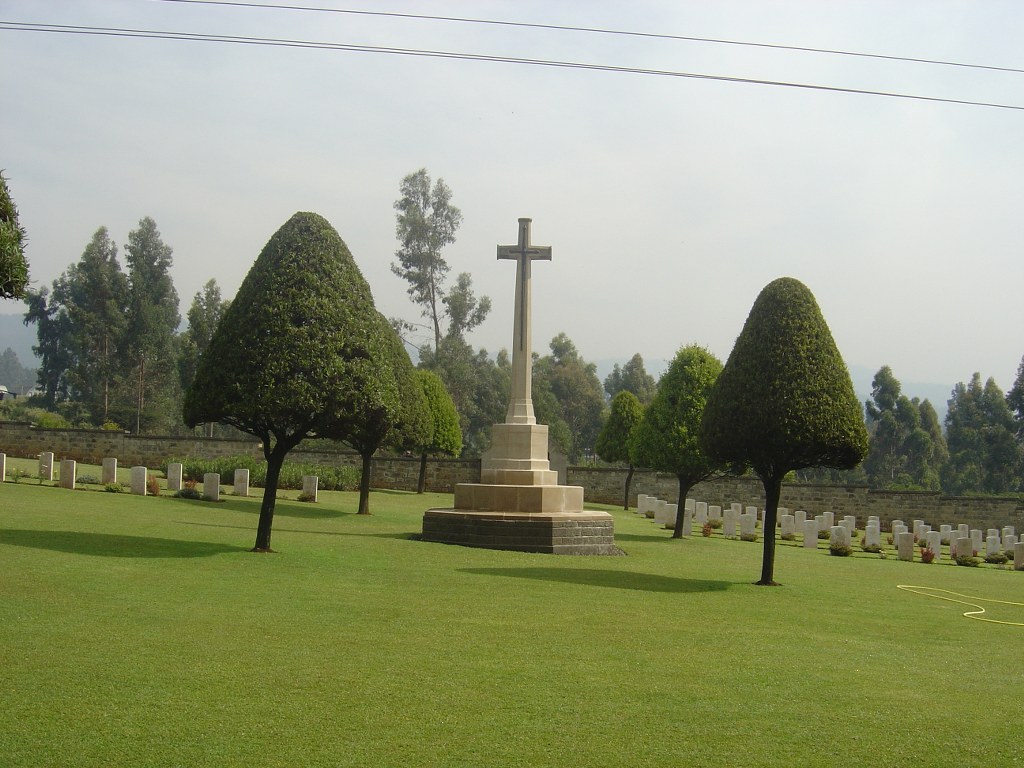
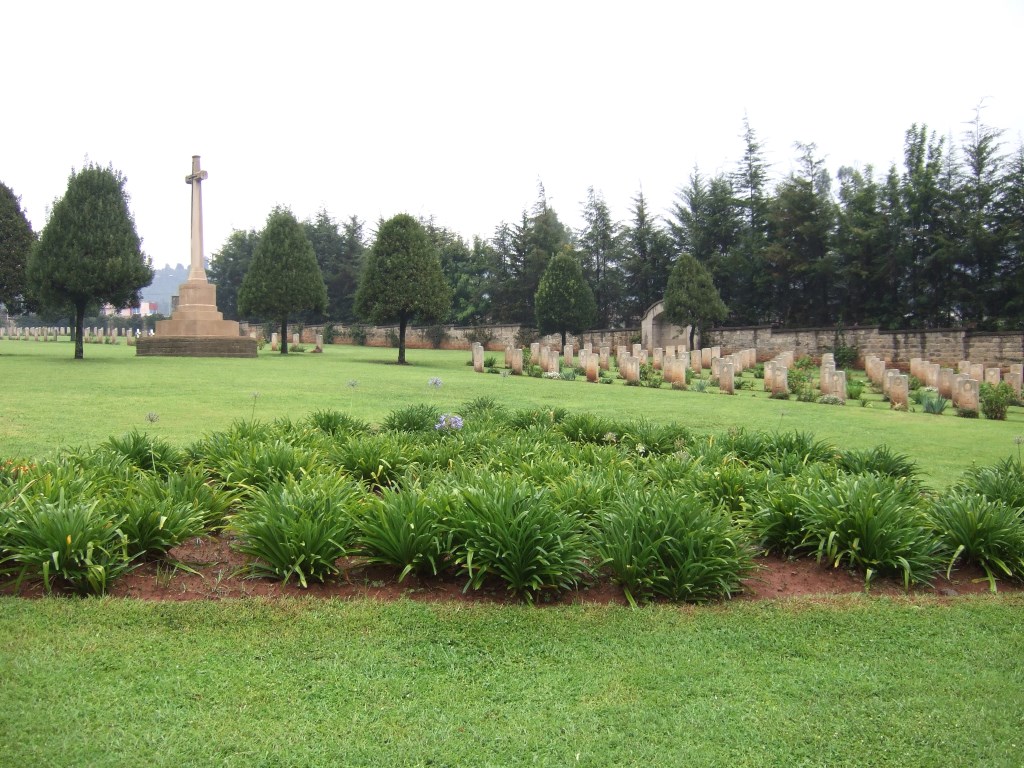
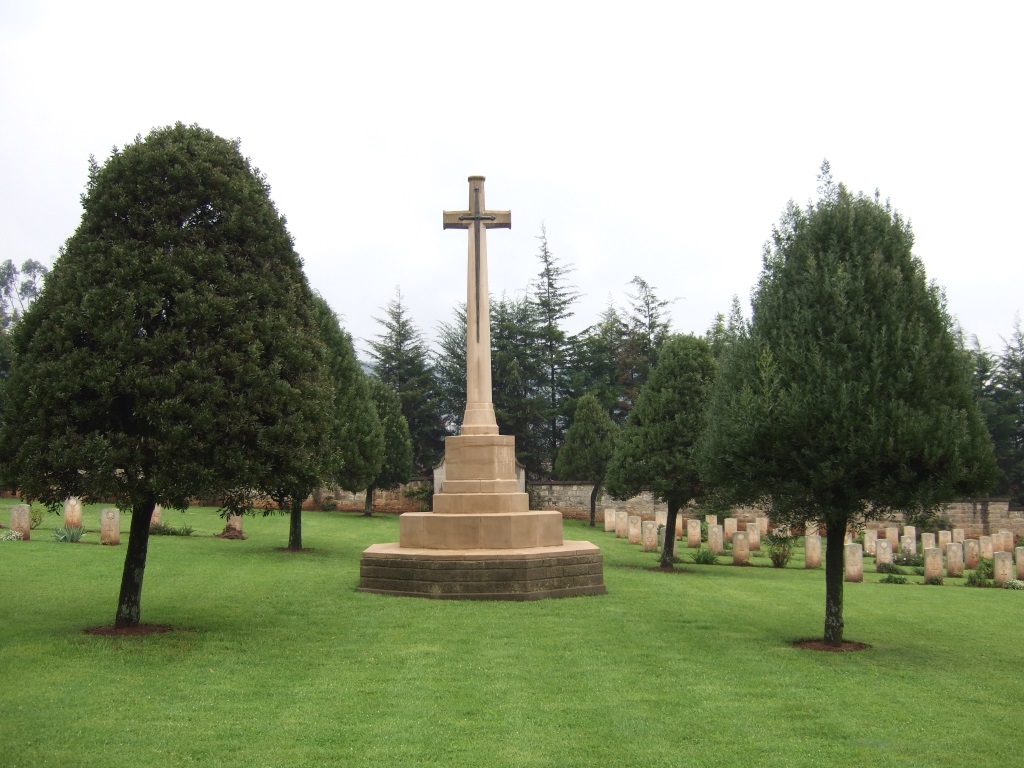
Cemetery Spotlight - Addis Ababa War Cemetery
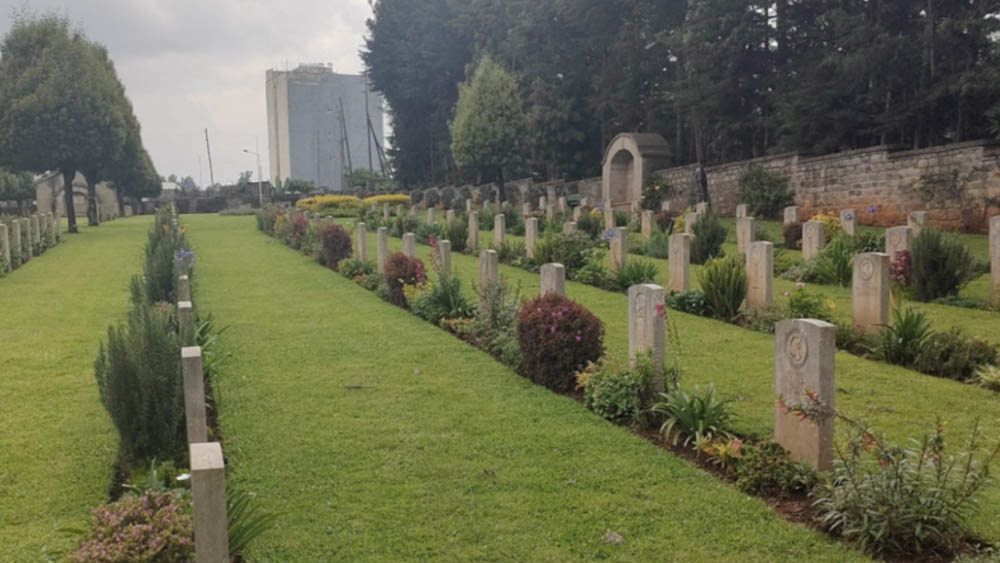
Addis Ababa means “new flower” in Amharic. It is a fitting name for a city known for its highland landscape and changing seasons.
Today, Addis Ababa War Cemetery contains 294 Commonwealth burials from the Second World War, seven of which are unidentified, from the East African Campaign. There are also three French war graves and 60 non-war burials.
Those buried here came from several countries and territories, including the United Kingdom, South Africa, India, Belgium, Nigeria and Kenya. Together, their graves show the international nature of the forces that served in East Africa.
Addis Ababa War Cemetery is maintained by a skilled local team responsible for caring for the graves, planting, lawns, trees, paths and other features across the site.
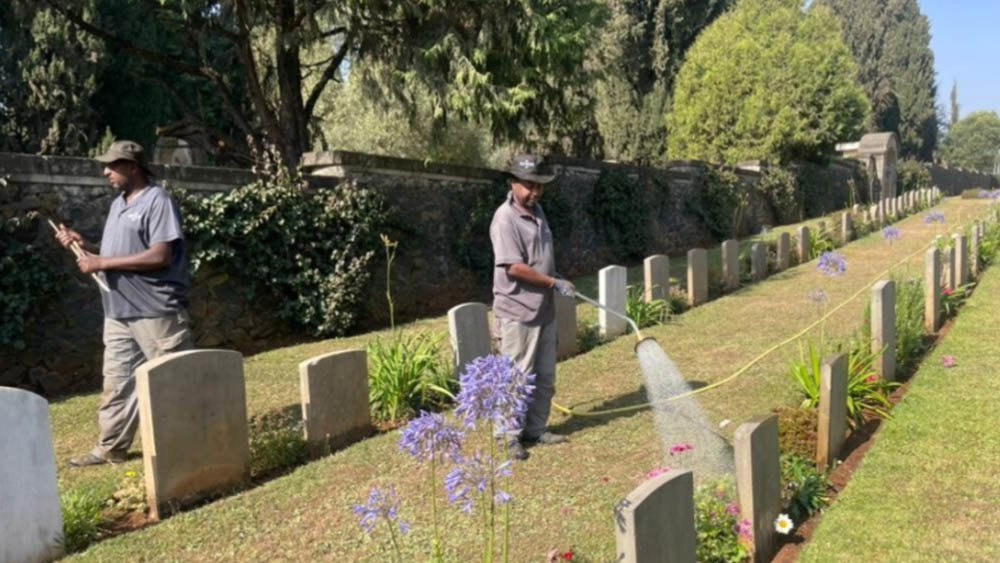
Their work is shaped by the cemetery’s location. Addis Ababa stands more than 2,300 metres above sea level, making it the highest capital city in Africa and one of the highest capitals in the world. Its climate is cooler than many people might expect from an African city, with strong differences between the wet and dry seasons.
The main rains usually arrive between June and September. During this period, frequent and sometimes heavy rainfall causes grass and weeds to grow quickly. Wet ground can also create problems with drainage, erosion and access, particularly because the cemetery is built on a moderate slope.
The team, therefore, has to adjust its work as conditions change. Mowing and edging may need to be carried out more frequently during periods of rapid growth, while heavy rain can delay the use of machinery or make some parts of the cemetery difficult to reach safely.
The slope also means that water must be carefully managed. After periods of heavy rain, the team checks for signs of runoff, soil movement and water collecting around paths, borders or grave plots.
During the drier months, the pace of grass growth slows, and attention moves towards other seasonal tasks. These can include pruning shrubs, maintaining borders, caring for younger plants and preparing the grounds for the next period of rain.
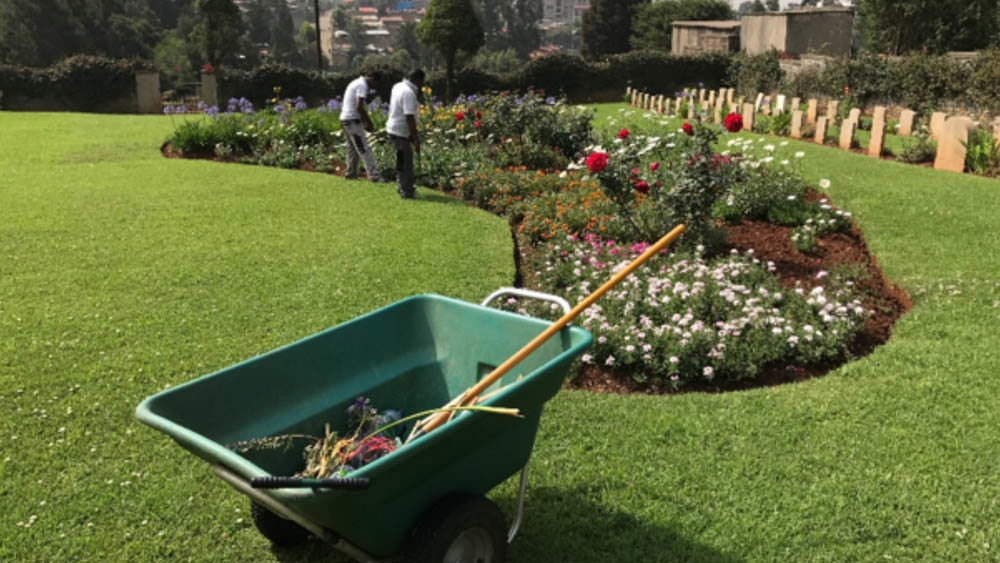
Cold nights are another feature of Addis Ababa’s climate. Temperatures can fall sharply during the dry season, placing different pressures on plants from those experienced at CWGC sites in hotter or more humid parts of Africa and Asia. The team must select and manage plants that can cope with both strong sunshine and cooler highland conditions.
Maintaining the cemetery is not simply a matter of cutting grass. The team regularly inspects the entire site, looking for changes that may require attention. Paths and boundaries must remain safe and presentable, planted areas must be kept under control, and the ground around each grave must be carefully maintained.
The headstones also require regular inspection and cleaning. Dust, soil, plant growth and weathering can gradually affect their appearance. Cleaning must be carried out carefully so that inscriptions remain legible without damaging the stone.
The team also watches for unstable ground, damaged planting and any developing maintenance issues. Identifying these early helps prevent more substantial repairs being needed later.
One of the most noticeable features of the cemetery is its mature Australian Blackwood trees, known scientifically as Acacia melanoxylon.
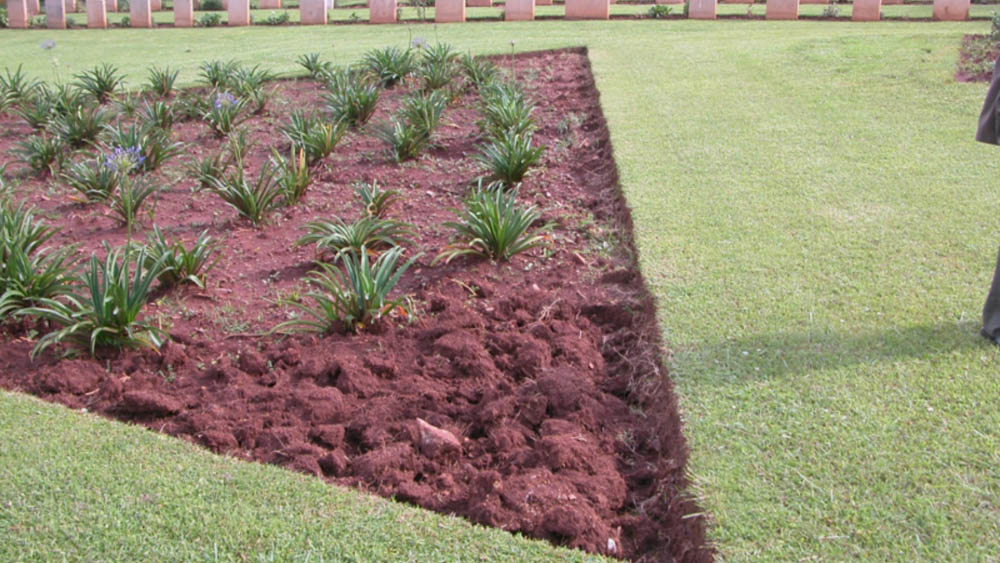
The species is native to eastern and south-eastern Australia but has been introduced to many other parts of the world, including Ethiopia. It is well-suited to the cooler conditions of the Ethiopian highlands and can grow into a tall tree with a broad, upright canopy.
At Addis Ababa War Cemetery, the trees provide height and structure, helping to frame the graves and planted areas below. Their foliage provides shade during sunny periods, while their pale cream flowers add seasonal interest.
Mature trees bring their own maintenance needs. The team monitors their condition, clears fallen branches and leaves, and manages the surrounding grass and planting. This helps protect visitors, headstones and other cemetery features while allowing the trees to remain an important part of the landscape.
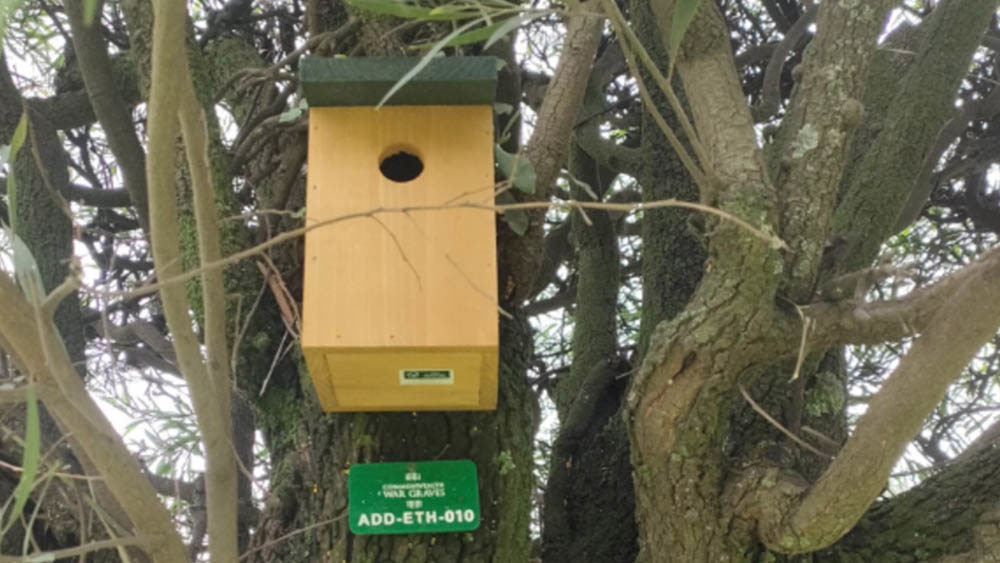
The trees also provide shelter and habitat for birds and insects. Bird boxes have been installed within the cemetery to support local wildlife and contribute to the Commission’s wider work on biodiversity.
The result is a cemetery that is both a place of remembrance and a living highland landscape. Its appearance changes with the seasons, from the fast growth and heavy rainfall of the wet months to the colder nights and drier ground of the winter period.
Through each of these changes, the local team continues its work. Their knowledge of the site, its soil, its plants and its climate allows them to respond to conditions throughout the year.
Location information
Addis Abbaba War Cemetery is approximately 9 kilometres from the city centre on Ambo Road, the main road to western Ethiopia, opposite the General Wingate School.
Visiting information
ARRIVAL
The route to the cemetery is signposted.
PARKING
It is possible to park outside the main entrance of the cemetery. The ground is a mixed surface of grass and gravel but is firm and flat.
There is enough space for up to 5 vehicles to park.
The parking area is approximately 5 metres from the main entrance.
ACCESS, LAYOUT AND MAIN ENTRANCE
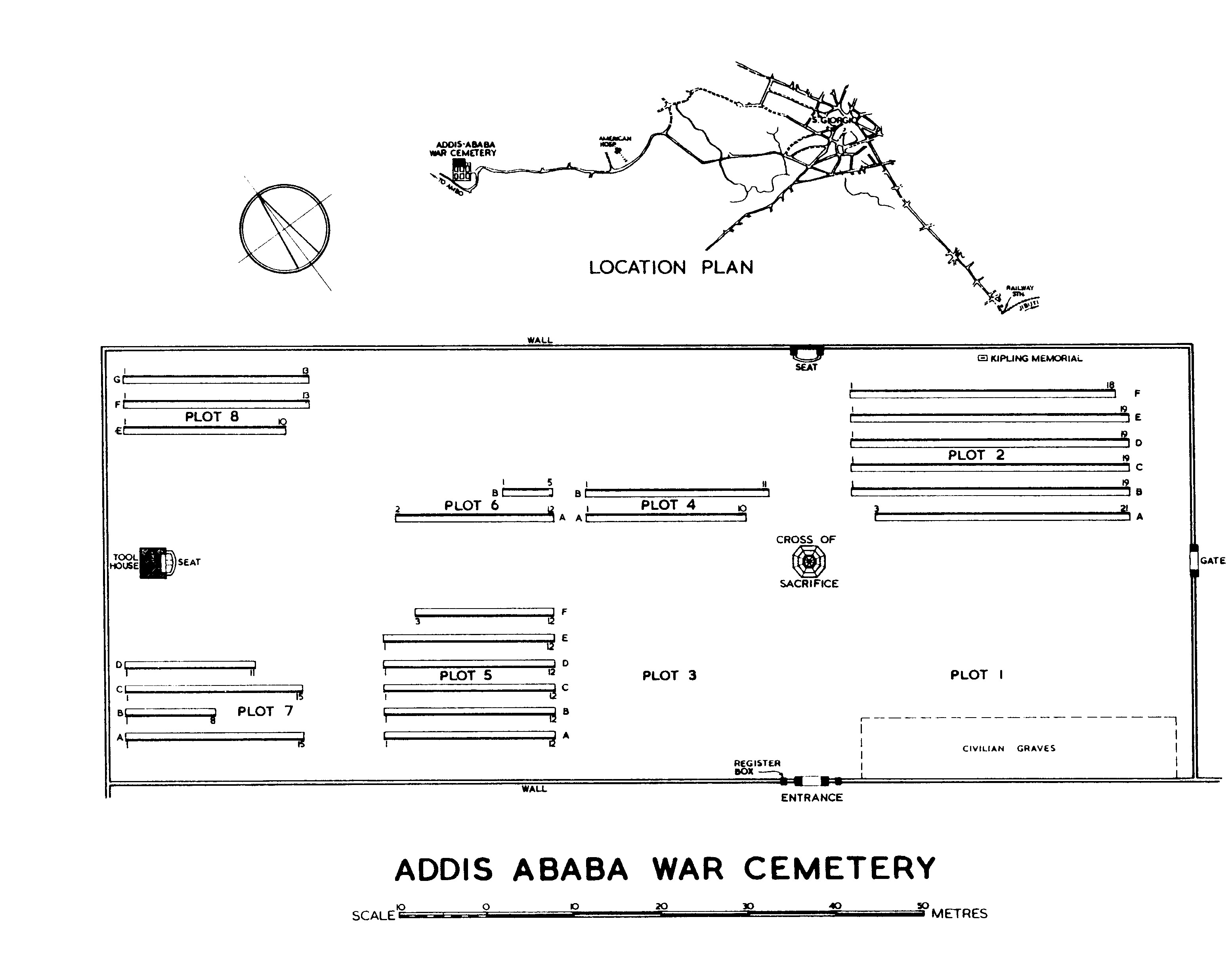
There is a large metal double gate which is kept open when the cemetery is open. There is a step down from the entrance into the cemetery, which is rectangular shaped, and has a moderate slope along the length of the cemetery.
The Register Box is on the left-hand side of the main entrance built into the main gate pillar.
The Cross of Sacrifice is in the centre of the cemetery burial area, slightly to the right of the main entrance.
There are 2 large arched shelters in the cemetery, both have stone bench seating areas built into the back wall of the arch.
ALTERNATIVE ACCESS
There are no alternative entrances or access into the cemetery.
ADDITIONAL INFORMATION
The cemetery is open;
Monday to Thursday 0800 hrs to 1700 hrs
Friday and Saturday 0800 hrs to 1630 hrs.
History information
When Italy entered the war in June 1940, Ethiopia, which had been part of the Italian East African empire since 1936, became a threat to British positions in Egypt and the link by sea to the Far East and Australasia.
Commonwealth forces took up defensive positions on Ethiopia's borders with Sudan to the west and Kenya to the south, and in mid-December 1940, after initial skirmishes with the Italians, the first of a series of offensives was launched from Kenya. A strike east into Italian Somaliland secured the coastal port of Mogadishu in February 1941 which made possible an advance into the heart of Ethiopia. Within a month Harar had been taken and Addis Ababa, the Ethiopian capital, was captured early in April, allowing the deposed Emperor Heile Selassie to return in May.
Diminished Italian forces continued to withdraw north and the East African campaign in Ethiopia was not concluded until the end of November 1941 with the surrender of the last concentration of Italian forces at Gondar.
Addis Ababa War Cemetery contains 294 Commonwealth burials of the Second World War, seven of which are unidentified. The cemetery also contains the graves of three French airmen and 60 non-war burials.