

Medjez-El-Bab War Cemetery
- Country Tunisia
- Total identified casualties 2525 Find these casualties
- Identified casualties from First & Second World War
- GPS Coordinates Latitude: 36.62588, Longitude: 9.57115
PLEASE NOTE
The cemetery will be closed until the end of November 2026, due to the ongoing construction works taking place there.
We apologise for any inconvenience.
CWGC MedJez-El-Bab War Cemetery: Sustainability for the Future
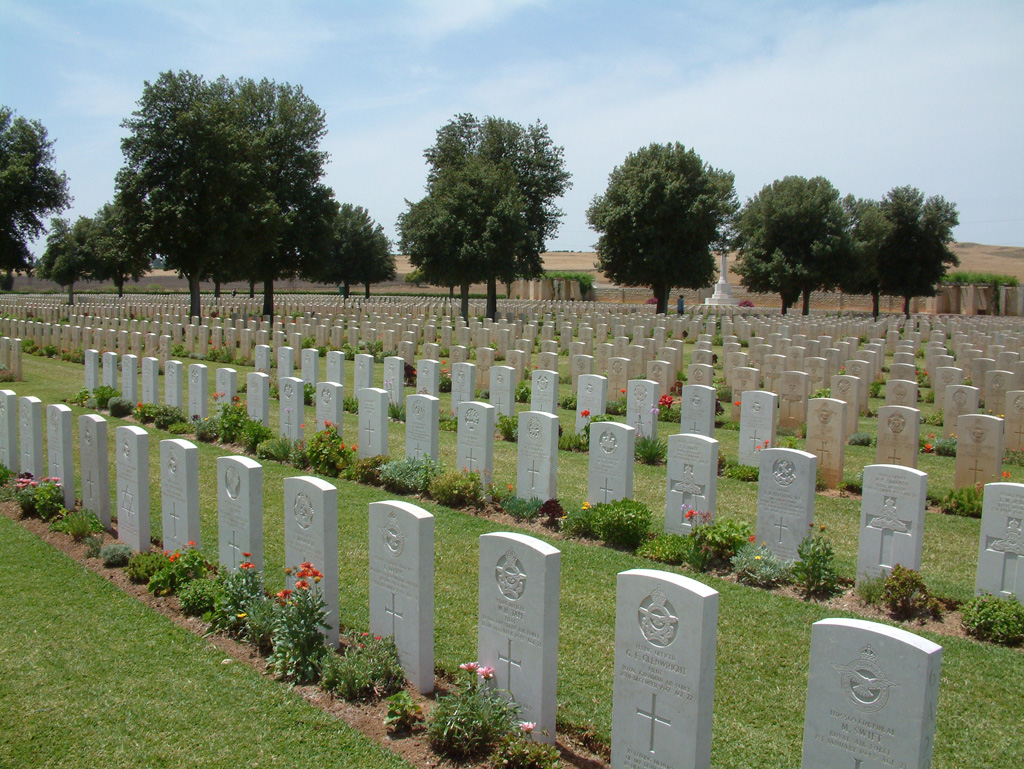
Commonwealth War Graves is implementing a total Landscape redesign project for the Medjez-El-Bab War Cemetery in Tunisia, the largest Commonwealth war cemetery in the country. The cemetery, which spans 19,000 square meters and contains 2,903 graves, is being reimagined to honour its historical significance while addressing environmental challenges such as water scarcity and climate stress.
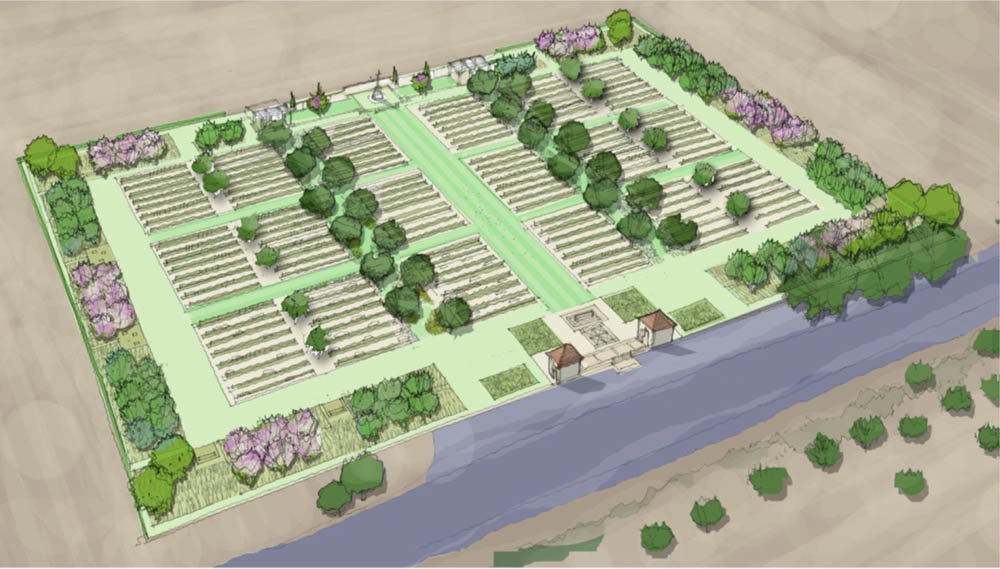
The project is part of the Commonwealth War Graves Commission's ongoing efforts to create sustainable, climate-resilient landscapes while maintaining the dignity and purpose of war cemeteries. The redesign will reduce irrigated turf by 75%, increase biodiversity, and integrate the cemetery into its surrounding landscape.
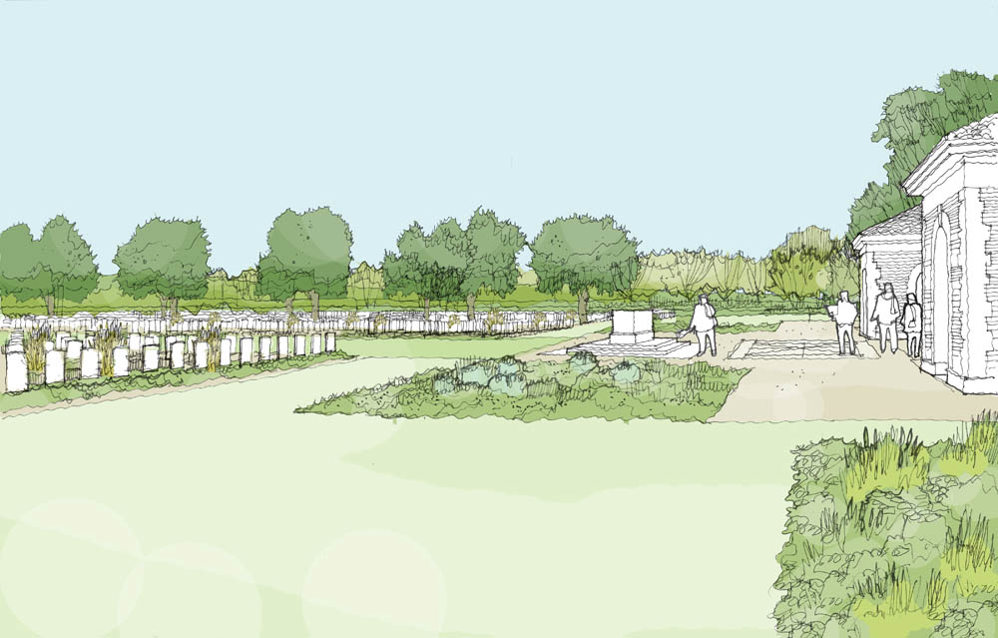
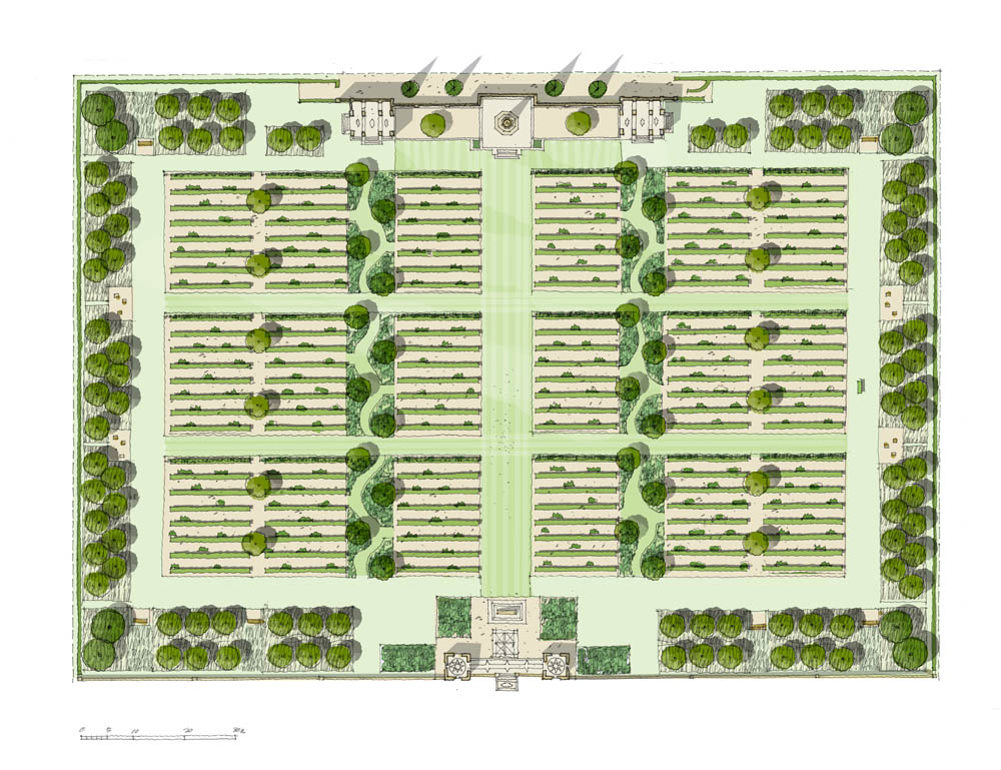
The new design will form the transition from traditional high-maintenance lawns to sustainable, drought-tolerant plantings that reflect the local ecology and enhance biodiversity. Key elements of the proposal include:
- Entrance Area: Gravelled space with low, drought-tolerant planting to preserve open views and reduce maintenance.
- Central Avenue and Cross Axes: Retain irrigated turf for symbolic clarity and order.
Grass Margins and Pathways: Transition to native, un-irrigated vegetation that will bloom in spring and remain dormant in summer. - Burial Plots: Replace lawns with gravel gardens, low planting, and taller grasses to soften the geometry while maintaining legibility.
- Olive Groves: Introduce orchard-style planting underplanted with native species to enhance biodiversity and provide areas for reflection.
- Meandering Paths: Enhance shaded corridors with drought-tolerant groundcovers and herbaceous plants for a textured, fragrant understorey.
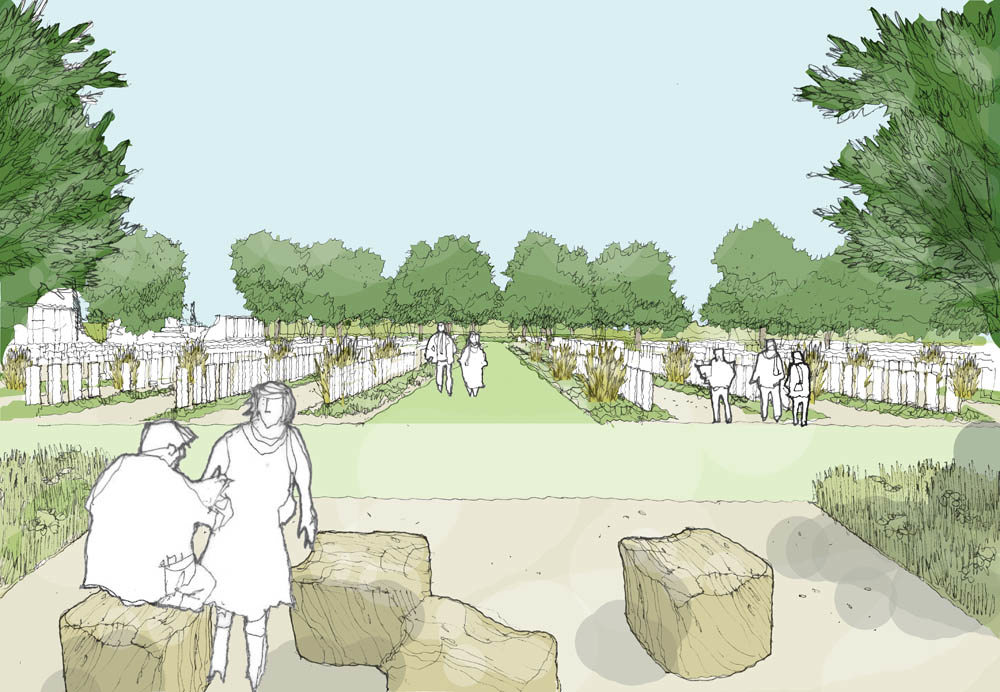
The design draws inspiration from the surrounding Medjerda Valley and nearby Thuburbo Majus, incorporating native and resilient species such as olive trees, lavender, rosemary, thyme, and grasses. These plants are chosen for their ecological benefits, including soil stabilisation, pest deterrence, pollinator support, and carbon sequestration.
The design aims to continue to provide reflection on the historical significance of the site, which commemorates soldiers who fought in the North African Campaign during World War II, preserving the sanctity and memory of the cemetery, while emphasising the importance that CWGC landscapes must adapt to the environmental realities to remain sustainable.
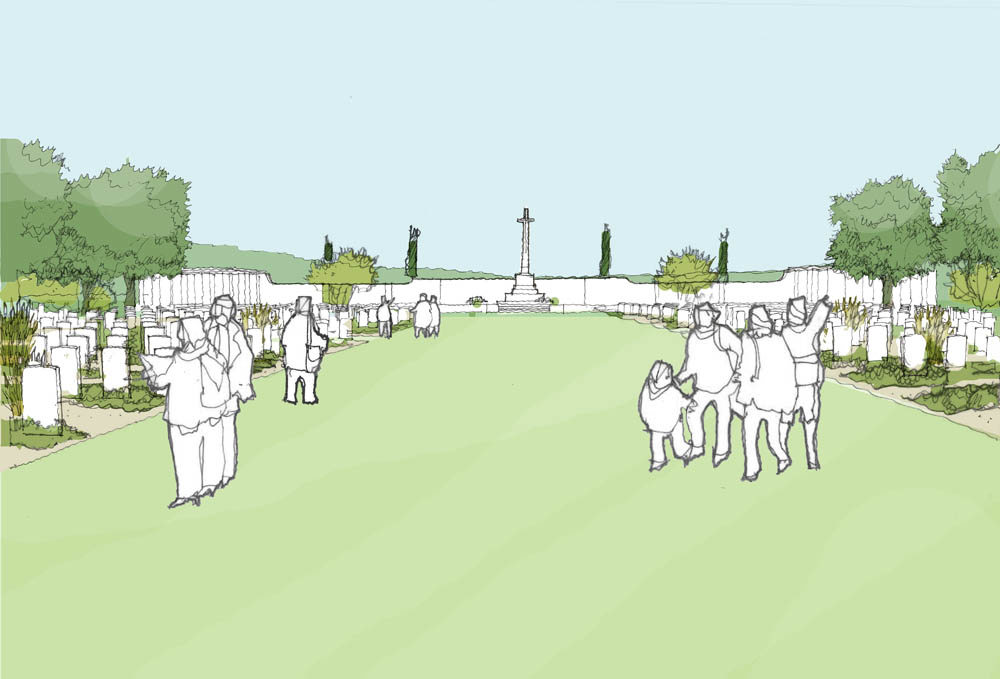
Commonwealth War Graves is working with landscape architect Joe Perkins to implement this landscape redesign project for the Medjez-El-Bab War Cemetery in Tunisia, the largest Commonwealth war cemetery in the country.
Location information
Medjez-el-Bab is approximately 60 kilometres west of Tunis. The Cemetery is situated 5 kilometres west of Medjez-el-Bab on the road to Le Kef (Route GP5).
GPS Co-ordinates: Latitude: 36.626687, Longitude: 9.570444
Visiting information
ARRIVAL
All routes to the cemetery are signposted.
PARKING
It is possible to park in a long gravel lay by in front of the main entrance to the cemetery. The parking is off the main road.
ACCESS, LAYOUT AND MAIN ENTRANCE
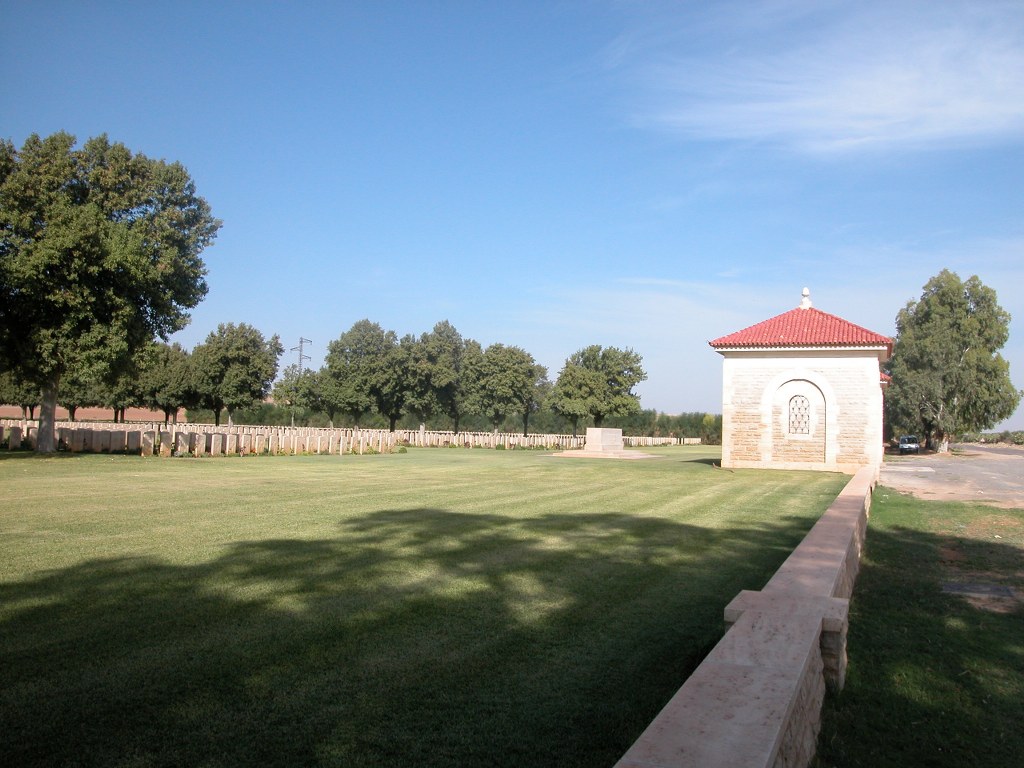
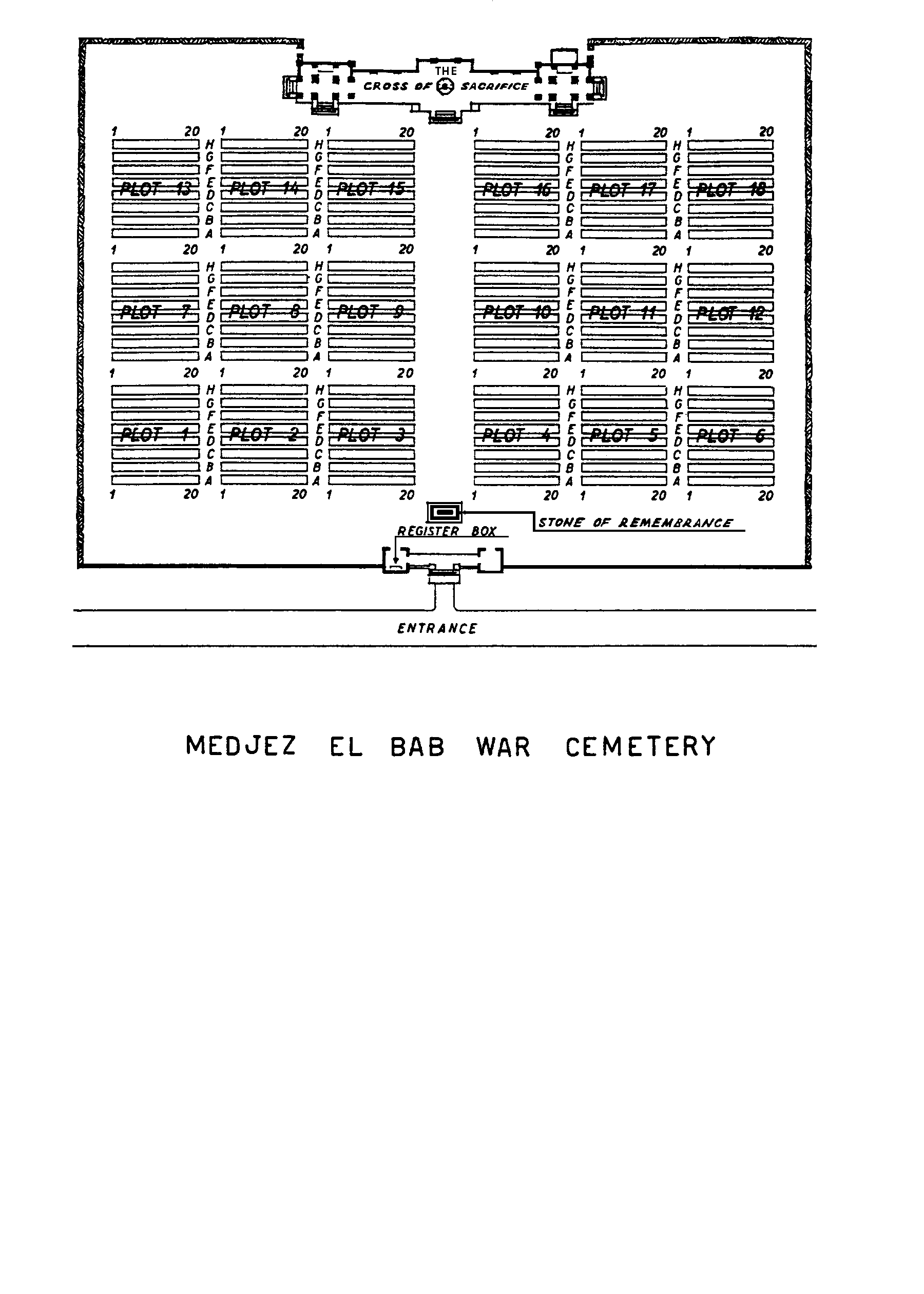
The cemetery is rectangular shaped. There stone shelter buildings on either side of the main entrance. Two stone steps lead up from the main road into the cemetery though a double metal gate, approximately 1.5 metres wide.
Directly opposite the entrance is the Stone of Remembrance.
All the routes and paths inside the cemetery are grass, flat and level.
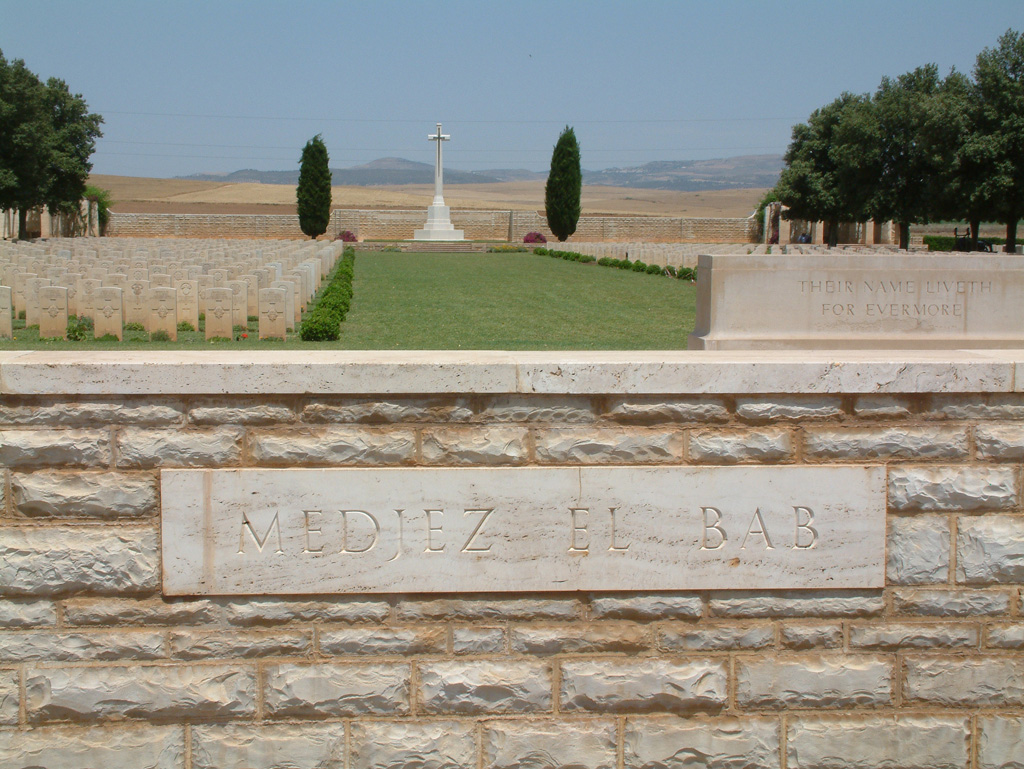
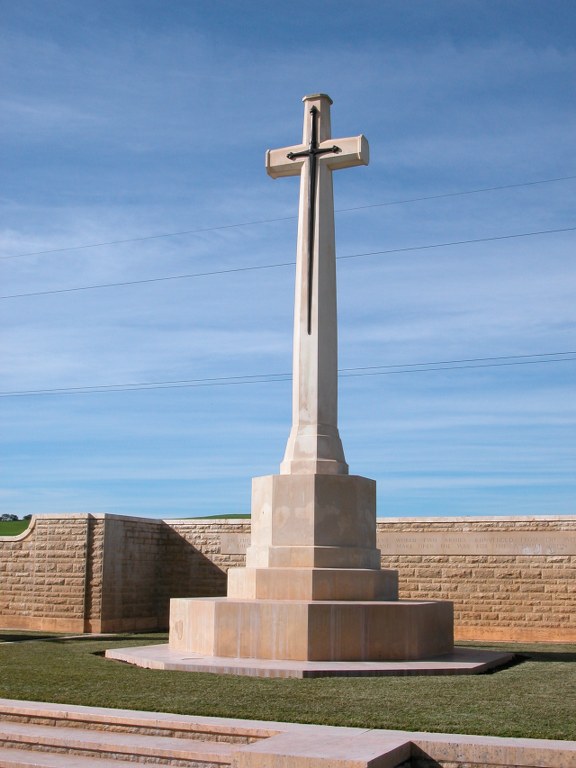
At the furthest point from the main entrance is the Cross of Sacrifice. The Medjez-El-Bab Memorial is located on either side of the Cross, comprised of pergolas stone columns and engraved panels.
There are stone steps in a number of locations leading up to the memorial area, which is grass surrounding the Cross and paving inside the memorial areas.
There are seating areas with stone benches inside the pergola structures of the memorial and stone benches inside the shelters at the main entrance. There are two stone benches on the left and right sides of the cemetery near the front of the cemetery.
The Register Box is in the left-hand shelter at the main entrance. The Cemetery Register and visitor books can only be viewed during the gardener’s working hours; please see Additional Information.
ALTERNATIVE ACCESS
There are no other entrances to the cemetery.
ADDITIONAL INFORMATION
The cemetery is not locked and therefore permanently open.
Gardeners working hours are as follows:
SUMMER
July and August Mon to Thu 0700 to 1200 1300 to 1700
Fri 0630 to 1330
WINTER
September to June Mon to Thu 0700 to 1200 1300 to 1700
Fri 0700 to 1200 1300 to 1600
RAMADAN
Mon to Fri 0700 to 1400
History information
In May 1943, the war in North Africa came to an end in Tunisia with the defeat of the Axis powers by a combined Allied force.
The campaign began on 8 November 1942, when Commonwealth and American troops made a series of landings in Algeria and Morocco. The Germans responded immediately by sending a force from Sicily to northern Tunisia, which checked the Allied advance east in early December. In the south, the Axis forces defeated at El Alamein withdrew into Tunisia along the coast through Libya, pursued by the Allied Eighth Army. By mid April 1943, the combined Axis force was hemmed into a small corner of north-eastern Tunisia and the Allies were grouped for their final offensive.
Medjez-el-Bab was at the limit of the Allied advance in December 1942 and remained on the front line until the decisive Allied advances of April and May 1943.
There are 2,903 Commonwealth servicemen of the Second World War buried or commemorated in MEDJEZ-EL-BAB WAR CEMETERY. 385 of the burials are unidentified. Special memorials commemorate three soldiers buried in Tunis (Borgel) Cemetery and one in Youks-les-Bains Cemetery, whose graves are now lost.
Within the cemetery stands the MEDJEZ-EL-BAB MEMORIAL, bearing the names of almost 2,000 men of the First Army who died during the operations in Algeria and Tunisia between 8 November 1942 and 19 February 1943, and those of the First and Eighth Armies who died in operations in the same areas between 20 February 1943 and 13 May 1943, and who have no known graves.
The five First World War burials in Medjez-el-Bab War Cemetery were brought in from Tunis (Belvedere) Cemetery or in Carthage (Basilica Karita) Cemetery in 1950.
The CEMETERY and MEMORIAL were designed by Sir J. Hubert Worthington.