

23 November 2026
39,000 Trees: How the CWGC maps and manages trees
When visiting our cemeteries and memorials, you may notice the trees and carefully maintained landscapes at a CWGC cemetery, but you may not realise how much information and planning sits behind their care.
 Image: Some of the beautiful trees at Reichswald War Cemetery, Germany
“Trees play an important role across the Commission’s estate,” explained CWGC Senior Horticulture Consultant Marcus Forster. “They are used to frame key features, create focal points, define boundaries, provide shelter and screening, enhance biodiversity, and contribute to the distinctive character and atmosphere of our cemeteries and memorials.”
But behind each tree is a data-driven approach, combining cutting-edge software, collaboration, and physical inspections to ensure beautiful, healthy trees across our estate.
Discover the thoughts and processes behind tree mapping and selection at the Commonwealth War Graves Commission.
At a glance: How CWGC manages its trees
The Commonwealth War Graves Commission selects and monitors trees by:
Managing our tree population through TreePlotter, providing a consistent and evidence-based approach
Understanding what trees we have, where they are and their current condition
Monitoring risks, changes and management requirements through regular inspections
Using climate projections and species-selection evidence to build resilience into future planting
Combining local expertise with tree inventory data to guide renewal, succession and long-term investment
Using inspection and inventory data to prioritise interventions and target resources where they are most needed
What is tree mapping and how does CWGC use it?
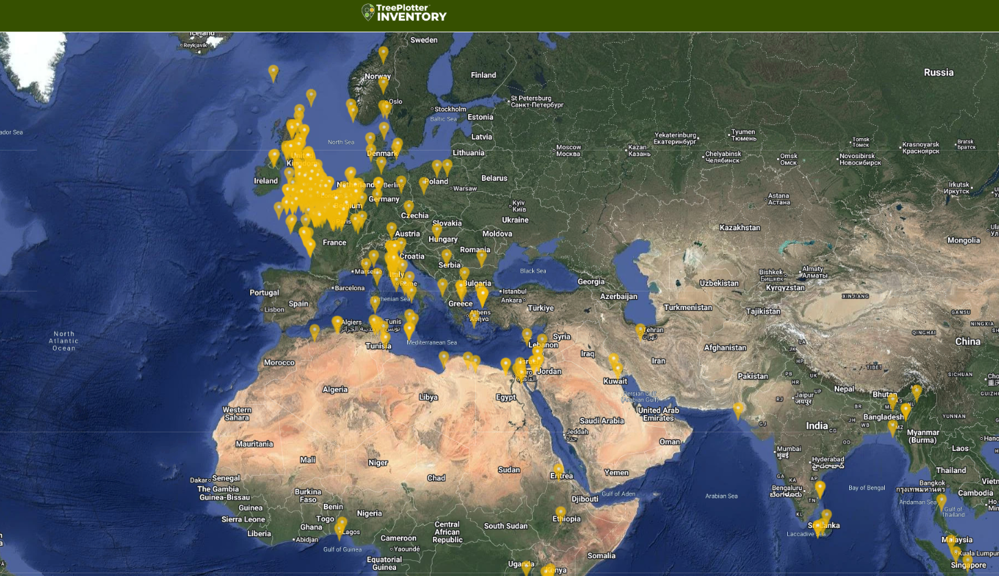 Image: TreePlotter software allows us to map and manage 125,000 trees worldwide
Tree mapping is the process of locating, identifying, and logging important data about individual trees or groups. In this case, that refers to trees planted across CWGC’s global estate.
We have over 2,300 sites and manage around 125,000 trees across the globe in our tree management system, TreePlotter.
“TreePlotter is a digital global tree management system that we use to map, record, inspect, provide environmental data, etc., for all the trees under our care,” Marcus Forster explained. “It helps us understand our existing tree population, identify opportunities for greater resilience and diversity, and make better-informed planting decisions.”
How tree mapping supports long-term care
Using a tech-led approach to tree management is key to the long-term care of our sites:
Risk management – Through periodic safety inspections, our Horticulture Team identify defects and arranges any remedial works required
Environmental tracking – Statistics on carbon sequestration, stormwater run-off and air quality help us quantify some of the many benefits our trees provide
Species and age diversity – Monitoring the age and species profile of our tree population helps to identify future replacement and succession planting needs
How does CWGC use technology to monitor its trees?
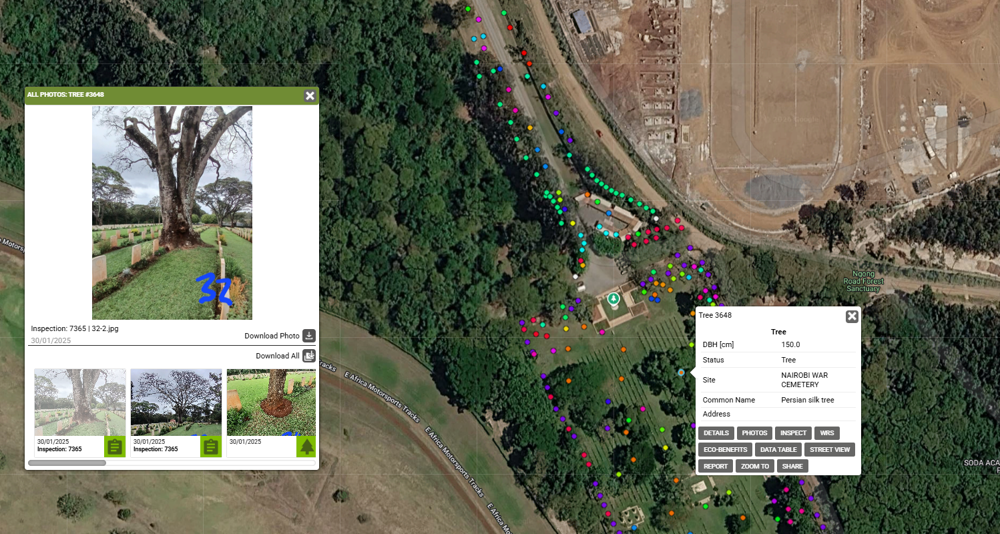 Image: This software tracks and records many aspects of tree health
TreePlotter is the main piece of software CWGC uses to monitor our tree inventory.
How trees are located and recorded
TreePlotter is a map-based tool, also known as a Geographic Information System (GIS).
It uses satellite imagery and mapping, such as Google Maps, to accurately pinpoint the location of individual trees.
Each tree is visible within the TreePlotter interface, and we can use a variety of views and fields to review tree location and status data.
Turning tree records into useful information
Our tree data helps us regulate inspections, maintenance, and replacement work in terms of tree monitoring and health.
Our Horticulture specialists and trusted contractors are often busy in the field, where tree inspections are part of our ongoing work.
How digital tools support horticultural teams
TreePlotter information can be used to identify sites where action is needed, where inspections may need to be made, or identify sites where replacement specimens should be planted.

Want more stories like this delivered directly to your inbox? Sign up for our newsletter for regular updates on the work of Commonwealth War Graves, blogs, event news, and more.
Sign UpHow are trees inspected and monitored?
Trees undergo periodic inspections to identify whether any work is needed. This helps us manage risks and maintain the longevity of the trees under our care.
“Inspections are carried out only by trained individuals, and inspections are recorded in TreePlotter,” Marcus said.
The mix of physical inspections and the use of data allows us to proactively monitor the health of our trees worldwide and react accordingly.
How inspection findings inform priorities
“Depending on whether any issues are observed during inspections, remedial works will be arranged on a priority-based timeframe; any trees requiring a detailed inspection will have this carried out by a suitably trained person, either internal or external contractor,” Marcus Forster said. “All information recorded is used to inform how the future of the trees on CWGC sites continues to be a key part of our landscapes.
“We use tree inventory data, site assessments and mapping tools to help guide species selection and long-term planning, alongside the latest industry research, recognised arboricultural best practice and accredited methodologies.”
Keeping records up to date
Keeping our records accurate and up to date is essential to what we do at the Commonwealth War Graves Commission, whether tree and plant data or the commemoration records we hold for 1.7 million Commonwealth men and women.
The accurate and ongoing flow of data ensures we are on top of the present and long-term health of the plants and trees across our global estate.
Managing trees across different cemeteries and landscapes
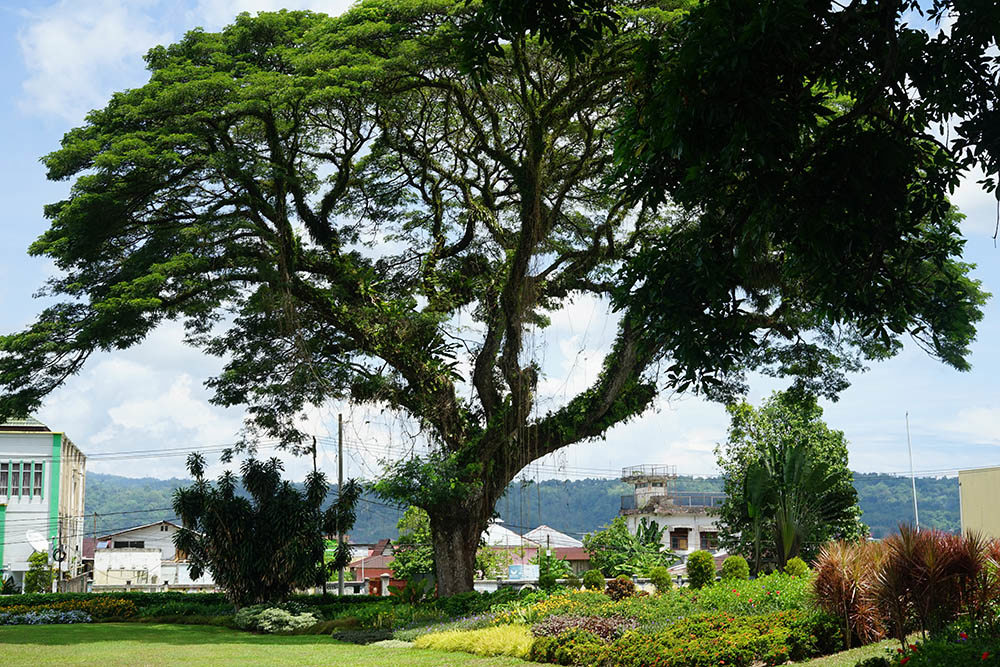 Image: A Rain Tree in Ambon War Cemetery, Indonesia
You can find war graves, cemeteries, and war memorials in a diverse array of climates and environments around the world.
Why different sites require different approaches
Our global estate contains a wide diversity of trees and plants, growing across very different climates and site conditions. Effective management therefore needs to respond to local conditions rather than applying a single approach everywhere.
For example, the trees in Northern France and Belgium grow in temperate conditions, while trees in Thailand and Kenya experience very different temperatures, rainfall patterns, soils and seasonal conditions.
These differences influence species selection, establishment, irrigation, inspection and ongoing management. By combining local knowledge with good arboricultural practice and tree data, we can make decisions that are appropriate to each site while maintaining a consistent overall approach to tree management.
Right tree, right place
“‘Right tree, right place’ is the principle of selecting a tree species whose characteristics and requirements are well matched to the conditions of a specific site, both today and in the future,” Marcus said.
“We assess factors such as climate, soil conditions, available space, biodiversity value and long-term suitability before selecting the most appropriate species for a site.
“Among other things, different species have different water requirements and can influence soil conditions, which is why selecting the right tree for the right place is so important.”
Leaning on local knowledge to inform planting
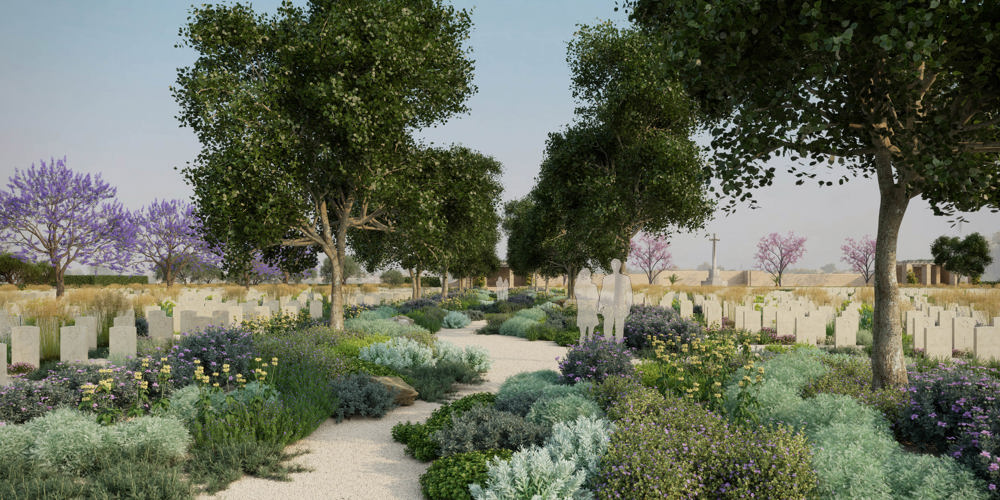 Image: An artist's depiction of Medjez-El-Bab War Cemetery's future, including abundant tree coverage
CWGC collaborates with partners around the world to ensure the ongoing and future health of our sites. This extends to selecting plant and tree species, such as those being planted as part of the 39,000 Trees for 2039 project.
“Where appropriate, we work with local experts, nurseries, arboriculturists and other specialists to help ensure suitable species are selected for each site,” Marcus said.
For example, Medjez-El-Bab War Cemetery in Tunisia is undergoing a transformation, where we’re working hard to install a completely new, climate-resilient landscape to protect it for the future.
Part of the work at Medjez-El-Bab has been the identification and planting of appropriate local species.
Of these, olive, cork oak and bitter orange trees will play a huge role in establishing that climate-resilient landscape while also ensuring the site remains a place of inspiration and delight in line with our horticultural standards.
“Among other things, the recording of the existing trees, condition and historical records of the site helped to inform the retention of existing and establishment of new trees on site,” Marcus said.
How tree mapping supports the future of CWGC’s landscape
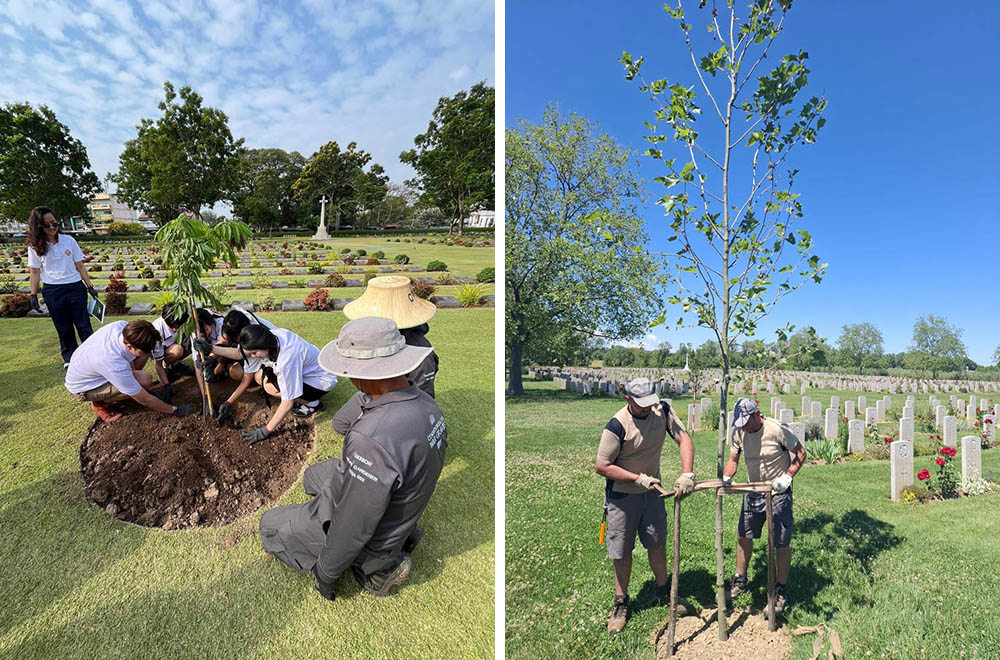 Image: New tree specimens being planted around the world: schoolchildren, under supervision of CWGC gardeners planting a new tree in Kanchanaburi War Cemetery, Thailand; a new tree is planted in Coriano Ridge War Cemetery, Italy
The ongoing health and sustainability of our estate is linked with tree health, planting, and care:
Supporting local wildlife – By providing shelter and food for local wildlife, our landscapes help ensure rich local biodiversity
Improving soil health – Trees help improve soil health and quality in numerous ways, such as enriching nutrient content, improving microbial activity, protecting from erosion, and managing water
Development - Continuing our care for our unique heritage estate by developing and improving the landscapes and gardens
Supporting sustainability
“Trees can create habitats and microclimates that support birds, insects, fungi and other plants, increasing overall biodiversity,” Marcus explained.
We aim to adopt a more holistic approach to managing our horticulture, thinking about design and layout in keeping with the surrounding landscape.
Tree plotting and mapping, with all the benefits listed in this article, is an important tool in ensuring the long-term sustainability of our sites.
By providing information and data across a variety of points, we are able to proactively plan for climate trends and changes, select the most appropriate species to help us achieve our goals, and make sure our landscapes are fit for the future.
39,000 Trees for 39,000
We want to ensure our cemeteries, memorials and their surrounding landscapes are healthy, climate-resilient and biodiverse, whilst remaining places of deep meaning.
By committing to establish 39,000 new trees by 2039 across our global estate, we recognise our responsibility to capture more carbon and support and improve thriving natural habitats.
Discover more about this keystone horticultural project here.
Commonwealth War Graves Commission tree management frequently asked questions
Tree mapping is the process of locating, identifying, and logging important data about trees. In this case, that refers to trees planted across CWGC’s global estate.
A tree inventory lists physical, environmental, and conditional information about trees, such as tree height, width, age, protection status, historical significance, and so on.
Tree mapping helps with tree management by:
Risk management – Through periodic safety inspections, our Horticulture Team identify defects and arranges any remedial works required
Environmental tracking – Statistics on carbon sequestration, storm water run-off and air quality help us quantify some of the many benefits our trees provide
Species and age diversity – Monitoring the age and species profile of our tree population helps to identify future replacement and succession planting needs
CWGC uses a mixture of software, practical knowledge, collaboration, and pursuing a “right plant, right place” philosophy to plan for long-term tree care.
Trees are an integral part of the character and setting of our cemeteries. In many locations, they contribute to the original landscape design, provide structure and enclosure, support biodiversity, and help create the sense of tranquillity and permanence associated with these sites.
Effective tree management ensures that these landscapes can be protected and sustained for future generations. This means balancing the retention of significant and mature trees with public safety, tree health, climate resilience and the need for carefully planned succession planting.
Good management is therefore not simply about maintaining individual trees. It is about understanding the role of trees within the historic landscape and planning how that landscape will develop over decades to come.
Author acknowledgements
Alec Malloy is a CWGC Digital Content Executive. He has worked at the Commonwealth War Graves Commission since February 2022. During that time, he has written extensively about the World Wars, including major battles, casualty stories, and the Commission's work commemorating 1.7 million war dead worldwide.
Marcus Forster is a Senior Horticulture Consultant with the Commonwealth War Graves Commission (CWGC), working across its global estate to support the management and development of horticulture, trees and landscapes. His work combines practical horticultural expertise with arboriculture, sustainable land management and the use of digital technology to improve how landscapes and assets are managed. He has a particular interest in tree management, climate resilience, water efficiency and developing practical solutions that help historic landscapes remain sustainable for future generations.