


A new design honouring Sierra Leone's WW1 Carrier Corps
A new addition honouring the fallen from the Sierra Leone Carrier Corps to the existing Freetown memorial will be the first of our sites to integrate a beacon of light, which will shine a beam visible in the night sky from a 5km radius when lit.
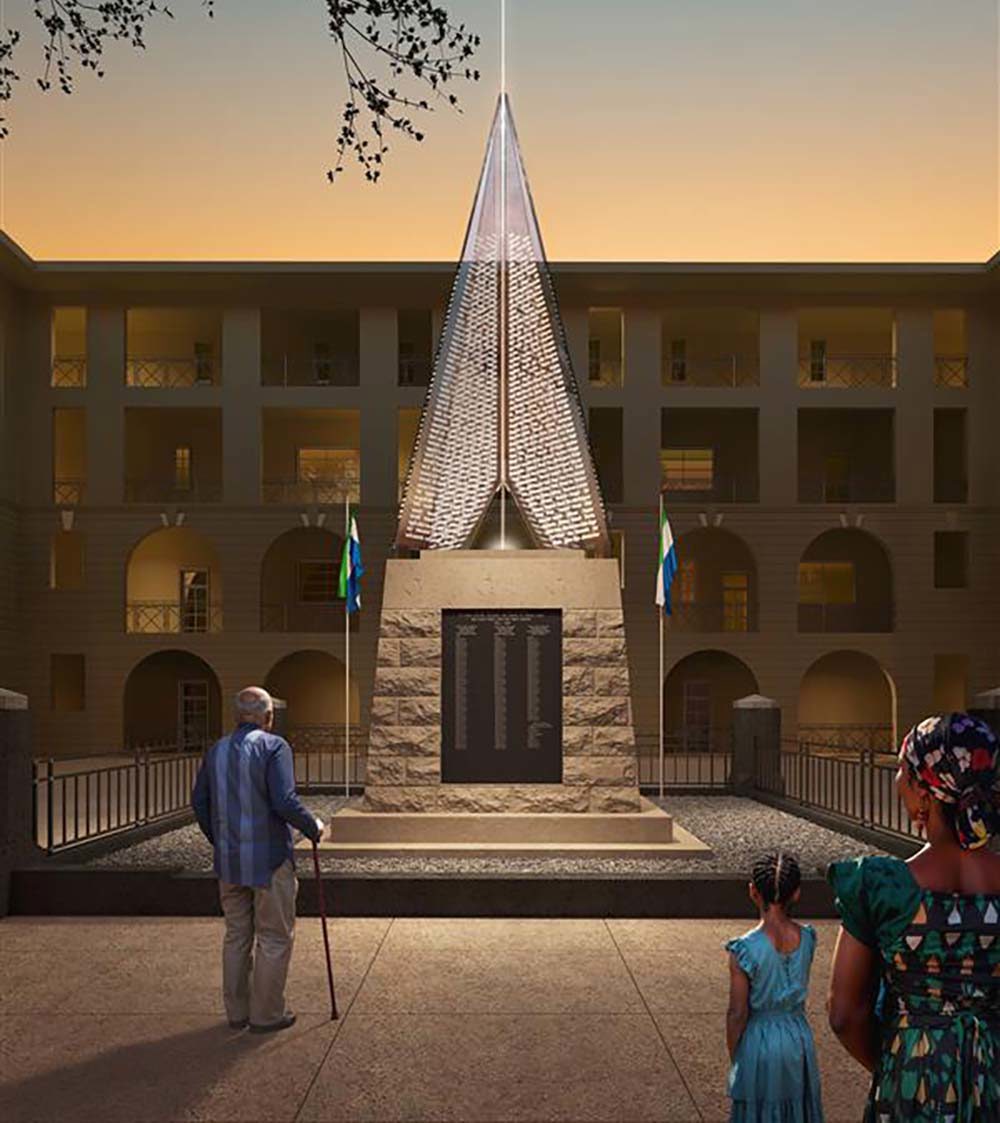
The new design by Oshinówò Studio, image ©Hayes Davidson.
The new addition to the memorial designed by Lagos-based Oshinówò Studio is a radical contemporary intervention in which a prism of structural glass rises above the existing memorial designed by Sir Edwin Lutyens in 1930.
Joining the ranks of celebrated architects who have set the tone for war memorials to date, practice founder Tosin Oshinowo is the first woman and the first West African architect to design a memorial for the CWGC.
Reaching nine metres high, the memorial’s four structural glass blades are etched with the recorded names of the 946 fallen Carrier Corps - an eloquent tribute and powerful symbol of remembrance.
The memorial will form a focal point of World War commemoration and, in line with the wishes of the City of Freetown, be part of wider societal commemorations for significant anniversaries and festivals.
The integrated beacon will be lit in recognition of the November Remembrance Day, which marks the end of the First World War and honours members of the armed forces who died in the line of duty, and for other significant days of commemoration in Sierra Leone.
The new addition to the Freetown Memorial will be unveiled on Saturday 7 November 2026.
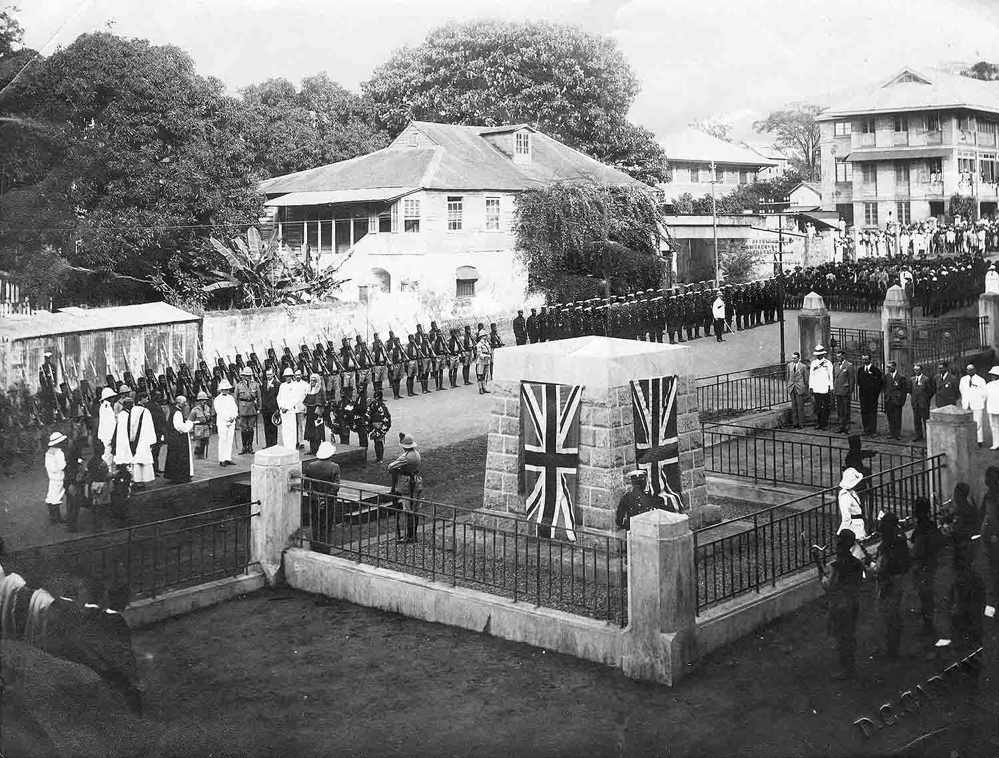
Unveiling of the original Freetown Memorial, Sierra Leone by Captain C E Cookson on 11 March 1931.
Regarded locally as Sierra Leone’s National Memorial, the Freetown Memorial sits in a courtyard flanked by the Government Treasury buildings.
The new design provides access to the monument beyond the 7m x 7m perimeter and is intended to be visible to residents and onlookers from across the whole city. Oshinówò's design went beyond the brief to propose an erudite and poignant memorial befitting the local context, placing ownership back in the hands of local Sierra Leoneans.
Architect Tosin Oshinówò said:
“Honouring the past, shaping the future, our design for the Freetown memorial stands not only as a tribute to the fallen, those who lost their lives during the First World War, but as a symbol of Sierra Leoneans’ collective commemoration, representing cost of war and a people's resilience, as well as the global commitment to peace for generations to come.”
Architect Tosin Oshinówò: How do you design a memorial that honours thousands of people while speaking to everyone?
Bellapart: How do you turn an ambitious vision into a lasting memorial?
During the First World War, non-combatant labourers and soldiers from across Africa contributed to war campaigns. The Carrier Corps were the men who directly enabled the soldiers to fight and were enlisted to transport supplies and materials of war across terrain that was impassable to vehicles and animals.

Many of them died in service and have never been properly commemorated. Over recent years, we have been working with local partners to find out who these men were and ensure that they have a fitting memorial.
The process of researching missing names involved extensive global archive work by our historians. This was complemented by on-the-ground consultation led by West African heritage consultants, who engaged with stakeholders to explore a largely forgotten period of history.
David McDonald, CWGC Operational Manager (Non-Commemorated Project): Honouring First World War Casualties in Sierra Leone.
This period of Sierra Leone’s history is under-recognised globally in narratives dealing with the First World War, with few photographs and limited archival records. The new World War One memorial offers a form of redress and creates a permanent home to honour the men, confronting past inequalities.
Beyond Freetown, the architectural response will include a broader community reach by creating four satellite sites in provinces where the Carrier Corps were enlisted from. Here, marker memorials will be designed in keeping with the Freetown Memorial, enabling the public to commemorate and honour those lost during the First World War from their communities.
This represents a new approach for CWGC, incorporating a co-design process to determine the places, people and events being memorialised.
What is the CWGC doing in Sierra Leone?