

14 September 2026
68,000 Civilian War Dead: What the Civilian War Dead Roll of Honour is and How to Explore it
It’s a tale as old as conflict: whenever major warfare strikes, civilians are unfortunately caught in the crossfire. Such was sadly the case in the Second World War.
The Commonwealth War Graves Commission’s Civilian War Dead Roll of Honour commemorates some 68,000 civilian men and women who died from enemy action in the Second World War.
This aspect of our work is often overlooked. After all, our chief focus is on the war graves of military personnel lost in both World Wars.
But with the Second World War, it became clear that civilians were ever more in the line. Commemorating them took on renewed importance.
As such, our records commemorate over 68,000 Second World War civilians by name, making it easy for relatives to find their family member’s details.
At a glance: What’s on this page?
This page examines the Commonwealth War Graves Commission’s small role in commemorating a selection of civilian war dead, including:
What the Civilian War Dead Roll of Honour is and who it commemorates
Where the Roll of Honour sits
How civilians may have lost their lives to enemy action
Why the figure is around 68,000
How to read a Civilian War dead record
If CWGC maintains civilian graves or not
What is the Civilian War Dead Roll of Honour?
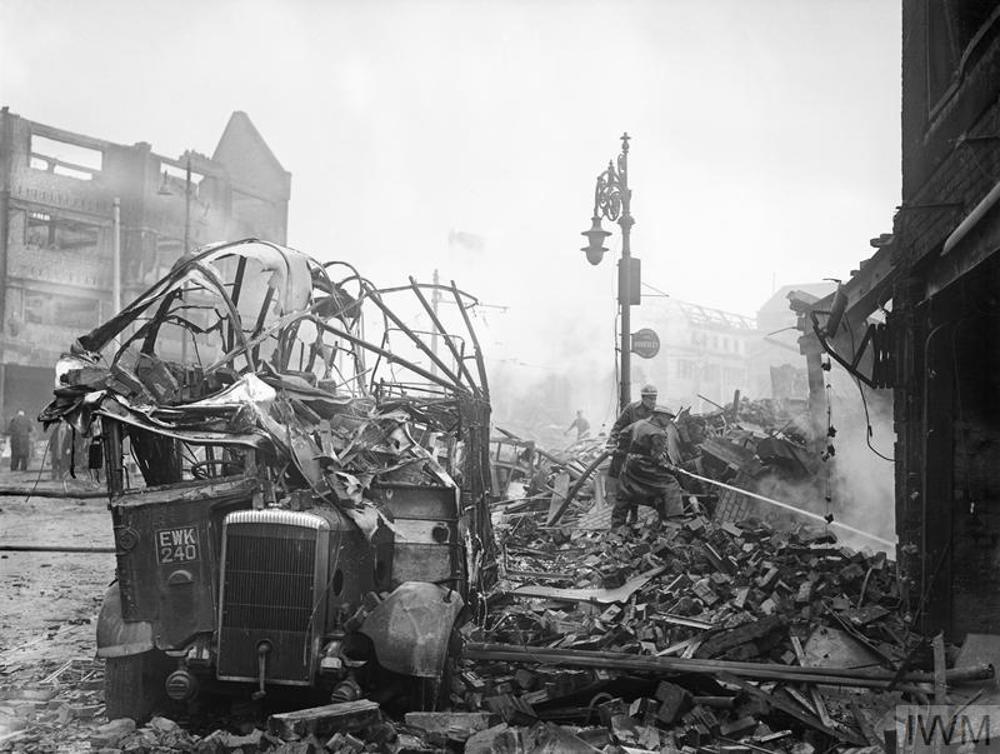 Image: A burnt-out bus next to the shattered ruins of Coventry Train Station during The Blitz (IWM (H 5593))
The Civilian War Dead Roll of Honour is the official CWGC commemoration of eligible Commonwealth civilians who died because of enemy action during the Second World War.
The Roll of Honour ensures that civilians who meet CWGC’s eligibility criteria are commemorated by name, even where we are not responsible for their grave, as per our “How We Commemorate War Dead” policies.
This is our primary form of commemoration for Second World War Commonwealth Civilians, although it should be stressed that the names listed in the Civilian Roll of Honour are predominantly British civilians.
Why was the Civilian War Roll of Honour established?
Early into the Blitz in September 1940, the bombing of major UK cities by the Luftwaffe, CWGC founder Sir Fabian Ware wrote to Prime Minister Winston Churchill to “consider the commemoration of civilians, men, women and children, by the deliberate slaughter of whom the enemy is creating a new category of normal war casualties.”
Churchill acquiesced and so the Commission entered a new phase of work. With Churchill’s approval, the then Imperial War Graves Commission was empowered by the government to collect and record the names of civilians who died due to enemy action in the Second World War.
Reaching out to cities, metropolitan boroughs, councils, and rural districts, as well as appealing directly to ordinary citizens, the Commission asked them to submit forms advising details of those victims of hostile activity.
Why is the Roll held at Westminster Abbey?
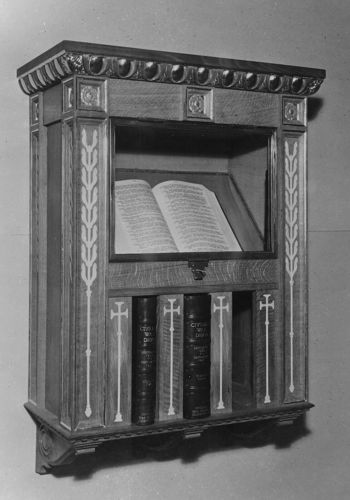 Image: A vintage photograph of the Civilian War Dead Roll of Honour in Westminster Abbey
The Civilian War Dead Roll of Honour is held at one of Britain’s most important historic sites: Westminster Abbey in central London.
A national place of commemoration
Westminster Abbey is one of the most storied places of national commemoration in the UK.
Around 3,000 famous Britons, including six kings and four queens, statesmen, scientists, musicians, writers and poets, are buried or commemorated among the Abbey’s crypts and tombs.
It has become a focal point for state funerals and wider acts of remembrance and commemoration, such as the annual Field of Remembrance.
As a symbol of British collective commemoration, Westminster Abbey makes the ideal place to hold the physical Roll of Honour.
The Roll and CWGC records
The Civilian War Dead Roll of Honour takes the form of seven leather-bound volumes held in a wooden case in the Abbey’s Nave, just outside the entrance to St George’s Chapel at the building’s western end.
One volume is kept open on display inside the case at all times. The pages are periodically turned so visitors can see different names of our civilian war dead.
68,000 or so names recorded on the Roll of Honour are kept in our records. These are virtually accessible to anyone with access to our website. Simply browse our search tools to learn more.
Who is included in the Civilian War Dead Roll of Honour?
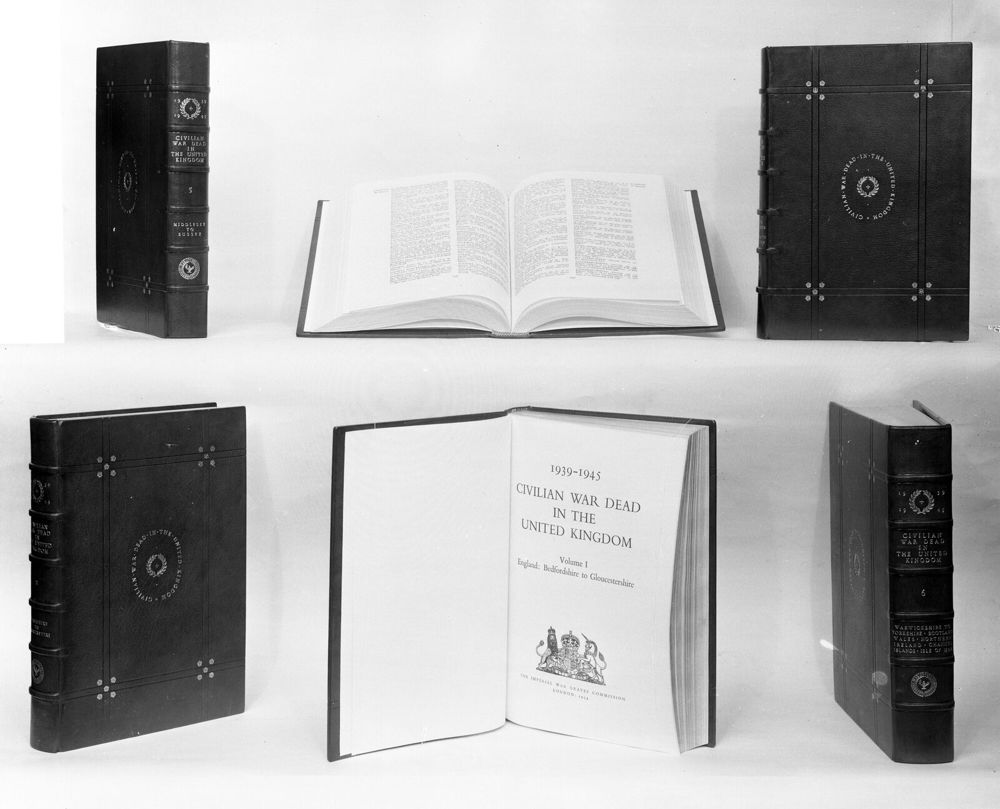 Image: Inside the Civilian War Dead Roll of Honour
To be included on the Civilian War Dead Roll of Honour, a civilian must have been a victim of enemy activity in the Second World War, including:
Death as a direct consequence of enemy action or munitions
Death while detained by the enemy
Death after release from enemy detention where linked to detention conditions
Death from allied munitions or weapons of war in defined circumstances
Note: While Merchant Seamen, fishermen and other sailors were technically civilians in wartime, they are not commemorated on the Civilian Roll of Honour.
The Tower Hill Memorial instead commemorates by name members of the Commonwealth fishing and merchant fleets lost in wartime.
Civilian deaths linked to the enemy
Systemised targeting of civilian population centres by aerial bombing was a key policy of combatant air forces in the Second World War.
Possibly the most famous bombing campaign, at least in the Commonwealth, was the Blitz: the Luftwaffe's targeting of British cities in the early 1940s.
This later developed with the introduction of the V-1 and V-2 “Vengeance” weapons: cross-continental missiles developed by the German military machine to target enemy populations, which continued to strike the UK until March 1945.
Most of the names commemorated by the Civilian Roll of Honour were victims of the Blitz. Around 43,000 British men and women were killed in the Blitz between September 1940 and May 1941.
The UK was far from the only British-controlled territory to be subject to military bombing in the Second World War. Malta, for example, became one of the most bombed places on earth during the war, with King George VI awarding the island the George Cross for its citizens’ resilience and bravery.
Others lost their lives in more direct actions. While attempting to flee France and evacuate to the UK in May 1940, CWGC gardener Leopold Shreeve was shot in the stomach by raking German tank fire and killed on his way to hospital. He is buried in Vailly-sur-Aisne Communal Cemetery but is also recorded on the Roll of Honour.
Civilians detained by the enemy
British and Commonwealth civilians found themselves detained in a variety of places for a variety of reasons by the enemy in wartime.
Notably, during the German occupation of France, around 150 CWGC personnel, such as gardeners and clerks, were held in civilian internment camps by German authorities.
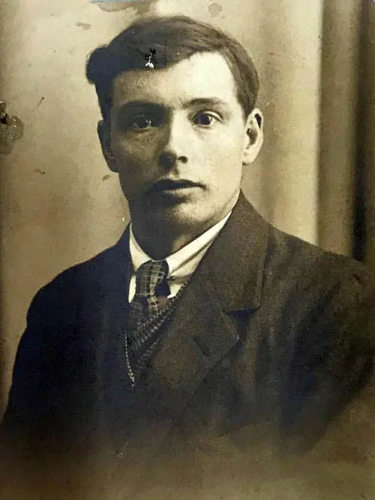 Image: Charles Henry Holton
Charles Henry Holton, a Commission gardener working in Hébuterne, northern France, was arrested on July 15, 1940, alongside his son and two fellow workmen. They sent him to Ilag VIII Tost, an internment camp in Upper Silesia.
During his captivity, Charles fell desperately ill in May 1941 and had passed away by April.
He is just one of many Commonwealth citizens to die in captivity in wartime.
Those unlucky enough to be captured by the Imperial Japanese faced appalling treatment, but civilians were often spared the worst extremes of cruelty.
Nonetheless, civilians interned by the Japanese were forced into overcrowded spaces with little in the way of food or medical facilities.
Among the most notorious was Stanley Internment Camp, Hong Kong, which housed thousands of civilian prisoners, including British, Canadians, Americans, and Dutch, in cramped, stifling conditions.
Why evidence is important
Millions of civilians sadly died in the Second World War.
Commonwealth civilians were largely spared the horrors of the Holocaust, where non-combatants were systematically targeted for extermination by Fascist powers, or the mass slaughter of the Eastern Front.
However, as we’ve discussed here, they were far from the firing line.
Despite this, civilians continued to work, live, and pass away in their normal lives, despite the backdrop of the war.
Not everyone who died during wartime is eligible for inclusion on the Civilian Roll of Honour. We have to be able to link their deaths to either direct enemy activity, internment by the enemy, or the provable after-effects of enemy activity, such as succumbing to lung damage caused by firebombing.
Without proper evidence clearly establishing a link between civilian deaths and enemy activity, they will not enter our records nor be formally commemorated by us.

Want more stories like this delivered directly to your inbox? Sign up for our newsletter for regular updates on the work of Commonwealth War Graves, blogs, event news, and more.
Sign UpWhy do people say around 68,000 war dead?
The exact number of Commonwealth civilians who died due to military action in the Second World War will likely never be conclusively known.
The 2024-25 Annual Report records that 68,156 civilians are commemorated by name in the Civilian War Dead Roll of Honour.
However, that number may be subject to change.
Why the figure can change
Since our founding at the height of the First World War, the Commonwealth War Graves Commission has continually been at work.
Ongoing research, extensive projects, and deep-diving programmes ensure we constantly update our records to show newly discovered names.
This isn’t just the case for the civilian names we commemorate. We recover between 80 and 150 sets of new human remains each year, predominantly military, and work tirelessly to ensure their proper commemoration.
Why records are updated
Our records are not static. They are living records, constantly updated thanks to the pioneering work of our Historians and Commemorations Team, as well as external partners and organisations.
Accurate recording and commemoration of our war dead is at the core of our work, including the civilians who meet our commemoration criteria.
Without accurate, up-to-date records, we cannot make the necessary updates to rolls of honour, headstones, or war memorials to ensure their accuracy.
Why every name matters
Our principles of equality in commemoration, regardless of rank, nationality, or branch of service, place a great emphasis on names.
Our role is to commemorate more than 1.7 million Commonwealth men and women by name. Typically, these will be the military service personnel in our care, buried in our cemeteries or commemorated on our war memorials.
These principles extend to the eligible civilians we commemorate via the Roll of Honour.
Each name is more than just a line in a ledger, a carving on a headstone, or a feature of a memorial panel. They represent the real people whose lives were sadly lost in the World Wars and they should never be forgotten.
The names help us give thanks to the people who lost their lives in military service during the World Wars and remind us of the civilian cost of globalised industrial warfare too.
While it is not the main focus of our organisation, highlighting civilian losses and remembering them highlights a sometimes-overlooked aspect of commemoration.
How are names added or updated?
New information may lead to a record being corrected, expanded or, where eligibility is confirmed, added. Cases need evidence and are assessed against CWGC’s commemoration criteria.
Evidence and eligibility
New cases for civilian war dead require the same levels of evidence to prove eligibility for commemoration under our criteria.
You need to be able to conclusively link that a Commonwealth civilian lost their life due to enemy action in the Second World War.
When a new name may be accepted
Commemoration of civilian war dead is not the main priority of the Commonwealth War Graves Commission.
Most cases reviewed by the Commemorations Team will be of military personnel, but occasionally we will accept submissions for civilian casualties.
The bar for inclusion is quite high for civilian war dead, but the onus is on the submitter to prove that the casualty in question died due to military action.
If accepted, we will correct and update our records accordingly. Visit the Commemorations page to learn more about submitting cases.
How to search for Civilian War Dead records
You can find the names of all the civilian war dead in our records using the Find War Dead tool.
Civilian War Dead records search tips
Start with the person’s full name – Our tool allows you to search by name
Add a date of death, age, location or family detail if known – These can help refine your search
Check whether the result is listed as a civilian record – Select “Civilian War Dead 1939-1945” in the Find War Dead search tool in the “Served in” Section to bring up casualties commemorated by the Civilian Roll of Honour.
Review the place of commemoration – Are they buried in a municipal plot? Some may mention their final resting place instead of the Civilian Roll of Honour.
Check spelling variants or initials if no result appears – Spellings are key.
Use the records enquiry route if you believe a name or detail may be missing – Still can’t find what you’re looking for? Contact our Enquiries team, and we will point you in the right direction.
How to read a Civilian War Dead record
A civilian’s CWGC record does not differ too greatly from our military personnel files. If you click on an individual civilian’s casualty page, you will be met with the following details:
Their name
Age at death
Date of death
Family details, where recorded
Location or address, where recorded
Place of commemoration, i.e., their non-CWGC grave separate to their commemoration in the Civilian War Dead Roll of Honour
Additional information, such as home addresses, etc., where available
Please note our records are purely for commemoration. They are not military records, nor do they provide details on how a civilian was killed.
Does CWGC care for Civilian Graves?
CWGC commemorates eligible civilian war dead through the Civilian War Dead Roll of Honour.
Generally, we do not mark or care for civilian graves in the same way we care for Commonwealth war graves.
Civilian Stories, local places, and shared memory
In the same way we remember names like the Somme, El Alamein, Passchendaele, and Normandy for military battles, civilian incidents, particularly the Blitz, hold their own shared meaning and memories too.
From national record to local story
The Blitz hit industrialised towns and cities across the UK, not just London. Manchester, Liverpool, Southampton, Coventry, Glasgow, Cardiff, Birmingham, Bristol and other large industrial hubs were hit.
Families and communities
The losses of civilians to enemy bombing are a national story but also allow us to look at it on a local scale.
On Christmas Eve 1944, for instance, Manchester was rocked by V-1 bombing attacks, resulting in hundreds of deaths. 27 were killed when a V-1 smashed into a row of terraced houses at Abbey Hills Road, Oldham, in the early hours of Christmas morning.
Victims of the Cardiff Blitz are buried in Cathays Cemetery, Cardiff, the youngest of whom is two-year-old Terence O’Brien, who is buried alongside his parents, Terence Snr. and Flora.
Communities were greatly affected by loss. Take the bombing of Sandhurst Road school as an example.
On 20 January, a 500kg bomb hit Sandhurst Road School in Catford, southeast London. The blast destroyed part of the school building while children were having lunch. 38 primary school-aged pupils and six staff members were killed.
These are stories told again and again, connecting us with a shared loss and ongoing commemoration.
Discover more stories of civilian war dead on For Evermore.
Why civilian commemoration still matters today
The focus on loss, commemoration, and remembrance is very much military in the Commonwealth, but we cannot forget the ordinary men, women, and children lost to the chaos and carnage of war.
While our attention is very much on the military side of commemoration, the Civilian Roll of Honour highlights how the innocent are all too often the victims of war.
Civilian War Dead Roll of Honour 1939-145 FAQs
The Civilian War Dead Roll of Honour lists by name around 68,000 Commonwealth men and women of the Second World War who died as a direct result of enemy action.
The Civilian War Dead Roll of Honour is kept in a cabinet in Westminster Abbey. The Civilian War Dead Roll of Honour takes the form of seven leather-bound volumes held in a wooden case in the Abbey’s Nave, just outside the entrance to St George’s Chapel at the building’s western end.
The 2024-25 Annual Report records that 68,156 civilians are commemorated by name in the Civilian War Dead Roll of Honour. The number can change, subject to new evidence being submitted.
To be included on the Civilian War Dead Roll of Honour, a civilian must have been a victim of enemy activity in the Second World War, including:
Death as a direct consequence of enemy action or munitions
Death while detained by the enemy
Death after release from enemy detention where linked to detention conditions
Death from Allied munitions or weapons of war in defined circumstances
Yes, CWGC includes Civilian War Dead in our records where they meet our criteria.
Search for Civilian War Dead in our Find War Dead tool. Use the "Civilian War Dead 1939-1945" search field to locate them.
No, the CWGC does not care for the headstones or war graves of civilians. Their official point of commemoration is the Civilian War Dead Roll of Honour in Westminster Abbey.
Author acknowledgements
Alec Malloy is a CWGC Digital Content Executive. He has worked at the Commonwealth War Graves Commission since February 2022. During that time, he has written extensively about the World Wars, including major battles, casualty stories, and the Commission's work commemorating 1.7 million war dead worldwide.