
24 June 2026
A Partnership of Remembrance: How CWGC and the Volksbund Care for German War Graves Around the World
The partnership between the Commonwealth War Graves Commission and the Volksbund Deutsche Kriegsgräberfürsorge (VDK) is one of Europe’s most enduring examples of post‑war cooperation.
Together, the two organisations care for tens of thousands of German war graves around the world, support each other’s commemorative work, and ensure that the stories of the fallen on both sides of the world wars are told with dignity and accuracy so future generations understand the true cost of conflict.
The Commonwealth War Graves Commission and the Volksbund Deutsche Kriegsgräberfürsorge
A Global Commitment to Care
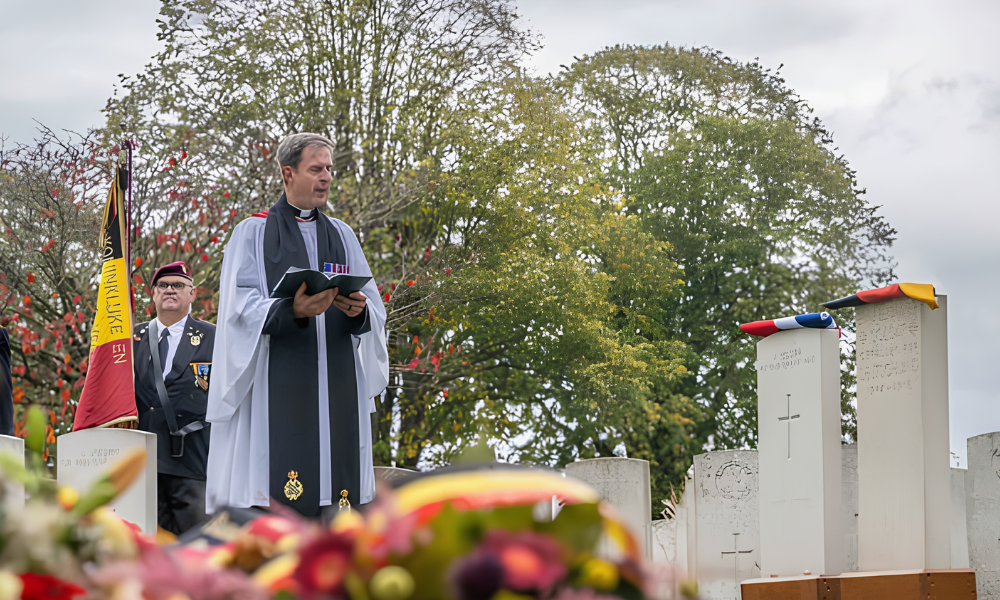
Image: A joint service for British and German burials of the First World War (Photo: Eric Compernolle)
CWGC maintains over 19,500 German war graves across the world on behalf of the Federal Republic of Germany.
These graves are spread across more than 20 countries including Belgium, France, Kenya, Namibia, Singapore, and the United Kingdom. Some lie in large, well‑known cemeteries; others are in small churchyards, remote landscapes, or near historic battlefields.
This work is delivered through CWGC’s Agency Services arrangement with the Federal Republic of Germany, under which our regional teams carry out the day‑to‑day care of German war graves around the world.
Germany adopts a reflective approach to remembrance and commemoration, which means there are slight differences in the design of the gravestones. Whilst the material and shape are the same, German gravestones usually bear names, ranks and the Iron Cross as a symbol of the German military, but do not feature personal inscriptions or insignia of the unit to which the person belonged.
This global network of care is supported by the Volksbund, which provides oversight, and historical expertise.
The partnership ensures that German war dead, whether from the First World War, the Second World War, or later circumstances, are treated with the same dignity and respect as Commonwealth servicemen and women.
The work is wide‑ranging.
It includes routine horticultural maintenance, structural conservation, research, and the sensitive handling of graves that have become unmaintained or difficult to locate.
It also involves supporting ceremonies, educational programmes, and public engagement, which help communities understand the human stories behind the headstones.
Shared Projects Across Continents
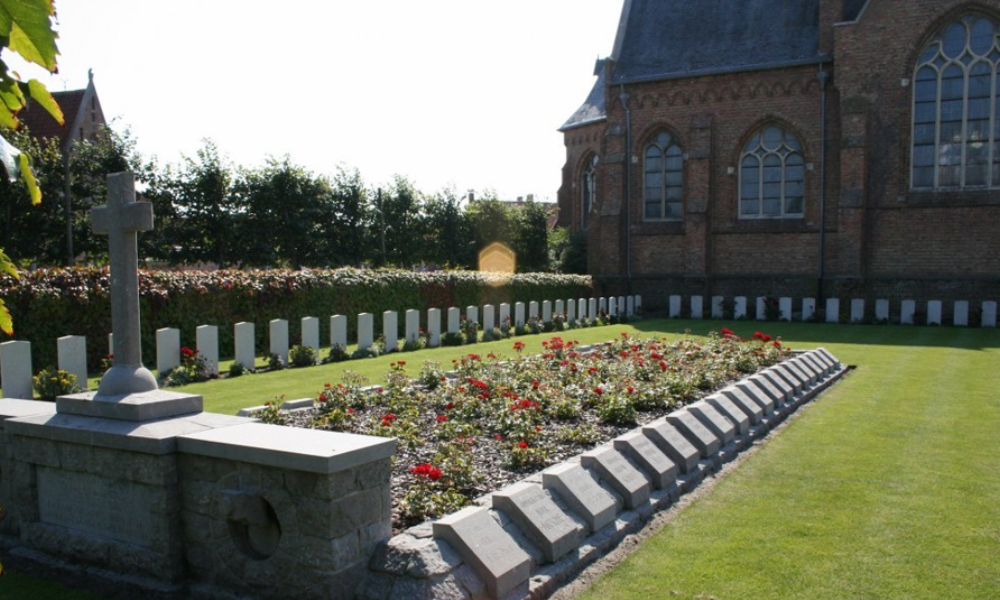
Image: Sint Donaas Churchyard, Zeebrugge, Belgium
The partnership is perhaps most visible in the major projects the two organisations undertake together.
One recent example is the renovation of Sint Donaas Churchyard in Zeebrugge, Belgium, a site containing more than 170 German war graves from World War One, including casualties from the torpedo boats S15 and S20. CWGC completed the restoration work earlier in 2024.
Another significant area of collaboration is the ongoing research into unmaintained German war graves in the United Kingdom.
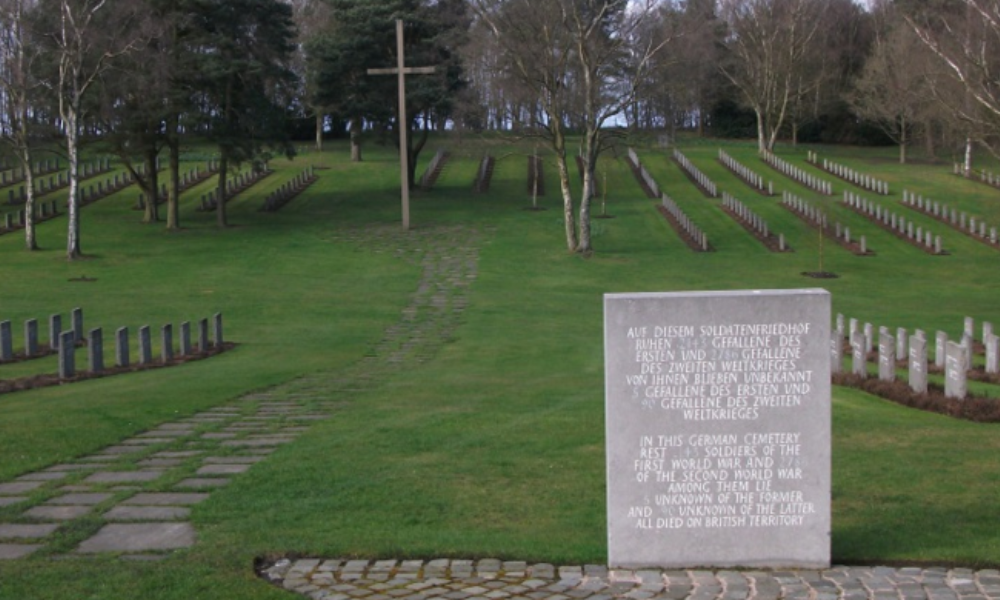
Image: Cannock Chase German Military Cemetery
Not all German war dead were moved to Cannock Chase after the 1959 agreement between the UK and the Federal Republic of Germany. Some graves remained in local churchyards, prison grounds, or unmarked locations, moved to Germany after the war, or could not be relocated for religious or family reasons.
The CWGC and the Volksbund are working together to understand the full landscape of these graves.
Early research has already identified more than 300 cases requiring investigation. The work is meticulous and often complex, involving archival research, site visits, and sensitive discussions about what should happen next. It is a long‑term project, but one that reflects the shared commitment to ensuring that no one is forgotten.
The Volksbund and the CWGC take complementary approaches to youth engagement, ensuring these lessons are never forgotten. Both organisations combine practical learning with reflective, cross‑cultural experiences.
The Volksbund’s international youth exchanges and camps bring young people together to care for war graves, explore history on site, and build dialogue around peace and shared European values.
Shared initiatives like the Staffordshire Youth Exchange, delivered as part of the Cannock Chase Summer War Graves Camp, bring both organisations together to give young people a meaningful, immersive understanding of the cost of conflict.

Want more stories like this delivered directly to your inbox? Sign up for our newsletter for regular updates on the work of Commonwealth War Graves, blogs, event news, and more.
Sign UpCannock Chase: A Symbol of Cooperation
While the partnership is global, Cannock Chase German Military Cemetery in Staffordshire remains one of its most symbolic sites.
Created after the 1959 UK–FRG agreement, the cemetery contains nearly 5,000 burials and has been maintained by the CWGC since 1967, with funding and oversight from the German government and the Volksbund.
The current renovation of the cemetery’s buildings, including the transformation of the former Head Gardener’s cottage into a new History Centre, is a joint endeavour. The Volksbund’s exhibition team has developed a concept that recognises the diversity of visitors who come to the site, many of whom arrive with little prior knowledge of German military history.
Their exhibition will explore four themes: the history of war, personal stories, cemetery architecture, and the cooperation between the CWGC and the Volksbund. It is designed to bring history to life, preserve dignity, promote understanding, and highlight the democratic values that underpin modern remembrance.
Learn more about the Cannock Chase project
A Partnership for the Future
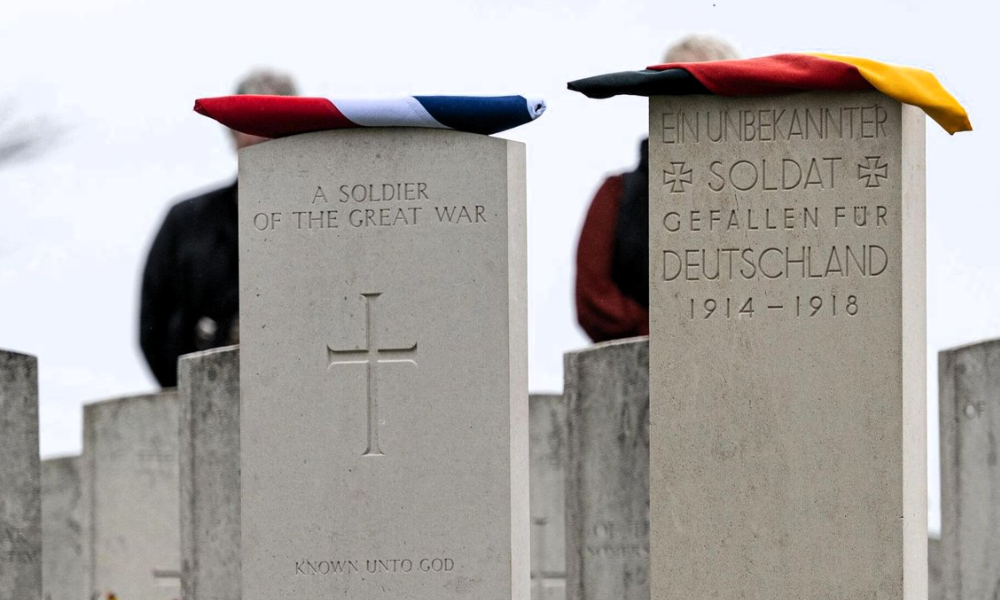
Image: Unknown British and German First World War servicemen, commemorated together for all time
What makes the CWGC–Volksbund partnership remarkable is not just its longevity, but its adaptability.
It has grown from a post‑war administrative arrangement into a modern, forward‑looking collaboration that embraces education, digital engagement, community outreach, and international cooperation.
Whether restoring a cemetery in Belgium, researching a forgotten grave in a British churchyard, or developing a new exhibition in Staffordshire, the two organisations work side by side with a shared sense of responsibility.
Author acknowledgements
James Garbett is Area Marketing and Communications Lead at the Commonwealth War Graves Commission, leading on communications and engagement across Africa, Asia, the Americas, the Pacific, and the United Kingdom, to share the stories of those commemorated by the CWGC, helping connect new audiences with the Commission’s work around the world.