10 August 2026
Education Work Spotlight: What CWGC Delivers and Why It Matters to Commemoration
Education and outreach are core pillars of our work here at the Commonwealth War Graves Commission.
The World Wars were enormous, world-changing events, and we feel their effects to this day. They’re immensely important periods of history, linking the Commonwealth together in a shared history of sacrifice.
Educating the public in the UK and around the world on the World Wars, our place in the World War story, and the importance of commemoration is something we believe passionately in.
As such, we have created many education resources, programmes, talks, and tours designed to engage and educate the public on who we are, what we do, and the World Wars.
Discover more about what the Commonwealth War Graves Commission delivers for schools and learners here.
At a glance: What's on this page
This article discusses CWGC's outreach and education work, including:
- What we deliver for schools and learners
- CWGC's free education resources
- Learning through CWGC records
- Talks & tours
- Outreach in action
- Why education and outreach matter to year-round commemoration
What CWGC Delivers for Schools and Learners

The Commonwealth War Graves Commission provides free education resources for all ages.
“Our education work, as well as the cemeteries and memorials we maintain, ensures that remembrance does not remain fixed in the past, but continues to inspire understanding, reflection and responsibility in every new generation," said Simon Bendry, CWGC Director of Education, Engagement and Volunteering.
Free learning resources
Our high-quality learning resources are free for educators.
We bring together tools, teaching aids, and interpretive materials that support community learning and exploring local and international Commonwealth history and connections.
CWGC education resources cover a variety of year groups and topics, ranging from exploring One Day in a World War, South Africa’s experience in the First World War, Women at War, poets and war poetry, and much more.
Classroom, cemetery, and battlefield learning
Our school resources support classroom learning but are also available to support battlefield and cemetery visits.
We publish a series of free information leaflets illustrating aspects of our work and major war cemeteries and memorials.
With resources available for sites in Europe, Africa, North America, Australasia, and Asia, these ably demonstrate the breadth and scope of the World Wars and our work.
Resources for different ages and settings
As touched on above, we have created a suite of resources available for a variety of age groups and settings.
They are adaptable and suitable for a variety of different settings and scenarios, such as classroom lessons, assemblies, pastoral sessions, local-history projects, cemetery visits and battlefield visits.
However, these are not just strictly educational resources. You can use them to supplement your own personal research if you’re examining the World Wars, the work of Commonwealth War Graves, or commemoration in general.
Learning Through CWGC Records
Some of our war graves education resources are designed to interact with CWGC records. We commemorate over 1.7 million men and women, and our records reflect that.
Starting with a name
Names can be a starting point when searching CWGC records. As well as their name, you will be able to find their unit and regiment, country of service, and final burial place.
These can help learners better understand service details, identify places of commemoration, and build a research journey.
Research and critical thinking skills
Being able to seek out, understand, and act on research and information is an important step in all learners’ development.
Our “One day in a World War” resources are a great way to encourage students to explore war graves records while developing their research and critical-thinking skills.
Covering either 1 July 1916, the First Day of the Somme, or D-Day, June 6, 1944, information from our records to examine the personal stories of those who died on these single pivotal days in World War history across the world.
Primarily aimed at students aged 11-14, the information could be used by any age group interested in exploring the stories behind those who died during these key periods of the First and Second World Wars.
From a record to a story
CWGC records are not military service records, focused entirely on commemoration, but they make the perfect place to begin the journey from a name in our database to a full story.
A fun in-classroom activity would be to use our records and names as a starting point and encourage learners to research their military service details, biography, and so on before uploading it to For Evermore: our online storytelling platform.
Learning Outside the Classroom
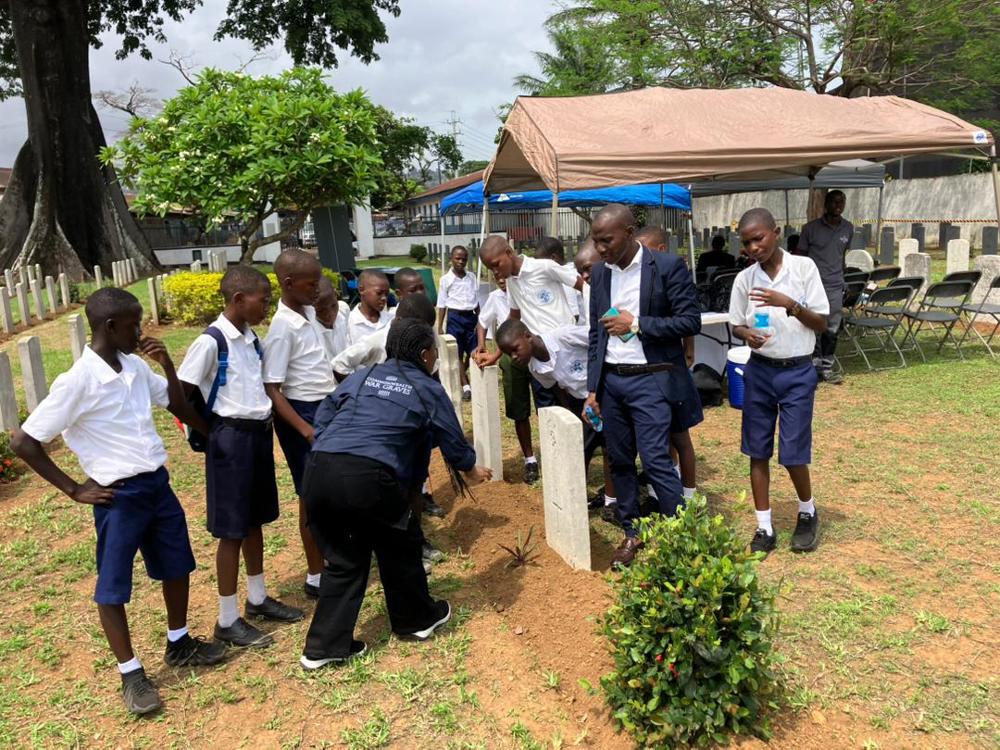
Image: Schoolchildren on a War Graves Week tour in Sierra Leone
CWGC cemeteries and memorials are not just places of commemoration. They can become outdoor classrooms and learning opportunities for visitors of all ages.
Cemetery and memorial visits
In the UK, over 12,000 locations hold CWGC war graves, from our major cemeteries to local churchyards, municipal burial grounds, and so on.
These spaces are perfect for exploring and teaching local and international Commonwealth World War history.
Our Public Engagement Coordinators and volunteer tour guides are busy throughout the year, collaborating with various schools, universities, and learning institutions on trips, large and small, to our locations.
Likewise, we encourage school visits to our non-UK sites too. During War Graves Week, our annual celebration of our work around the world, we regularly organise and host visits from local schools at war cemeteries around the world.
In 2026 alone, we welcomed schools to our sites in Kenya, Sierra Leone, Canada, Malta, and many more non-UK territories. Our colleagues in France and Belgium regularly host engagement tours and talks with local schools, colleges and universities too, something we are beginning to roll out in other parts of the world.
Our sites are the perfect outdoor learning experiences. Here, we can show commemoration in practice, share the work that goes into caring for our sites, why they matter, and stories of the people they commemorate.
You may also use the names in our cemeteries and on our memorials as catalysts for research and individual learning projects. Why not take a name and task pupils with building a full story to test their research skills?
Local heritage on your doorstop
In the UK, we are blessed with history in every village, town and city. Local history is usually just a few short footsteps away.
Learning about the names and people commemorated in your local vicinity could be a fun local history school project.

Want more stories like this delivered directly to your inbox? Sign up for our newsletter for regular updates on the work of Commonwealth War Graves, blogs, event news, and more.
Sign UpTalks, Tours and Outreach
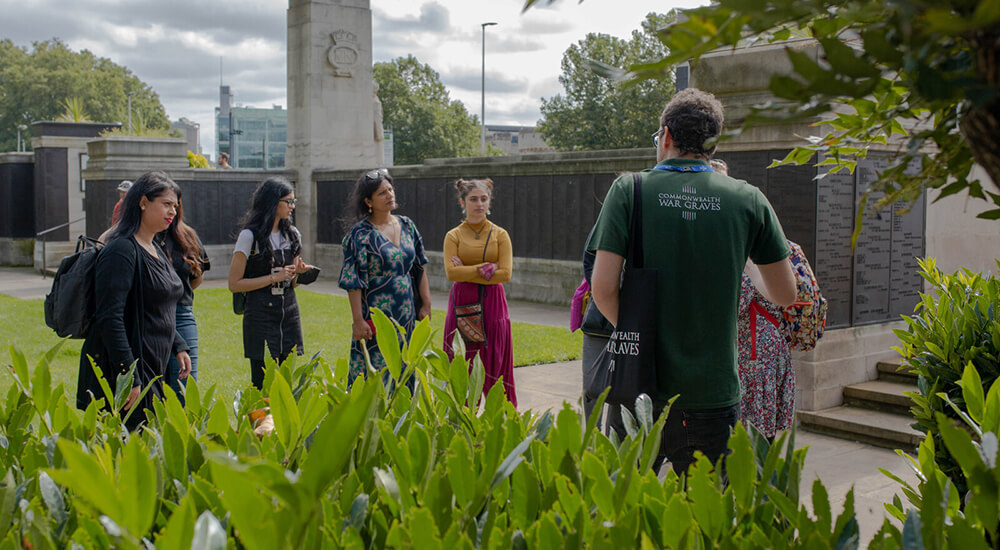
Image: A CWGC Public Engagement Coordinator giving a talk at the Tower Hill Memorial
Engaging face-to-face with the public is extremely important for CWGC outreach. As such, we have built an extensive nationwide network of Public Engagement Coordinators, volunteer tour guides, and guest speakers to help educate the public on who we are and what we do.
Free talks and tours
Our Public Engagement Co-ordinators work with our volunteers and a network of volunteer speakers to offer a series of free talks and tours on a range of topics about the CWGC nationwide.
Topics covered include our founding and history, our global work, horticulture standards and practices, architecture, and much more related to us and our work.
Public Engagement Coordinators and volunteer speakers
In March 2018, we created a Public Engagement Network within the UK to increase public knowledge of our work. We currently have a team of eleven Public Engagement Coordinators (PECs) who each cover an area of England, Scotland and Wales.
The PECs are responsible for all forms of engagement in the UK with the aim of raising awareness of the work of the Commonwealth War Graves on a local and global level.
Their work includes, but is not limited to, presentations and workshops tailored to all ages, cemetery tours, representing the Commission at events, both local and national, building and maintaining networks with their regions and managing volunteers.
The PECs are supported by our Volunteer Speakers Programme.
The Speakers Programme aims to connect with schools, colleges, universities, as well as social and community groups, to explain our work and share the stories of the men and women that we commemorate.
We offer a range of highly engaging and informative talks adapted for different audiences.
Outreach in schools and communities
We regularly team with schools, colleges and universities on a variety of outreach and engagement projects.
This can range from simple school visits, to accompanying pupils on school trips to our sites, and our work with universities for student volunteer tour guides and speakers.
For instance, we have a longstanding partnership with the University of Glasgow, where student volunteers conduct tours at our sites in Scotland and give talks to a variety of institutions, companies and organisations on our behalf.
Outreach in Action: Names, Places and Local Stories
Get to know some of our global outreach and education initiatives by reading below.
War Graves Week
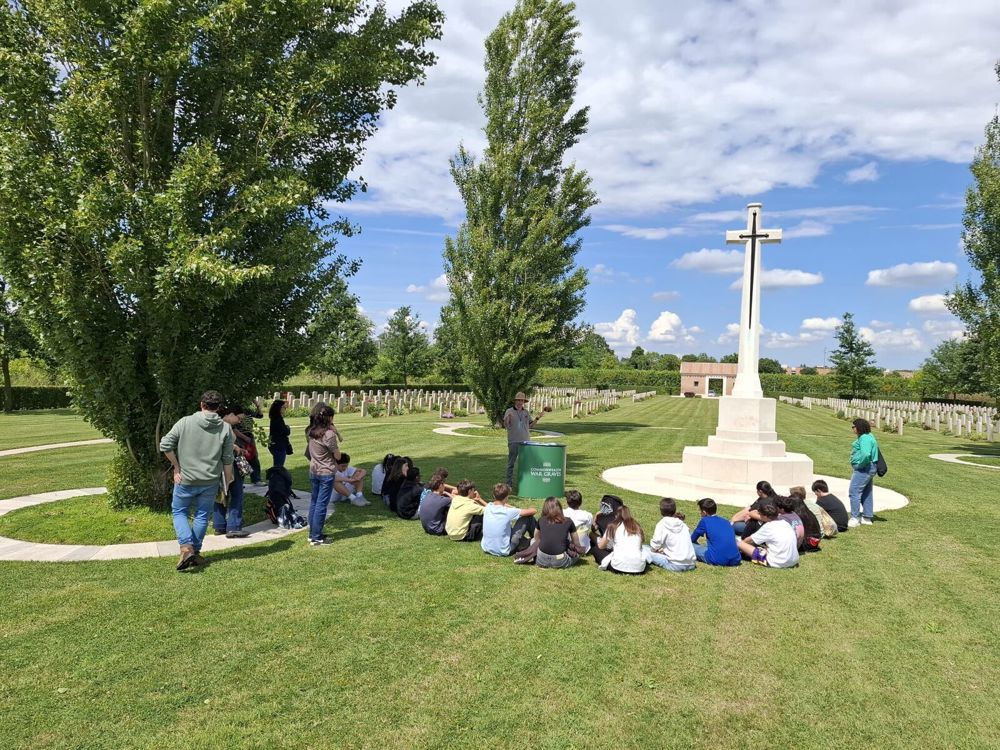
Image: A school War Graves Week trip to Faenza War Cemetery, Italy
War Graves Week is our annual celebration of our work and one of the busiest events in our global calendar.
Taking place each May, this is where we host many events and activities at sites around the world, encouraging visitors to join us to learn more about our work and the people we commemorate.
Our PECs and volunteer speakers are busy across the world during War Graves Week, interacting with visitors to our sites, including school trips and university excursions, to spread the word on our work.
Supporting youth education in South Africa
In 2025, learners from schools in Cape Town took part in an immersive education event exploring the stories of the Black South African labourers commemorated on the Cape Town Labour Corps Memorial.
The workshop used inclusive, multilingual and immersive headset technology to highlight historical inequalities, but importantly, encourage reflection through a contemporary lens.
Central to our work is ensuring the stories of all servicemen we now know to have been previously overlooked are honoured and recognised, with the permanence and prominence they deserve. Connecting young people to this mission is key to the legacy this five-year programme of work will leave behind.
Thanks to the Commonwealth War Graves Foundation's support, we partnered with a local organisation to expand this initiative, reaching 4,000 high school learners.
Battle of the Boar’s Head Podcast & Exhibition
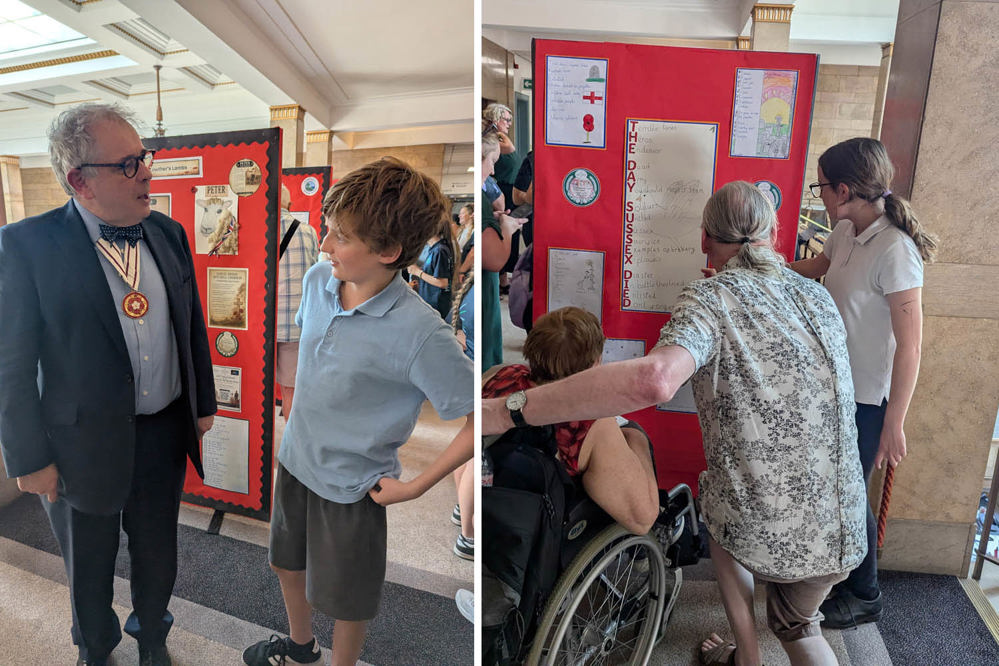
Image: Visitors to the Battle of Boar's Head Exhibition in Worthing, England
To mark the 110th anniversary of the Battle of the Boar’s Head, and to mark the 23 men of Worthing, Sussex, who died in the attack, a new podcast and exhibition was organised by the pupils of three local primary schools.
Organised by CWGC Education Officer Sarah Nathaniel, the initiative has seen pupils from three local primary schools research and record a four-part podcast sharing the stories of Worthing men who died in this key First World War battle for the county of Sussex.
Funded by the Lawson Trust and supported by historian and Old Front Line podcaster Paul Reed, the project will also contribute research to the For Evermore stories portal.
An exhibition was arranged by the schoolchildren at Worthing Town Hall, showcasing the stories of the men of Worthing who died in this First World War battle.
Why Education Matters to Year-Round Commemoration
Commemoration is perpetual at the Commonwealth War Graves Commission. It takes many forms, from the diligent review and updating of our records, the care we put into maintaining and protecting our sites and ensuring the names of the 1.7 million men and women in our care are visible and commemorated for all time.
Education and outreach are pillars of commemoration that sometimes get overlooked by the general public but are absolutely essential to our core mission.
As Sarah Nathaniel, Public Engagement Coordinator (South East) and Education Officer, says: "When young people engage with their local World War history, they uncover the human stories behind global events.
"Understanding the experiences of those who lived, served and died in their own communities encourages reflection, empathy and a sense of responsibility to preserve and share these stories for future generations."
Want more updates on CWGC's education and outreach initiatives?
Sign up to our Education Mailing list
Author Acknoweldgements
This blog was written by Alec Malloy with the help of Simon Bendry and Sarah Nathaniel.
Alec Malloy is a CWGC Digital Content Executive. He has worked at the Commonwealth War Graves Commission since February 2022. During that time, he has written extensively about the World Wars, including major battles, casualty stories, and the Commission's work commemorating 1.7 million war dead worldwide.
Simon Bendry is Director of Education, Engagement and Volunteering at the Commonwealth War Graves Commission. Simon leads and develops our outreach, education, and volunteering programmes in the UK and overseas, helping us reach thousands of schoolchildren, students, organisations, and members of the public each year.
Simon is also an accredited battlefield guide with a deep knowledge of both the First World War and Commonwealth War Graves work in commemorating 1.7 million men and women worldwide.
Sarah Nathaniel is CWGC Education Officer and Public Engagement Coordinator (South East). Sarah helps us engage and reach organisations and schools across the South East of England and also works closely with Simon to develop our education resources and offerings.