22 June 2026
For Evermore: How to share your family’s World War stories with the Commonwealth War Graves Commission
Many families around the world hold fragments of First World War history, from photographs and stories to letters, objects, and other memories and keepsakes.
Capturing and preserving the stories and memories of First World War servicemen and women commemorated by the Commonwealth War Graves Commission is very important. Long out of living memory, the experiences and sacrifices of those lost in this epochal conflict should never be forgotten.
That’s where For Evermore: Stories of the Fallen, our online storytelling platform, comes in.
For Evermore is an online stories archive connected to Commonwealth War Graves Commission records. We invite members of the public to share their family stories via For Evermore to preserve them digitally so we might share them for future generations to discover, learn, and remember.
For Evermore is free to use and open to all members of the public. As well as individuals sharing their family stories, we also encourage others to share their research and life stories of service personnel we commemorate. We also partner with organisations with connections to the World Wars to share stories they’ve uncovered, too.
By sharing their stories on For Evermore, we can move beyond just 1.7 million names etched in headstones or carved into memorials and discover the real people behind the names.


At a glance: what’s on this page
This page is a guide on how to share family world war stories on For Evermore: Stories of the Fallen, including:
- What For Evermore is
- What a family story contains
- What type of stories can be shared on our digital storytelling platform
- Who can share family world war stories on For Evermore
- What to include in a world war casualty story
What is For Evermore?
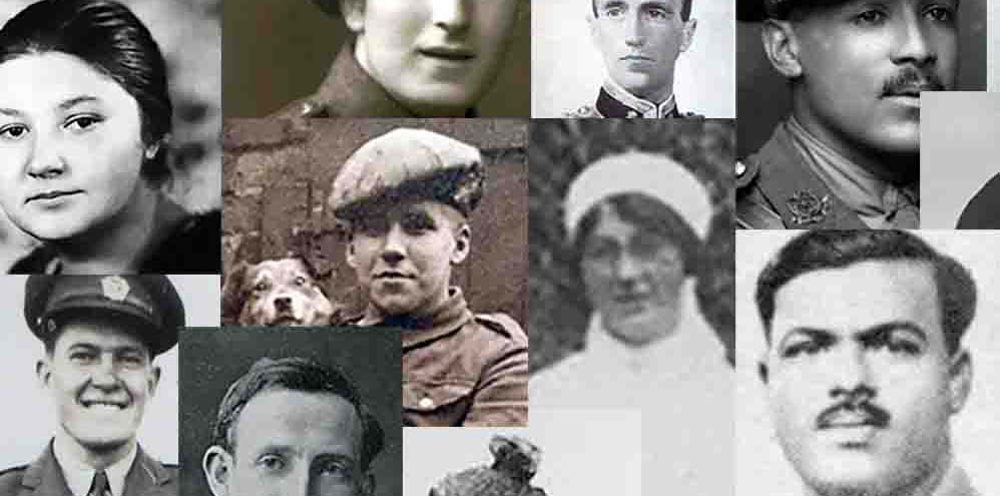
As mentioned above, For Evermore is our digital storytelling platform. Launched in 2023, the platform holds thousands of First and Second World War Commonwealth stories of those commemorated by Commonwealth War Graves.
A place for names and stories
The overall goal of For Evermore is to preserve and share the stories and memories of all 1.7 million men and women we commemorate.
In doing so, we can connect the names you see carved into our headstones, grave markers, and memorials with the real servicemen and women of the World Wars.
How For Evermore connects to CWGC records
For Evermore is closely linked to our records.
Each submitted story is linked to a serviceman or woman in our records, connecting them to their individual casualty pages on our website.
But the connection goes beyond the simply practical. With so many men and women commemorated around the world by the Commonwealth War Graves Commission, the list of names in our records can seem impersonal and obscure.
The platform helps connect these names to the real person behind them. Each was a real person with their own families, careers, and aspirations, sadly lost to the chaos and tumult of the world’s largest conflicts.
Why family stories matter
Family stories remind us that real people fought the First and Second World Wars.
Millions of families around the Commonwealth were touched by loss during these world-changing conflicts.
Family commemoration stories are an important part of remembrance, especially as the world wars leave living memory. The emotional connection between a person and the past, especially our relatives and ancestors, created by these stories, is powerful.
The stories of servicemen in our care, shared via For Evermore, are preserved, helping to bridge generational divides and ensuring they are commemorated and remembered forever.
Explore world war stories on For Evermore
Who can share a story on For Evermore?
Anyone with a story of a casualty of the First and Second World Wars commemorated by the Commonwealth War Graves Commission can share a story on For Evermore, including:
- Family members
- Descendants
- Community researchers
- Local history groups
- Teachers and students
You do not need to be an expert
We have thousands of inspirational, moving, and interesting stories submitted by relatives of those we commemorate, individual researchers, and partner organisations waiting to be explored on For Evermore.
You do not need to be an expert on genealogy or military history to upload a story to For Evermore. The platform is open for anyone to share a story of someone we commemorate, no matter how short or long.
What counts as a family story
In the context of For Evermore, we class family stories as those submitted by relatives of the deceased.
We often receive submissions from people recounting the story of their grandfather’s service, their great-grandfathers, long-lost cousins, uncles and so on.
If you’re related to a casualty we commemorate and have their story, then this counts as a For Evermore family story!
Stories from communities and researchers
We work with a variety of organisations and partners to showcase stories of the Commonwealth’s war dead on For Evermore.
For example, we have been showcasing stories of Commonwealth medal recipients from the archives of auction houses Spinks and Noonan’s Mayfair. Elsewhere, we have partnered with the Thiepval Memorial Project to share and preserve stories from the Thiepval Memorial on the Somme.
We are always open to collaboration. Please contact us to learn more.
We also welcome submissions from individual researchers.
You may notice, as you browse the storytelling platform, that several authors have contributed many stories about servicemen and women they are not related to. This is perfectly fine, and we welcome any submissions from individual researchers who may wish to share and preserve them via our digital platform.
What can you include in a For Evermore story?
What we’re trying to do with For Evermore is discover the real people behind the names. We’re not looking for a repeat of the information we already have in our records and casualty database.
There is no hard and fast defining rule on what you can or cannot include in your First World War soldier story, or stories of relatives in our care, uncovered during family history research. That said, here are some ideas on what you can include:
- Full name
- Age
- Family relationships
- Hometown or community
- Service details, where known
- Photographs
- Letters or diary extracts
- Objects or family documents
- Where the person is buried or commemorated
Names, dates and family details
The basic details, such as casualty names, dates of birth and death, are almost essential. You can find this very basic data in CWGC records using our Find War Dead tool.
Otherwise, including family details is encouraged. Such information can be found in newspaper archives and obituaries as well as historic census information.
Family information helps us get a feel for the story subject’s upbringing. What part of the world were they from? How many brothers and sisters did they have, if any? You can also enhance this by looking at their occupations and working histories, too, to create a fuller picture of the person being written about.
Military service details
Details on the subject’s military service should also be included where possible. There are several places to acquire these details.
Regimental and battalion war diaries are available for British units, as are ship and squadron logs for navy and air force casualties. The National Archives also includes relevant military records and may be a good starting point to learn more about an individual’s military service.
Likewise, Australian, New Zealand, and Canadian military records, including individual service records, are widely available to help your research.
Photos, letters and documents
Photos, letters, and documents add an extra personal, emotional touch to a For Evermore story.
Many families hold their loved ones' letters home or correspondence between loved ones. These offer fascinating insights into the thoughts and feelings of the story subject, what it was like in uniform, their relationships with their comrades and family members, and give a rounder picture of the subject’s own experiences.
Photos are always fantastic to see, whether of casualties in their military uniform, on duty, or in civilian life. They can be highly emotional, too, putting a face behind an abstract name on a headstone or memorial name panel.
Personal memories
Personal memories of interactions or experiences are a great way of adding extra emotional heft to a For Evermore story.
If you have a personal memory associated with the casualty in our care, such as remembering how they liked to watch football or if you went on trips together, for example, we’d encourage you to include it.
These little personal touches again help remind us that these were living, breathing people with their own complex lives and relationships, which is an overlooked aspect of commemoration.

Want more stories like this delivered directly to your inbox? Sign up for our newsletter for regular updates on the work of Commonwealth War Graves, blogs, event news, and more.
Sign UpStart with a name: Using CWGC records
CWGC records are a great starting point when researching and writing about your First World War family history or finding Second World War casualties in our care.
Our records contain pertinent information that you can frame a story around, including:
- Full name
- Rank
- Service number
- Unit or regiment
- Date of death
- Age, where available
- Cemetery or memorial
- Additional family information, where recorded
We have compiled easy-to-use research guides to help you search our war grave records and find the information you’re looking for. Download one today to start your research journey.
Search for the person’s name
The name is the starting point.
Our records are searchable by first and last name and initials to help you find the correct serviceman or woman you are writing about.
Unit, service number and dates
We commemorate 1.7 million men and women from across the Commonwealth at the CWGC. As such, there will be some duplicate names. Here are some ideas on how to refine your search.
The Find War Dead tool contains fields to narrow your search, including unit, ship or squadron, service number, and dates of death.
Place of commemoration
CWGC records also include places of commemoration to help you find a war grave or memorial commemorating a particular serviceman or woman.
This will be listed on a casualty’s individual page.
You can also use our Find Cemeteries and Memorials to help your search. You can also download war dead lists from each cemetery or memorial page to help locate individuals within a place of commemoration.
What do I do if I cannot find a name in CWGC records?
If you cannot find the war graves record you were searching for, here are some tips:
- Try different spellings
- Search with initials and full names
- Add a service number if known
- Check regiment or unit details
- Use date of death if available
- Look at family information in the record
- Save the cemetery or memorial page
How to prepare and write a For Evermore story
Ready to get started? Here’s how begin preparing and writing a world war family story on For Evermore.
Getting ready
Preparing to write a family world war story can be made easier if the users gather the key details first.
- Start with the person’s name.
- Add their CWGC record or place of commemoration
- Write down the family memory or story
- Add context from letters, photos or documents
- Check dates, places and spellings
- Keep the story focused on the person
- Save any image permissions or source notes
Writing guidance
Here are some general tips for writing a For Evermore story:
- Use short paragraphs
- Start with who the person was
- Include where they came from
- Explain their family or community connection
- Add service details where known
- Include the photograph or memory that matters most
- Say when something is a family memory rather than a confirmed fact
Sharing your For Evermore story
Each For Evermore story has its own page and link, which you can share with your family, friends and other organisations. We would encourage you to share your story far and wide.
We often use For Evermore submissions in our wider campaigns, blog posts, articles, and even exhibitions, with all credit given to the original author. This way, we can keep sharing and preserving the stories of those we commemorate to ensure they are never forgotten.
So, inspired? Visit For Evermore: Stories of the Fallen and submit your world war family stories today.
Create a Story on For Evermore
Author acknowledgements
Alec Malloy is a CWGC Digital Content Executive. He has worked at the Commonwealth War Graves Commission since February 2022. During that time, he has written extensively about the World Wars, including major battles, casualty stories, and the Commission's work commemorating 1.7 million war dead worldwide.