

01 June 2026
How to plan a battlefield trip responsibly
What’s the best way to plan a visit to a CWGC cemetery or memorial, to see war graves, and to experience the battlefields of the past?
Such places are areas tinged with memory, meaning, and tragedy. Planning your battlefield trip will help you gain a better understanding of where you’re going, why these places matter, and how to approach them respectfully.
Our cemeteries and memorials often sit on the sites of former battlefields. They are inextricably connected, not only to time and place, but to our shared Commonwealth history too.
This guide will help you prepare for a visit to a former battlefield in a responsible way to help maximise your time and understanding of these powerful spaces.


At a glance: What's on this page
This page offers advice and guidance on how to plan a responsible battlefield trip and visits to Commonwealth War Graves Commission cemeteries and memorials, including:
- What a responsible battlefield trip is, in brief
- How to prepare before you go
- Why CWGC cemeteries and memorials are places of commemoration, not just stops on an itinerary
- What respectful behaviour looks like on site
- How to use records to plan a more meaningful visit
- What to expect when visiting a cemetery or memorial
- How to connect a place to a name or story
- Common questions about responsible battlefield travel
What a responsible battlefield trip means
Responsible battlefield travel is a way to better understand and enjoy these history-rich locations. It also means you’ll have a deeper understanding of CWGC sites and how to visit war graves respectfully.
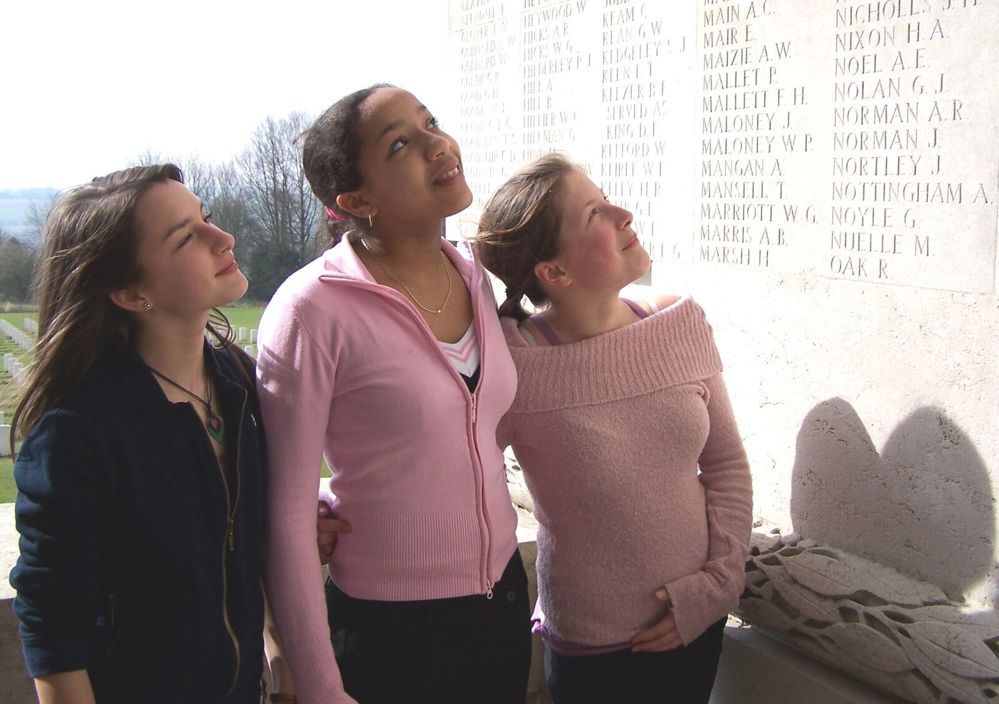
Image: Three young visitors examine the name panels at the Thiepval Memorial
What makes a visit responsible
A responsible battlefield trip means:
- Preparing well in advance
- Sorting destinations and travel
- Understanding where you are going
- Knowing that CWGC cemeteries and memorials are spaces for the commemoration of the Commonwealth’s war dead
- Behaving respectfully
Places of commemoration, not just history
Commonwealth War Graves Commission cemeteries and memorials are powerful spaces of commemoration.
It’s here where you’ll find our war graves, our headstones, our special memorials, and our memorial name panels. Each basically has the same function: commemorating by name over 1.7 million men and women of the Commonwealth who died in the world wars.
Our sites often sit on or close to the former battlefields of the First and Second World Wars, linking them forever with the Commonwealth’s shared history of loss and sacrifice in wartime.
There are some exceptions, such as the UK-based naval memorials at Plymouth, Portsmouth and Chatham, or the Runnymede Air Forces Memorial in Surrey. While these are not located where the people they commemorate died, they are still their points of commemoration.
Why this matters to visitors today
We ask that, when visiting, you approach our cemeteries and memorials with respect. If you do, you will find them inspirational and moving places that ask you to consider the people they commemorate and contemplate their loss.
How to prepare before you go
Battlefield trip planning starts at home! Here are some tips to help you get started.
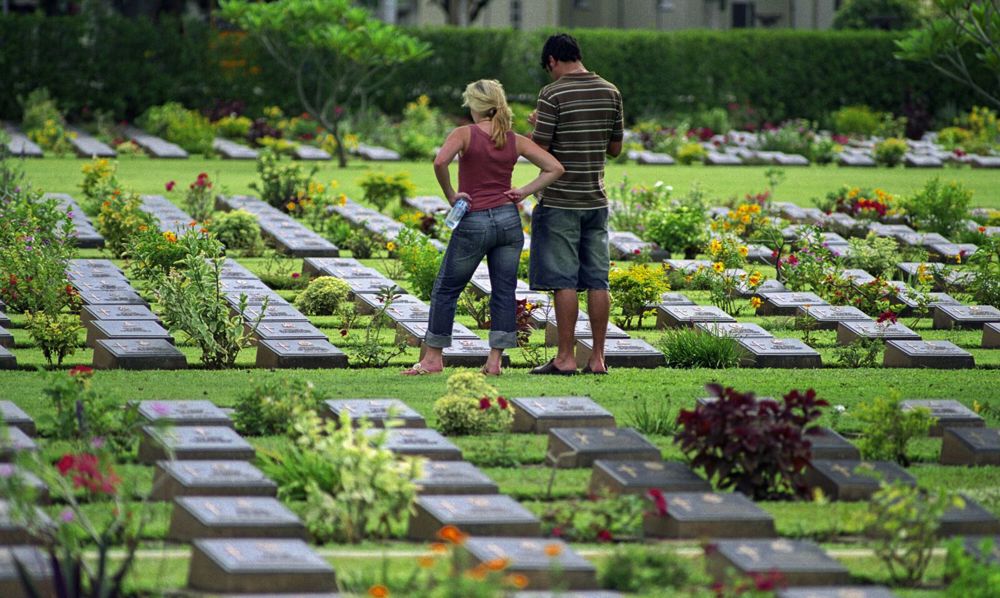
Image: Visitors inspecting the bronze grave markers at Kanchanaburi War Cemetery, Thailand
Start with a place or a name
Firstly, think about where you want to go!
The world wars were, as the name suggests, truly global. Some of the most visited former battlefields in the world can be found in France and Belgium, such as the Normandy landscape or the former Western Front.
However, these don’t tell the whole story. From the rugged mountaintops and plunging valleys of central Italy to the thick rainforest and jungle of Burma, to the deserts of North Africa, you’ll find world war battlefields on nearly every continent.
At the same time, you will find CWGC war graves, cemeteries and memorials in 23,000 locations across 155 countries and territories worldwide. To start your planning, you’ll need to know where to go.
Likewise, you may want to visit a relative’s final resting place and the areas they fought in. CWGC records can help you pinpoint these locations and are a good place to start.
Using Commonwealth War Graves records to shape your visit
Our search tools are here to help you plan a visit to a CWGC site.
Use the Find War Dead tool to search for the men and women in our care. This will give you their final resting place, as well as information on how to find them in a cemetery or burial plot, or their location on a memorial name panel.
If you were searching for casualties from a particular regiment, ship, or squadron, you can also refine your search to include all the servicemen. Again, the search results will show you the final resting place.
Our Find War Cemeteries and Memorials tool allows you to search through all our locations by country and then region.
Plan time, routes, and expectations
Each cemetery and memorial page also includes visitor information, such as opening hours, a useful map, and directions.
Use this information to help schedule in your site visits and plan around other activities you may wish to do on your battlefield trip.
If you’re looking for inspiration on which areas to visit, why not start with our Normandy and WW1 Battlefield guides?
One thing to incorporate into your battlefield trip planning is what to expect at a CWGC site. You will find impeccably maintained horticulture and plant life, rows of our iconic headstones, or hundreds of names etched into stone or cast in bronze on our war memorials.
But we remind you: these are spaces commemorating the war dead. Approach them with respect and let them unfold as you browse the names on headstones, read the personal inscriptions, and be moved by the young ages of some of those in our care.
How to use CWGC records to make your visit more meaningful
As well as helping you plan your trip, our records can also help add deeper meaning when visiting war graves and memorials.
Names and stories
For Evermore is our online storytelling platform. Here, we collate and share stories of those in our care submitted by the public.
Each For Evermore story has the subject’s place of commemoration. This is a great way to attach a face to a place and learn more about the people a particular site commemorates.
Visit For Evermore in your planning phase and search by cemetery name. This will bring up each casualty commemorated or connected to the burial ground, cemetery, or memorial.
The history behind CWGC spaces
The majority of our cemetery and memorial pages contain historical information regarding the casualties commemorated here. This takes the form of battle information as well as the history of the cemetery or memorial itself.
You can use this information to learn more about our sites.
For example, Tyne Cot Cemetery in Passchendaele, Belgium, is our largest war cemetery in the world. It marks the spot of the furthest Commonwealth advance during the Battle of Passchendaele, and many of the nearly 12,000 servicemen who died in the battle are commemorated here.
Download our apps
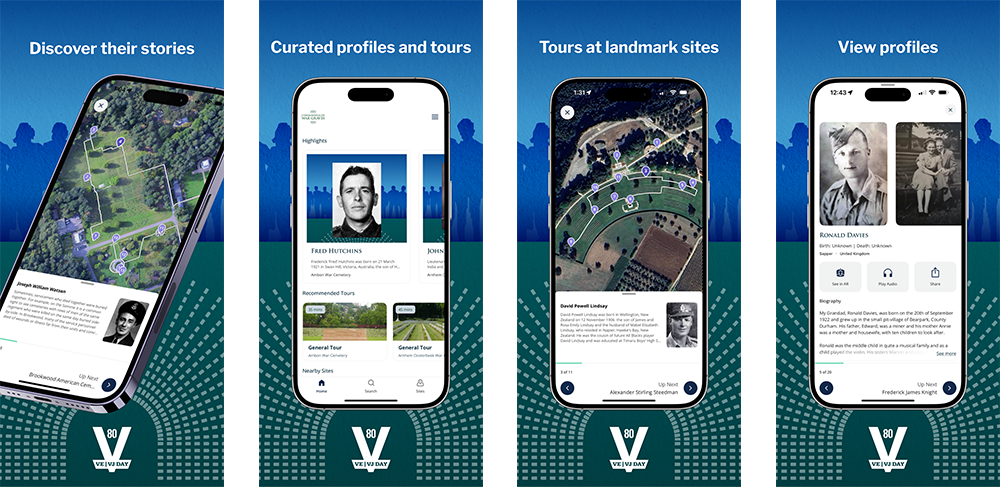
Image: Enhance your visit with the For Evermore app
The CWGC Apps are a great way to enhance your on-site experience.
The CWGC War Graves App is a great application for anyone planning a trip to our war cemeteries, for those just curious to find war graves near them, or for those who want to remember the servicemen and women of the Commonwealth forces who died in the two World Wars.
Simple to use, the CWGC War Graves App allows you to search for war graves at more than 23,000 locations, in more than 150 countries and territories and makes it easy to find and visit these places of remembrance.
You can search for cemeteries by name, location, postcode or use your phone’s location to find sites nearby. If we have a photo or plan of a cemetery, you’ll be able to view it online and using our map feature, you’ll be able to find the location and navigate to it using your mobile device.
Whether you’re at one of our cemeteries or memorials, you can experience a guided tour of our site by one of our expert historians with the For Evermore app.
We’ve compiled tours of some of our most visited sites around the world. Whether you’re interested in the Western Front, or the jungle battlefields of the Pacific theatre, you will be able to explore our sites and discover more about the history of the world wars and those who fought in them.
The For Evermore app draws on the stories in our collection: For Evermore – Stories of the Fallen. We’ve collected thousands of stories from relatives and researchers alike about some of the men and women who died during the world wars.
Now you can visit a site and scan a headstone to see if we’ve got a story about them. If we don’t, you’ll get that person’s commemoration information and any other details we have about them – you might even be inspired to research them and create a story about them yourself, ready for the next inquisitive visitor.

Want more stories like this delivered directly to your inbox? Sign up for our newsletter for regular updates on the work of Commonwealth War Graves, blogs, event news, and more.
Sign UpWhat respectful behaviour looks like on site
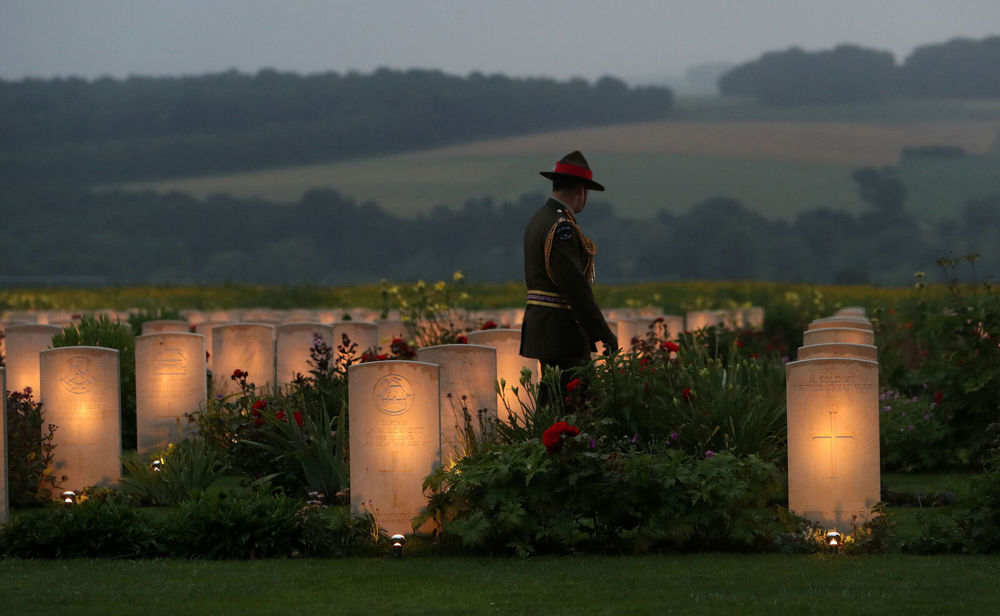
Image: A New Zealand serviceman takes in a war cemetery, lit up for the 100th anniversary of the Battle of the Somme
Remember, CWGC sites are places which commemorate our war dead. Please bear this in mind when visiting a Commonwealth War Graves Commission site.
- Quiet reflection - These are spaces of quiet contemplation, so we would ask to please be mindful of others and your surroundings.
- Respect graves and memorials - Our headstones are neatly arranged in plots and rows. We ask you to please not sit, stand or climb on headstones or memorials. Normally, our cemeteries will have seating. Likewise, please do not walk on graves or plant borders.
- Tributes - Small tributes are acceptable, such as fresh flowers, poppy crosses, although we will remove these after a while. Please do not leave permanent items, such as glass vases, ceramic plates, or plastic tokens. Please do not attach anything directly to our headstones or name panels.
- Litter - Please take any litter you have with you when you leave.
Photography - Photography is encouraged, and we love seeing your photos of your sites. We ask you to please be mindful of others when taking your photographs.
Reading CWGC headstones and memorial name panels
Our iconic headstones differ in size, shape and material, depending on the location and local conditions. For instance, you are probably familiar with our rows of Portland stone headstones in our French and Belgian sites but may not know that we use bronze-faced plaques in places such as Gallipoli or our Thai and Myanmar cemeteries.
Wherever we place them, our headstones are there to identify our casualties or mark the final resting places of unidentified servicemen and women we were able to recover and bury.
- Standard inscriptions - Each headstone typically includes: Name, rank, Country or regiment emblem, awards such as the Victoria Cross, Service number, A Religious emblem or text where appropriate, such as a Star of David for Jewish casualties or Arabic script for Muslim servicemen.
- “Known Unto God” inscription – This inscription can be seen on unidentified servicemen’s headstones. The phrase was chosen by Rudyard Kipling, the Commission’s first Literary Officer. Additionally, headstones may bear descriptions such as “A Canadian officer of the Great War” if they were able to be partially identified.
- Personal inscriptions – Casualties’ relatives were invited to provide personal inscriptions to their loved ones’ headstones. These are deeply moving messages and worth taking the time to read when visiting one of our sites.
“Missing” casualties, or those with no known war grave, are commemorated on CWGC war memorials.
If the memorial is dedicated to missing Army casualties, such as Thiepval, names are arranged by:
- Regiment by the Army’s standard of regimental precedence
- Rank in each regiment, moving down in seniority
- Alphabetically by surname for each rank
Naval memorials and the Tower Hill Memorial commemorating members of the Merchant Navy and fishing fleets are arranged:
- By ship or vessel, alphabetically
- Alphabetically by seniority
The Runnymede Air Forces memorial arranges commemoration by:
- National Air Force (RAF, Royal Canadian Air Force, Royal Australian Air Force, etc.)
- Rank by seniority
- Alphabetically by name
Each memorial panel is also numbered. The numbers will tell you on which section of a memorial a particular individual is commemorated.
What to expect at a CWGC cemetery or memorial
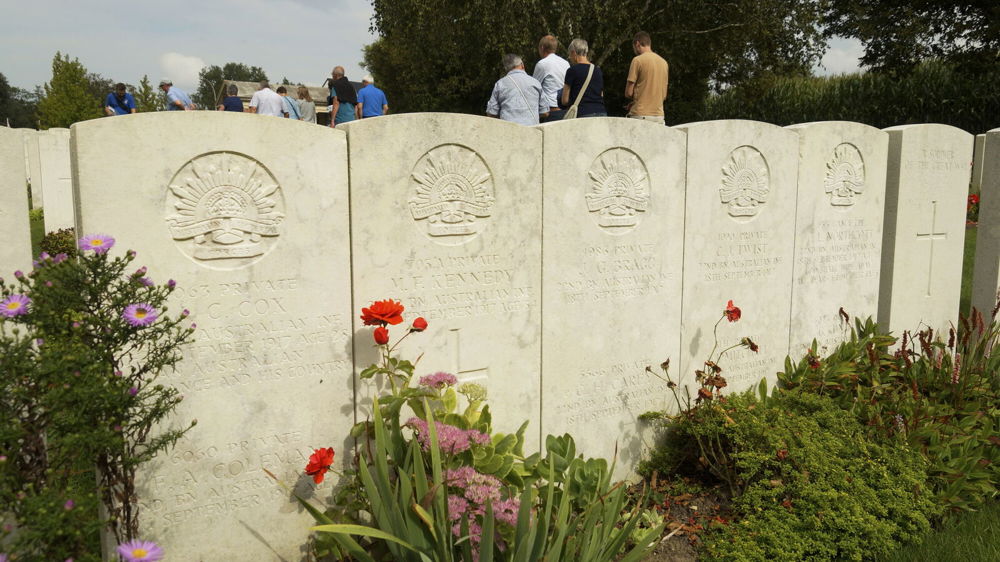
Image: A row of neatly kept headstones at Hooge Crater Cemetery
If you’ve not visited one of our locations before, here’s what you can expect when visiting a CWGC cemetery or memorial.
Quiet places in wider landscapes
As we’ve mentioned a few times in this article, many of our cemeteries and war memorials sit on former battlefields, close to or on the locations where servicemen fought and fell. Others were constructed close to medical facilities and hospitals where servicemen were treated and sadly succumbed to their wounds.
These sites have become part of the wider memorial landscape, helping illustrate the loss experienced on these formerly chaotic battlefield spaces. For instance, the Somme cemeteries and memorials effectively form a ribbon along the Somme sector, helping illustrate the battle’s course and scale of loss.
Different sites; different scales
While our cemeteries contain hallmarks and design features that instantly make them recognisable as Commonwealth War Graves sites, no two cemeteries or memorials are the same.
For example, a visit to Ypres town cemeteries, four of which lie within the city limits, and a visit to Tyne Cot, our largest war cemetery in the world, will ably show the differences in scale.
Likewise, if visiting Normandy, you can see this dichotomy in the thousands of casualties buried at Bayeux War Cemetery, contrasted with the fewer than 50 buried at Jerusalem War Cemetery, Chouain. Both sites commemorate casualties of the Normandy Campaign but vastly differ in size.
What visitors can notice and learn
Visitors will notice the Stone of Remembrance at our larger sites, our Cross of Sacrifice and of course the headstones and grave markers commemorating the dead by name. At our memorials, the scale of the missing is what grabs attention, such as the more than 72,000 names etched into the name panels on the Thiepval Memorial.
You will also see impeccably kept horticulture, including well-maintained lawns and plant borders. Our sites were designed to be places of peaceful reflection; garden areas that delight, move and inspire. Our horticulture teams around the world perform stellar work in ensuring our sites are blooming and healthy in spring and summer while protecting them in autumn and winter.
Each site will also include a site register in a box close to or in the entrance. You can use this to locate any of the casualties commemorated at a particular site, including their burial plot and row or their location on a memorial panel.
How to balance learning, travel, and commemoration
A responsible battlefield trip is not about seeing as many sites as possible, but about giving places enough time and attention to understand what they commemorate.
Slowing the pace of your visit
These are spaces rich in memory and meaning. Take the time to slow down and appreciate the interplay between cemeteries, memorials, and the wider landscape.
It’s worth slowing down your visit to examine the names inscribed on headstones and etched into our memorial panels. They reveal a little more about the people who fought and fell in the Commonwealth’s battles on air, land, and sea in the World Wars.
Choosing fewer places more meaningfully
With war graves in 23,000 locations across more than 150 territories and countries around the world, it can seem overwhelming when choosing which CWGC site to visit.
The Somme alone boasts over 400 CWGC locations, with France and Belgium containing the bulk of our sites.
We recommend thinking deeply about which CWGC sites you want to visit and why. Are you interested in following the course of a battle, such as the Somme or battles of Ypres, using our sites? Do you want to find places of commemoration for specific regiments or individuals?
Deciding on the above will help give more meaning to your battlefield trip and allow you to visit the sites you want to in good time.
Connecting history to people
Remember, these are places that commemorate real people. You can connect to people behind the names using our records and For Evermore before you go or on-site using our apps.
Connecting with the people helps us move beyond names on headstones or memorial panels. These were real people with their own lives and aspirations, cruelly cut down in wartime. By learning more about them and sharing and understanding their stories.
Why responsible battlefield trips matter today
Responsible battlefield trips still matter because they help people approach major historic places through real names, real sites and real acts of commemoration.
Why place still matters
CWGC sites matter today as they are the physical places of commemoration for the Commonwealth’s shared war dead.
They are places rich in memory and meaning; spaces where we come to discover and appreciate the sacrifice of so many men and women around the world.
Today, our work continues. Remains of fallen servicemen and women are still being discovered over a century after the First World War ended and over eighty years since the end of the Second World War.
Our sites continue to be focal points of commemoration for the Commonwealth.
From travel to understanding
Responsible battlefield travel can be a vehicle for understanding the loss and shared sacrifice endured by the Commonwealth during wartime.
It can also help provide an understanding of the landscape, time, and place of important campaigns, such as Normandy or the Battle of the Somme.
Visit us on your next trip to discover our sites.
The CWGC Visitor Centres
Our visitor centres in Ieper, Belgium, and Beaurains, France are the ideal gateways to battlefield trips.
Come and visit us to learn more about our work, who we are, and what we do.
Visit the visitor centre pages now to learn more and to plan your trip.
Planning a Responsible Battlefield Trip Frequently Asked Questions
Responsible battlefield travel means preparing properly, understanding the commemorative purpose of the places you visit, and approaching sites with care and respect.
Of course! We encourage you to visit our sites as part of wider trips to former world war battlefields. Many of our First World War cemeteries and memorials sit close to or on the former battlefields. Use our Find War Cemeteries and Memorials tool to find their location. Each cemetery and memorial page contains location and visitor information too.
Approach our sites with care and respect. These are places of commemoration and quiet contemplation. Please also be mindful of others and be careful not to disturb the horticulture, headstones, or memorial panels.
You can search for names in our records or on For Evermore to connect the real people commemorated at our sites with their names on headstones or memorial panels. This will give you a deeper understanding of the men and women we commemorate and the connection with their final resting places.
Our sites differ in scale and location, but you can expect to find beautifully maintained places of quiet contemplation and commemoration at a CWGC site.
That is entirely up to you and your itinerary, but a responsible trip often means giving places enough time and attention rather than rushing. If visiting one or more of our sites as part of your trip, we would encourage you to take time to really get to know the site, read the headstones or memorial panels, and experience the site as a whole, rather than rushing through.
Yes, we encourage you to take photos of our sites and even run an annual photography competition for the Commonwealth War Graves Foundation calendar. We ask you to please be respectful of the site and others when taking photographs. Please share your photos with us on social media as we love to see them!
Author acknowledgements
Alec Malloy is a CWGC Digital Content Executive. He has worked at the Commonwealth War Graves Commission since February 2022. During that time, he has written extensively about the World Wars, including major battles, casualty stories, and the Commission's work commemorating 1.7 million war dead worldwide.