

20 November 2026
Remembrance Across Borders: The History of Berlin South-Western Cemetery
In the woodland cemetery at Stahnsdorf, south-west of Berlin, more than 1,100 Commonwealth servicemen of the First World War are buried or commemorated. Many died as prisoners of war, far from their families and homes.
But the history of Berlin South-Western Cemetery also reaches beyond the men remembered here. During the Cold War, it became a place where local people gathered for remembrance despite official suspicion and risk.
Its story brings together the war dead, those who cared for their graves and a community determined to ensure that their stories are never forgotten.
Berlin South-Western Cemetery At a Glance
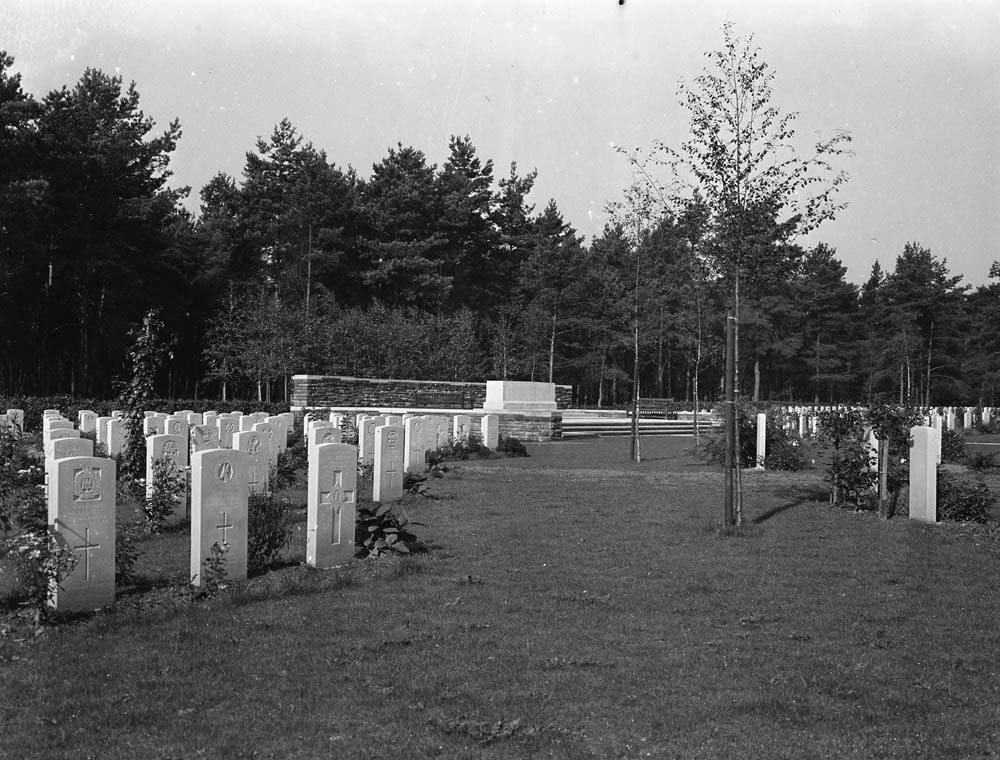 Image: CWGC war graves and Stone of Remembrance at Berlin South-Western Cemetery, 1937
Located in Eastern Germany, Berlin South-Western Cemetery has an interesting history:
The original cemetery was established in 1909
A 1924 agreement saw First World War Commonwealth war graves scattered around Germany brought into four sites, including Berlin South-Western Cemetery
Many of the Commonwealth burials on-site are those who died as captivity as Prisoners of War
After the Second World War, the cemetery fell into the Soviet occupation zone and subsequently East Germany, eventually falling behind the Berlin Wall
Local staff continued to care for war graves until the wall fell and Commission staff could access eastern Berlin
Even behind the wall, British military authorities were able to liaise with their East German counterparts for remembrance and commemoration ceremonies
Queen Elizabeth II visited the cemetery during her 2004 state visit to Germany
Visitors can visit Berlin South-Western Cemetery
You can also find the names of those commemorated here using our search tools
A cemetery within a cemetery
Berlin South-Western Cemetery forms part of the much larger Südwestkirchhof at Stahnsdorf. The wider cemetery opened on 28 March 1909, providing burial space for a rapidly growing Berlin in the early 20th century.
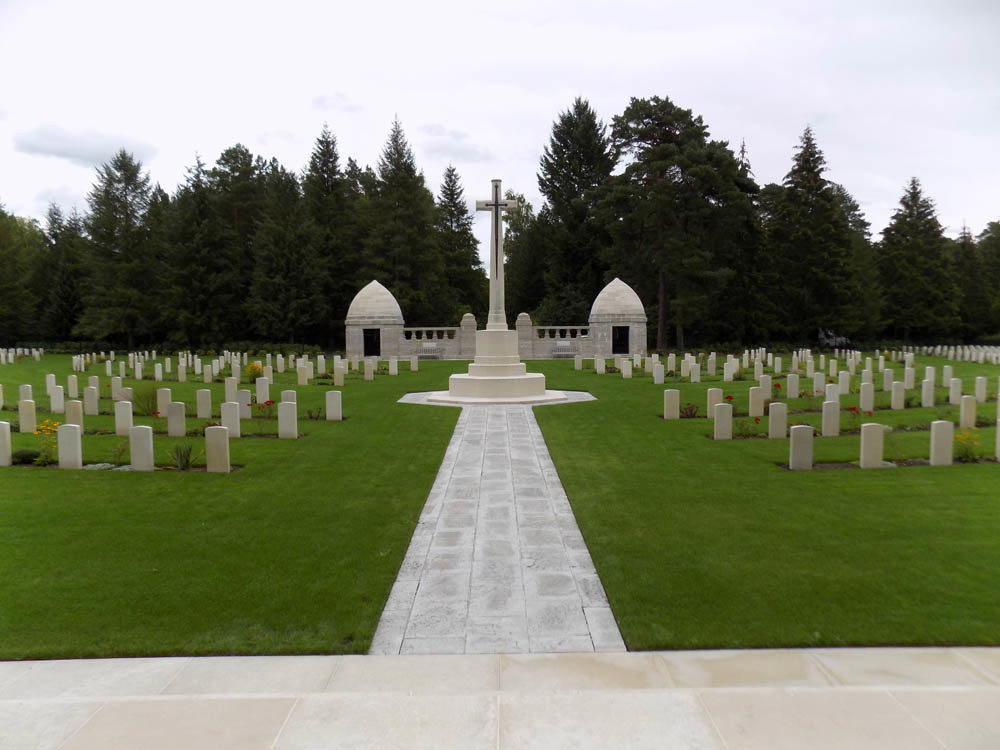 Image: Berlin South-Western Cemetery in 2015
Its design made use of the existing woodland, with graves set among trees and landscaped paths. Its wooden chapel drew inspiration from Norwegian stave churches.
In 1913, a dedicated cemetery railway opened between Wannsee and Stahnsdorf, helping people reach the site from the city.
The Commonwealth plot came later. In 1922–23, the decision was made to bring together Commonwealth war graves scattered across Germany into four permanent cemeteries. Berlin South-Western was one of the sites chosen.
A 1924 agreement with the church authorities secured the land for the plot. It also provided for extending the main avenue to reach it and stipulated that the agreement would remain valid even if the surrounding cemetery closed. Permanent remembrance and access to the graves were being planned from the very beginning of the site.
During 1924–25, remains were brought here from more than 140 burial grounds in eastern Germany. These included cemeteries serving prisoner-of-war camps at Döberitz, Lamsdorf and other locations.
Today, 1,176 First World War servicemen are recorded as buried or commemorated here. Among them are men remembered on special memorials because their original graves could no longer be found.
Lives that ended in captivity
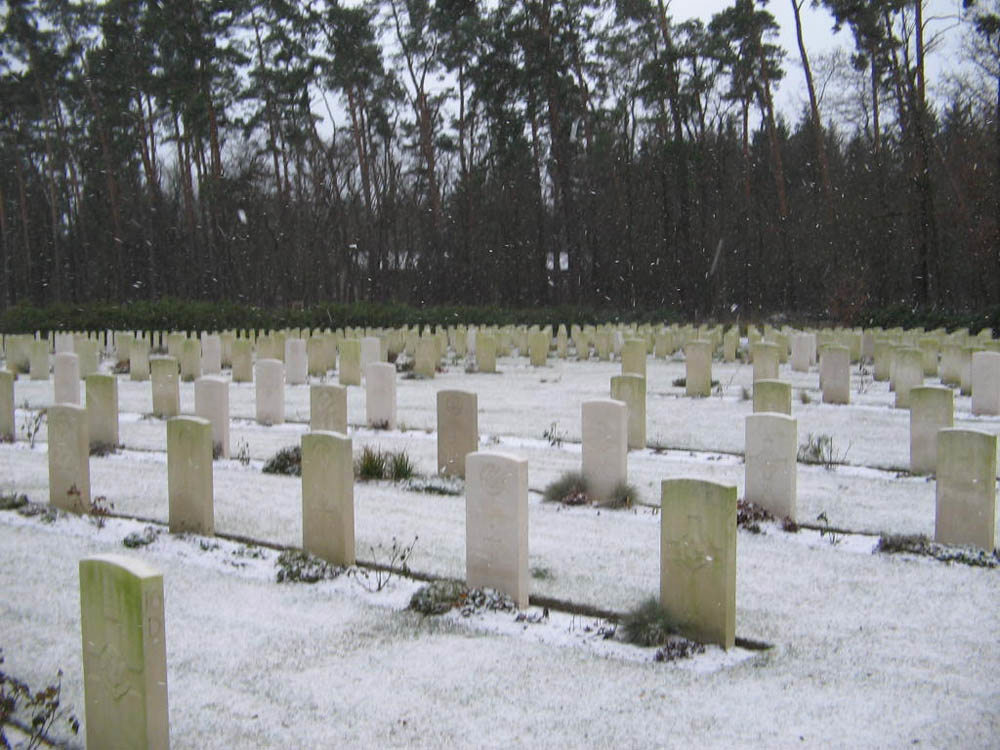 Image: Frost blankets headstones and horticulture at Berlin South-Western Cemetery, where many Prisoners of War are buried
These graves tell a different part of the First World War’s story from the cemeteries along the former Western Front. Many of those remembered at Stahnsdorf survived capture but never returned home.
One was Leonard Bungay, from Mose Ambrose in Newfoundland, the son of Mary and William Bungay. He served aboard the sailing vessel Dictator.
On 28 June 1918, the German submarine U-151 boarded and sank the ship in the North Atlantic. The crew were taken prisoner and transported to Berlin. Leonard died there on 14 October 1918, less than a month before the Armistice. He is buried in Plot IX, Row D, Grave 9.
Another Newfoundlander, Private Lewis Gilbert Hudson, had worked as a fisherman before joining the Newfoundland Regiment in 1916.
He was captured during the fighting at Monchy-le-Preux in April 1917 and held at Altdamm prisoner-of-war camp. On 2 April 1918, he died of tuberculosis in the camp hospital.
Although he had been buried at Altdamm, his remains could not later be found. A special memorial at Berlin South-Western Cemetery ensures that he is still commemorated by name.
You can find the names of each individual commemorated at Berlin South-Western Cemetery using our Find War Dead tool.
Caring for graves in a divided Germany
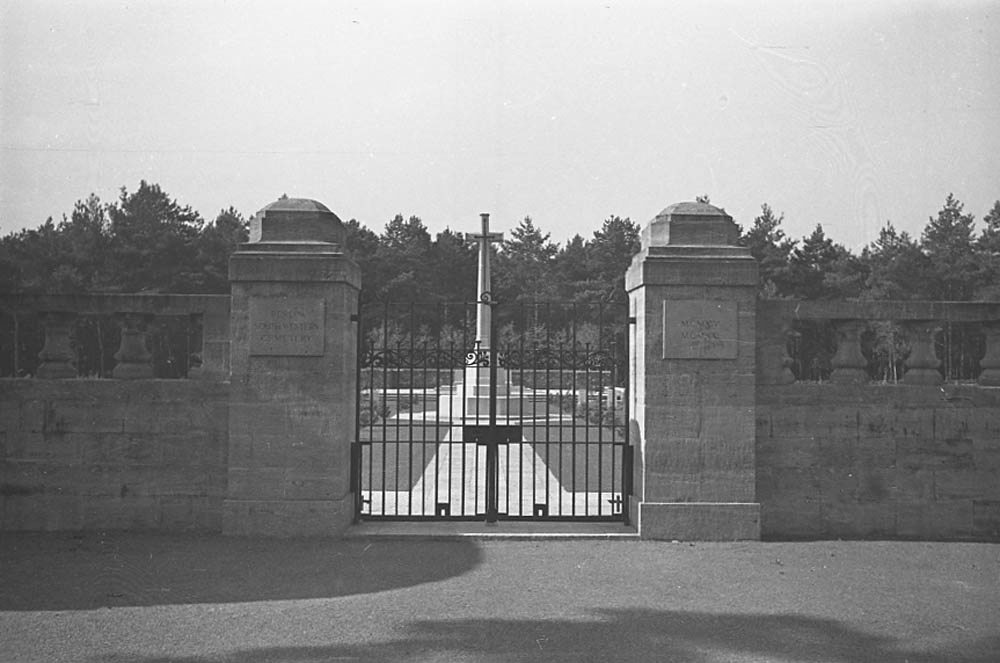 Image: The cemetery lay behind the Berlin Wall for decades
After the end of the Second World War, Stahnsdorf lay in the Soviet occupation zone and subsequently in the German Democratic Republic, or East Germany.
The construction of the Berlin Wall in 1961 cut the wider cemetery off from much of the population it had originally served. The cemetery railway ceased operating, and maintaining the grounds, buildings and monuments became increasingly difficult.
Yet local staff continued caring for the Commonwealth graves through the years of division.
Among those responsible for the wider cemetery was Reinhard Schwarz, who supervised its outdoor work from 1974 to 1989. An obituary written by a member of the cemetery’s support association describes a workforce with little equipment, carrying out much of its work by hand.
Timber from the grounds was exchanged for building materials and sometimes used to pay tradespeople. Such practical efforts helped keep the cemetery functioning in difficult circumstances.
Care also involved negotiation across the political divide. In April 1987, the UK and East Germany signed an agreement concerning British armed forces’ war graves.
Documents held by Germany’s Federal Archives include correspondence from that year about alterations and maintenance at Stahnsdorf. This shared commitment to commemoration extends beyond Germany, with the CWGC also caring for the graves of German war dead buried in the UK.

Want more stories like this delivered directly to your inbox? Sign up for our newsletter for regular updates on the work of Commonwealth War Graves, blogs, event news, and more.
Sign UpRemembrance behind the Berlin Wall
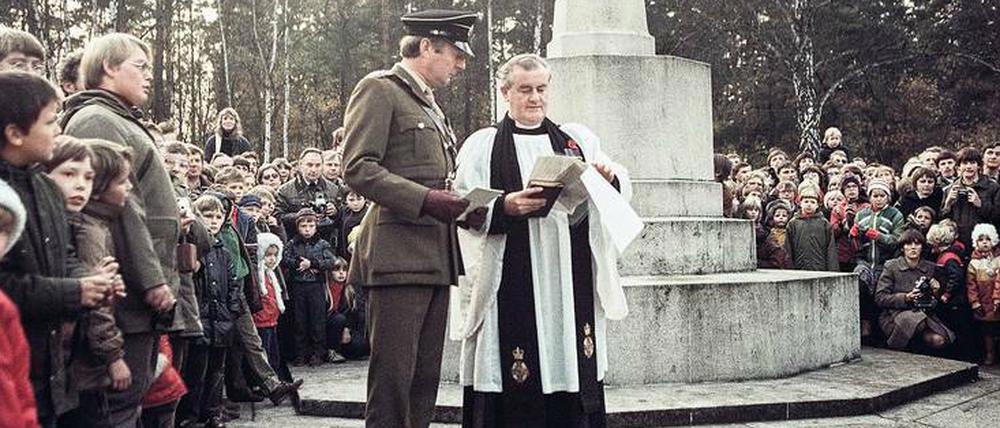 Image: British and East Germans had a rare opportunity to come together in remembrance at Berlin South-Western Cemetery, despite the Cold War dividing nations (Photo by Bernd Blumrich)
During the Cold War, remembrance ceremonies at Stahnsdorf gave East German residents an unusual opportunity to gather alongside British and Commonwealth representatives.
BRIXMIS, the British military liaison mission to Soviet forces in Germany, helped sustain this tradition. Former mission officer Peter Williams recalled its sponsorship of the annual service, attended by Commonwealth diplomats based in East Berlin, with tea afterwards arranged by the mission’s warrant officer and local staff.
For local visitors, the ceremonies offered contact with people and traditions rarely encountered in everyday life. But the Stasi, East Germany’s state security service, monitored this interest. Accounts accompanying photographs of the gatherings describe surveillance and visits from the police and security services after people attended the 1981 commemoration.
The following year, families found a simple way to make sure they could be present. According to accounts, word spread that people should come to the cemetery with their children for family walks. There were fears that the authorities might block access.
Some families arrived three hours before the ceremony was due to begin. The account cites Stasi reports estimating that between 1,500 and 2,000 East German citizens were present.
This explains the many children visible at the front of the gathering. What might look like an ordinary family occasion took place against a background of uncertainty about how the authorities would respond.
On that occasion, the account records no arrests or confrontations. But the pressure did not disappear. Reporting published in 2004 describes how access to the cemetery was blocked for the 1988 remembrance ceremony.
A royal thank you
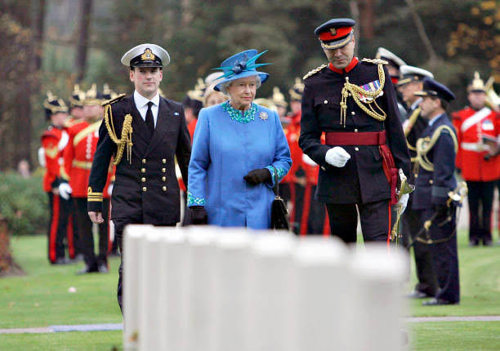 On 3 November 2004, long after the end of the Cold War, Queen Elizabeth II visited Stahnsdorf during her state visit to Germany.
She paid her respects to the First World War dead and thanked cemetery employees for looking after the graves during the East German years. She also met local people who had attended remembrance services before reunification.
Among them was Birgit Preiß, who showed the Queen photographs of the crowds that had gathered in the early 1980s.
The visit recognised both the care given to the cemetery and the commitment of people who had continued to remember its dead. For a community once separated from its neighbours by a heavily guarded border, it was a significant moment.
Visiting Stahnsdorf today
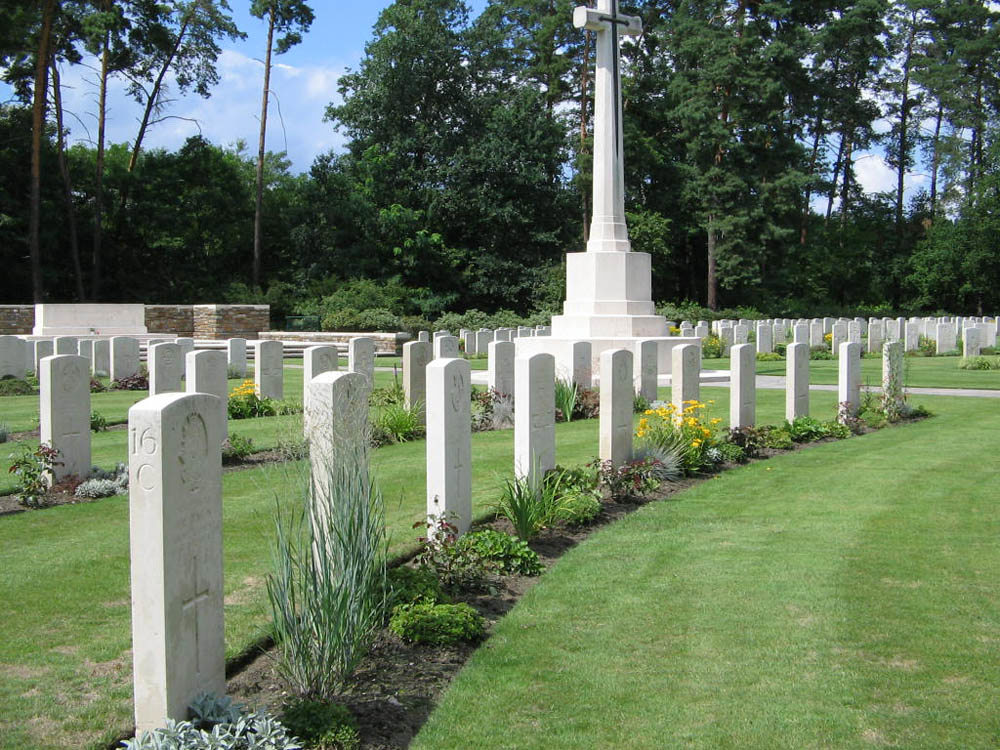 Image: Berlin South-Western Cemetery is open to all visitors
Today, visitors can walk through the wider woodland cemetery to the Commonwealth plot, around twenty minutes on foot from the main entrance. Remembrance services continue, bringing people together at the graves.
The headstones and memorials record individual lives lost during the First World War. The cemetery’s later history shows how those lives continued to matter to people who had never known them.
For more than a century, care and remembrance have kept those connections alive. At Stahnsdorf, that responsibility has been shared by cemetery staff, local residents and visitors from across the world.
Author acknowledgements
James Garbett is Area Marketing and Communications Lead at the Commonwealth War Graves Commission, leading on communications and engagement across Africa, Asia, the Americas, the Pacific, and the United Kingdom, to share the stories of those commemorated by the CWGC, helping connect new audiences with the Commission’s work around the world.