

28 November 2022
Somme war cemeteries and memorials to visit
The World War1 battlefields of the Somme bore witness to some of the bloodiest fighting of anywhere on the Western Front. Discover more about our Somme war cemeteries and memorials.
Commonwealth War Graves Commission Somme Cemeteries and Memorials to Visit
At a glance: What's on this page
This page is a guide to CWGC Somme war cemeteries and memorials, including:
- How many Commonwealth soldiers are commemorated on the Somme
- Battle of the Somme facts
- Somme War Cemeteries
- Somme War memorials
- Visitor tips and information
- Trip planning help
- Non-CWGC Somme sites to visit
- Somme FAQs
How many Commonwealth soldiers are buried On the Somme?
Close to 150,000 Commonwealth casualties are buried in close to 350 sites on the Somme. They range from large cemeteries with thousands of casualties through to small cemeteries and individual graves in village churchyards and burial grounds.
For those soldiers with no known war grave, commemoration takes a different form. These men are commemorated by name on war memorials around the Somme, predominantly at Thiepval.
Battle of the Somme Facts
The Battle of the Somme 1916 was a large-scale combined offensive by forces of the British and French Empires against the German lines astride the river Somme, in northern France. It began on 1 July 1916 and lasted for 141 days, ending on 18 November 1916.
The Battle of the Somme today is chiefly remembered for the horrors of the first day, the sacrifice of the “Pals” battalions and the grinding attrition of trench warfare.
The first day of the Battle of the Somme is regarded as the worst in British military history, as the British Army suffered over 57,000 casualties, of whom the Commission commemorates over 18,500 who were killed.
Many of those going into battle for the first time on 1 July belonged to the so-called “Pals battalions” of the British Army. Groups of volunteers, many from the same communities, workplaces, clubs, or organisations who enlisted together at the beginning of the war, served together and often all too tragically died together, leaving whole communities back home grieving for their lost loved ones.
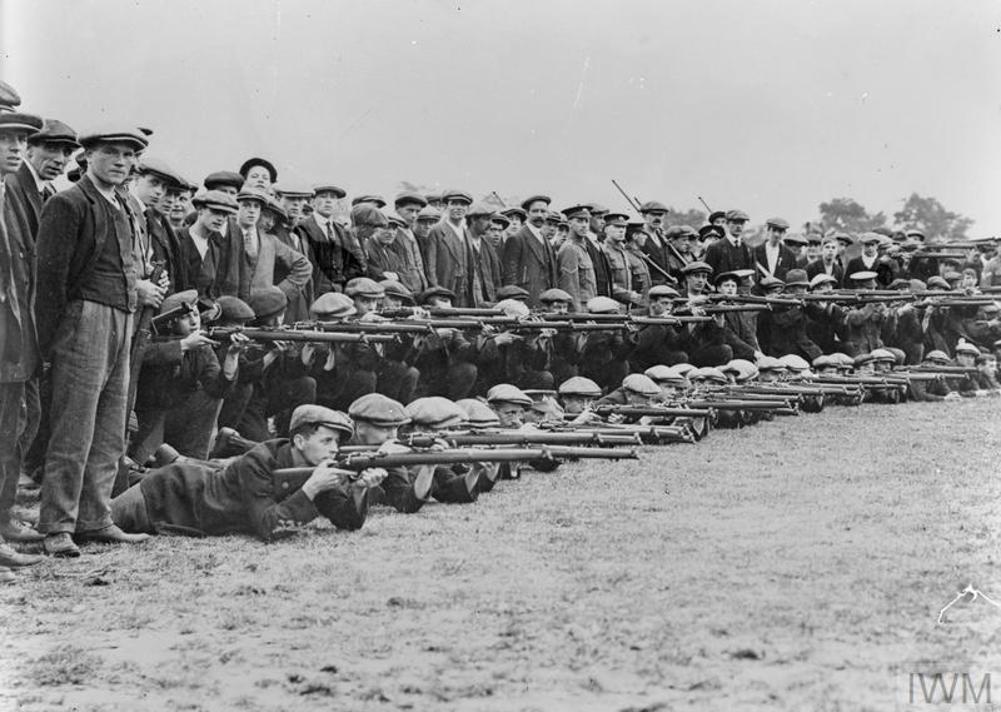
Recruits of the 'Grimsby Chums' , later the 10th Battalion, Lincolnshire Regiment, during rifle training, September 1914. © IWM Q 53286
Despite the disaster of the first day, gains were made, and the offensive would continue for 141 days, ending on 18 November 1916. An estimated 3.5 million men from all sides took part in the Battle of the Somme, with over 1 million being casualties during the four and a half months of fighting.
The battle also saw major technical innovations, including the first use of tanks in warfare, at the Battle of Flers-Courcelette on 15 September 1916.
Understanding Somme Cemeteries and Memorials
Where are Commonwealth soldiers of the Somme Commemorated?
Cemeteries containing the graves of the fallen of the Somme can be found in several places across Northern France and the United Kingdom.
Men were buried where they fell in First World War battlefield cemeteries, others were moved to larger cemeteries after the war, and some were evacuated for medical care and later died at hospital centres away from the frontlines.
Some of our largest Somme cemeteries are:
- Serre Road Cemetery No.2 - 7,137 burials
- Caterpillar Valley Cemetery, Longueval - 5,571 burials
- Delville Wood Cemetery, Longueval - 5,523 burials
- London Cemetery and Extension, Longueval - 3,874 burials
- A.I.F. Burial Ground, Flers - 3,647 burials
- Ovillers Military Cemetery - 3,561 burials
Where is the memorial for the Battle of Somme?
There are eight CWGC memorials to the missing of the Battle of the Somme 1916 and to those whoTHE died on the Somme during the rest of the war:
- Thiepval Memorial - 72,309 casualties
- Pozieres Memorial - 14,701 casualties
- Vimy Memorial - 11,151 casualties
- Villers-Bretonneux Memorial - 10,703 casualties
- Neuve-Chapelle Memorial - 4,653
- Caterpillar Valley (New Zealand) Memorial - 1,205 casualties
- Beaumont-Hamel (Newfoundland) Memorial, 8,08 casualties
- Noyelles-Sur-Mer Chinese Memorial, 92 casualties
Visitng Somme Cemeteries
Below are some of the largest and most frequently visited CWGC sites on the Somme, commemorating tens of thousands of casualties of the bloody fighting of the summer of 1916.

SERRE ROAD CEMETERY No.2
Serre Road Cemetery No. 2 is the largest of three Serre Road Cemeteries. It contains more than 7,000 casualties from World War One, nearly 5,000 of whom are unidentified. The vast majority of the identified casualties are from the UK, however there are also groups of casualties from Australia, Canada, South Africa, and New Zealand, as well as a sole German casualty.
The cemetery itself was formed in May 1917 and initially held 475 casualties. It was then greatly expanded following the end of the war as casualties were found and reburied, or moved to the cemetery from smaller plots in the region.

CATERPILLAR VALLEY CEMETERY, LONGUEVAL
Caterpillar Valley, which lends its name to the nearby cemetery, was christened by British troops stationed on the front lines near Longueval village. Caterpillar Valley Cemetery contains nearly 1800 identified casualties of World War One, with a further 3,800 unidentified burials.
The majority of the casualties found here are United Kingdom forces, buried alongside Australian, South African and New Zealander troops. Of the identified troops, roughly three quarters of them fell between July and August 1916, the early months of the Battle of the Somme.
Like Serre Road, burials from plots within the region were moved to Caterpillar Valley. It also contains the Caterpillar Valley (New Zealand) Memorial which commemorates 1,200 New Zealand soldiers who have no known grave.
On 6 November 2004, the remains of an unidentified New Zealand soldier were taken from the cemetery and returned to Wellington, New Zealand, where they lay at rest within the Tomb of the Unknown Soldier at the New Zealand National War Memorial.

DELVILLE WOOD CEMETERY, LONGUEVAL
Delville Wood Cemetery takes its name from the dense forest that played host to a series of engagements during the Battle of the Somme, known as the Battle of Delville Wood.
The cemetery itself was formed after the Armistice, when remains from smaller cemeteries and isolated sites were brought together. It now contains more than 5,500 burials of World War One, the vast majority of which date from July to September 1916. More than 3,500 of the burials here are unidentified.
Opposite the cemetery stands the South African National Memorial, which is the national memorial to all South Africans who fell during World War One, as well as World War Two and the Korean War.
World War One cemeteries in France and Belgium
Throughout France and Belgium there are more than 2000 cemeteries and memorials that commemorate the many World War One Commonwealth casualties. Some of these cemeteries are huge with thousands of war dead, some are individual burials in village churchyards.
There are 371 CWGC sites commemorating First World War servicemen, located in the Somme department of France, where the vast majority of the casualties of the Battle of the Somme are buried, although, as there was fighting in the region throughout the war, there are also many casualties of other battles.
Casualties of the Somme are not solely buried in these cemeteries, however, as the battle extended to the north into the Pas de Calais department, such as at Gommecourt, but troops were also evacuated from the frontlines and later died of their wounds and were buried in sites close to medical centres lik,e Etaples Military Cemetery, or were even evacuated back to the UK before dying at home.
German WW1 cemeteries on the Somme
Jeancourt Communal Cemetery Extension contains 455 burials, the majority of which are Commonwealth war graves. However, there are also nearly 170 identified German casualties, 138 of whom died during the second half of 1916, in the midst of the Battle of the Somme. Jeancourt was home to a German hospital centre.
During the war, the cemetery was used by both sides depending on who was controlling the territory at any given time. Today there are nearly 500 Commonwealth casualties of the war buried alongside the German casualties.
Roisel Communal Cemetery Extension was begun by German forces during the war. It now contains more than 1,000 graves, half of which are Commonwealth war graves, the rest are some 500 German Foreign Nationals, 190 of whom are unidentified.
Fricourt German War Cemetery is managed by the German War Grave Commission – the Volksbund Deutsche Kriegsgräberfürsorge – and is the burial place of more than 17,000 German war dead from World War One. Around 10,000 of the burials here are casualties of the Battle of the Somme and the ensuing battles, including the German Spring Offensive and the Hundred Days Offensive.

Want more stories like this delivered directly to your inbox? Sign up for our newsletter for regular updates on the work of Commonwealth War Graves, blogs, event news, and more.
Sign UpSomme war memorials to visit
The CWGC memorials to the missing on the Somme are some of our most well-known memorials of World War One.
Visiting Thiepval memorial to the missing of the Somme
The Thiepval Memorial to the Missing of the Somme is the largest CWGC memorial to the missing anywhere in the world.
Designed by Sir Edwin Lutyens, the Thiepval Memorial bears the names of more than 72,000 missing officers and men of the United Kingdom and South African forces who died on the Somme before 20 March 1918, more than 90% of whom died between July and November 1916.
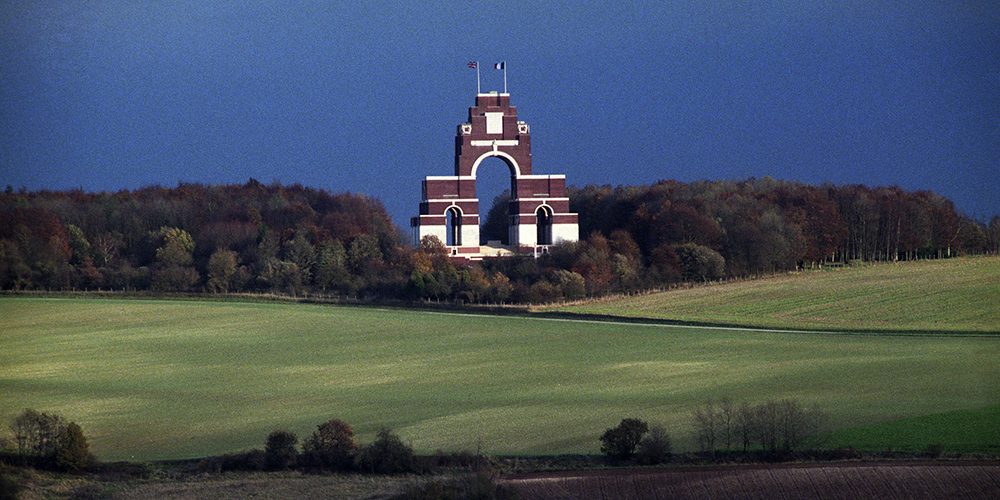
The memorial is also a monument to the Anglo-French alliance, recognising the joint nature of the Somme offensive as well as the wider, shared war effort. At the foot of the memorial lies the Thiepval Anglo-French Cemetery, which contains equal numbers of French and Commonwealth soldiers, many of whom died during the Battle of the Somme.
As one of the most iconic war memorials in the world, Thiepval often plays host to remembrance services, including a regular service on 1 July each year to mark the anniversary of the first day of the Battle of the Somme.
One of the most notable events marked the 100th anniversary of the end of World War One. The Shrouds of the Somme was a powerful piece of commemorative art in which 72,000 shrouded figures (one for each of the names listed on the memorial) were created and then laid at the foot of the memorial, a tactile reminder of the sheer scale of the human sacrifice.
Other CWGC Somme war memorials to visit

POZIERES MEMORIAL
The fighting on the Somme was not limited to the period of the Battle of the Somme 1916, as Commonwealth troops were deployed in the region from August 1915 until the summer and autumn of 1918 when Allied forces drove back the German Army at the end of the war.
One of the major periods of fighting in the Somme came during the German Spring Offensive in 1918.
Boughed by reinforcing troops released from the eastern front following the Russian revolution and subsequent withdrawal from the war, German high command instigated a series of major attacks designed to defeat the British French Armies and force them to the negotiating table before the full might of the American military could be brought to bear on the Western Front.
The German offensive began in March 1918, with German forces initially making the largest territorial gains seen since the beginning of the war
The deepest thrust of the German offensive cut across the battlefields of the Somme, towards Amiens. It is in this territory, close to Albert, that the Poziers Memorial stands. The memorial, designed by W.H. Cowlishaw, commemorates more than 14,000 soldiers of the United Kingdom as well as 300 South African casualties, who died during the German offensive from 21 March to 7 of August 1918, by which time the Allied forces had stemmed the tide of the German advance and were themselves preparing to go on the offensive.
Those who died during the subsequent Allied counter attack known as the Hundred Days Offensive which began on 8 August at the Battle of Amiens are commemorated by the Vis-en-Artois Memorial

VILLERS-BRETONNEUX MEMORIAL
The 1918 German advance across the Somme was stopped short of Amiens at the village of Villers-Bretonneux.
Australian forces played a vital role in the two battles of Villers-Bretonneux, both in stopping the German surge towards the coast, and in the hard-won recapture of the village. Such was their levels of bravery and sacrifice, the Australian National Memorial was erected here.
As a National Memorial, the Villers-Bretonneux commemorates all Australian service people who lost their lives during the Great War, but it also acts as a memorial to the missing for more than 10,000 Australian soldiers who died in France during the First World War.
Nearby lies Villers-Bretonneux Military Cemetery which contains the graves and memorials of more than 2,140 servicemen of the British Empire including nearly 780 who served with Australian forces.

CATERPILLAR VALLEY MEMORIAL
At the end of the war, the New Zealand officials elected to build small memorials at areas of significance, rather than fewer larger memorials like the Thiepval or Vimy Memorials. Caterpillar Valley Memorial is one of seven memorials on the Western Front commemorating the New Zealand fallen of the First World War.
The Caterpillar Valley memorial commemorates just over 1,200 New Zealand war dead during the Battle of the Somme in 1916 who have no known grave.

BEAUMONT-HAMEL (NEWFOUNDLAND) MEMORIAL
The opening day of the Battle of the Somme is known as the bloodiest day in British military history, but it was also a dark day for the people of Newfoundland.
Today, the province of Newfoundland and Labrador is part of Canada. However, during World War One, it was a separate British dominion. When the war began, Newfoundland raised its own regiment, which served as part of British forces.
On the morning of the battle, the Newfoundland Regiment were to advance alongside the Essex Regiment to support the initial attack. Despite the withering fire from German defences, the Newfoundlanders continued their advance, incurring huge losses.
Of the approximately 800 men who went forward only about 110 survived unscathed, of whom only sixty eight were available for roll call the following morning. No unit suffered heavier losses that day.
Beaumont-Hamel (Newfoundland) Memorial stands among the preserved trenches of the Newfoundlanders' position. It lists the names of more than 800 servicemen of Newfoundland who have no known graves, including some 220 members of the Newfoundland Royal Naval Reserve and Mercantile Marine lost at sea.
Discover war cemeteries and memorials
You can discover more about the war cemeteries and memorials to the missing on the Somme, as well as at our sites around the world, through the Commonwealth War Graves Commission website.
You can search for all sites on the Somme and find out more about how to visit our sites as well as details about the casualties we commemorate there.
How to plan a Somme visit
Search CWGC records before travelling
Our records are ideally suited ot helping you plan a Somme cemeteries and memorials trip.
Firstly, they allow you to find the location of every CWGC site in the Somme region. Use our Find War Cemeteries and Memorials tool to search and browse all of these locations. You can specifically search for the Somme department, which will reveal all our sites in this region.
If you're searching for the place of commemoration for a Somme serviceman, then our Find War Dead tool can help. With fields allowing you to search by name, regiment, country of service and place of commemoration, you're sure to find the casualty you're looking for.
Use a cemetery or memorial page to plan
Each cemetery or memorial we care for has its own unique page.
On each page, you will find:
- Location information, including a map
- Directions and travelling information
- Historic information
- Downloadable spreadsheets with the names and information of each individual commemorated at a particular site
- Downloadable cemetery and memorial plans to help you locate individuals within a cemetery or on a memorial name panel
If you are searching for the point of commemoration of a particular individual, this information is available on their own individual casualty page.
Travelling to the Somme battlefields
Where to Stay
- Albert - The most convenient base for Somme battlefield touring, featuring a central location close to Thiepval and Beaumont‑Hamel.
- Péronne - Ideal for visitors focusing on the southern Somme and home to the excellent Historial de la Grande Guerre museum.
- Amiens - A beautiful, historic, larger city with more amenities, the stunning medieval cathedral, and easy access to the Somme valley.
Getting There
From the UK
By Car:
- Calais to Albert: approx. 1 hr 45 mins
- Calais to Péronne: approx. 1 hr 30 mins
By train:
- Eurostar to Paris, then TGV to Amiens or Lille
- Local trains connect to Albert and Arras
From Paris
By car:
- Approx. 1 hr 45 mins to Albert
By train:
- Paris Gare du Nord to Amiens (1 hr)
- Paris Gare du Nord to Arras (50 mins)
Getting Around The Somme
A car is by far the easiest way to explore the battlefields, although the open country also lends itself well to bicycle tours. Distances between sites are short, but public transport is limited.
CWGC Apps
Our apps provide visitor information and directions to help you plan a visit to the Somme. Download them for free today to learn more about our sites across the Somme, where they’re located, and selected virtual tours of key Somme cemeteries and Memorials.
Can you visit the Somme battlefields of ww1?
The scars of the Great War remain in the countryside of Northern France - a stark reminder of the horrors of war and the sacrifices made by those who fought there.
The battlefield of Beaumont-Hamel is one of the best-preserved examples of the Somme battlefield. Visitors today will be able to clearly see the lines of trenches and the myriad of shell craters which pockmark the landscape.
It is here that the Newfoundland Regiment made their heroic but doomed advance against overwhelming enemy fire on the first day of the Battle of the Somme, and as such, it was chosen as the site for a memorial to all Newfoundlanders who lost their lives during the war.
The perfect starting point when visiting the cemeteries and memorials of the Western Front.
Visit the CWGC in IeperNo trip to the Western Front would be complete without seeing our visitors centre in Arras, France.
The CWGC Visitor CentreNon-CWGC Somme sites to visit
The Circuit of Remembrance
The Circuit of Remembrance (Circuit du Souvenir), also known as the Remembrance Trail, is a signposted, 40-mile driving, walking, and cycling route through the former Somme battlefields.
It passes through many important 1916 locations that help tell the Battle of the Somme story and the people who fought here.
Key stops on the Circuit of Remembrance include:
- Albert – An important hub of early fighting on the Somme, including the British disastrous first day attacks, Albert is rich in World War history
- La Boiselle – Home to the immense Lochnagar Crater, blown by the Royal Engineers on 1 July 1916
- Thiepval – Site of immense fighting across Thiepval Ridge and now site of Commonwealth War Graves largest war memorial the Thiepval Memorial to the Missing of the Somme
- Beaumont-Hamel – The site where the Newfoundlanders charged into battle, you will find some of the best-preserved trenches on the Somme at Beaumont-Hamel
- Rancourt – Rancourt houses the French National Cemetery, a German military cemetery, and the small Rancourt Military Cemetery
- Péronne - Within the Château de Péronne sits the Museum of the Great War (Historial de la Grande Guerre), dedicated to the a balanced history of the war, showcasing French, British, and German perspectives
The Circuit of Remembrance is clearly signposted with driving, cycling, and walking routes all available. Visit the Somme Tourism website for more information.
Lochnagar Crater, La Boisselle
One of the most dramatic reminders of the underground war, Lochnagar Crater was created by a massive British mine explosion on 1 July 1916. At 100 metres wide and 30 metres deep, it’s the largest surviving crater on the Western Front.
Somme 1916 Museum, Albert
Located in a former air‑raid shelter beneath the town, this museum uses dioramas, artefacts, and immersive displays to recreate trench life.
Historial de la Grande Guerre, Péronne
One of Europe’s best First World War museums, offering a balanced view of French, German, and British experiences. The displays are modern, thoughtful, and beautifully curated.
Pozières Windmill Site
Marked by an Australian memorial, the Windmill site is not CWGC. Australian official war historian Charles Bean described it as the “centre of the storm” for Australian troops.
Fricourt German Cemetery
This German cemetery is a powerful counterpoint to the Commonwealth cemeteries. It contains more than 17,000 German graves.
Ulster Memorial Tower
The Ulster Memorial Tower is close to the Thiepval Memorial. Opened in 1921, it stands as Northern Ireland’s national war memorial, symbolising the Ulster Division’s struggles on the Somme and wider war. A small café and gift shop is located on-site.
Why the Somme still matters - Frequently Asked Questions
The Battle of the Somme still matters today because the names of the fallen, the cemeteries and memorials where these servicemen are commemorated, and CWGC records continue to make the human cost of the First World War visible.
July 1 1916, is the First Day of the Battle of the Somme. It was the first day of the 5-month Battle. On this day, over 18,500 Commonwealth servicemen were killed in action and nearly 60,000 became casualties. It remains the blackest day in history for the British Armed Forces.
The Thiepval Memorial to the Missing of the Somme is our largest war memorial in the world. It is important because it commemorates by name over 72,000 British and South African servicemen who died in the Somme sector but sadly have no known grave.
Yes, there are over 450 locations on the Somme where you will find Commonwealth war graves. This includes some 350 commemorating casualties dating from the Battle of the Somme. You can find this and visitor information for these sites by using our Find War Dead tool.
While the first day of the Somme is widely remembered for its tragedy, the Battle of the Somme actually lasted for 5 months, from July to November 1916. The campaign drew in Australian, Canadian, Indian, and South African troops, with British Armed Forces supported by the French. The Somme battlefield covered a sector 20 miles wide by 6 miles deep and should be viewed as a longer campaign without losing sight of the first day's significance.
You can use our records to search for Somme war dead. Use the Find War Dead tool and filter using the First World War, France burial location, and Battle of the Somme date range to find servicemen. Alternatively, you can use our Find War Cemeteries and Memorials tool and use France and Somme as your locations. You will be able to download a list of all the war dead commemorated by Somme sites on each cemetery or memorial's individual page.
Alternatively, you can use For Evermore: Stories of the Fallen, our storytelling platform, to discover stories of those we commemorate on the Somme.
Thiepval and the more than 72,000 names it commemorates make visible the scale of those who died in the Somme sector without a war grave.
Our cemeteries and memorials are permanent points of commemoration for the fallen of the Battle of the Somme. We also maintain records of these servicemen's names, which are constantly monitored and updated accordingly. Our maintenance and horticultural teams provide year-round care for our sites on the Somme, too.
Explore more: Beyond the Somme


Author acknowledgements
Alec Malloy is a CWGC Digital Content Executive. He has worked at the Commonwealth War Graves Commission since February 2022. During that time, he has written extensively about the World Wars, including major battles, casualty stories, and the Commission's work commemorating 1.7 million war dead worldwide.