
20 April 2026
The Canada National Volunteer Program: Empowering people & protecting war graves across Canada
Each April in Canada, National Volunteer Week offers an opportunity to pause and recognize the millions of Canadians who give their time, energy, and expertise to causes that strengthen communities and preserve shared values.
The National Volunteer Program
Katrielle Ethier, one of The Commonwealth War Graves Commission’s team in Canada, takes us through the National Volunteer Program ahead of Canada’s National Volunteer Week.
This year, from April 19 to 25, National Volunteer Week is guided by the theme “Ignite Volunteerism”, a call to reflect on what sparks people to step forward, and how that spark can grow into sustained, meaningful action.
This year’s celebration is especially significant for CWGC’s National Volunteer Program (NVP), as it also marks one year since the program officially launched in Canada.
Beginning in Prince Edward Island and progressively rolling out across eight provinces, the program’s early success is a powerful example of what can be accomplished when volunteerism is ignited by a shared purpose and meaningful connections.
Later this spring, the program will continue to expand to include Quebec and New Brunswick, completing its national footprint.
Meet Our Volunteers in Canada
Since the program’s launch, more than 400 volunteers have joined, each bringing their own motivations, experiences, and commitment to honouring fallen Commonwealth servicemembers commemorated in Canada.
We recently spoke with three volunteers who joined the National Volunteer Program this year. They shared about their experience and what sparked their interest in volunteering with CWGC.
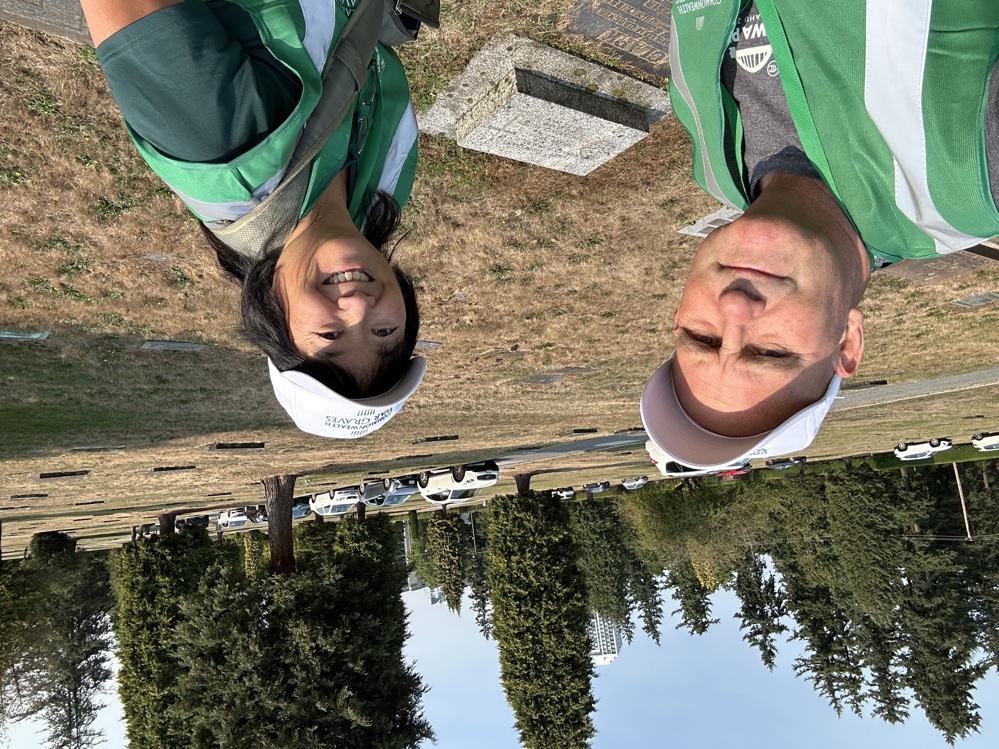
Image: Greg and Sue, two of our amazing Canadian volunteers
Sue is a now-retired municipal worker for the City of Vancouver in British Columbia. For Sue, that spark is rooted in a deep sense of responsibility to remember both those who served and the families who carry their legacy forward.
As she explains, “I just feel it’s important to recognize and honour the soldiers, and their and their families’ sacrifice.”
Greg is also a retired municipal worker for the City of Vancouver, in British Columbia. He signed up with Sue, and they complete their volunteer war grave inspections together.
He describes a moment of realization during his first visits to the cemeteries with Sue, “When we started to get going, it was very enlightening. It brought a sense of accomplishment and that doing this work is really important.”
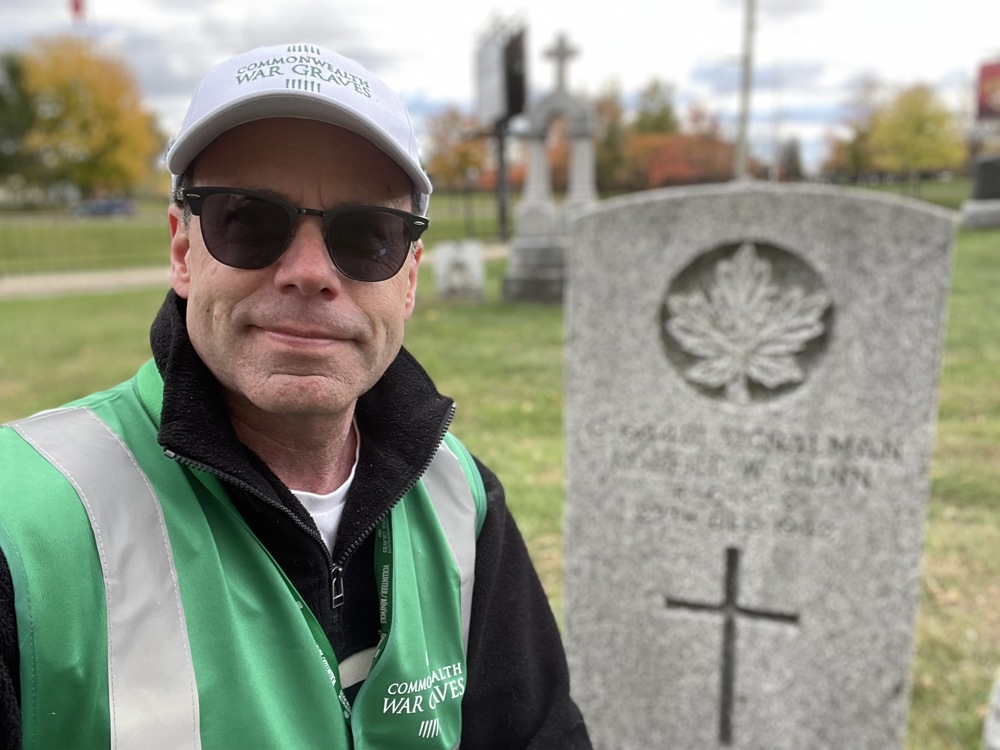
Image: Stuart, another keen volunteer helping us care for war graves in Canada
Stuart is a professional historian, author and heritage cemetery advocate in Eastern Ontario. Stuart’s family is deeply connected to military service, with his grandfather having served in Northwest Europe during the Second World War, and his sister served in the Royal Canadian Air Force.
Joining the National Volunteer Program brought together long-standing personal interests, family connections and a sense of shared purpose. “It gives me a real purpose to do something very tangible to honour the veterans who died during the two world wars,” he reflects, noting the satisfaction that comes from moving beyond symbolic remembrance and into action.
What Ignites the Spark? Personal Paths Into the NVP
NVP volunteers across Canada, like Sue, Greg and Stuart, each have their own stories and reasons why remembrance and commemoration matter to them.
For Greg, curiosity sparked by family history played a pivotal role. He recalls being offered his great‑grandfather’s medals – something he had never known existed.
“He fought in World War One at Ypres,” Greg explains. “Now I have a nice case with the medals and a pin for his service at the front. That sparked my curiosity.”
That curiosity soon grew into action. Before travelling to Europe, Sue and Greg spent months researching wartime records, determined to understand not only Greg’s great‑grandfather’s service, but also the people who served alongside him.
“We purposefully made trips to go visit those grave sites,” Sue shares. “In a way to honor his great-grandpa, we thought we would find some of his buddies and go visit their grave sites.”
Some NVP volunteers felt called to care for war graves as an act of thanks for the Canadian and Commonwealth forces that liberated their families from occupation during the world wars. Others joined NVP because CWGC cares for a loved one’s grave overseas – since distance prevents them from visiting, volunteering becomes a way to pass that care on by honouring another servicemember.
Whatever ignited someone’s desire to volunteer with CWGC, their shared purpose ensures that remembrance is not only observed but actively lived.
From Spark to Connection: When History Comes Alive
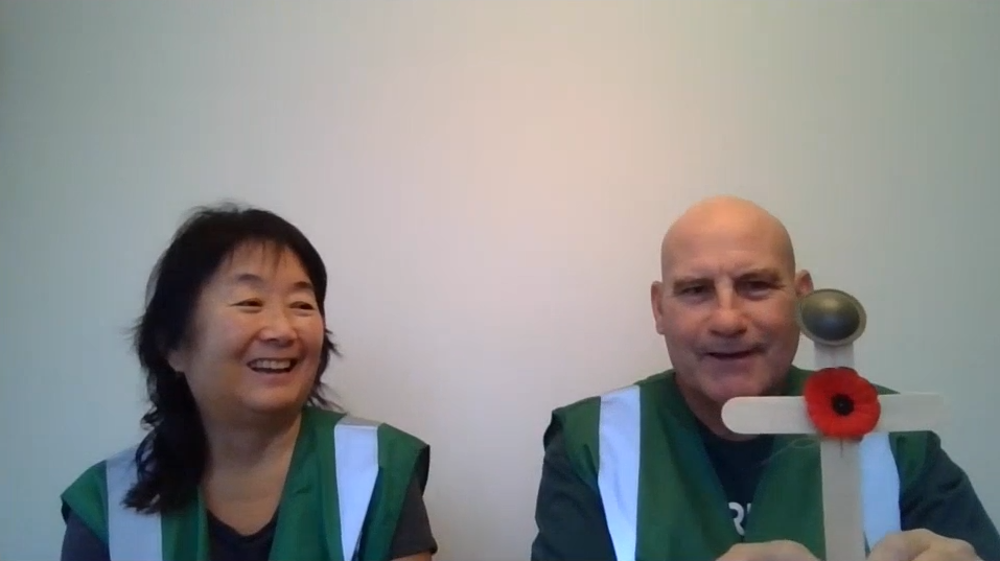
Image: Sue and Greg showing the small crosses they made to leave at their assigned graves for Remembrance Day
When volunteers inspect their first war graves, the history they once learned in textbooks becomes immediate and personal.
For Stuart, spending time at each grave allows him to connect with these stories in ways that learning about the wars’ broader histories does not.
“They had families, they had different reasons for signing up and for joining the armed forces,” he notes. “But sometimes that can get lost when we're all in school and learning about these big sweeping moments.”
Greg also describes how he experienced this shift.
“When you look at the gravestones, the ages just stand out,” Greg reflects. “They went to war, and they were so young. It hits you –the responsibility they took on at such a young age to look after this country and others. It brings to light what their sacrifices mean to me.”
These moments often mark the transition from interest to engagement. History is no longer distant; it is embodied in individual lives.
Igniting Action: Volunteering as Living Remembrance
At the heart of the National Volunteer Program lies the belief that remembrance is not simply an event to observe, but a responsibility we share with communities. By involving community members in these graves’ care, remembrance grows beyond symbolism into tangible action.
Stuart captures this distinction powerfully. “It’s one thing to go to a Remembrance Day ceremony and to stand in silence, and that’s an important thing for us all to do,” he notes. “But to actually be tasked with going into a cemetery and doing things to help improve the appearance of a veteran tombstone or to report on structural issues – that’s very satisfying.”
This hands‑on work gives volunteers a tangible sense of purpose. Identifying issues early, caring for headstones, and ensuring points of commemoration remain dignified are quiet acts, but ones with lasting impact.
Fueled by Purpose: Being Part of Something Bigger

Image: NVP staff with Stuart at a local heritage fair to promote NVP
As volunteers settle into the program, they discover how their role fits within a much larger collective effort.
Stuart describes this sense of shared purpose with quiet pride. “There’s an added element of pride when you know that you’re one small cog in a very large international machine, all moving towards the same goal,” he reflects. “That’s neat.”
That sense of being part of something larger extends beyond individual moments of pride or accomplishment. It is also transforming how CWGC carries out its work across Canada. As volunteers step into this shared responsibility, their collective impact is reshaping how war graves here are cared for, monitored, and protected for future generations.
From Shared Purpose to Sustainable Impact
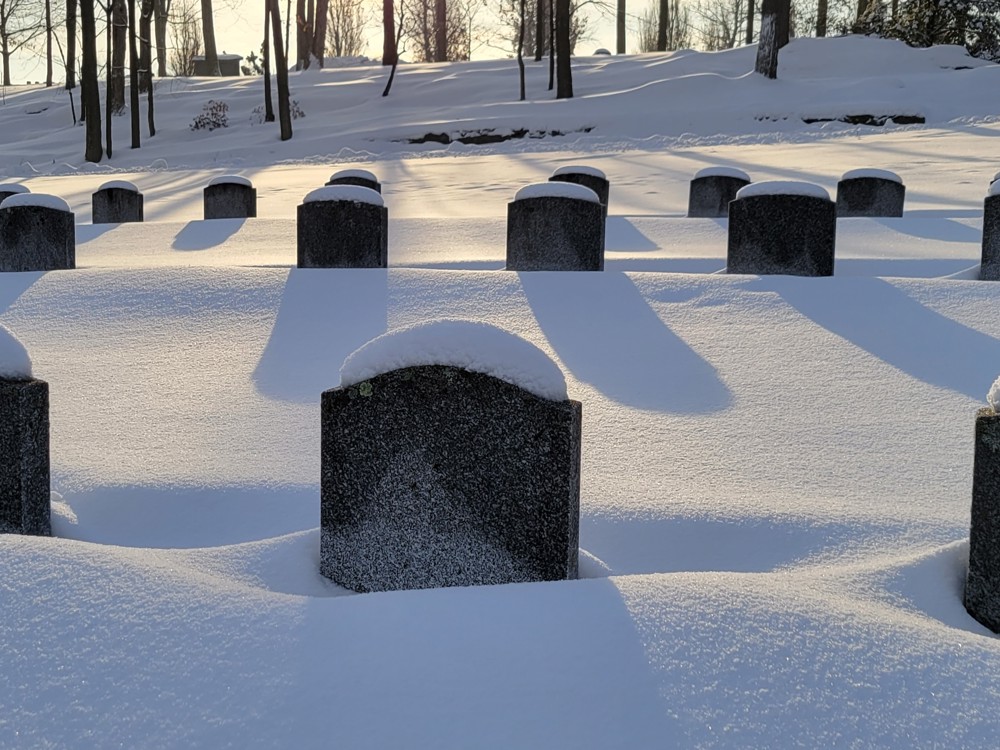
Image: Headstones in the snow at Beechwood Cemetery, December 2025
NVP volunteers have become an integral part of CWGC’s work in Canada. Prior to the National Volunteer Program, inspecting the more than 14,000 war graves across the country required extensive travel, time, and resources.
Inspecting that many war graves spread out in 2,800 cemeteries across a country nearly the same size as Europe presented CWGC staff in Canada with unique challenges. Each summer, staff would travel thousands of kilometres on pre‑set “tours” of cemeteries to inspect every war grave in a given region.
Additionally, because of Canada’s harsh winters, the “inspection season” is much shorter here than in most places. Weather permitting, inspections can usually begin in mid-May, with the season ending around Remembrance Day or earlier if winter sets in sooner.
War graves cannot be inspected during the winter months for multiple reasons. Heavy snowfall – which can easily exceed one metre annually – often covers headstones or inscriptions, making graves difficult to locate, even when cemeteries are accessible.
Merely one or two centimetres of snow can conceal ice or tripping hazards, rendering many cemeteries unsafe until the warm weather arrives.
As a result, war graves in Canada were typically inspected on a five to six-year cycle. Now, with the support of NVP volunteers, they will be inspected twice a year. This increased frequency allows CWGC to monitor conditions more regularly and sustainably.
CWGC staff will no longer need to travel thousands of kilometres each season by plane, boat, and/or car. By working with local volunteers, CWGC is reducing its environmental footprint while strengthening community engagement in remembrance.
The National Volunteer Program supports long-term sustainability by limiting travel-related emissions, making better use of local knowledge, and ensuring that the care of Canada’s war graves remains resilient, efficient, and community-driven for generations to come.
Keeping the Flame Alive: Discovering the Stories Behind the Stones
The impact of NVP volunteers often extends beyond inspections and headstone cleaning.
Greg recalls working in a cemetery and attracting the attention of local staff. “They were curious as to what we were doing, why we were doing it,” he says. “They were really happy that these soldiers were being remembered.”
During these chance encounters, and elsewhere in their lives, many volunteers proudly share the stories of the war dead commemorated in their community. Unsurprisingly, many NVP volunteers are avid history buffs and will research the stories of those whose war graves they visit and inspect.
Stuart highlights how accessible archival records allow volunteers to uncover the lives behind the names of Canadian war dead.
“Library and Archives Canada also has a scanned collection online that you can easily search. The entire personnel file for those [Canadian] wartime deaths are scanned and available,” Stuart explains. “Sometimes they're small, sometimes they're large, but they're just filled with the details of that individual's life.”
By researching and sharing these stories locally and online, volunteers also help ensure that remembrance remains personal, informed, and alive.
In explaining why caring for war graves is important to her, Sue draws inspiration from Greg’s experience discovering his family’s connection to the First World War. “It’s just a way to remember them and honour them,” she says, reflecting on soldiers and families whose stories might otherwise fade with time.
Looking Ahead: A New Season of Remembrance
Even after this National Volunteer Week comes to a close, the spark ignited by CWGC’s National Volunteer Program will be far from fading. With inspection activities resuming in mid‑May, volunteers will soon return to the quiet, meaningful work that brings care and dignity to Commonwealth war graves in Canada.
That momentum will continue to grow later this spring as NVP begins to welcome new volunteers in Quebec and New Brunswick, completing its national footprint. The upcoming launches in these two provinces signal an exciting chapter for the program, one shaped by local connections and a shared commitment to remember those who served.
One year on, the National Volunteer Program and the hundreds of volunteers in its ranks are living proof that our shared commitment to remembrance is a powerful spark igniting volunteerism across Canada.
As the days finally grow warmer and the work resumes, remembrance will continue to shine brightly as our team and volunteers work together to tend to each war grave, season after season.
Volunteer with Commonwealth War Graves in Canada and around the world
To join the National Volunteer Program in Canada – or the waitlist for Quebec and New Brunswick, click here.
If you would like to explore volunteer opportunities with CWGC elsewhere in the world, you can do so here.
Author Acknowledgements
Katrielle Ethier is a Marketing and Communications Executive for the Canada, Americas, and Pacific Area, helping promote our work in commemorating Commonwealth servicemembers buried or commemorated across the Americas and the Pacific rim.