

18 May 2026
The Somme in 2026: Why What Happened in 1916 Still Matters
Over a century after the Battle of the Somme, this most infamous of First World War events continues to resonate, but why does it matter today?
For the United Kingdom and the Commonwealth, the Somme is one of the most evocative and tragic First World War battles. Running from 1 July to 18 November 1916, the battle is remembered as a pivotal yet painful but highly recognisable event of the Great War.
But the Somme’s relevance today comes from more than just the battle itself.
The names of the Somme’s fallen are still visible in our records and etched into Commonwealth War Graves Commission headstones and war memorials; their stories are visible on our storytelling platforms and shared by our teams and supporters; their final resting places are still lovingly cared for by us.
The names still resonate, as do our cemeteries and memorials, which still sit in the wider Somme landscape. Now healed, the reminders of the epic battle dot the Somme countryside, acting as permanent places of commemoration for the battle's fallen.
At a glance: What's on this Page
This blog covers why the Battle of the Somme still matters over a century after its end, including:
- Why the Somme still matters in the present day
- Why 1 July 1916 remains a powerful date in public memory
- Why names on the Thiepval Memorial still shape how people understand the Battle of the Somme
- Cemeteries and memorials in the wider Somme landscape
- How CWGC still cares for these sites and promotes commemoration to this day
- How to connect Somme places to individuals we commemorate
- Frequently asked questions about the Somme, Thiepval, and why it matters to this day
Why the Somme still matters 110 years on
So, why does the Somme still matter over a century after the battle ended?
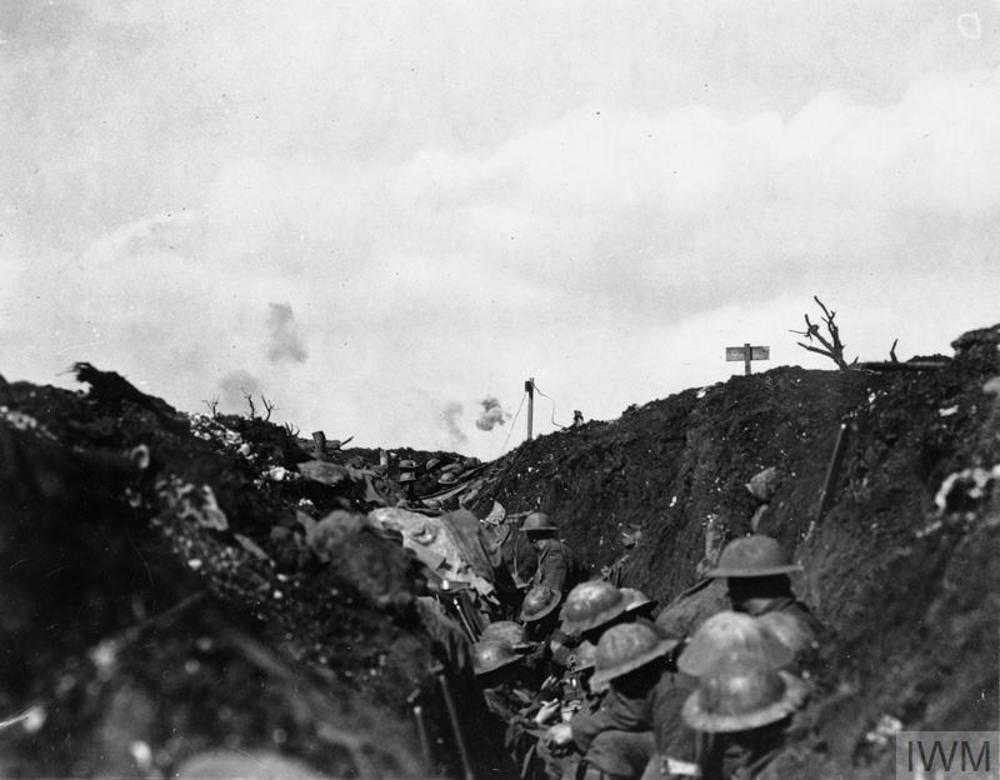
Image: Shrapnel bursts overhead of Canadian servicemen holding a trench at Flers-Courcelette, July 1916 (IWM (CO 802))
More than a single battle
When we think of the Battle of the Somme today, we reflect on the futility of warfare and the loss of so many young British and Commonwealth soldiers.
The Somme was split into many different actions, from the notorious first day, where over 18,500 Commonwealth soldiers were killed in a single morning, to the introduction of Commonwealth troops in July and August, to the final battles around the Ancre Heights.
But the Somme is more than just a single campaign. It holds historical resonance for sure, but the Somme’s effects can still be felt today.
Why time has not reduced the Somme’s meaning
The Somme has lost none of its potency as a major historical event.
Today, it’s a reminder of the sheer scale of the loss of the First World War. Communities up and down the UK were touched with loss during the Battle, as were those in Australia, Canada, India, New Zealand, Newfoundland, and South Africa.
Today, the commemorative landscape of the Somme is experienced by hundreds of thousands of visitors each year. CWGC cemeteries and memorials cover the landscape, with headstones and name panels bearing the names of the Commonwealth’s Somme war dead, permanent reminders of the loss experienced between July and November 1916.
This landscape is still here to be seen and experienced and has become integral to Somme commemoration a century after the battle’s end, and continues to shape our understanding of the battle.
Why the Somme became a lasting symbol
The Somme became a lasting symbol of loss for several reasons.
- Casualties – The Battle of Loos in late 1915 had resulted in tens of thousands of Commonwealth deaths, but the Somme was on another scale. Over 57,000 casualties, including over 18,500 dead, were taken on the First Day of the Somme. More than 100,000 Commonwealth soldiers were dead by November.
- Futility and stalemate – The cost in human life for little gains, just six miles over five months, has made the Somme as infamous and controversial as the bloody first day.
- Cultural identity – In the United Kingdom, especially, the Somme has become symbolic of the wider Great War and a touchstone of national identity. Many of the troops were volunteers from “Pals Battalions,” groups of friends and co‑workers who enlisted together. Their heavy losses devastated entire communities, embedding the Somme deeply in local and national memory. Today, images of men “going over the top”, shattered Western Front battlegrounds, mud, blood, and barbed wire define the British First World War experience and have entered cultural memory.
The Battle of the Somme today is essentially the most well-known British battle of the Great War.
Somme commemoration often becomes commemoration for the entire war effort, despite its global nature and the presence of many different nationalities and cultures in the Armed Forces of the British Empire.
Why 1 July 1916 still resonates
While the wider Battle of the Somme holds strong cultural relevance, the first day of the battle, 1 July 1916, holds special significance.
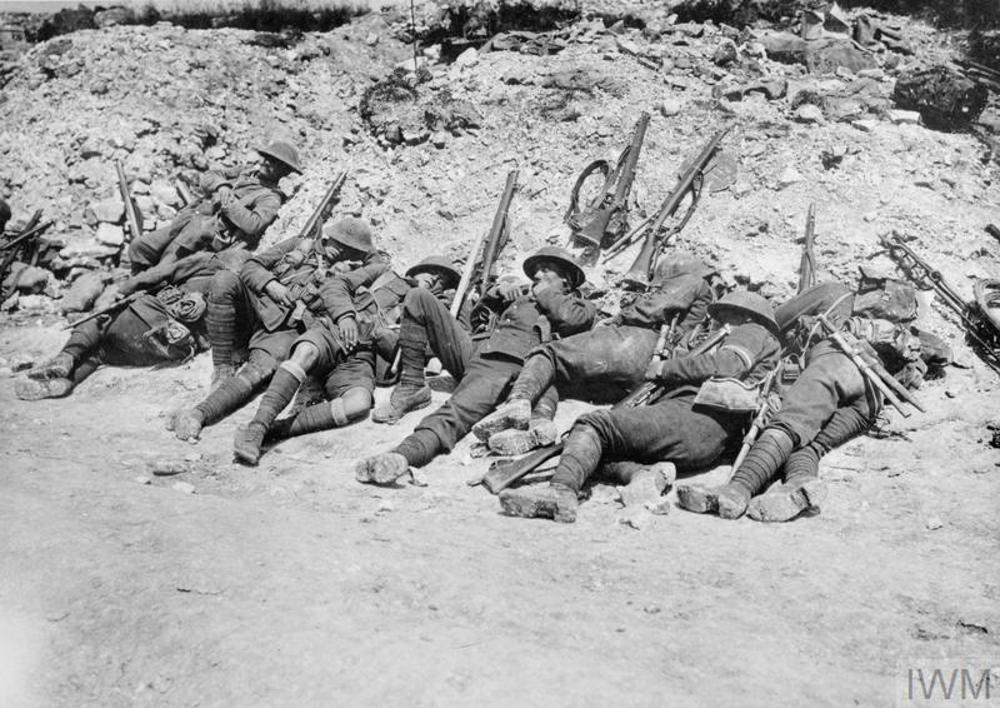
Troops of the Royal Warwickshire Regiment waiting to go into action at Beaumont Hamel, July 1 1916, on the First Day of the Somme (IWM (Q 733))
A date that still shapes public memory
The First Day of the Somme is still the blackest day in British military history. With 57,000 casualties and over 18,500 servicemen dead by the end the day, no single event in British military history has resulted in this loss of life.
1 July 1916 also holds the same dark significance for Newfoundland. Then, a Dominion of the British Empire, the small island sent its sons to the Somme under the banner of the British Empire.
The Royal Newfoundland Regiment attacked across No Man’s Land at Beaumont-Hamel on the Somme’s first morning. Of the 801 Newfoundlanders who went into battle that day, 223 officers and enlisted men had been killed, 386 wounded, and a further 91 were missing. No unit suffered as heavily as the Royal Newfoundland Regiment on the Somme’s opening day.
Why the first day became so widely known
The Somme’s first day is so widely known because of the scale of destruction.
The old myth that soldiers were told to walk across No Man’s Land is overexaggerated, but as the morning went on, it became clear that German defences were still immensely strong in some places.
Although in some sectors, such as the southern Somme, British troops made solid gains, the overwhelming narrative is one of heavy losses and death.
Looking beyond one day
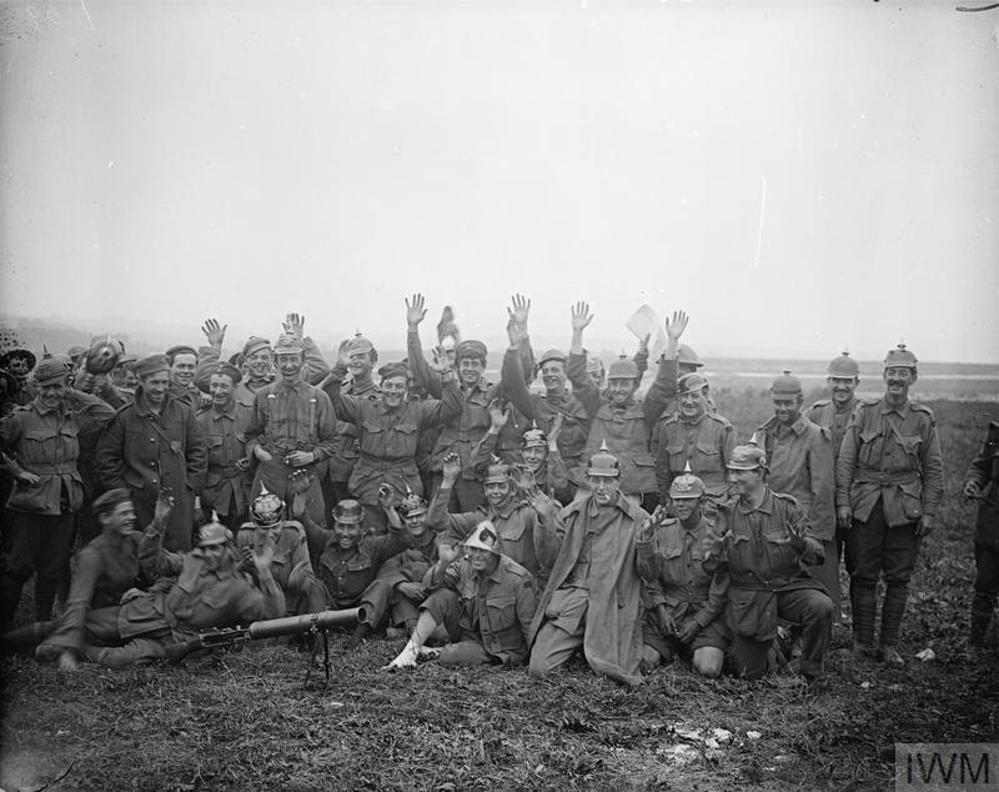
Image: Australian soldiers, some wearing German helmets, pose victoriously after taking the village of Pozieres during the wider Battle of the Somme (Aussies Pozieres IWM (Q 4039))
But the Somme wasn’t just fought on 1 July 1916. It was a five-month battle, raging between July and November, with peaks of activity and lulls, like any major First World War campaign.
More Commonwealth troops began appearing on the Somme in Mid-July as British losses mounted, and the Newfoundlanders were essentially decimated by the Somme’s First Day.
In actions such as High Wood, Delville Wood, Pozieres, Mouquet Farm, Flers-Courcelette, Regina Trench and the Battle for the Ancre Heights, the forces of Australia, Canada, New Zealand, India, and South Africa fought and fell in their thousands.
It’s important to remember the Battle of the Somme beyond just its first day. Commonwealth War Graves Commission cemeteries and memorials are full of burials and commemorations of men who died across the wider Somme battle, rather than on 1 July 1916.
Thiepval and the names of the missing
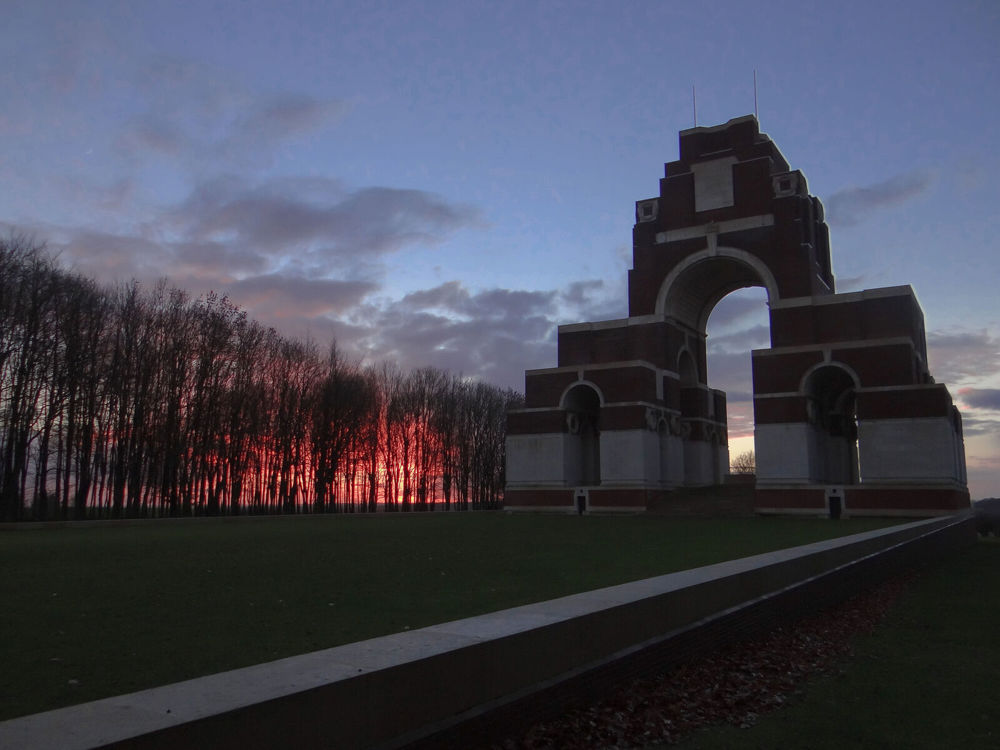
Image: The Thiepval Memorial is our largest war memorial in the world, commemorating over 72,000 missing servicemen of the Great War, the majority of whom died during the Battle of the Somme
Such was the destructiveness of the Battle of the Somme, and the nature of World War One battlefields, that tens of thousands of British and Commonwealth servicemen who fought and died in the campaign have no known war grave.
More than 150,000 Commonwealth servicemen died on the Somme between July and November 1916. Almost half of them are “missing”, that is, have no known final resting place.
Commonwealth War Graves Commission war memorials commemorate these missing Somme servicemen, the largest of which is the Thiepval Memorial to the Missing of the Somme.
Why Thiepval remains central to Somme Commemoration
Thiepval itself lies in the heart of the former Somme battlefields. The memorial stands silently over the former war-torn landscape, which is now a place of peaceful tranquillity, complete with small woodland and rolling, open farmland.
Today, the Thiepval Memorial to the Missing is a focal point for commemoration on the Somme. More than 72,000 British and South African officers and enlisted men are commemorated by name upon the memorial’s monumental stone panels.
Those commemorated here died on the Somme battlefields; not everyone dates from July to November 1916, but the majority were victims of the Battle of the Somme.
Sadly, those commemorated upon Thiepval have no known war grave. While it has been possible to locate, identify, and rebury some of the men commemorated at Thiepval, the sad fact is that nearly half are still lying in places unknown.
The missing and what the memorial makes visible
There are many reasons why Somme casualties are considered missing.
They may have been unable to be identified when recovered and first buried, or their original graves were lost in the carnage of battle or during the post-war concentration and recovery of the Somme’s war dead.
The nature of their wounds and demise may have also played a role, such as being struck by shellfire or being caught up in a mine explosion. Some just simply went missing in the chaos and carnage of the Battle of the Somme.
To give relatives a place to visit and mourn for their missing loved ones, the CWGC created war memorials listing each missing casualty by name.
Thiepval and other memorials to the missing of the Somme, such as the New Zealand (Caterpillar Valley) Memorial, are physical places of commemoration. They make each missing soldier visible, acting as a tangible reminder of the loss shared by so many families across the UK and Commonwealth, resulting from the First World War.
Why names matter more than numbers
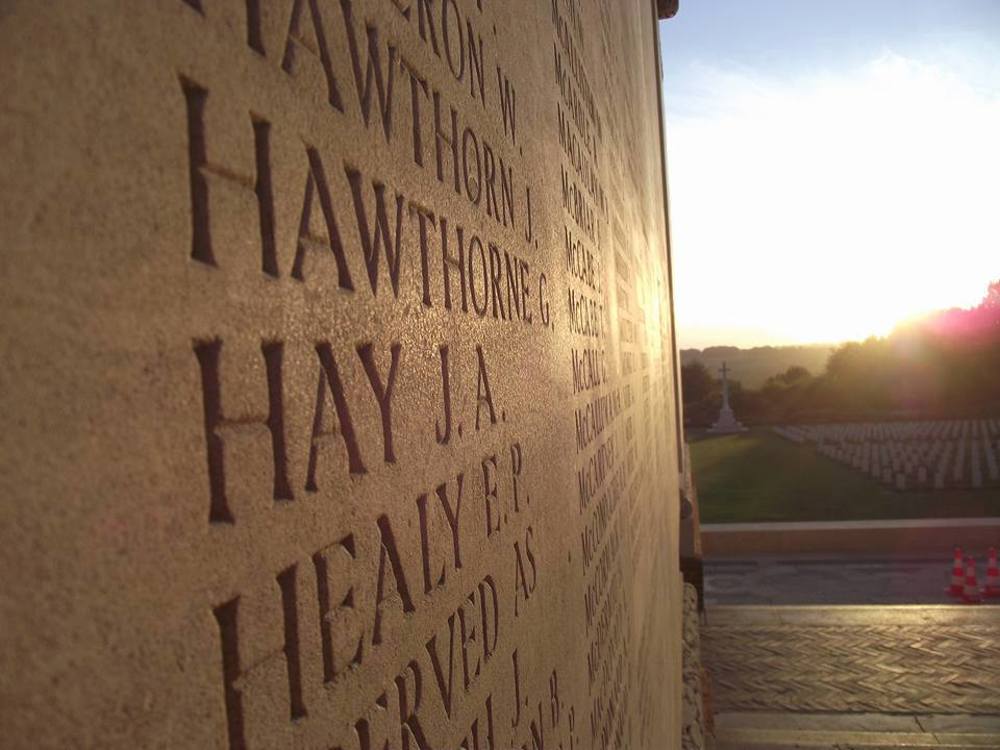
Image: Over 72,000 names of servicemen are carved into Thiepval's name panels
The numbers behind the Somme can be overwhelming and moving in equal measure. The more than 72,000 names on Thiepval, for instance, are staggering and humbling, but the numbers do not tell the whole story.
That’s where the Thiepval names come in.
Names remind us that each soldier lost on the Somme was a real person. Each was someone’s son, brother, husband, or father; a loved one with their own inner and outer lives, hopes, dreams, skills, and aspirations.
Digging into the names allows us to better understand the human loss of the First World War and the Battle of the Somme. Uncovering the stories of those commemorated on Thiepval helps us get to know the men behind the names. In doing so, the impact of the Somme’s statistics is heightened, and shows that these soldiers were real people, not just statistics in history books or blogs.
Our storytelling platform, For Evermore: Stories of the Fallen, contains stories of over 1,000 soldiers of the Battle of the Somme. We encourage you to upload and share your stories of those in our care so we may preserve and share these stories for future generations to know and explore.

Want more stories like this delivered directly to your inbox? Sign up for our newsletter for regular updates on the work of Commonwealth War Graves, blogs, event news, and more.
Sign UpThe wider Somme landscape of cemeteries and memorials
Thiepval may be a focal point for commemoration on the Somme, and our largest war memorial in the world, but it is by no means the only CWGC cemetery and memorial on the Somme.
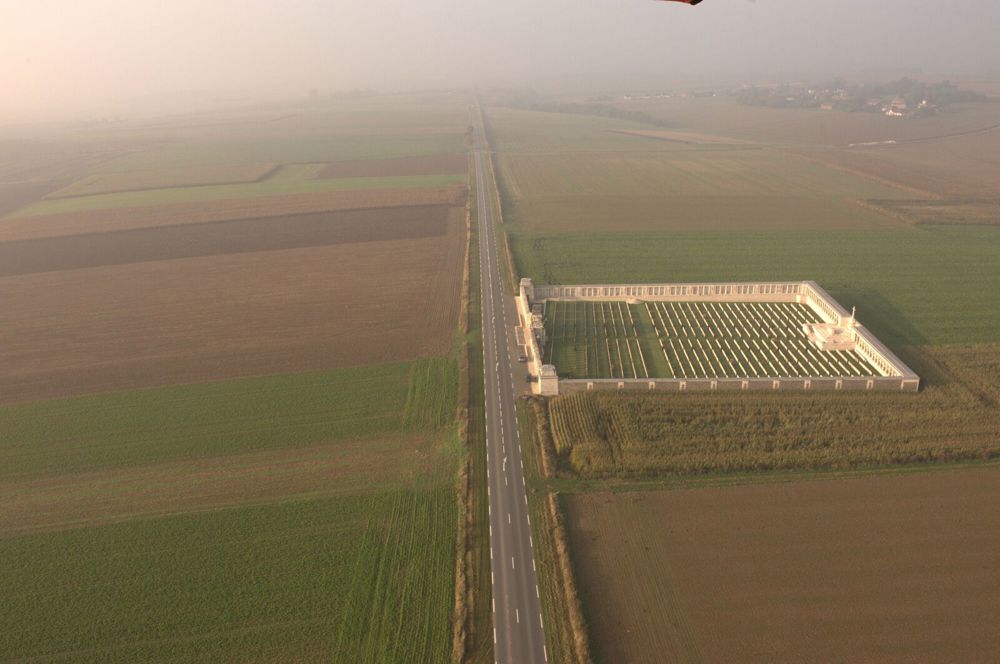
Image: Pozieres British Cemetery, where Australian, British, and Canadian servicemen are buried side by side
More than one CWGC site on the Somme
There are over 350 locations that commemorate Battle of the Somme casualties throughout the region, and 450 locations we maintain on the Somme.
These range from individual graves in local churchyards, to plots in municipal cemeteries to purpose-built CWGC war cemeteries and memorials.
Cemeteries, memorials, churchyards and the wider landscape
The wider Somme landscape is one tinged with tragedy and mourning. Despite the countryside having healed, some areas, such as Newfoundland Memorial Park, still bear the scars of the terrible conflict that hit the region over a century ago.
Today, CWGC cemeteries and memorials dot the landscape. Each helps tell the story of the battle, with sites sitting in the Northern, Centre, and Southern Somme sectors, including:
South Africa (Delville Wood) National Memorial
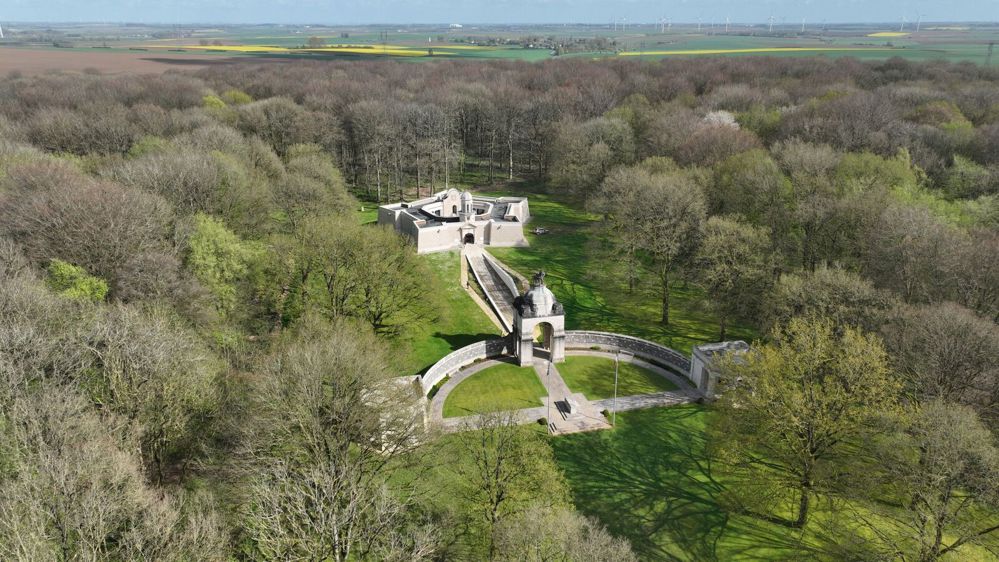
Image: The South Africa (Deville Wood) National Memorial amongst now recovered woodland
South Africa’s story on the Western Front is tied to Delville Wood.
A woodland held by Imperial German forces, the South African Brigade entered the woods in mid-July 1916 to capture the strategically important ground. Some 3,100 South African officers and men entered the woods. They endured near constant shelling and counterattacks for six days before being relieved. Just 750 made it out of Delville Wood.
Today, the Delville Wood site is a wider memorial complex, containing Delville Wood Cemetery and the South African (Delville Wood) National Memorial, and the now thriving woodland itself.
Unveiled in 1926, the South African National Memorial at Delville Wood commemorates the South Africans who died in military service during the First World War.
Originally, no names were included on the memorial, as it stood as a symbol of South African sacrifice at Delville Wood, but a memorial wall was added in 2016, bearing the names of South African Native Labour Corps support troops who died on the Western Front.
Newfoundland Memorial Park & the Beaumont Hamel Memorial Park
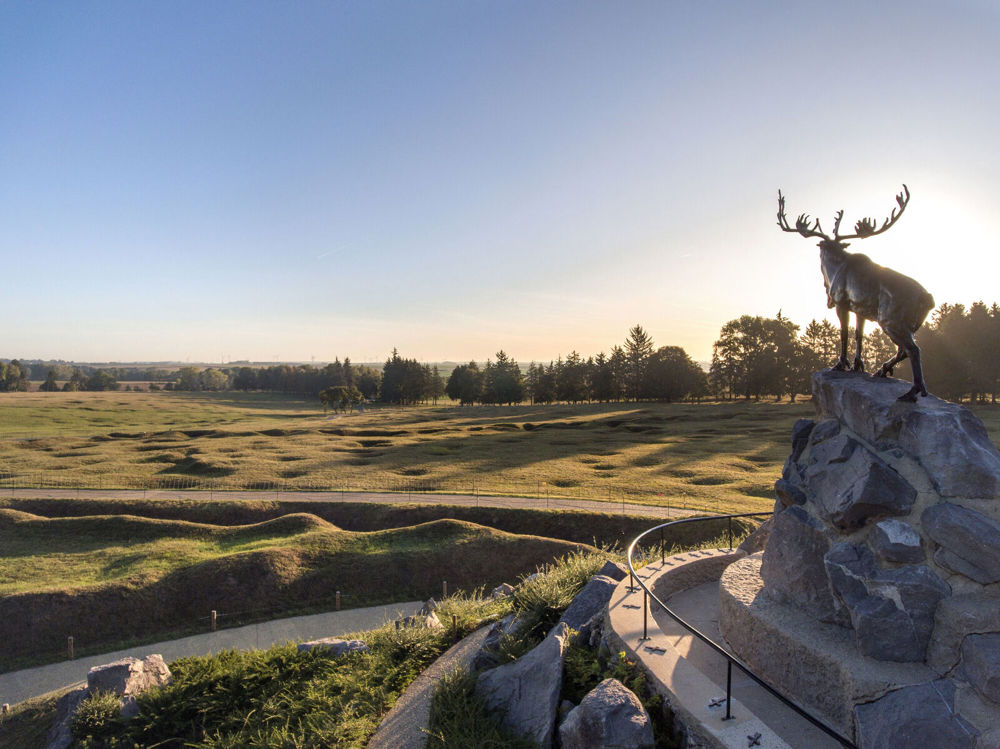
Image: The bronze Caribou, symbolising Newfoundland, looks out over the still battlescarred landscape of Newfoundland Memorial Park (© Somme Tourisme-Nicolas Bryant)
Today, the preserved trenches of Newfoundland Memorial Park and scarred landscape remind us of the intensity of the Newfoundlanders’ attack. The ground remains pitted and gouged, showing the brutal landscape of the Somme.
The Beaumont Hamel Memorial, topped with a bronzed caribou representing Newfoundland, today commemorates Newfoundland’s fallen of the First World War, including those cut down on the Somme’s first day.
The wider Newfoundland Memorial Park also contains other CWGC sites, including:
- Y Ravine Cemetery
- Hawthorn Ridge Cemetery No.2
- Hunter’s Cemetery
Caterpillar Valley Cemetery
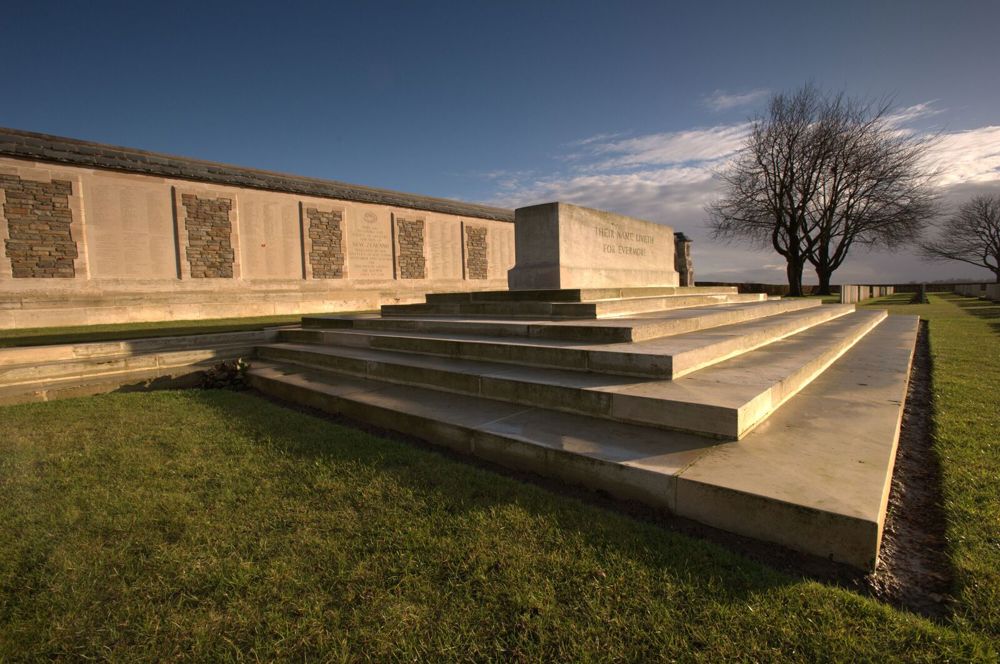
Image: The Stone of Remembrance and New Zealand national memorial at Caterpillar Valley Cemetery
Caterpillar Valley Cemetery sits in the heart of the battlefield where much of the fighting between July and September 1916 took place. From it, you can cast your gaze over the Somme front, spotting iconic locations like Delville and High Wood, as well as many other CWGC cemeteries.
Caterpillar Valley is the second-largest cemetery on the Somme, with over 5,500 graves. Nearly 3,800 of these are unidentified.
Within the cemetery sits the Caterpillar Valley (New Zealand) Memorial, commemorating 1,200 members of the New Zealand forces who died on the Somme with no known grave.
Pozieres British Cemetery
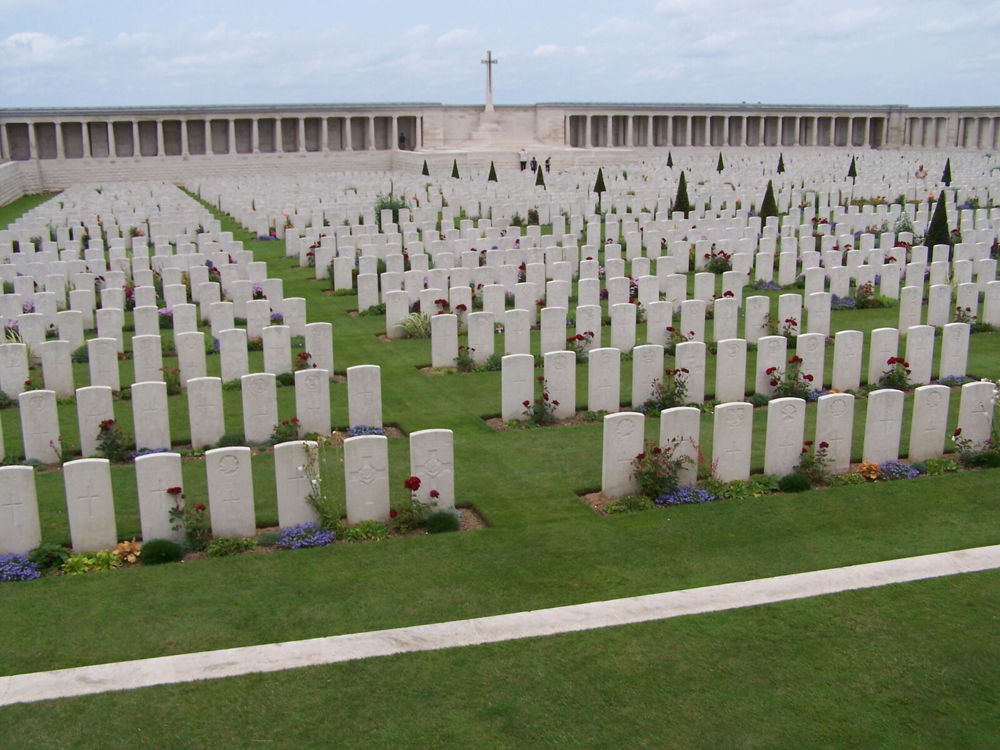
Image: Serried rows of headstones lead towards the rear memorial at Pozieres British Military Cemetery
Pozieres British Cemetery is predominantly a British cemetery, but the cemetery also contains Australian and Canadian burials of the Somme.
Pozieres is of special significance to Australian forces. The village was part of the sector given to Australian forces to attack as the Somme battle expanded and Commonwealth forces were brought to Northern France.
The Australian 1st Division attacked Pozieres on 23 July. The German frontline had been smashed by artillery, and the Australians captured the village on the first day. Strong German counterattacks and artillery turned Pozieres into a “giant mincing machine” as more Australian divisions were brought up.
Pozieres and the battlegrounds beyond, such as Mouquet Farm, were a baptism of fire for the Aussies on the Western Front. In scant weeks, the Australian Divisions took over 23,000 casualties, with 6,700 men killed in action or missing.
2,700 servicemen, Australian, Canadian and British, are commemorated at Pozieres British Cemetery. Over 1,300 are unidentified.
Canadian Military Cemeteries on the Somme
The Canadian Corps suffered around 23,000 casualties during the Battle of the Somme. It was involved in some of the bitterest fighting of the campaign, especially as attrition set in following the July advances.
Places like Regina Trench and Flers-Courcelette are as integral to the Canadian Great War Experience as the vaunted Vimy Ridge. The Somme became a crucible for Canadians on the Western Front, testing Canada’s soldiers and leadership before their major successes in 1917 and beyond.
To understand the cost paid by the Canadians on the Somme, we’d recommend trips to:
- Adanac Miliary Cemetery
- Regina Trench Cemetery
- Courcelette Cemetery
Here, thousands of Canadians lie or are commemorated, representing the enormous struggle of the Somme experienced by the Commonwealth as a whole.
Why place still matters
These spaces still matter today as they are physical reminders of the human cost of the Battle of the Somme.
Commemoration is far from tied to a single date, like 1 July 1916. Caring for these sites is a year-round commitment at the Commonwealth War Graves Commission.
By maintaining and caring for the final resting places of the fallen of the Somme, we maintain a connection with these servicemen and their sacrifice.
The near-endless names inscribed on headstones and on war memorials help us understand the scale of the Somme and how communities across the Commonwealth were affected. These CWGC spaces are the link between past and present.
How CWGC keeps the Somme relevant today
As touched on above, commemoration of the Somme’s war dead is part of our eternal mission to commemorate by name each and every Commonwealth serviceman and woman who fell in service to the British Empire during the World Wars.
Caring for the sites on the Somme
Today, our dedicated teams of gardeners and horticulturalists, stonemasons and skilled craftspeople help care for the sites on the Somme.
Some of these are approaching or are over 100 years old. A policy of conservation and sustainability means we are reviewing and repairing our sites where necessary. Plant health and horticulture are also carefully maintained to ensure these spaces remain inspirational places of contemplation and peace.
Projects such as 39,000 Trees for 2039 will ensure healthy tree life and wider horticulture in our Somme sites, enshrining them as spaces for modern commemoration as much as reflection on the past.
Adding new trees to select Somme sites will help improve biodiversity, provide shade and shelter for visitors, and encourage wildlife to visit our sites. All of these factors are vital in ensuring the long-term health of CWGC cemeteries on the Somme.
When it comes to maintaining headstones, memorials and masonry, we prefer to repair rather than wholesale replace. Headstones are rated by a series of eligibility criteria to determine if a wholesale replacement is required. Likewise, name panels are similarly reviewed.
If necessary, we will engage in large-scale projects to protect and repair our cemeteries and memorials. The Thiepval Memorial underwent a comprehensive renovation between 2022 and 2023, including upgrades to drainage and water protection systems, repairs to brickwork, and updating name panels.
In doing so, Thiepval was made ready to stand over the Somme for decades to come before further restoration work is required.
Connecting places with records
Our records contain the names and places of commemoration for all of the casualties we commemorate on the Somme.
These can help connect people with names and our sites. Use the Find War Dead tool to search our casualty database for individual servicemen and women to discover where they are buried.
You can also use our Find Cemeteries and Memorials tool to find all of our sites across the Somme to help plan your visit.
Helping people move from history to understanding
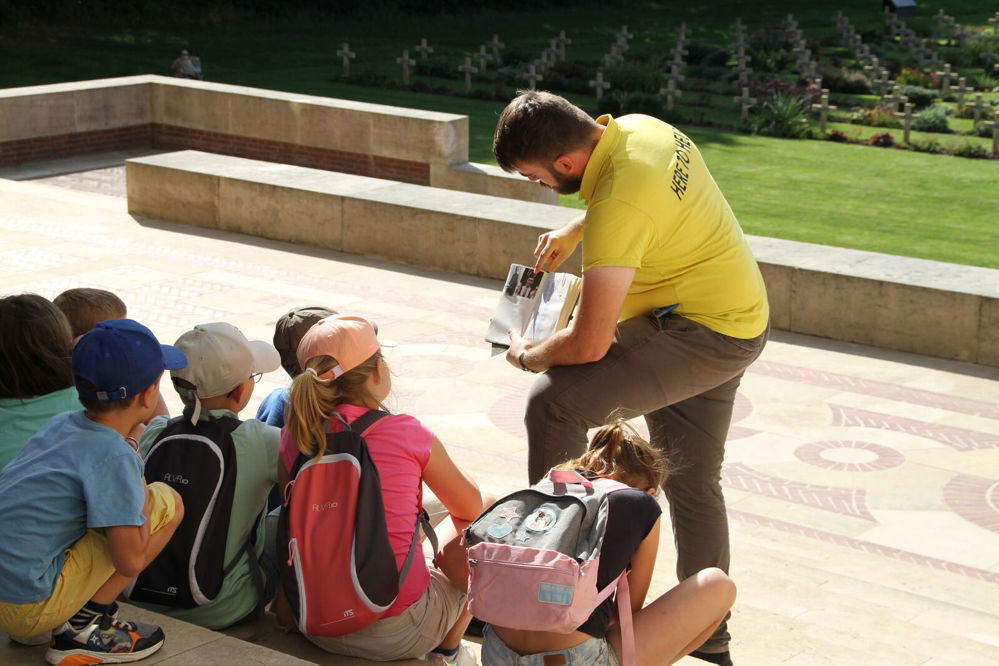
Image: CWGF Guides are integral to sharing the stories of those we commemorate on the Somme
Each summer, we invite young history enthusiasts to work with us at the Somme as Commonwealth War Graves Foundation Guides.
The Guides, funded by our charity arm, the Commonwealth War Graves Foundation, are located at Thiepval. They inform visitors on the history of the Battle of the Somme and the history of the Thiepval Memorial and help them search for names across the site's many name panels.
The Guides also share stories of those commemorated at Thiepval. Sharing their stories ensures the people behind the name are not forgotten and helps us to better understand who these people were and what they went through.
You can also read many stories of the Somme’s fallen on For Evermore: Stories of the Fallen, our online storytelling platform. We encourage you to also upload and share your family stories here.
Digital commemoration tools like For Evermore help us ensure Somme commemoration is a permanent aspect of our work, framing it in a year-round context, rather than just focusing on events in July.
Why the Somme still matters now
The Somme and its commemoration still matter today, as they provide one of the clearest ways people can encounter and experience the loss of the First World War and appreciate its scale.
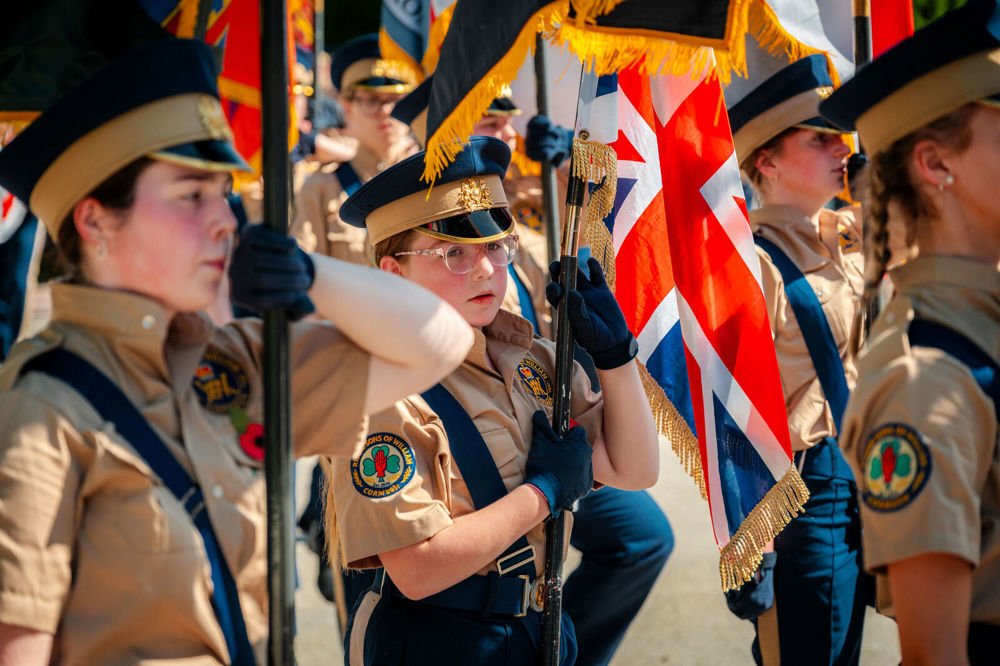
Image: Cadets helping mark 109 years of the Thiepval Memorial at the 2025 ceremony
Why The Somme landscape matters
The wider Somme landscape is a place rich in history, connecting the Commonwealth through our shared sacrifice.
Today, the cemeteries, memorials and war graves the Commonwealth War Graves Commission maintains around the Somme region are places to reflect and think on the loss of so many servicemen and the futility of warfare.
We encourage you to visit us and our sites to experience these powerful places of commemoration for yourself. In doing so, you will have a better understanding of the landscape these men fought and fell in and how we care for them today.
Why names still matter
The names on Somme headstones and memorials are powerful reminders that this battle and the wider conflict were fought by real people.
Each name represents a lost individual, a person in their own right, crudely snatched away by the destructiveness of the Battle of the Somme.
Their names matter as they remind us of the sheer volume of those lost during the First World War. The experiences of the Pals Battalions and the Commonwealth soldiers lost on the Somme have left an indelible mark on each nation.
Together, the names represent our shared history of loss and sacrifice on the Somme.
Why commemoration still matters
Commemoration on the Somme ensures those who were lost are never forgotten. The reminders of their shared sacrifice are everywhere, and caring for these sites is part of our ongoing mission.
Through commemoration, we can make sure future generations understand the importance of the Battle of the Somme, its massive scale, and how and why it left such an indelible impact on the British national psyche.
Somme commemoration also allows us to come together with other Commonwealth nations and the French to embrace, explore, and remember our shared history. In doing so, those who fought and fell in those most infamous of battles will never be forgotten.
Why the Somme still matters - Frequently Asked Questions
The Battle of the Somme still matters today because the names of the fallen, the cemeteries and memorials where these servicemen are commemorated, and CWGC records continue to make the human cost of the First World War visible.
July 1 1916, is the First Day of the Battle of the Somme. It was the first day of the 5-month Battle. On this day, over 18,500 Commonwealth servicemen were killed in action and nearly 60,000 became casualties. It remains the blackest day in history for the British Armed Forces.
The Thiepval Memorial to the Missing of the Somme is our largest war memorial in the world. It is important because it commemorates by name over 72,000 British and South African servicemen who died in the Somme sector but sadly have no known grave.
Yes, there are over 450 locations on the Somme where you will find Commonwealth war graves. This includes some 350 commemorating casualties dating from the Battle of the Somme. You can find this and visitor information for these sites by using our Find War Dead tool.
While the first day of the Somme is widely remembered for its tragedy, the Battle of the Somme actually lasted for 5 months, from July to November 1916. The campaign drew in Australian, Canadian, Indian, and South African troops, with British Armed Forces supported by the French. The Somme battlefield covered a sector 20 miles wide by 6 miles deep and should be viewed as a longer campaign without losing sight of the first day's significance.
You can use our records to search for Somme war dead. Use the Find War Dead tool and filter using the First World War, France burial location, and Battle of the Somme date range to find servicemen. Alternatively, you can use our Find War Cemeteries and Memorials tool and use France and Somme as your locations. You will be able to download a list of all the war dead commemorated by Somme sites on each cemetery or memorial's individual page.
Alternatively, you can use For Evermore: Stories of the Fallen, our storytelling platform, to discover stories of those we commemorate on the Somme.
Thiepval and the more than 72,000 names it commemorates make visible the scale of those who died in the Somme sector without a war grave.
Our cemeteries and memorials are permanent points of commemoration for the fallen of the Battle of the Somme. We also maintain records of these servicemen's names, which are constantly monitored and updated accordingly. Our maintenance and horticultural teams provide year-round care for our sites on the Somme, too.
Author acknowledgements
Alec Malloy is a CWGC Digital Content Executive. He has worked at the Commonwealth War Graves Commission since February 2022. During that time, he has written extensively about the World Wars, including major battles, casualty stories, and the Commission's work commemorating 1.7 million war dead worldwide.