

24 April 2026
Grave of First World War Hampstead soldier finally identified in France
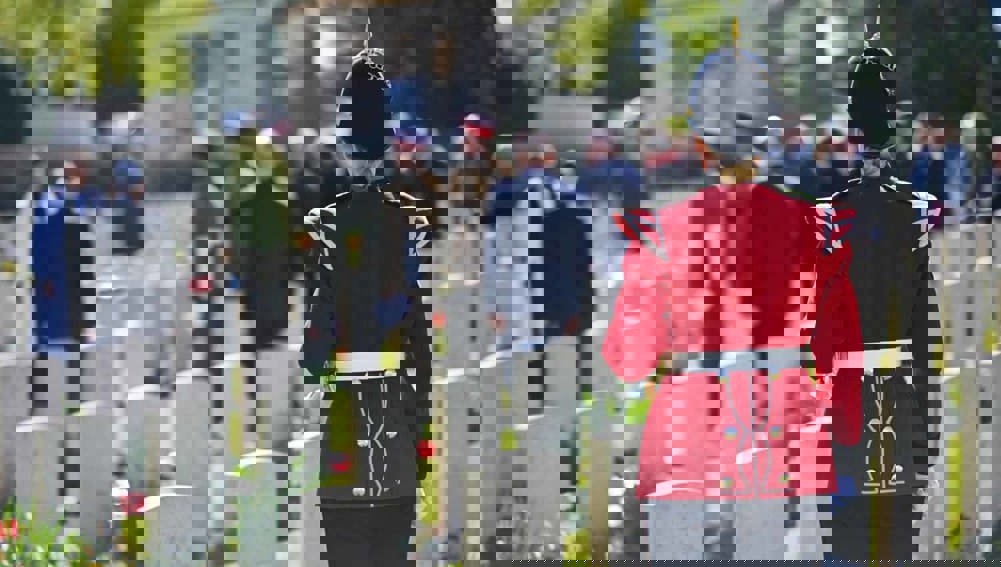
Lance Corporal April Farthing of The Band of the Royal Yorkshire Regiment played the Last Post during the service (Crown Copyright).
A London-born officer who died fighting with extraordinary gallantry during the German Spring Offensive of 1918 has finally been identified, giving his family closure after 108 years.
The grave of Lieutenant George Kenneth Steinberg MC of 34th Battalion Machine Gun Corps has been rededicated on 23 April 2026 at CWGC Croisilles British Cemetery, near Arras in France.
The grave was identified after evidence was submitted to CWGC. This was initially rejected but re-examined by JCCC during the Covid 19 pandemic, a process which uncovered further evidence confirming the initial findings.
Rosie Barron, JCCC Caseworker, said: "The identification of the grave of Lt Steinberg has been a long process and required in depth research. Lt Steinberg was clearly a very brave man, who did his duty to the end under very difficult circumstances. It is very pleasing to know that his family now have answers as to what happened to him and can come and pay their respects at his graveside.”
The family of Lt Steinberg was unable to attend the ceremony, but his great nephews provided an inscription for his new headstone which reads ‘he died like a brave man fighting to the last and leaves a glorious memory behind’.
Lt Steinberg was awarded the Military Cross in 1917 for conspicuous gallantry, personally directing his machine guns under the heaviest shell fire after all his non-commissioned officers had become casualties. He was killed on 22 March 1918, having fired 20,000 rounds in defence of his position.
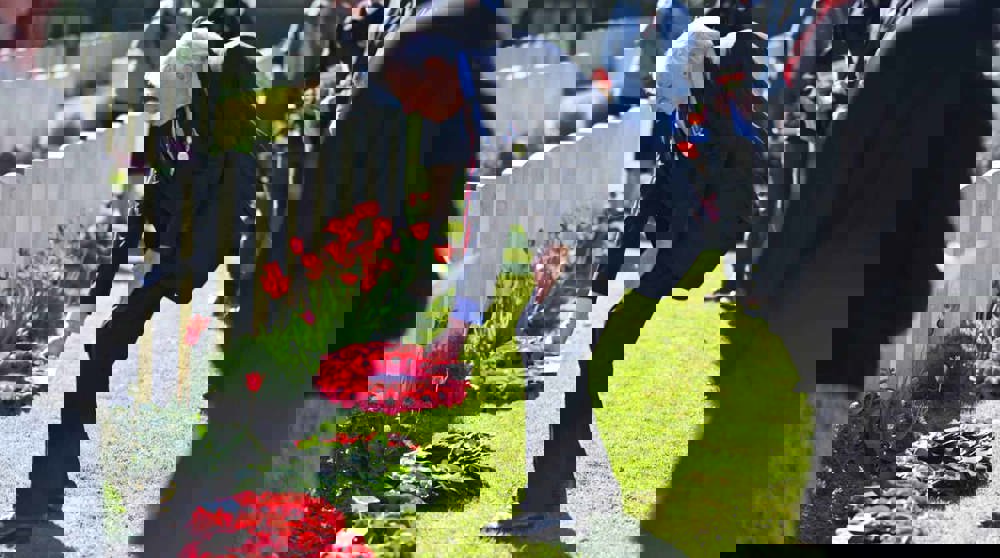
A member of the Machine Corps Association lays a wreath at the grave of Lt Steinberg (Crown Copyright).
The rededication service was conducted by the Reverend Joseph Roberts CF, Chaplain to 1st Battalion The Royal Anglian Regiment. It was attended by serving personnel of The Royal Anglian Regiment and The Band of The Royal Yorkshire Regiment as well as members of the Machine Gun Corps Association.
Reverend Jospeh Roberts CF (Chaplain to the Forces) said: “Restoring Lt Steinberg’s name to his headstone reminds us that every grave (known or unknown) marks a unique and sacred story of service and sacrifice. It is an honour to rededicate his resting place in an act of solemn gratitude. We give thanks for his courage to the end, remaining faithful and true alongside his men, fighting with extraordinary determination and gallantry. We rightly commend Lieutenant Steinberg to God’s enduring care.”
His final resting place is now marked with a newly inscribed CWGC headstone to be cared for in perpetuity.
CWGC Identifications Manager, Catherine Nell said: “We are honoured to see one of our previously unknown graves at CWGC Croisilles British Cemetery in Northern France now identified. The completed research means that we are now able to mark the grave as that of Lieutenant George Kenneth Steinberg MC, who lost his life in the Spring Offensive of March 1918. His newly engraved headstone ensures his appropriate commemoration now and for generations to come”.
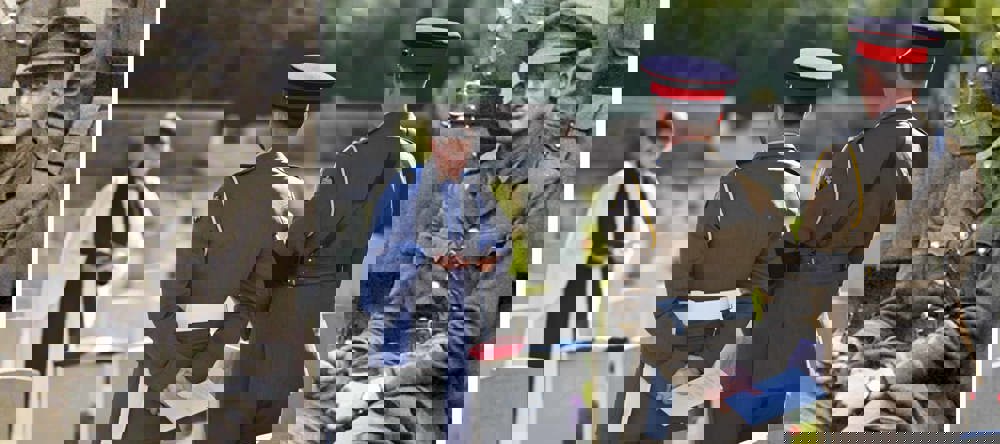
Lieutenant George Kenneth Steinberg MC (copyright unknown), the service was supported by serving soldiers of the 1st Battalion the Royal Anglian Regiment (Crown Copyright).
Lieutenant George Kenneth Steinberg MC
Lt Steinberg was born in Hampstead, London, on 27 March 1893 and worked as a patent agent’s assistant.
Shortly after the outbreak of the First World War, Lt Steinberg enlisted into The Royal Berkshire Regiment but was discharged on 23 June 1915, having been given a Commission. He initially joined The East Lancashire Regiment as a second lieutenant before transferring to the Machine Gun Corps.
Lt Steinberg arrived on the Western Front on 11 April 1917 and joined 102nd Company Machine Gun Corps. He is described as having been an intelligent, sober, and punctual man, he distinguished himself as a strong leader and was awarded the Military Cross which was published in the London Gazette of 17 December 1917. The citation for the decoration read:
‘For conspicuous gallantry and devotion to duty. During an enemy barrage, one of his machine guns was blown up, and shortly afterwards, all the non-commissioned officers became casualties. Nevertheless, he collected the guns and moved them forward to an advanced position, personally superintending the action of each gun under the heaviest shell fire.’
By March 1918, 102nd Machine Gun Company had been redesignated as 34th Battalion Machine Gun Corps. When the German Army launched Operation Michael, the first phase of their Spring Offensive, on 21 March 1918, 34th Battalion Machine Gun Corps was in the line near St Leger where they had spent the preceding days hurriedly preparing defences and emplacements for the expected attack. On 21 March 1918, Lt Steinberg was instructed to fire indirectly on Maida Vale. This was carried out for around thirty minutes. The enemy was visible and a haze which had been present earlier in the day had cleared. Lt Steinberg was then instructed to carry out direct fire which he kept up until dusk having fired 20,000 rounds.
Lt Steinberg’s servant was with him when he was killed on 22 March 1918 and recorded that he was buried three to four hours later. He was 24 years old. A letter written by a Lieutenant Colonel Cameron, records that Lt Steinberg had behaved with ‘special gallantry in the show – he was killed instantaneously by an 8” shell – he had evidently shown most extraordinary determination and gallantry’. Having initially been buried by the Germans his remains were moved after the war into Croisilles British Cemetery, where he was reinterred as an unknown lieutenant of 102nd Machine Gun Company. As he was missing, Lt Steinberg was commemorated on the Arras Memorial.