

02 November 2026
How to Find and Commemorate a Family Member This Remembrance Day
Remembrance is the perfect time to start exploring your family history.
The World Wars touched millions of families across the Commonwealth. Seemingly every family has a story to tell.
If you want to start researching your relatives commemorated by the Commonwealth War Graves Commission, it’s never been easier.
Here’s all you need to know about researching and commemorating your family members this Remembrance.
At a glance: How to find & commemorate a family member
Gather any information your family already has
Search CWGC's records for your relative
Explore where and how they are commemorated
Discover more about their life and service
Share their story or explore ways to commemorate them
Start With What You Know About Your Family Member
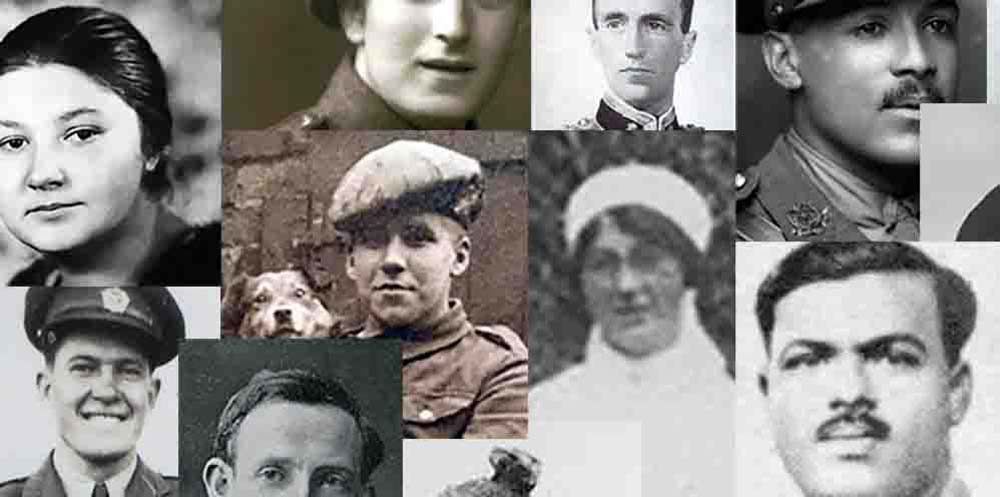
You don’t need many details to start your casualty search in the CWGC database.
What information can help you start your search?
To begin your research, you really only need a name. Each of the 1.7 million Commonwealth men and women we commemorate at the CWGC is done so, where possible, by name, and our records reflect this.
Other useful details include:
Service number
Regiment
Rank
Country of service
Service branch
You may be able to find these details in your family archives, such as letters sent from your relative in wartime, diaries, photographs, and so on.
If they’re a family member, this information should be readily available, but it’s worth checking out all your available sources.
Sometimes names are spelt differently, and family recollections may contradict information found elsewhere, such as in unit war diaries, medal citations, newspaper articles and so on.
Find Your Relative in CWGC's War Records
Looking to find a war grave, research a First or Second World War soldier, or find a family member we commemorate? Here’s how to start.
Don't forget to download one of our free How to Research Guides. They're full of useful tips to help make your search easier.
Where can you search for a family member?
The CWGC Find War Dead tool is your starting point.
This tool allows you to search through our entire casualty database. Here, you will find the commemoration records for everyone in our care.
What if you find several people with the same name?
CWGC records feature plenty of servicemen and women who share a name.
There are numerous search fields you can use to filter your search so you can find the specific individual you are looking for.
For instance, you can refine your search via:
Country commemorated in
Cemetery or memorial
Medals and awards
Date of death
Rank
Unit
These will help narrow down your search until, hopefully, you find the correct casualty.
What Can a CWGC Record Tell You About Your Relative?
Commonwealth War Graves records are not war service records. They do not tell you about a service person’s war record or exploits. They are centred around where a person is buried or commemorated.
But they can still provide useful information in understanding and creating a wider casualty story.
For example, Date of Death could be used as a starting point to discover what an individual and their regiment were up to when they were killed.
Let’s look at that in action.
We have a casualty whose records say they died on 1 July 1916. Additionally, their records state that they are commemorated on the Thiepval Memorial to the Missing.
From this, we can deduce that the casualty fought and died on the First Day of the Battle of the Somme. As they are commemorated on a war memorial, they have no known war grave.
We could then use this as a starting point for further research by noting the individual’s regiment. From there, we could find war diaries or regimental histories detailing the regiment’s exploits on that day.
Understanding the personal details in a CWGC record
Otherwise, a CWGC casualty record contains information such as:
Name
Rank
Unit, ship or squadron
Date of death
Place of commemoration or burial
Using the record to explore their life and service
Where possible, a casualty record will include additional information, such as parents’ names, place of birth, medals awarded, and so on. Not every casualty has this level of information.
What if some information is missing?
As we touched on earlier, these are not military service records. Information regarding their day-to-day life or unit exploits will be found elsewhere.
Records kept in The National Archives, unit war diaries, newspaper archives and collections, alongside personal items such as letters and family photographs, can help you create a fuller story in tandem with our records.

Want more stories like this delivered directly to your inbox? Sign up for our newsletter for regular updates on the work of Commonwealth War Graves, blogs, event news, and more.
Sign UpDiscover Where and How Your Family Member Is Commemorated
Next stop is finding out where your relative is commemorated. You may wish to visit them for Remembrance and to pay your respects, or to visit them at another time, perhaps as part of a wider battlefields trip.
How to search for war graves, cemeteries and memorials
Each individual casualty’s records confirm their place of commemoration or burial. You can find this information on each casualty page.
To find war graves near you, be sure to use our Find Cemeteries and Memorials tool, or download the CWGC App. This gives the details of all locations where you will find war graves, including navigation information, maps, and more.
Some will be buried in CWGC war graves, either in one of our war cemeteries worldwide, a local churchyard or cemetery, an isolated grave, or a municipal burial ground.
Our war memorials commemorate around 500,000 First and Second World War service personnel.
Elsewhere, we commemorate some in Rolls of Honour or digitally where circumstances have prevented traditional commemoration.
What is the difference between a war grave and a memorial?
CWGC war graves hold the remains of service personnel eligible for commemoration under our criteria.
War memorials commemorate First and Second World War Commonwealth personnel who have no known war grave or final resting place.
Not every person buried in a CWGC war grave is identified. These individuals are commemorated by name on an appropriate war memorial.
Exploring the places where your relative is commemorated
To learn more about the sites where your relatives are commemorated, simply click on the place of commemoration link on an individual casualty page.
This will take you through to the cemetery or memorial page. Here, you’ll find lots of useful information, including historic context, visiting information, directions, and sometimes a map, so you can learn about our places of commemoration and plan your visit.
Turn Your Family Member's Record Into a Personal Story
As we’ve spoken about in this article, CWGC records and your relative’s information can help form the basis of a great personal story.
Looking beyond names, dates and service details
What do you know about your relative’s life before their military service? Did they have any hobbies or interests? What was their occupation? Did they have any siblings? Did they play a sport or a musical instrument? What was their education like?
All of these aspects can help shape a person’s story beyond just their military service. After all, these were real people with real hopes, dreams, fears, and ambitions.
These details help us get a better idea of the person behind the name on a headstone or a war memorial panel, as well as insights into the ordinary men and women thrust into extraordinary circumstances in wartime.
Finding letters, photographs, and family memories
Letters, photographs, and family memories are vital for turning a dry serviceman’s record into something more tangible.
It’s these personal insights that hold the small details that create a fuller picture of an individual.
Check through your personal archives for relatives’ stories and further information. They can make a real difference.
Here are some stories where photographs and personal details have made it easy for relatives to piece together their predecessors' exploits and wider World War stories:


Share Your Family Member's Story Through For Evermore
Once you put your family story together, you’ll need a place to share it. You can do so on For Evermore: Stories of the Fallen
What is For Evermore?
For Evermore is our online resource that collects the stories of the war dead from both world wars commemorated by the Commonwealth War Graves Commission.
This is your opportunity to remember the stories that mean the most to you. Tell us about a relative, loved one or someone you have researched who today is commemorated at one of our cemeteries and memorials around the world.
We collate your stories to create a single, searchable repository that honours the memory of the men and women across the Commonwealth who lost their lives during the world wars and ensure that these stories are available for the generations to come.
What could you include in a family member's story?
Some helpful details you could include in your For Evermore story include:
Pre-war life - Where they grew up, their family, occupation, education, or hobbies
Service history - Where they enlisted, units they served with, campaigns, ships, or airfields they were stationed at
Circumstances of their loss - Details about the battle, action, or date they died (if known)
Burial or memorial details - Where they are buried or commemorated on a memorial today
Family connection - How you are related to them, or how the family remembered them
A For Evermore story does not have to be lengthy. We do ask, however, that you try to expand the story beyond the commemoration information we already feature on our website.
Helping their story reach new generations
As the World Wars fade from living memory, sharing your family stories on For Evermore is a great step towards ensuring your relatives' experiences, story, and sacrifice are never forgotten.
As a digital solution, For Evermore is one of our key tools for interacting with new generations, so upload your story today and help it reach new, younger audiences to preserve your relative’s memory for evermore.
Ways to Commemorate a Family Member This Remembrance Day and Beyond
Remembrance is the perfect time of year to reflect on the impact and loss created by all conflicts, past, present, and future – but commemoration does not stop there.
At the Commonwealth War Graves Commission, it is an eternal commitment. Here are some ways you can commemorate your relatives year-round.
Visit a grave or memorial when possible
Why not visit your relative's final resting place or point of commemoration?
Be sure to use our apps or search tools to discover their location.
Share what you’ve discovered with your family
While we encourage you to share your family stories and research on For Evermore, be sure to share them with your family too!
Continue exploring throughout the year
Commemoration and remembrance are interlinked but don’t restrict yourself to just this period. There is a world of history out there waiting to be explored!
Why not attend one of our talks, events, and tours to learn more about our work, the people we commemorate, and the places where they are buried or commemorated?
What If You Cannot Find Your Family Member in CWGC Records?
There can be several reasons why a search does not return the expected person.
These may include variations in spelling, incomplete family information, differences in the details recorded, or the person falling outside our dates of commemoration.
CWGC records are not a complete register of everyone who served in the armed forces, or everyone who died in every conflict.
Revisit what you know, consider alternative spellings or read our research guides for more help. Otherwise, please contact our Enquiries team for more information and advice.
Author acknowledgements
Alec Malloy is a CWGC Digital Content Executive. He has worked at the Commonwealth War Graves Commission since February 2022. During that time, he has written extensively about the World Wars, including major battles, casualty stories, and the Commission's work commemorating 1.7 million war dead worldwide.