
10 November 2026
Remembrance: How Communities Can Take Part
Remembrance makes the perfect time of year to explore names and stories of those commemorated by the Commonwealth War Graves Commission.
While commemoration is a year-round commitment for us, we realise that Remembrance Day and Armistice Day are when the World Wars are most vivid in the public’s mind.
So, how can you get involved in this Remembrance? It can be as simple as searching our records for a name…
At a glance: Ways Communities can take part
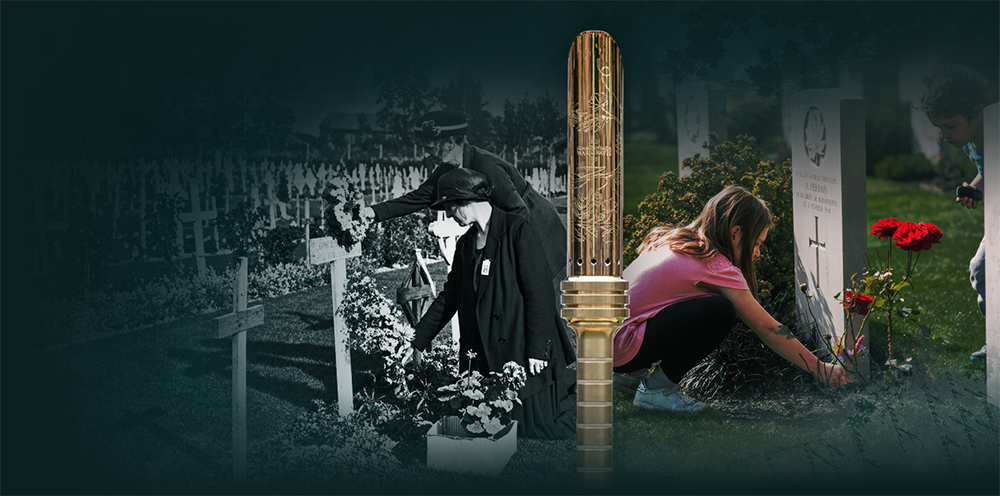
Communities and individuals can take part in Remembrance in numerous ways, including:
Researching names from the local community
Exploring stories and servicemen connected to the local area
Discovering stories from across the Commonwealth with CWGC apps and For Evermore: our online stories archive
Visiting a CWGC war grave, cemetery, or memorial near you
Connecting with different generations during your research or visit
Downloading the CWGC apps
Start With a Name from Your Community
Did you know there are war graves closer than you think? In the UK alone, there are over 160,000 war graves scattered around the country.
How to find someone connected with your area
Cities, towns, and villages up and down the UK were touched by World War history, and it’s the same for Commonwealth countries and communities worldwide.
Ordinary people from your local area did extraordinary things during the World Wars.
As a starting point, you may consider identifying and researching the war record of someone in your local communities and organisations, such as:
Former school pupils and university members
Someone from your workplace
A member of your faith community
A member of your sports club
Someone from your local neighbourhood
A family member
For example, for the Battle of the Boar’s Head anniversary, pupils from the Bamber and Homefield Primary Schools in Worthing did an extensive research project on servicemen from their town who died in this battle.
But where can you find these names? There are local war memorials dotted around the UK (these are typically not cared for by the Commonwealth War Graves Commission, but by organisations like English Heritage or the local government).
Other places you might look are:
A local cemetery or burial ground – Keep an eye out for the iconic green CWGV signs informing you of burials in our sites
A school honour board – Many schools kept rolls of honour commemorating the ex-pupils who went to war and never returned
Family photographs and records
Names passed down through generations
Where to look next
You can also search through CWGC records to discover the names of 1.7 million men and women commemorated worldwide by us.
Don’t forget to grab one of our free How to Research Guides on how you can research the people in our records.
Explore the Stories Connected to Your Local Area
World War history is in every corner of the UK and can be found across the Commonwealth. Here’s how to look for stories connected to your local area.
Who is commemorated near you?
Download the free CWGC App or use our Find Cemeteries and Memorials tool to find war graves near you.
But explore beyond the sights. We encourage you to visit each cemetery or memorial page on our website and download the casualty lists available on each. This will give you the names of each serviceman or woman commemorated at a particular site.
Look beyond the familiar
Cemeteries and memorials can reveal Commonwealth connections in your local war history you may have overlooked.
Let’s look at an example. Brookwood Military Cemetery is the largest Commonwealth War Graves cemetery in the UK.
You may think the site is dedicated solely to British personnel, but you would be wrong. Among the headstones, you will find large plots dedicated to Australian, Canadian, Indian, New Zealand, and South African personnel.
The cemetery holds French, Italian, German, Belgian, Czechoslovak, and Polish military history too.
But there are examples all over the UK. Did you know there are Indian mule handlers commemorated in Wales, for example? Or West Indies servicemen commemorated at Seaford?
Explore connections between people and places
World War history is global but even at a local level can reveal some interesting connections between people and place.
The Indian Muleteers at Brecon are a good example. These men were part of Force K6: animal transport companies designed to support Commonwealth armies where vehicles were impractical. They were stationed around Snowdonia and became popular with the locals.
It’s these kinds of connections you can explore this Remembrance.
Discover Stories from Across the Commonwealth
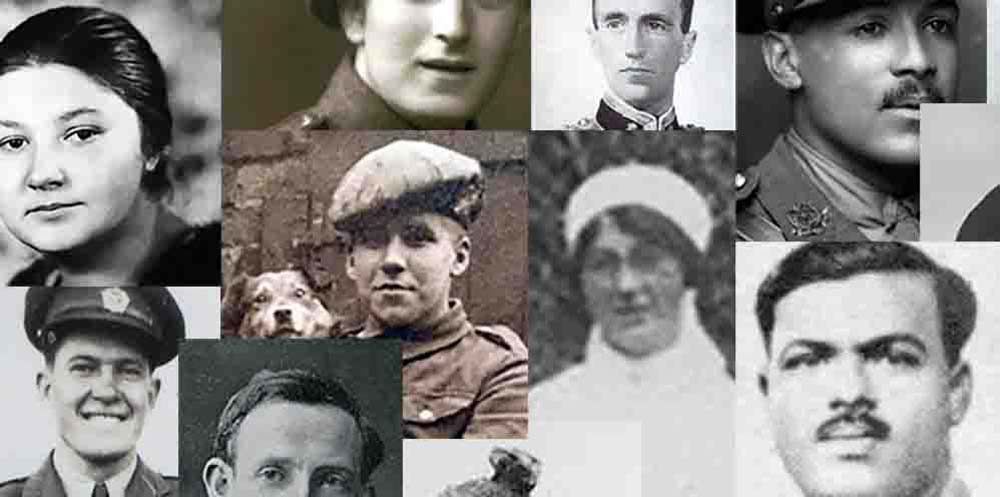
As our name suggests, our global commemoration work takes us all over the world. That means stories are waiting to be discovered and told across the Commonwealth too.
For Evermore: Stories of the Fallen is our digital archive, capturing and preserving publicly submitted family stories of those we commemorate. Browse tens of thousands of stories from across the Commonwealth and share your own.
A global story of commemoration
The First and Second World Wars took Commonwealth servicemen to all corners of the Earth.
Far from being just a British war, servicemen came from across the Empire to serve; some voluntarily, others coerced and essentially pressed into military service.
You will find Commonwealth War Graves sites in over 155 countries and territories around the world. This is a truly global story of commemoration.
Whether it’s the ANZACs at Gallipoli, the South Africans and Delville Wood, the Indian Army in Mesopotamia and East Africa, World War history takes us around the world.
Experiences that have received less attention
As our work continues, we continue to uncover and share World War experiences that have often been sadly overlooked.
The five-year Non-Commemorations Programme has uncovered tens of thousands of previously non-commemorated servicemen, from Indian, Kenya, Tanzania, Sierra Leone, South Africa and so on.
Their experiences vary: from frontline troops in overlooked campaigns, to logistics and transport services in horrendous conditions, to airmen taking to the skies, to merchant seamen, and much more.
For communities in the UK, such as the major Sierra Leone community in Reading, Berkshire, Remembrance provides a great opportunity to explore these stories.

Want more stories like this delivered directly to your inbox? Sign up for our newsletter for regular updates on the work of Commonwealth War Graves, blogs, event news, and more.
Sign UpVisit a CWGC Grave, Cemetery, or Memorial Near You
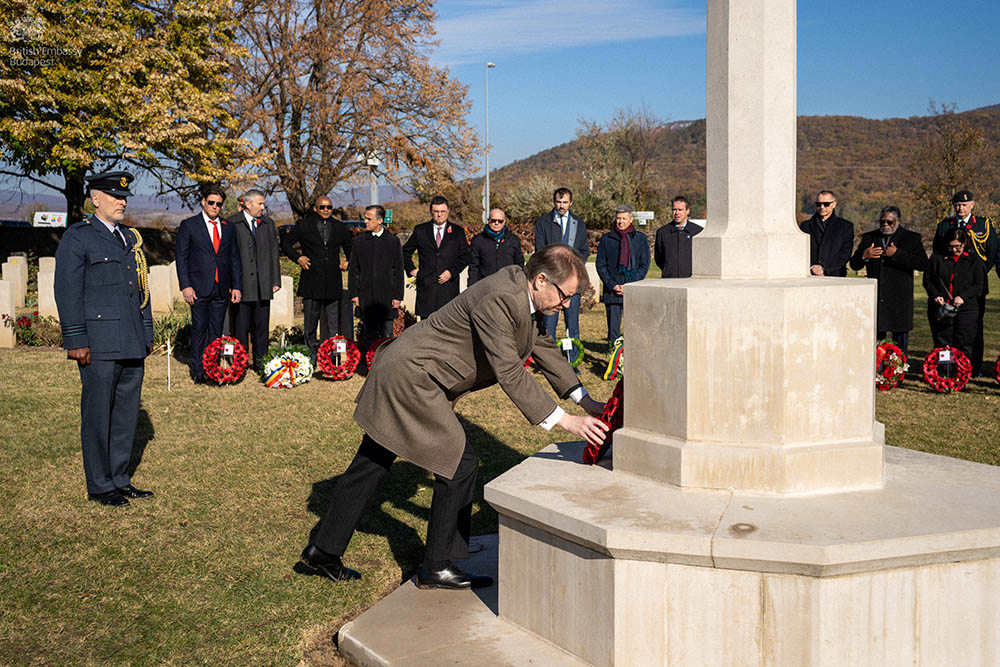
You can find CWGC sites in nearly every country. Why not visit one this Remembrance period and pay your respects to the people commemorated there?
Find CWGC sites in your area
Our sites cover a mixture of locations, including:
Dedicated CWGC cemeteries
CWGC plots in local churchyards or cemeteries
Individual graves in churchyards, cemeteries, or scattered locations
War memorials to the missing
Finding CWGC sites near you is easy.
Simply download the free CWGC App or use our Find Cemeteries and Memorials tool to search your local area.
Research a name before you visit
Part of our dedication to sharing the stories of those we commemorate is it turning servicemen and women into real people, not just a name carved in stone or etched in bronze.
It can be quite a moving experience visiting the final resting place of someone you have personally researched. The research period is a great time to better understand an individual’s interests, relationships, hopes, fears and personality insights.
Visiting their place of commemoration with this extra context and knowledge can greatly enhance the emotional side of visiting a CWGC site.
Bring Different Generations into the Story
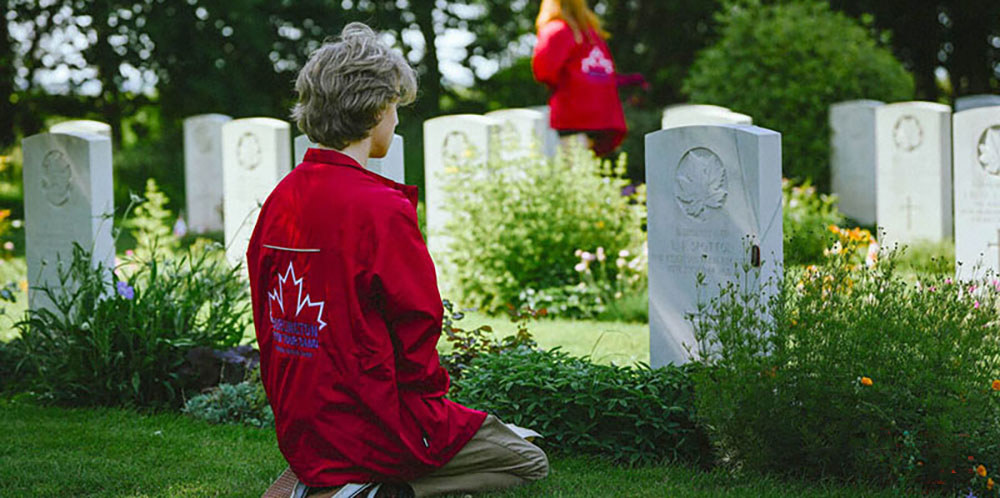
The World Wars are sadly fading from living memory. Remembrance is the perfect moment to explore cross-generational commemoration and story sharing.
Ask older generations what they know
Depending on your age, you may still have a living relative who either served in the armed forces during the Second World War or was around at the time.
Older generations have first-hand insight into the World Wars, whether that be their military service, or simply what it was like as a civilian at the time, or their elder relatives’ experiences.
We have previously captured veterans’ testimonies to preserve and share them, particularly in Tanzania and Kenya. The Voices of the Past project, we hope, is a bridge between generations.
Let younger people lead the research
Looking for classroom activities, university seminars, or joint projects for Scouts or similar organisations? Remembrance is the ideal opportunity.
For example, in the Voices of the Past project, we invited students from across Kenya and Tanzania to interview the Second World War veterans, establishing a link between the past and the present.
Encouraging younger generations to take part in Remembrance-themed research and history projects means we keep the flame alive, passing on the memories of the World War generations to the next.
Take Part Even if You Cannot Attend an Event
No doubt remembrance events will be taking place near you. Indeed, you can find CWGC ceremonies here, but if you can’t make it in person, don’t worry. There are more ways you can get involved.
Explore names and stories online
Use our online resources to explore our records, search for names, and discover new Commonwealth service personnel stories.
Visit a CWGC site digitally
How about taking a virtual tour of a CWGC site from the comfort of your own home?
The free For Evermore App offers virtual tours of select CWGC sites around the world, letting you explore them wherever, whenever you like.
Each tour contains historical information on each cemetery or memorial, service personnel information and biographies, and fascinating features you may overlook.
Download the For Evermore app today.
Research and share a story from home
Alongside our casualty records, there is a wealth of information available online to help your research.
Using the National Archives, newspaper archives, online libraries, unit and regiment histories and war diaries, and more resources, such as the Long, Long Trail, you can really dig deep into a serviceman or woman we commemorate.
If you’re putting a story together, don’t forget to share it on For Evermore so it can be shared and preserved forever.
Volunteer and Take Part Through the Year
Remembrance is centred around November 11, but ultimately commemoration is a major, ongoing responsibility for the Commonwealth War Graves Commission.
Our work does not stop, but did you know you can get involved too? Here’s how.
Ways to volunteer with CWGC
Please note: due to the success of our ongoing volunteer programmes, there are limited opportunities available across the CWGC to volunteer. We would recommend still registering your interest, in case spaces become available.
Otherwise, you can help us with:
Volunteer headstone maintenance under the Eyes On, Hands On programme and gardening
Volunteer talks and tours for public engagement and outreach
Student volunteering opportunities
Digital research and For Evermore moderation
Head over to the volunteer page for more information and volunteer opportunities.
Keep exploring after Remembrance Day
Don’t forget, Remembrance Day is just one day; commemoration is eternal. Hopefully, Remembrance has inspired you to keep looking beyond November and stay engaged throughout the year.
It doesn’t take much. You can do so by:
Volunteering
Researching names
Visiting sites
Contributing stories
Attending CWGC events
We hope you come back, and we hope you can visit us or share a story soon!
Taking part in Remembrance FAQs
Communities can take part by researching local names, exploring CWGC records, visiting nearby graves or memorials, sharing stories, volunteering or taking part digitally.
No, commemoration can begin with curiosity about any person, not just a relative.
People can begin with someone linked to their town, school, workplace, faith community, sports club or local area.
You can find CWGC sites near you using the Find Cemeteries and Memorials tool, or by downloading the free CWGC app.
Yes, there is no set form of Remembrance. Researching records, exploring your family history, and writing and sharing stories in the digital space is a valid form of commemoration and remembrance.
Young people can take part in Remembrance activities such as researching a local name, interviewing relatives, exploring records or helping to build a community story, as well as attending ceremonies or school-led participation.
You can discover more about the Commonwealth forces using CWGC records, our blog, and For Evermore: Stories of the Fallen, our online stories archive.
Be sure to read Non-Commemoration-tagged content to learn more about previously overlooked campaigns and personnel.
For Evermore: Stories of the Fallen is our online archive where we preserve and share family stories of those we commemorate.
Commemoration continues throughout the year through research, visits, volunteering, story sharing and discovering new names.
Author acknowledgements
Alec Malloy is a CWGC Digital Content Executive. He has worked at the Commonwealth War Graves Commission since February 2022. During that time, he has written extensively about the World Wars, including major battles, casualty stories, and the Commission's work commemorating 1.7 million war dead worldwide.