

22 April 2026
Somme Cemeteries and Memorials: Where people are commemorated and why those places matter
The Battle of the Somme is one of the bloodiest episodes of the First World War.
Drawing in millions of soldiers on both sides, including British, Australian, Canadian, Newfoundland, New Zealand, South African, and French troops, it resulted in over a million casualties.
Today, the cemeteries and memorials of the Battle of the Somme are physical reminders of the cost of one of the British Empire’s blackest military campaigns.
We at the Commonwealth War Graves Commission lovingly maintain the final resting places, war graves, and memorials of the Battle of the Somme, which cost some 150,000 Commonwealth lives.


At a glance: What's on this page
In this guide, you will learn about these cemeteries and memorials of the Somme, the people they commemorate, and why they matter today, including:
- What Somme cemeteries and memorials are, in brief
- Why some people are buried in cemeteries and others commemorated on memorials
- What “no known grave” means in Somme context
- Why places of commemoration still matter today
- How cemeteries and memorials help visitors understand the Somme through people, not only events
- What to look for when visiting a cemetery or memorial
- Key sites on the Somme
- Common questions about Somme commemoration and visiting
Why the Fallen of the Battle of the Somme are commemorated through both cemeteries and memorials
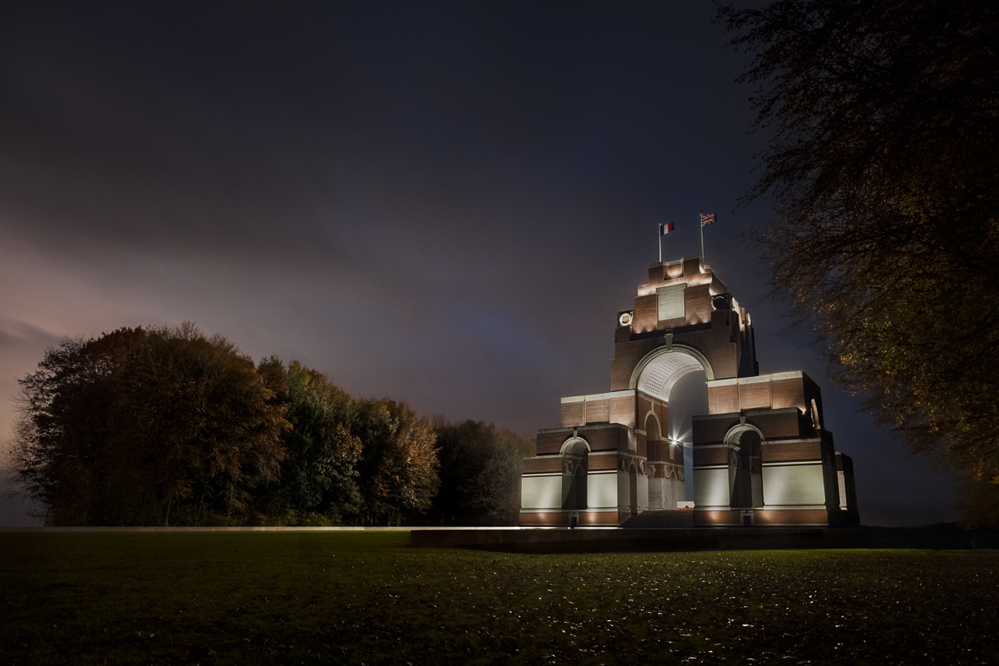
Image: The Thiepval Memorial illuminated at dusk
The Somme landscape is dotted with cemeteries and memorials. These are the places of commemoration dedicated to those who fought in the 5-month battle.
Two types of commemorative placeS
Commonwealth War Graves Commission sites on the Somme are broadly split into two categories:
- War cemeteries
- War memorials
Both effectively provide the same function, but there are some key differences you should know if you are planning your own pilgrimage exploring the Somme battlefields and our sites.
War cemeteries contain the burials of recovered servicemen. If we were able to identify them, the serviceman would have a CWGC headstone with their name, regiment, and other details clearly inscribed.
If a casualty was recovered, but we were unable to identify them, then they will bear a headstone with the inscription “Known unto God”.
War memorials commemorate by name servicemen with no known war grave.
Why do some servicemen have war graves and others do not?
Missing servicemen, i.e., those with no known war grave, may not have been identifiable upon recovery, or were simply lost on the Somme battlefields and have yet to be found.
So, a soldier buried in a CWGC war grave with a headstone reading “Known unto God” will be commemorated by name, just upon a war memorial, rather than their place of burial.
From time to time, it has been possible to identify previously missing casualties. If this is the case, they will be removed from their respective war memorial and given a CWGC headstone bearing their name.
Some 72,000 casualties of the Battle of the Somme with no known war grave are commemorated on the Thiepval Memorial to the Missing of the Somme. Others, such as New Zealand and Australia’s missing Somme war dead, are commemorated on other war memorials across the region.
What Somme cemeteries can tell us
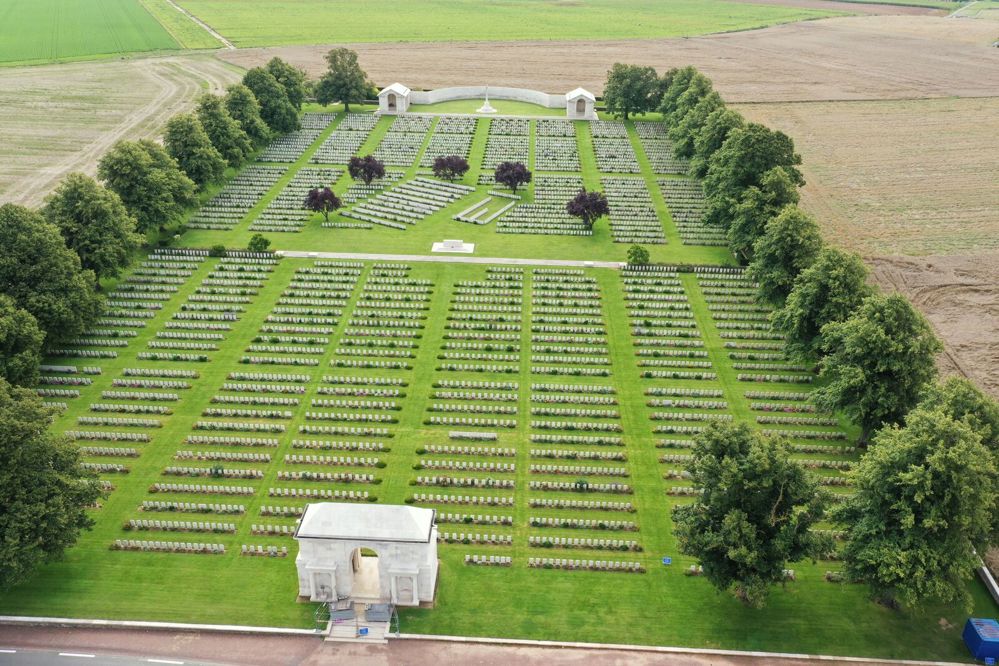
Image: Serre Road Cemetery No.2, one of the largest war cemeteries on the Somme
Individual graves, shared landscape
Somme war graves can be found in over 450 locations around the province, ranging from individual burials in local churchyards to our purpose-built CWGC cemeteries.
Many of the cemeteries are battlefield cemeteries, started by the soldiers at the front to bury their comrades. After the war, during what was known as concentration, many burials at smaller cemeteries were brought into newly built CWGC cemeteries, but at places like Railway Hollow Cemetery or Devonshire Trench, the soldiers are buried close to or at where they first fell.
These individual graves in Somme cemeteries are linked by a story of shared loss and sacrifice. The sheer number of those buried here, around 75,000, tells us the scale of the slaughter on the Somme.
Place, scale and proximity
The battlefields of the Somme stretched across a 16-mile front.
The ribbon of CWGC cemeteries and memorials dotting the landscape from the north at Gommecourt to the southern Somme at Maricourt tells the story of the battle.
Across five months from July to November 1916, the Allies only managed to advance six miles at a cost of over 600,000 Commonwealth and French casualties. The German defenders are estimated to have lost a similar number of men, including many highly trained officers and soldiers from the peacetime military.
Conversely, many of the British soldiers who went into action were relatively fresh, members of the “Pals Battalions” drawn from close-knit communities across the British Isles. While so many fell over those five months, including some 150,000 dead, the survivors gained valuable experience that would shape the British and Commonwealth armies into a formidable fighting force.
Still, the loss of so many young men was keenly felt in communities in the UK, Canada, Australia, Newfoundland, New Zealand, and South Africa.
What visitors can learn from a cemetery
Visitors to CWGC Somme cemeteries in northern France can learn much, not just about the battle and the men who fought it, but also our ongoing work in caring for and maintaining these places of commemoration.
The names of the fallen are clearly etched into their headstones or onto memorial panels, inspiring us to go beyond just the names on the headstones. Each name represents a real, living, breathing person. Each had their own aspirations, lives, and families.
But our cemeteries and memorials display the care and lengths we go to care for these spaces of meaning and memory. Our expert gardeners, stonemasons and other staff work year-round to ensure healthy horticulture and protect the stonework integral to telling these casualties’ stories.
What Somme memorials can tell us
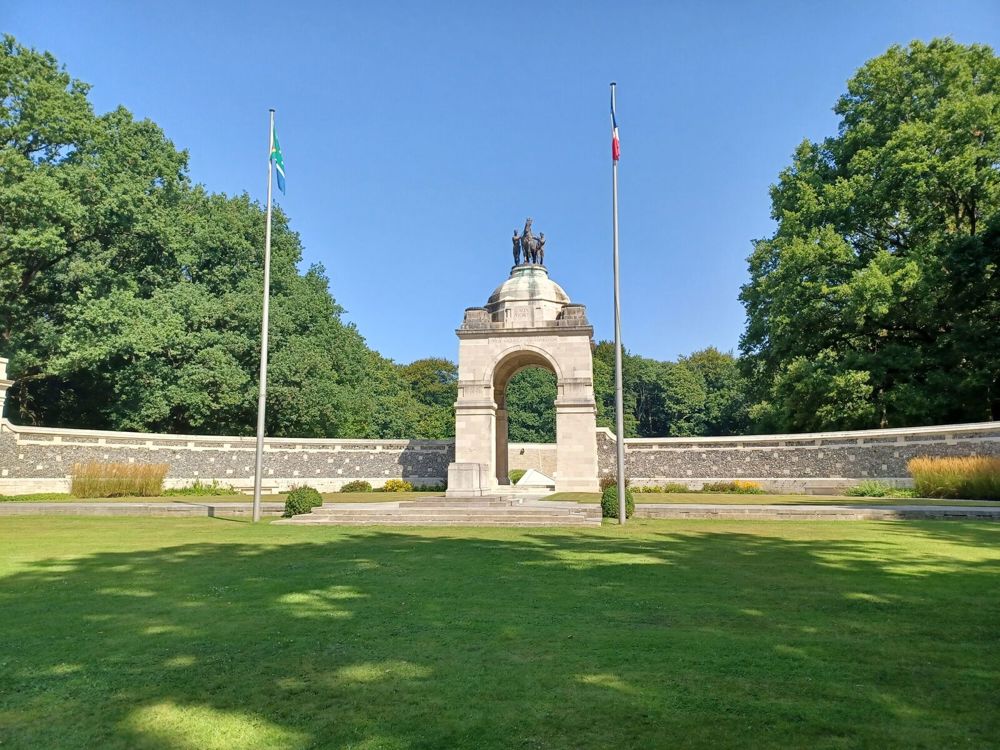
Image: The South African (Delville Wood) National Memorial
Commemorated by name without a known grave
World War 1 Somme memorials, such as the Thiepval Memorial, provide permanent points of commemoration for soldiers with no known war grave.
Thiepval may be the largest, in fact, it is the largest CWGC war memorial in the world, but other war memorials are located across the Somme.
National memorials, such as the Caterpillar Valley (New Zealand) Memorial, the Villers-Bretonneux Australian Memorial, or the South African (Delville Wood) National Memorial, are dedicated solely to their respective nations’ missing Somme war dead.
As these soldiers have no known war grave, their names are forever etched in stone upon CWGC memorial name panels, until they can be recovered or identified.
Why Somme War Memorials matter as places
CWGC War Memorials on the Somme matter as they are the places that commemorate the battle’s missing fallen.
Creating physical points of commemoration for these casualties was an important step in reconciliation and grieving post-war. Families of missing servicemen had a place to visit where they could find their loved ones’ names and mourn them.
The phrase “he is not missing, he is here” has become an important way of understanding the purpose of our war memorials.
As the Somme resulted in so many missing casualties, these places remind us of the cost of the battle and the wider First World War.
Today, the memorials such as Delville Wood, Caterpillar Valley, or Thiepval play host to important anniversaries, marking the exploits and loss of the Commonwealth troops on the Somme. Visitors still come to find their relatives’ names among the fallen, reminding us that the Somme still resonates 110 years after the battle ended.

Want more stories like this delivered directly to your inbox? Sign up for our newsletter for regular updates on the work of Commonwealth War Graves, blogs, event news, and more.
Sign UpHow CWGC connects names to the Somme landscape
The CWGC Somme cemeteries and memorials are connected to the landscape physically and help illustrate the story of the battle. Take the string of cemeteries atop the Redan Ridge, for example, or the South African Memorial at Delville Wood. Many, if not all, of our Somme sites are built on or close to the former battlefields.
But our cemeteries and memorials also link people to these places tinged with tragedy, loss and mourning.
Starting with a name
If you are looking to locate places of commemoration on the Somme, you can start with a name.
Our records hold the names of each Commonwealth serviceman who fell on the Somme battlefields and where they are commemorated.
Finding the place of commemoration
If you know their name, you can use our Find War Dead tool to search for them. This will bring up the serviceman’s individual page, which contains where they are buried or commemorated.
You can further refine your search using parameters such as country of service, service number, country commemorated in, and more options.
Linking a name to a site will give you further information on who they were and what they were doing when they were fighting. While our records are not military records, such as war diaries or service records, our cemetery pages give historic information on the location’s establishment and military actions pertaining to that cemetery.
For more information on where to find Somme war graves, read our Somme visitors' guide.
Why records and places work together
CWGC records and Somme places of commemoration work together in a couple of ways:
- Connecting names with cemeteries and memorials – Each individual commemorated by us on the Somme has an individual casualty page. Here, you will find details of their place of commemoration, from location on a war memorial to burial plots and so on.
- Historic information – Each cemetery and memorial page contains historic information regarding the battle or action casualties commemorated there, giving further context as to the actions of the men each site commemorates, the cemetery’s establishment, and other pertinent information.
What visitors should look for when visiting Somme cemeteries and memorials
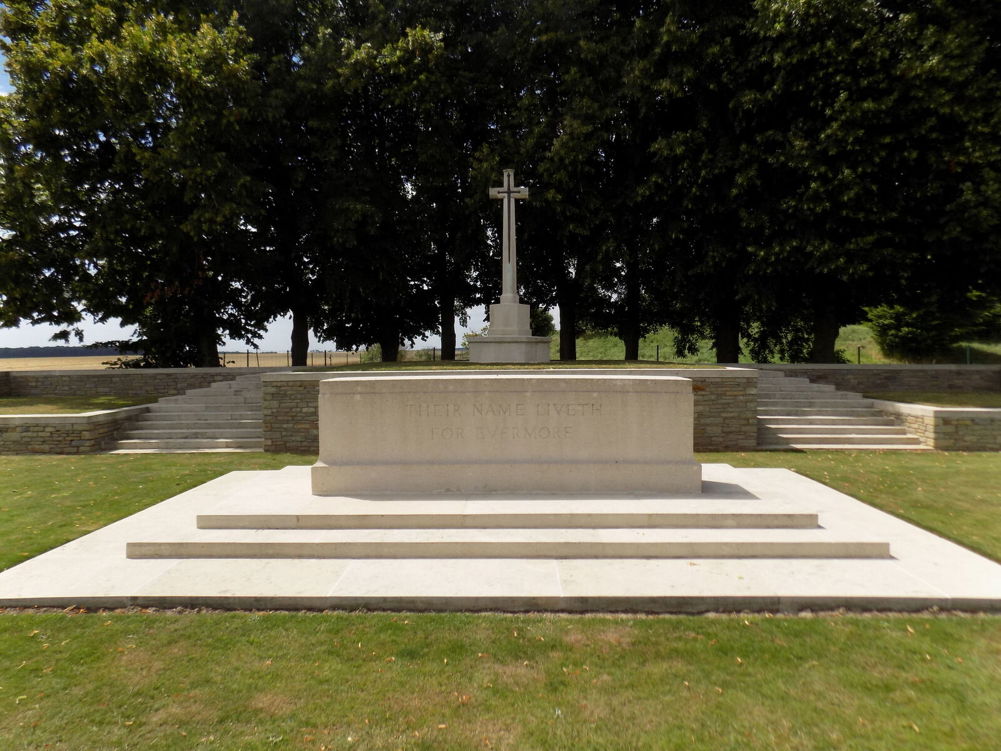
Image: Stone of Remembrance and Cross of Sacrifice at Crucifix Corner Cemetery
Approaching Somme cemeteries
CWGC cemeteries are distinctive. The rows of neatly arranged headstones, well-maintained architecture and perimeter walls set ours apart from municipal cemeteries or local churchyards.
But some other features indicate this is a CWGC cemetery or memorial:
- Stone of Remembrance – Cemeteries of a certain size will include the Stone of Remembrance. This altar-like cemetery feature was designed as a secular monument to the dead. Each stone bears the inscription “Their name liveth forevermore” as chosen by the Commission’s original literary advisor Rudyard Kipling.
- Cross of Sacrifice – The Cross of Sacrifice, designed by Sir Reginald Blomfield, is another unique CWGC cemetery feature. The cross sits on an octagonal bases with a bronze downward-pointing sword attached to its face. Blomfield designed it to "an "abstract and impersonal" symbol, avoiding specific Gothic sentimentality, to honour the fallen.
- Boundary walls – A feature of CWGC cemeteries is our boundary walls. Each cemetery is fenced by a strong stone wall that sets the boundary and helps protect the site from strong winds. Depending on the size of the cemetery, it may have a grand stone entrance, such as Serre Road No.2, but others may just have an iron gate. Some cemeteries, such as Caterpillar alley
- Registry box – Each cemetery will have a registry box. This details the names of each identified casualty commemorated here and the plot and row you can find their war grave.
Approaching a Somme war memorial
Some Somme war memorials do include the Stone of Remembrance and the Cross of Sacrifice on-site, such as the Delville Wood Memorial. However, there is no universal design across CWGC war memorials. They can range from single panels in larger sites to the monumental, towering red brick structure of Thiepval.
One thing to note is how to read memorial panels. The casualties of the Somme are predominantly land forces. While some Naval units fought on the Somme, these were land-based units, so they are commemorated in the same way as army casualties.
Those names etched into memorial panels are carefully arranged, so visitors looking for a particular person can find them with ease, but the method of arrangement differs from memorial to memorial.
If the memorial is dedicated to missing Army casualties, such as Thiepval, names are arranged by:
- Regiment by the Army’s standard of regimental precedence
- Rank in each regiment, moving down in seniority
- Alphabetically by surname for each rank
A registry box will be on-site, helping you locate the correct panel where a casualty is commemorated. Panels are typically numbered, making it easy for you to locate an individual serviceman. In the case of Thiepval, pier numbers will also be available. This information is also available on an individual casualty page.
Key CWGC Somme Cemeteries & Memorials to visit
There are over 450 locations around the Somme department where you’ll find CWGC war graves, cemeteries and war memorials. Here are a few to visit.
Thiepval Memorial to the Missing of the Somme
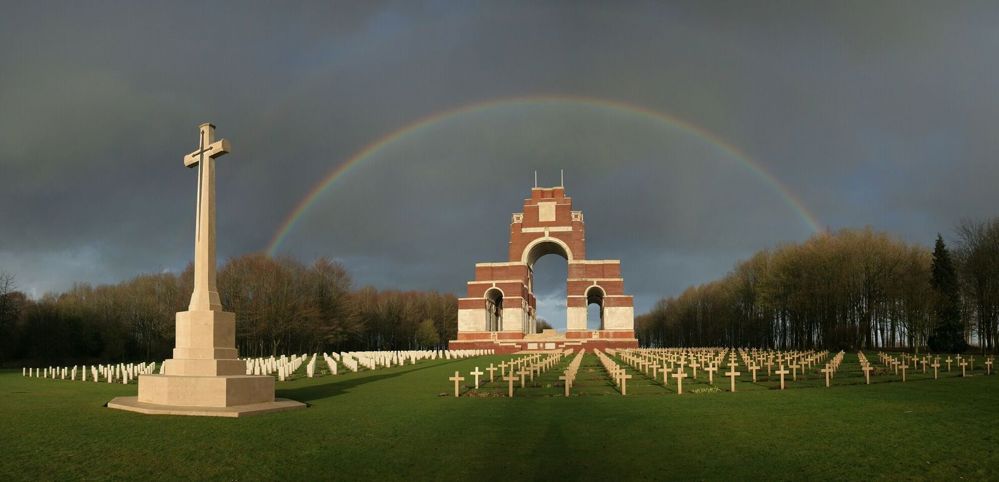
Image: A rainbow arcs over Thiepval Anglo-French Cemetery and the Thiepval Memorial
The Thiepval Memorial to the Missing of the Somme commemorates over 72,000 names of British and South African servicemen with no known war graves.
Over 150,000 Commonwealth servicemen fell during the 141 days of the Battle of the Somme, and this memorial indicates the destructiveness of the battle. Nearly half of those who died on the Somme are commemorated here.
Originally raised in a bleak, shattered landscape, the Thiepval Memorial now stands amidst mature trees and landscape returned to its pastoral state, but one which still bears scars and reminders of the horrors of the Somme that still haunt Britain and the Commonwealth’s shared psyche.
A non-CWGC visitor centre lies down the slope from the Memorial, where visitors can learn more about the battle, some of the people who fought and fell there, plus a gift shop with Great War-themed merchandise.
South African (Delville Wood) National Memorial
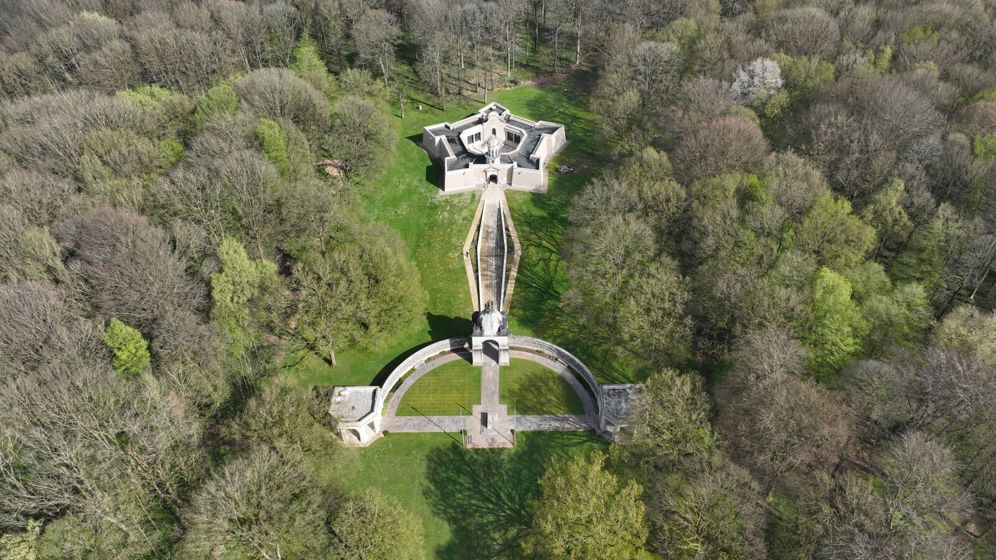 Image: The Delville Wood Memorial with memorial wall and museum
South Africa’s story on the Western Front is tied to Delville Wood.
A woodland held by Imperial German forces, the South African Brigade entered the woods in mid-July 1916 to capture the strategically important ground. Some 3,100 South African officers and men entered the woods. They endured near constant shelling and counterattacks for six days before being relieved. Just 750 made it out of Delville Wood.
Today, the Delville Wood site is a wider memorial complex, containing Delville Wood Cemetery and the South African (Delville Wood) National Memorial, and the now thriving woodland itself.
Unveiled in 1926, the South African National Memorial at Delville Wood commemorates the South Africans who died in military service during the First World War. Originally, no names were included on the memorial, as it stood as a symbol of South African sacrifice at Delville Wood, but a memorial wall was added in 2016, bearing the names of South African Native Labour Corps support troops who died on the Western Front.
The South African Delville Wood Commemorative Museum stands close to the memorial, providing deeper insights into the South African’s experiences on the Somme and wider Western Front.
Caterpillar Valley Cemetery
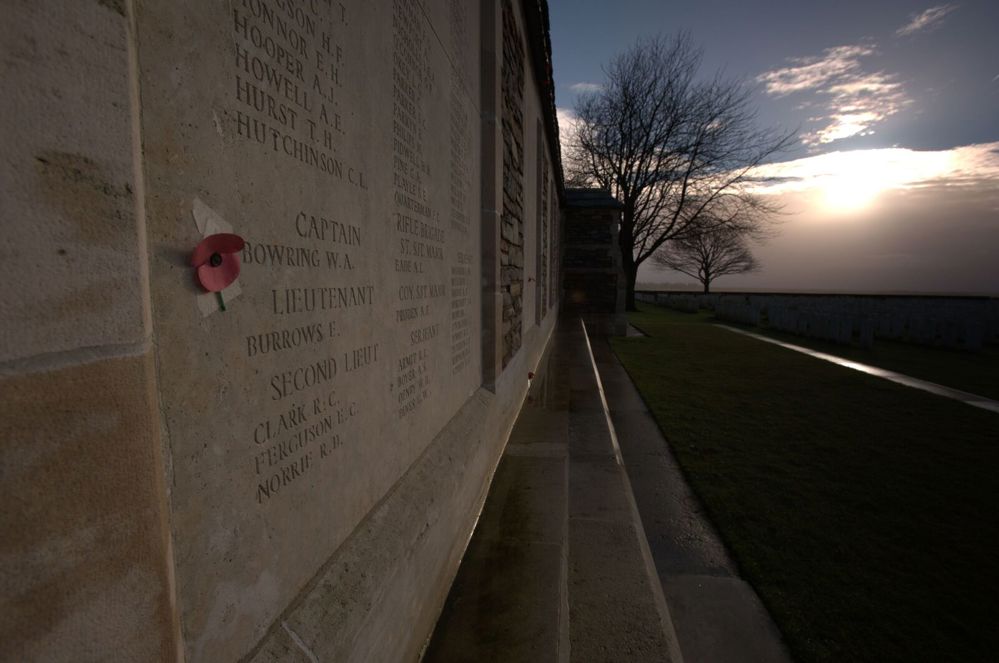
Image: The Caterpillar Valley (New Zealand) Memorial within Caterpillar Valley Cemetery
Caterpillar Valley Cemetery sits in the heart of the battlefield where much of the fighting between July and September 1916 took place. From it, you can cast your gaze over the Somme front, spotting iconic locations like Delville and High Wood, as well as many other CWGC cemeteries.
Caterpillar Valley is the second-largest cemetery on the Somme, with over 5,500 graves. Nearly 3,800 of these are unidentified.
Within the cemetery sits the Caterpillar Valley (New Zealand) Memorial, commemorating 1,200 members of the New Zealand forces who died on the Somme with no known grave.
Pozieres British Cemetery
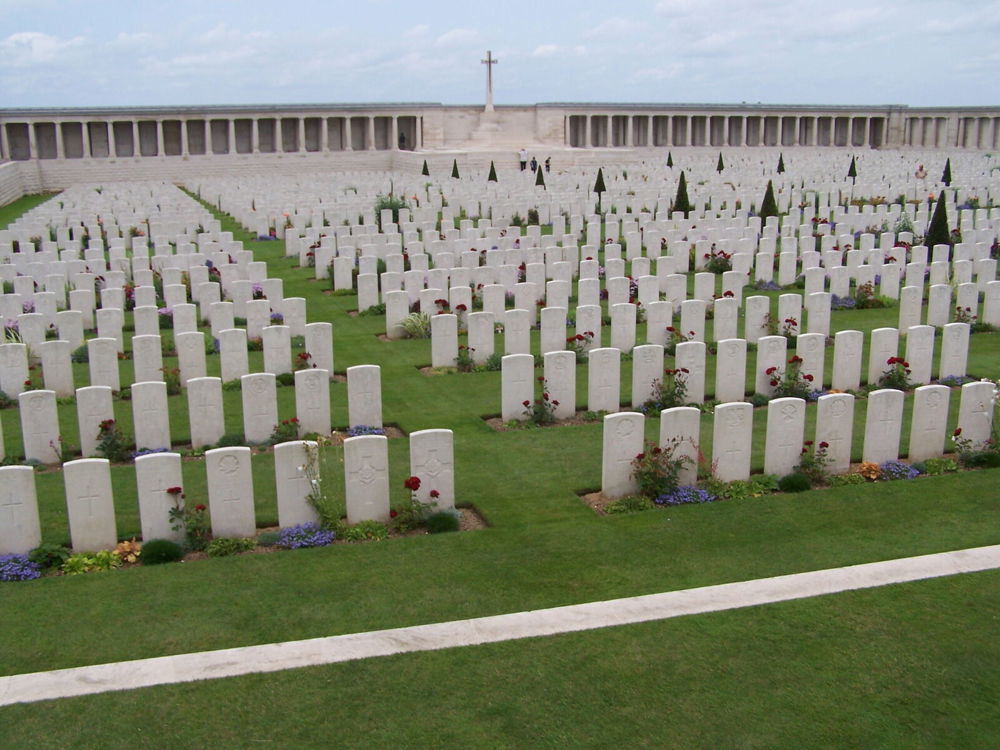
Image: Pozieres British Cemetery
Pozieres British Cemetery is predominantly a British cemetery, but the cemetery also contains Australian and Canadian burials of the Somme.
Pozieres is of special significance to Australian forces. The village was part of the sector given to Australian forces to attack as the Somme battle expanded and Commonwealth forces were brought to Northern France.
The Australian 1st Division attacked Pozieres on 23 July. The German frontline had been smashed by artillery, and the Australians captured the village on the first day. Strong German counterattacks and artillery turned Pozieres into a “giant mincing machine” as more Australian division were brought up.
Pozieres and the battlegrounds beyond, such as Mouquet Farm, were a baptism of fire for the Aussies on the Western Front. In scant weeks, the Australian Divisions took over 23,000 casualties, with 6,700 men killed in action or missing.
2,700 servicemen, Australian, Canadian and British, are commemorated at Pozieres British Cemetery. Over 1,300 are unidentified.
Newfoundland Memorial Park & the Beaumont Hamel Memorial Park
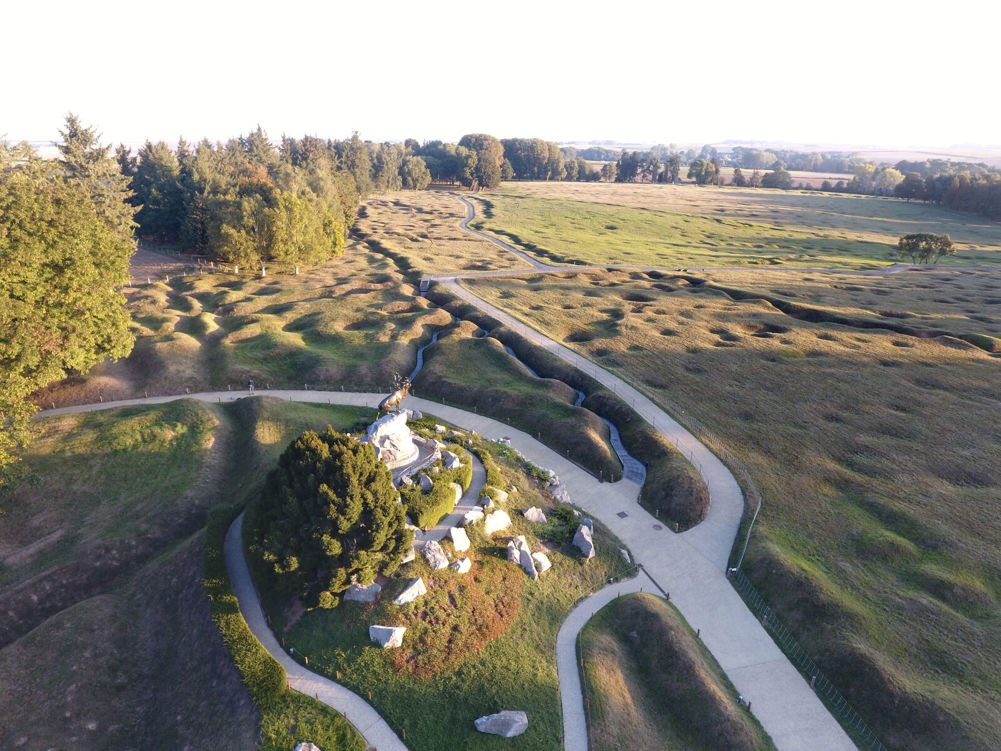
Image: The Beaumont Hamel memorial overlooking the preserved trenches and shell-scarred landscape of Newfoundland Memorial Park
We often think of the First Day of the Somme as a purely British and Irish tragedy but that doesn’t quite tell the whole story. The Royal Newfoundland Regiment also went into battle on 1 July 1916 with equally destructive results.
At Beaumont Hamel, the Newfoundlanders went over the top but were scythed down by withering German machine-gun and artillery fire. 780 volunteers of the 1st Battalion, Newfoundland Regiment went into action that day. Just 100 or so came out unscathed, the rest dead, wounded, or missing.
Today, the preserved trenches of Newfoundland Memorial Park and scarred landscape remind us of the intensity of the Newfoundlanders’ attack. The ground remains pitted and gouged, showing the brutal landscape of the Somme.
The Beaumont Hamel Memorial, topped with a bronzed caribou representing Newfoundland, today commemorates Newfoundland’s fallen of the First World War, including those cut down on the Somme’s first day.
The wider Newfoundland Memorial Park also contains other CWGC sites, including:
- Y Ravine Cemetery
- Hawthorn Ridge Cemetery No.2
- Hunter’s Cemetery
Canadian Military Cemeteries
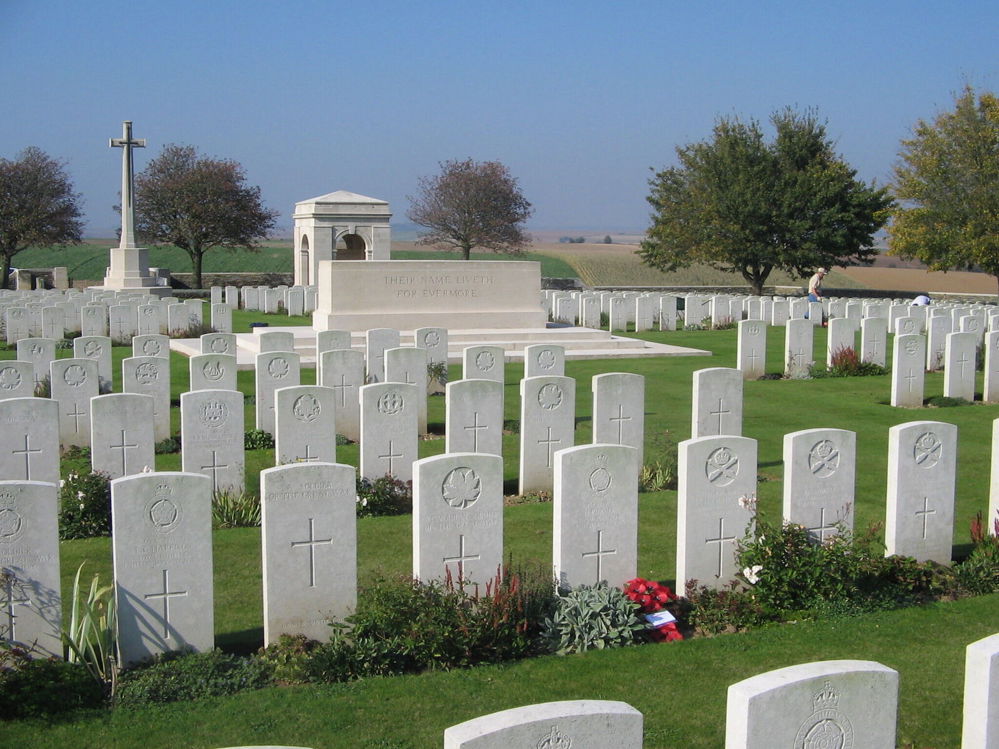
Image: Regina Trench Cemetery
The Canadian Corps suffered around 23,000 casualties during the Battle of the Somme. It was involved in some of the bitterest fighting of the campaign, especially as attrition set in following the July advances.
Places like Regina Trench and Flers-Courcelette are as integral to the Canadian Great War Experience as the vaunted Vimy Ridge. The Somme became a crucible for Canadians on the Western Front, testing Canada’s soldiers and leadership before their major successes in 1917 and beyond.
To understand the cost paid by the Canadians on the Somme, we’d recommend trips to:
- Adanac Miliary Cemetery
- Regina Trench Cemetery
- Courcelette Cemetery
Here, thousands of Canadians lie or are commemorated, representing the enormous struggle of the Somme experienced by the Commonwealth as a whole.
Somme Cemeteries and Memorials - Frequently Asked Questions
Casualties of the Somme who were recovered are commemorated with individual war graves in CWGC cemeteries. If identified, they will have a CWGC headstone bearing their name, regiment, and other pertinent information. If recovered but unidentified, the headstone will bear the inscription "Known unto God".
Casualties with no known war grave, or unidentified casualties in CWGC cemeteries, are commemorated by name on CWGC war memorials across the Somme.
A casualty may have been unidentifiable on recovery or simply never recovered. These are known as "missing" casualties with no known war grave. A casualty with no known war grave will be commemorated by name on an appropriate war memorial.
Somme cemeteries are permanent places of commemoration for the victims of the Battle of the Somme. They help us understand the scale of loss on the Somme, while providing a starting point to better understand commemoration by linking real people and names to places.
CWGC Somme War memorials are the permanent places of commemoration for casualties of the Battle of the Somme with no known war grave. Not only do they provide a physical location for us to commemorate and remember these servicemen, they are a physical reminder of the scale of loss resulting from the Battle of the Somme.
Yes, all of our Somme cemeteries and memorials are open to the public. Use the Find War Dead tool to find them. Read each cemetery page for visiting information, including directions and opening hours.
Author acknowledgements
Alec Malloy is a CWGC Digital Content Executive. He has worked at the Commonwealth War Graves Commission since February 2022. During that time, he has written extensively about the World Wars, including major battles, casualty stories, and the Commission's work commemorating 1.7 million war dead worldwide.