

25 May 2026
Why naval commemoration is different: buried at sea and remembered on naval memorials
The Commonwealth War Graves Commission commemorates over 100,000 Commonwealth navy personnel who died during the world wars.
But you may have noticed that naval commemoration is slightly different to the commemoration of land and air-based personnel.
The nature of naval service, taking place on, above, and beneath the world’s seas and oceans, meant very few of these men and women’s bodies were ever recovered. The majority have no known war grave but the sea, with no final resting places to visit.
As such, commemoration of naval personnel is mainly centred on our naval memorials.
Here, you’ll discover the forms naval commemoration takes, including our major naval memorials, and learn more about how CWGC commemorates Royal Navy, Merchant Navy and Commonwealth naval personnel.


At a glance: What's on this page
This page covers naval commemoration, the different forms it takes, and how commemoration of naval personnel is different to other armed forces branches, including:
- What makes navy commemoration different
- What “buried at sea” and "no known war grave" mean in commemorative terms
- Why some naval personnel have no known grave
- How naval memorials commemorate people by name
- How Jutland helps explain naval commemoration without defining all of it
- Where to search for a naval name or record
- Common questions about naval commemoration and visiting memorials
Why navy commemoration is different
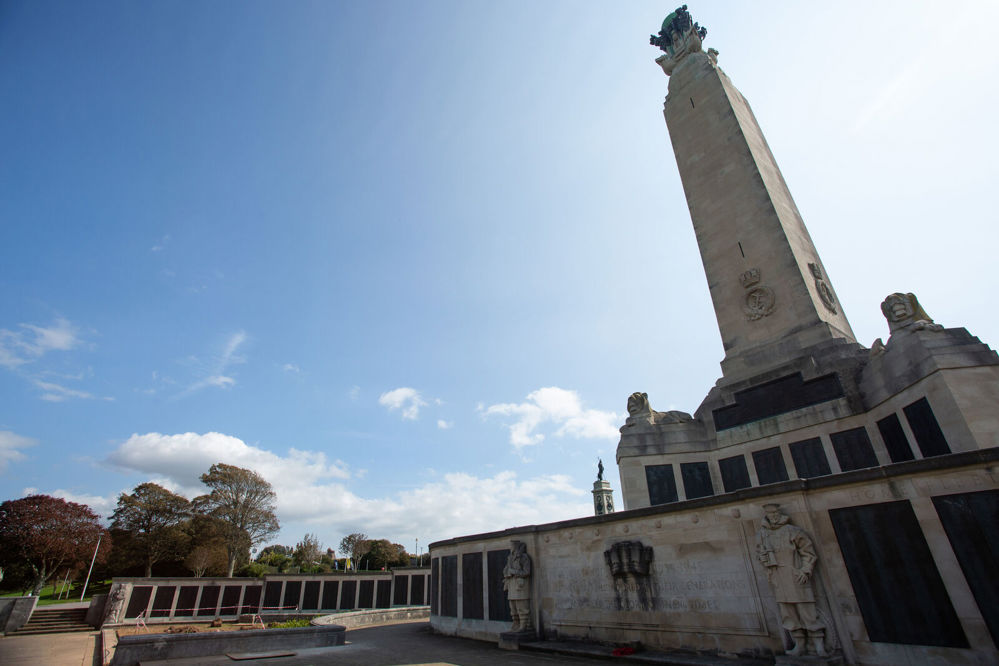
Image: Plymouth Naval Memorial, one of three major CWGC naval memorials in the UK
Commemoration of merchant and military naval personnel after the First World War presented a problem for the Commonwealth War Graves Commission.
Land-based forces buried their dead in local churchyards or improvised burial grounds and cemeteries, which were either turned into permanent sites after the war, or graves were concentrated into purpose-built CWGC cemeteries.
With a few exceptions, this was generally not possible for lost naval personnel who were typically buried at sea or lost below the ocean waves.
Service at sea and its commemoration consequences
Whether patrolling the world’s oceans, defending convoys, clashing with enemy ships, hunting submarines, or carrying precious cargo and troops around the world, naval service took Commonwealth personnel all over the world.
It presented many dangers too. Enemy warships and vessels, including submarines, could strike and sink Royal Navy boats in remote locations, far from coasts, as well as close to landmasses.
Once sunk or stranded on lifeboats and never rescued, these sailors were sadly lost to the deep.
In the Second World War, the Fleet Air Arm was the aerial wing of the Royal Navy. Its men flew escort missions, hunted enemy surface ships and submarines, performed air-sea rescue duties and guarded coastlines.
If these naval aviators were lost at sea, then their bodies were typically never recovered, similar to their shipbound comrades.
Why war graves are often not part of the story
Often, this meant personnel were lost at sea with no real way to recover their bodies for internment in CWGC war graves.
Sometimes, such as after the Battle of Jutland, sailors' bodies would be washed ashore, recovered, and buried in local churchyards or cemeteries. Personnel who died at home or on shore, perhaps due to illness or in accidents, were also buried in CWGC war graves, as were casualties from the Royal Marines or Royal Navy Divisions fighting on land.
On the whole, naval casualties were buried at sea and have no known war grave after being committed to the deep.
The creation of CWGC naval memorials


The Commission was determined to find an appropriate way to commemorate by name each of the men and women of the Royal Navy killed in the First World War with no known grave but the sea.
The solution was to build three great naval memorials in the UK to commemorate these missing naval personnel, mirroring the commission’s approach to commemoration of land and air force servicemen with no known war grave.
Three major memorials were built at Portsmouth, Plymouth, and Chatham, three cities with close links to the Royal Navy. As well as their long naval traditions, these cities were also chosen as they were the three “manning ports” Royal Navy personnel were assigned to for administrative purposes.
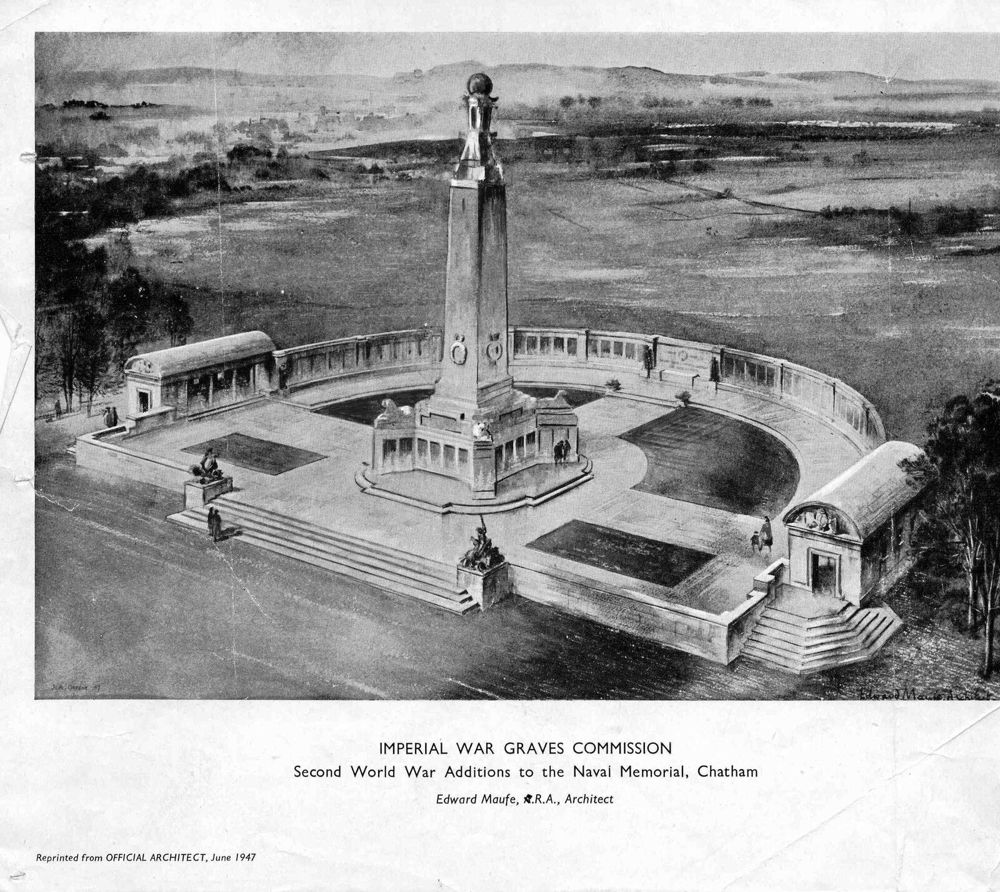
Image: An illustration of Chatham Naval Memorial from CWGC architect Edward Maufe
Sir Robert Lorimer designed the original memorials. Each memorial was envisioned as an easily recognisable landmark to help guide sailors back to port. Each stands as a tall obelisk atop curtain wall-style memorial panels, topped with a globe representing the Royal Navy’s global reach.
Each memorial was expanded after the Second World War to incorporate fresh casualties, not just from the Royal Navy, but other Commonwealth navies too, such as the Royal Australian and Royal Canadian Navies.
Merchant seamen have their own dedicated memorial in the centre of London. At the time of the First World War, London was one of the busiest seaports in the world, a vital artery for Imperial trade and military power.
The Tower Hill Memorial sits outside Trinity House, close to the banks of the Thames, as the permanent memorial to seamen of the merchant and fishing fleets who died in service to the British Empire in the World Wars.
To commemorate the airmen of the Fleet Air Arm with no known war grave, the Lee-on-Solent Memorial was constructed after the Second World War. Over 2,000 names adorn its memorial panels.
Merchant Seamen were also drafted into Royal Navy service under special contracts during the Second World War. Those who died with no known grave but the sea are commemorated on the Liverpool Memorial in the heart of one of Britain’s busiest port cities.
What “buried at sea” and “no known grave” mean
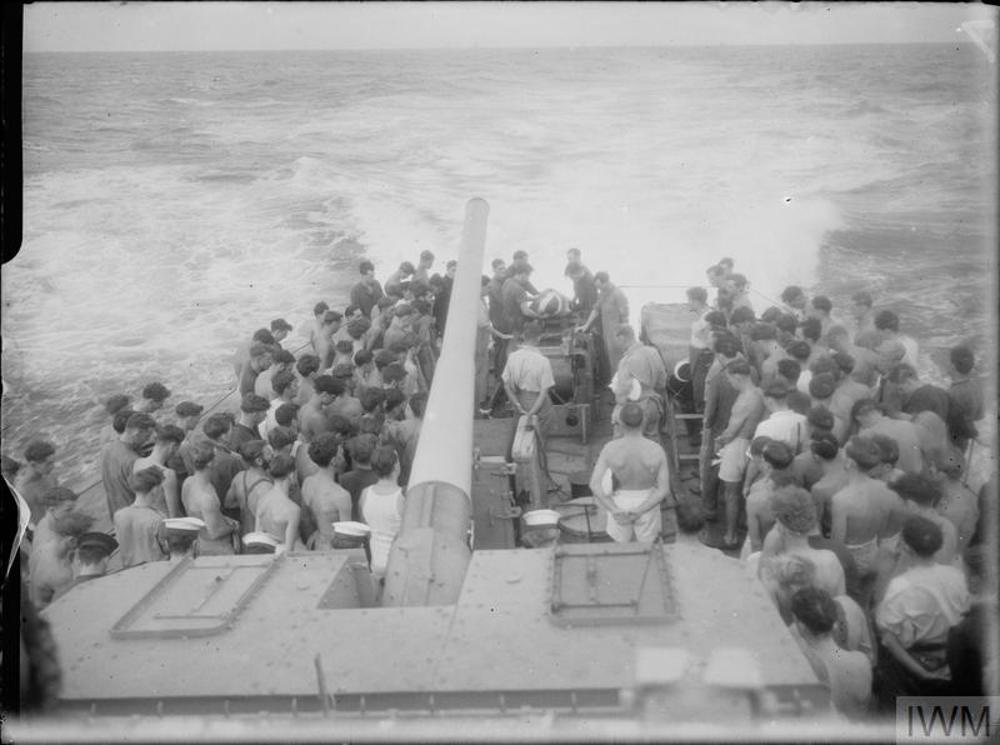
Image: A sombre burial at sea ceremony takes place beneath a gun aboard HMS Quilliam (IWM (A 25109))
What should be clear is that naval personnel, whether merchant or military, were typically lost without the ability to recover their bodies or remains.
Buried at sea explained
A burial at sea is when a member of a ship’s crew is lowered into the sea to have the ocean act as their final resting place.
Merchant and navy ships often lacked the necessary mortuary facilities to preserve and prepare burials on land. It was not practical to keep dead sailors aboard for both logistical and hygiene reasons.
The tradition of burial at sea is a long and old one, and many sailors often preferred to be committed to the deep, having spent their lives at sea.
This was a solemn and often grim duty. In some cases, it would be dangerous to stop or head for land, such as on convoy patrol or avoiding enemy submarines, to bury men. At other times, bodies had to be removed from gunnery emplacements to ensure they could keep operational in the midst of battle.
No Known War Grave explained
No known war grave means we have been unable to locate the final resting place of a Commonwealth serviceman or woman.
In the case of Commonwealth naval casualties, it means their remains were unable to be recovered as they were lost or buried at sea.
Why both lead to memorial commemoration
Commonwealth casualties with no known war grave, and naval casualties buried at sea, are commemorated via war memorials.
War memorials provide a physical point of commemoration for such casualties. They gave loved ones a place to come and mourn their relatives while also acting as reminders of the scale of loss thrown up by the world wars.
They also remind us that each merchant seaman and naval personnel lost was a person in their own right, rather than an obscure, impersonal statistic. The names are a powerful symbol of the loss endured by so many families across the Commonwealth during and after the First and Second World Wars.

Want more stories like this delivered directly to your inbox? Sign up for our newsletter for regular updates on the work of Commonwealth War Graves, blogs, event news, and more.
Sign UpWhat naval memorials can tell us
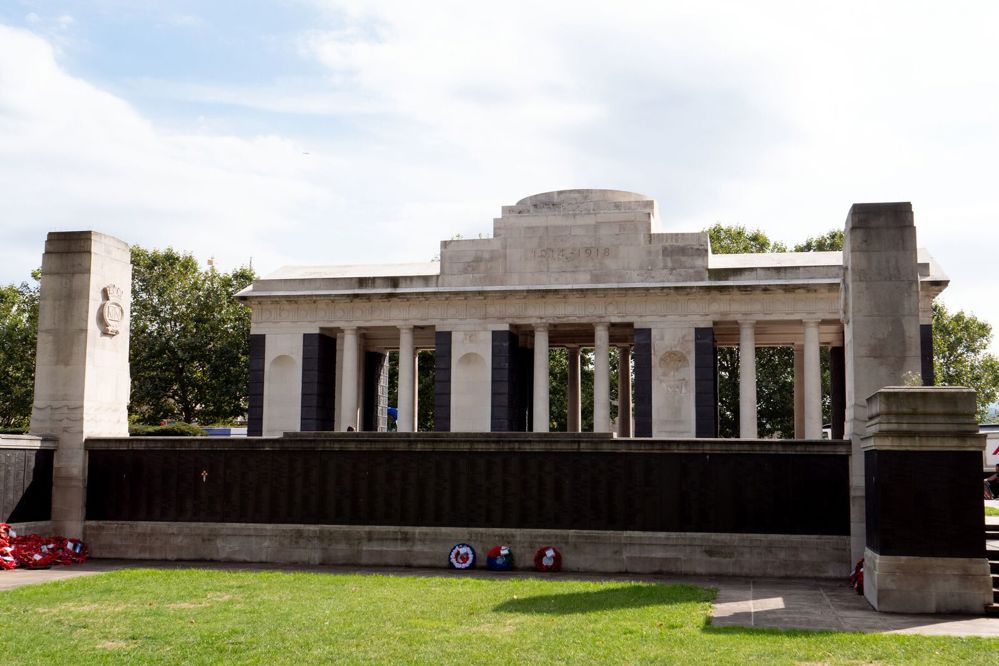
Image: The Tower Hill Memorial commemorates members of the merchant and fishing fleets who lost their lives during the world wars but have no known grave.
Naval memorials are powerful places of commemoration and help us better understand how naval losses were marked and remembered.
Commemorated by name with no known war grave
Etched in bronze, the names on CWGC naval memorials at Portsmouth, Plymouth, Chatham and Tower Hill represent sailors and seamen lost at sea or committed to the deep.
The purpose of CWGC war memorials, including our naval sites, is to commemorate each missing serviceman and woman by name. Each of our naval memorials contains tens of thousands of fallen sailors around the world with no known war grave but the sea.
Reading a naval memorial
Those names etched into memorial panels are carefully arranged, so visitors looking for a particular person can find them with ease. Each memorial also has a Memorial Register on site, listing each casualty by name with their pier and panel number to help you locate them.
Naval memorials and the Tower Hill Memorial commemorating members of the Merchant Navy and fishing fleets are arranged:
- By ship or vessel, alphabetically
- Alphabetically by seniority
Why our naval memorials matter
CWGC naval memorials continue to remind us of the scale of human loss during the World Wars.
They also emphasise that the world wars were not just fought on land or in the air. The seas and oceans became battlefields, and controlling sea lanes was vital to the war effort.
The Tower Hill Memorial also showcases the dangers the merchant and fishing fleets faced in keeping the Allied war machine fed, armed, and equipped. All too often, the Merchant Navy’s role was overlooked, but without their tireless work, both conflicts would have looked very different.
Using the Battle of Jutland as an example of naval commemoration
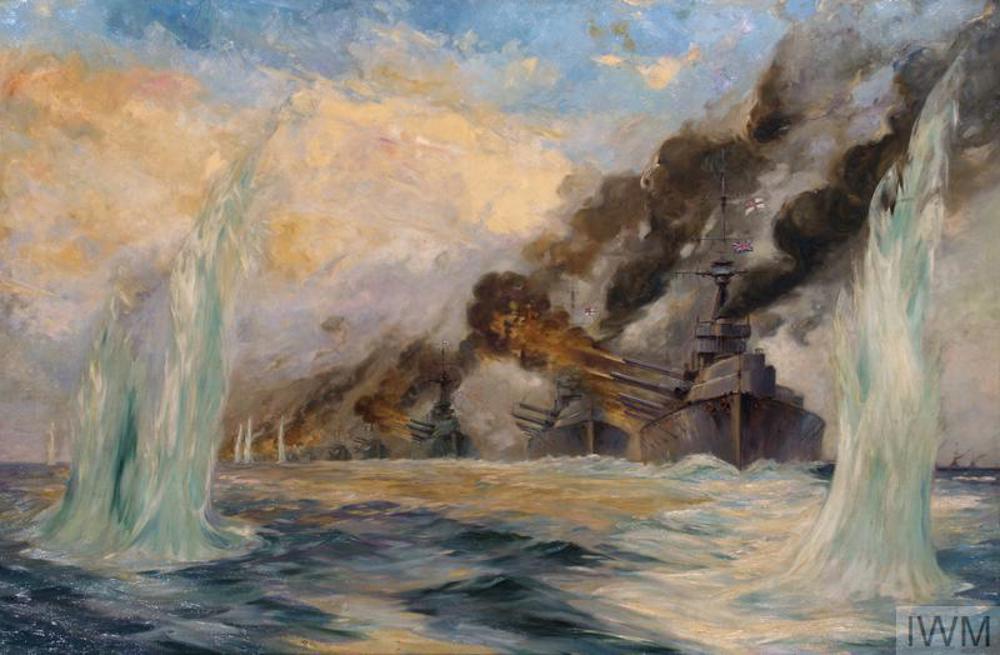
Image: Battleships in Action at Jutland, Robert Henry Smith, 1919 (IWM (Art.IWM ART1248))
The Battle of Jutland was the largest naval battle of the First World War. 14 Royal Navy ships were sunk during the clash of British and German fleets off the coast of Denmark on 31 May 1916. Just over 6,000 British sailors were killed in the battle.
Jutland makes the perfect example to examine naval commemoration.
Why the Battle of Jutland is often used as a starting point for Naval commemoration
As Jutland was the largest naval battle of the Great War, it is often used as a starting point for exploring and understanding naval commemoration.
The vast majority of the sailors lost at Jutland are commemorated by our naval war memorials.
For example, 17-year-old Boy 1st Class John Gilbert Eyres lost his life at Jutland when he went down with the cruiser HMS Black Prince. John’s body was never recovered, and so he is commemorated alongside his crewmates on the Portsmouth Naval Memorial.
John was commemorated on the Portsmouth Naval Memorial as he would have been assigned Portsmouth as his “manning port” when he joined the Royal Navy in 1915.
Some sailors’ bodies were washed ashore following Jutland, such as Victoria Cross recipient Commander Loftus Williams Jones. Commander Jones was recovered off the coast of Sweden some days after he died during the sinking of HMS Shark.
Because his body was recovered and identified, Commander Jones was given a war grave in keeping with CWGC policy, complete with an individual headstone. He is buried in the Commonwealth War Graves Commission plot at Kviberg Cemetery, Gothenburg, previously Fiskebäckskil, Västra Götaland.
What Jutland helps explain
Jutland helps differentiate the two forms that naval commemoration generally takes.
The bulk of the Royal Navy sailors lost at Jutland have no known war grave, such as the aforementioned Boy 1st Class John Gilbert Eyres, are commemorated on the bronze name panels of our war memorials.
If recovered, they will have their own war grave in a CWGC cemetery or a plot in a municipal cemetery. But as the majority were buried at sea or committed to the deep, their remains were generally not recoverable.
CWGC naval memorials provide permanent points of commemoration for those lost at Jutland. In doing so, their loved ones had a place to come and mourn their missing sons, brothers, and fathers.
Now, these act as focal points for ceremonies commemorating Jutland as well as wider naval casualties of the First and Second World Wars.
How CWGC connects naval names to memorials and records
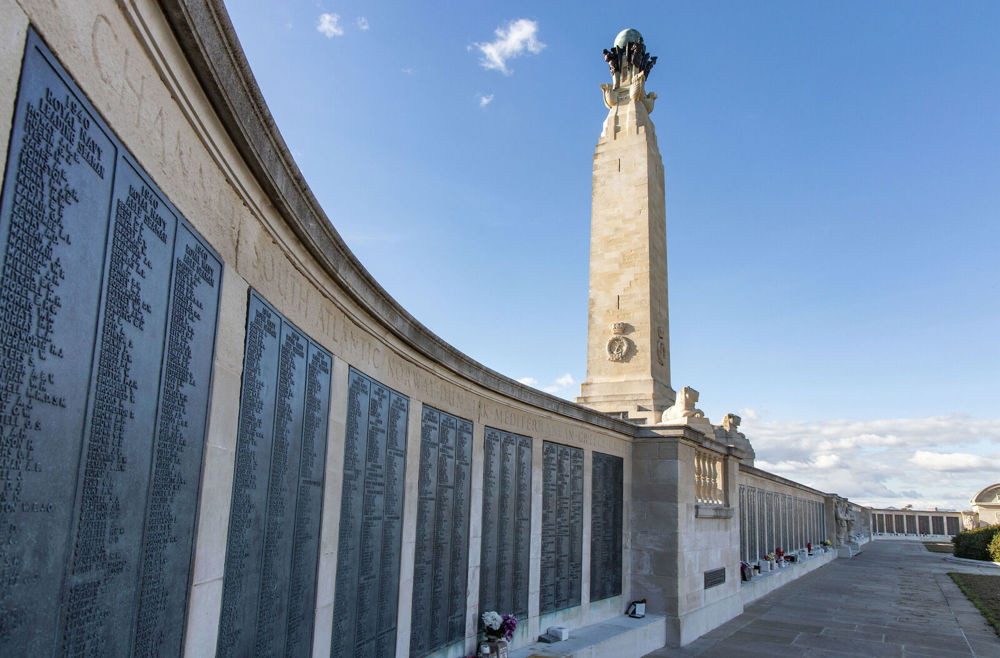
Image: Some of the bronze name panels at Portsmouth Naval Memorial
Our records contain the names of each Commonwealth sailor, including navy, merchant and fishing fleet personnel, who died in service to the British Empire during the World Wars.
They can help you connect different names to our naval memorials and their final resting places or points of commemoration.
Starting with a name
If you already know the sailor’s name, then you can use our Find War Dead tool to discover their place of commemoration.
You can search by first name and last name, initials, and other criteria, such as ship name, branch of service, and country of commemoration, to refine your search.
Alternatively, use one of our How to Search Guides for pointers on how to maximise your research.
Finding a place of commemoration
A sailor’s point of commemoration is listed on their individual casualty page as part of our naval memorial records. Their location on our name panels will also be listed to help you find them on-site.
Clicking on this will bring up the cemetery or memorial page, containing location information and directions, as well as some historical information regarding the site’s establishment and purpose.
Alternatively, you can use our Find War Cemeteries and Memorials tool to find the locations of our sites around the world.
Why records and memorials work together
CWGC naval records and our memorials work together to make it easy to locate the places of commemoration for missing and deceased naval personnel.
Searching through them can give you a better understanding of who these people were, where they served, and how they are commemorated.
You can also use those as a starting point for researching and sharing the stories of Royal and Commonwealth Navy personnel we commemorate.
What naval commemoration means today
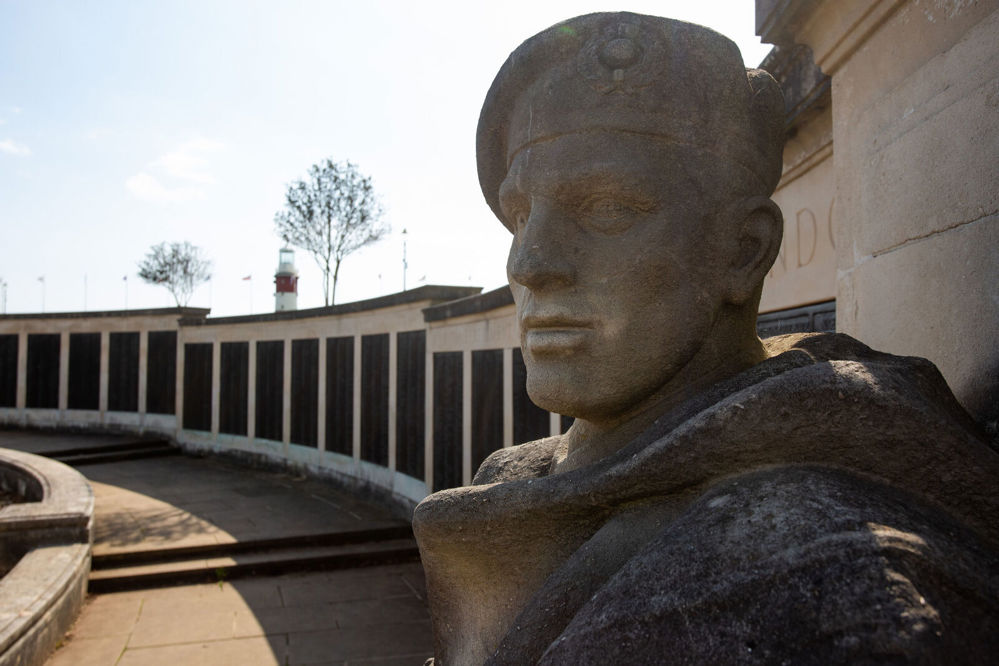
Image: A sculpture of a sailor at Plymouth Naval Memorial
Navy commemoration today asks us to remember and reflect on the loss of so many British and Commonwealth sailors, both military and merchant, who lost their lives in the two world wars.
Why absence still matters
Our understanding of the world wars is tinged with tragedy and loss. Naval casualties, with most of them having no known grave, reinforce the global nature of these conflicts and the sheer volume of loss experienced across the Commonwealth.
From naval memorials to connections
Today, with our storytelling platform, For Evermore, we can help move naval casualties from just names etched on a war memorial name panel to a real person to better understand their experiences.
By reading and learning their stories, we can connect with these naval personnel, ensure their sacrifices and losses are never forgotten, and embrace our shared history.
A visible form of commemoration
Today, the naval memorials at Portsmouth, Plymouth and Chatham are visual reminders of the Navy’s losses during the world wars.
They are focal points for naval commemoration in the United Kingdom, but act as the points of commemoration for sailors of many different nationalities, symbolising our shared loss.
If you get the opportunity, we encourage you to visit these sites to better understand the scale of loss endured by the seaborne services in wartime, the myriad of men upon their name panels, and experience the power of our naval war memorials.
Naval Commemoration Frequently Asked Questions
Naval commemoration is slightly different to the commemoration of land and air-based personnel.
The nature of naval service, taking place on, above, and beneath the world’s seas and oceans, meant very few of these men and women’s bodies were ever recovered. The majority have no known war grave but the sea with no final resting places to visit.
"Buried at sea" means a casualty's remains were committed to the sea. Individuals buried at sea or who went down with their ship typically have no known war grave.
In terms of naval commemoration, "no known war grave" usually indicates a casualty has been buried at sea, or their remains have not been discovered due to the nature of their death at sea. These sailors have no known final resting place and are instead commemorated by name on our naval war memorials.
No. Our naval memorials are the primary points of commemoration for naval personnel, including merchant seamen and fishermen, who died in service to the British Empire during the two world wars. They commemorate each sailor by name in keeping with our principles of equality in commemoration.
Yes, our main naval war memorials at Plymouth, Portsmouth, and Chatham are free to visit all year round but may be closed for special events and./or maintenance work.
You can use our Find War Dead tool to search for Royal Navy, Commonwealth Naval Forces and Merchant Seamen. Each individual casualty page will tell you where they are commemorated.
CWGC naval memorials matter because they are the physical points of commemoration for tens of thousands of naval personnel who have no known war grave. They are reminders of the scale of loss endured by the Commonwealth in the world wars, and indicate that those conflicts were not just fought on land, highlighting the importance of the navy and merchant fleets in wartime.
Author acknowledgements
Alec Malloy is a CWGC Digital Content Executive. He has worked at the Commonwealth War Graves Commission since February 2022. During that time, he has written extensively about the World Wars, including major battles, casualty stories, and the Commission's work commemorating 1.7 million war dead worldwide.