

21 April 2026
Non-Commemoration Programme Annual Review published – April 2026
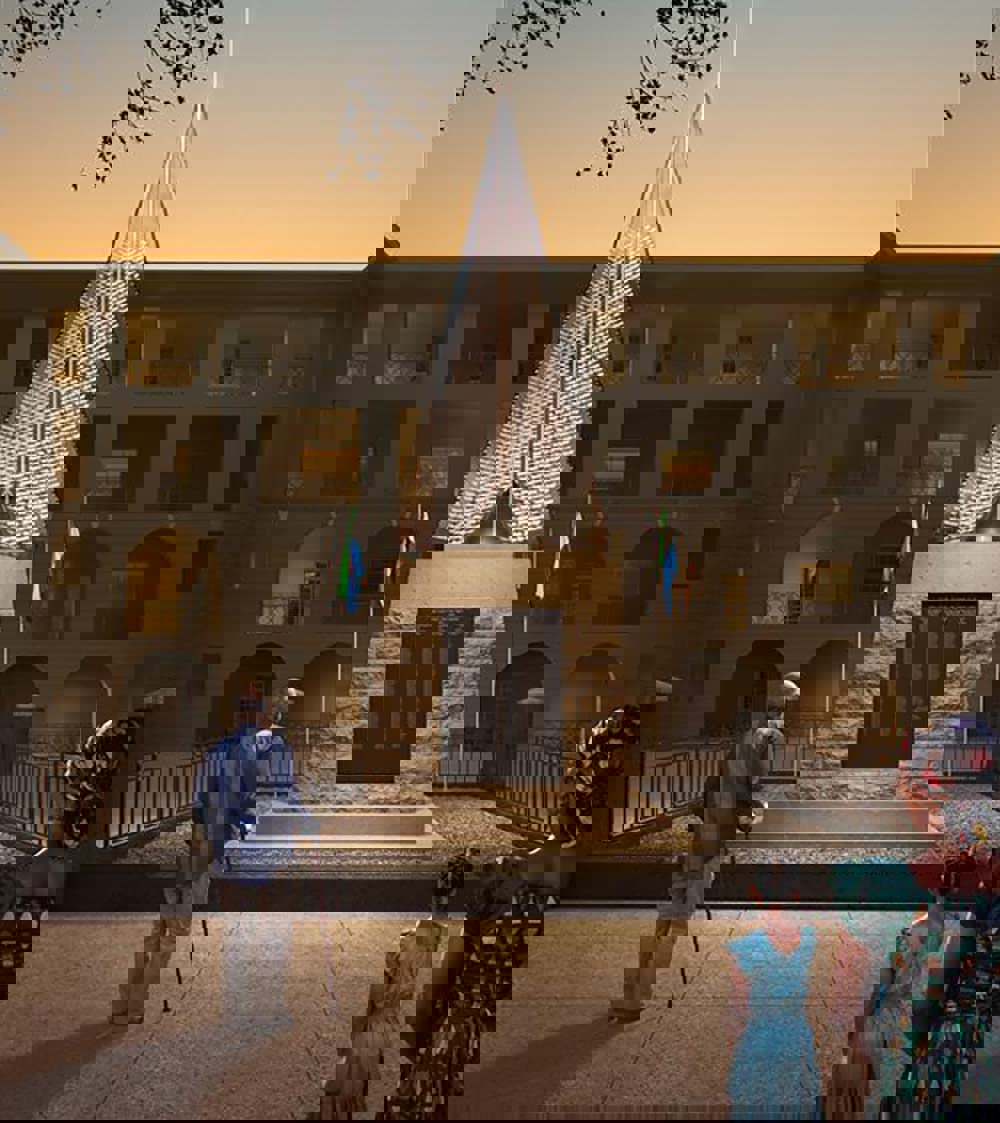
New Sierra Leone Carrier Corps memorial design by Oshinowo Studio, image ©Hayes Davidson.
Five years ago, in 2021, we established our five-year Non-Commemoration Programme and today are publishing the fifth and last annual review of its progress.
Our work will always continue to focus on properly commemorating the service of those who served for the British Empire and were not remembered equally, or by name, as per our commemoration policies.
As we finish this first, five-year push of activity, this April 2026 report marks some significant milestones for us.
We have completed extensive research and worked with partners and in archives around the world. Over the duration of the programme, we have now identified over 20,640 new names for commemoration and published two major research reports on the First and Second World Wars.
Construction is now underway in Freetown, Sierra Leone, on a new addition to the existing memorial honouring the fallen of the Sierra Leone Carrier Corps who were not commemorated properly. This will be the first of our memorials to feature a light beacon visible from all corners of Freetown.
Sadly, some of the war graves and memorials we care for in 23,000 locations and 150 countries around the world are in areas affected by past and present conflicts. This has led us to explore new solutions in commemoration until we can safely work in these sites.
A digital solution for Iraq’s Basra Memorial has been established, allowing us to commemorate by name tens of thousands of Indian servicemen who were previously only recorded numerically.
In 2026 and 2027, ambitious projects will take place in Sierra Leone and Kenya, both in Nairobi and on coastal sites close to Mombasa, while research and history-sharing initiatives in Egypt, India, Sudan, and Tanzania will help us bring long-overlooked global stories to the fore, continuing our important work.
We will continue to expand education and community engagement, bringing more people into conversations at our sites about this overlooked chapter of our shared history.
The Non-Commemoration Programme work will now be integrated and run as part of our mainstream activities, ensuring our efforts to find and properly commemorate missing servicemen continue – and we do this both with and alongside the communities most affected by our findings.

Get the latest updates on the incredible work of the Non-Commemoration Programme team.
Non-Commemoration